
South Africa’s giant pain problem
Millions of South Africans suffer from chronic pain, and it’s not being properly managed
 Add GroundUp on Google
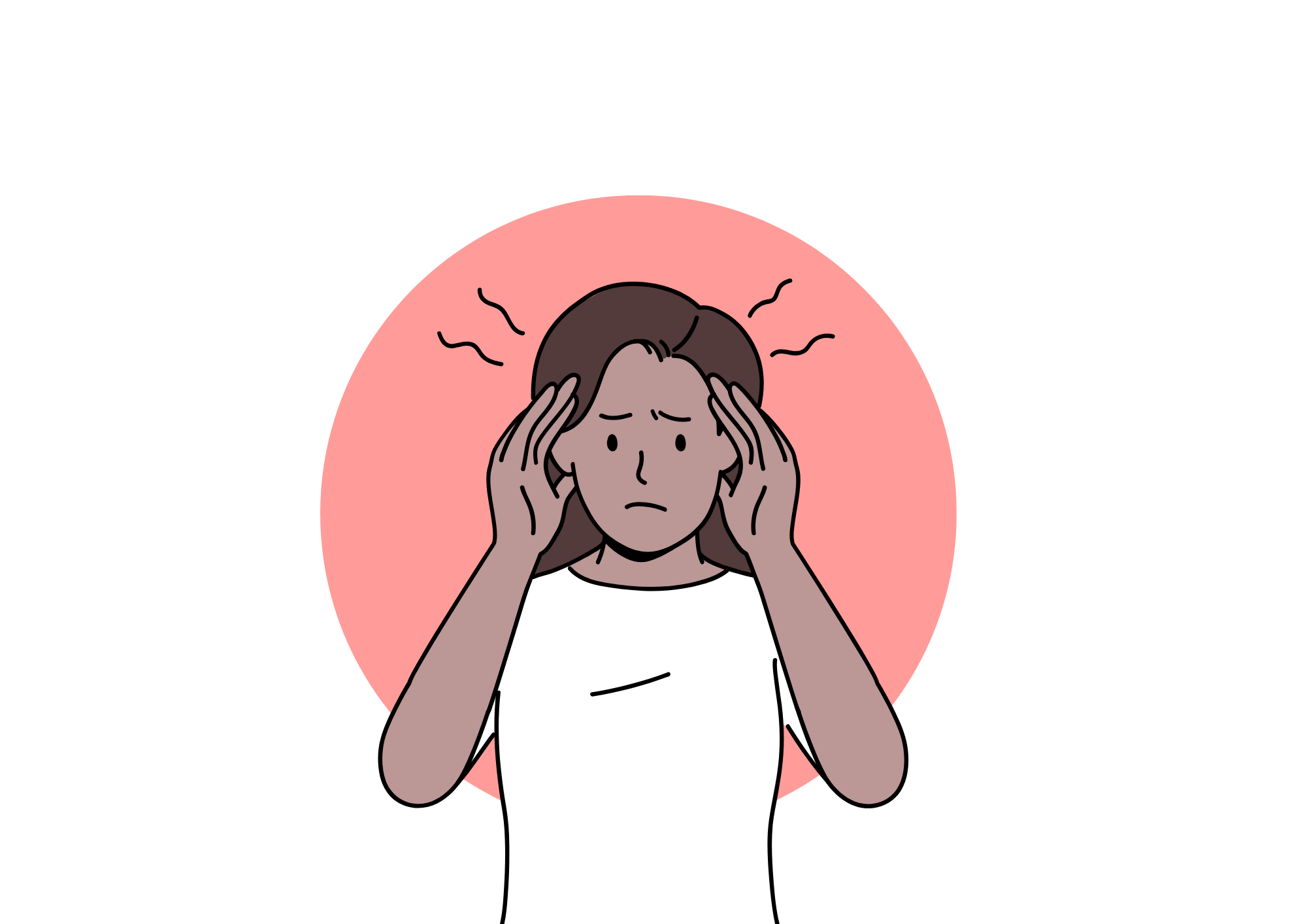
Nearly one in five South Africans suffers from chronic pain, a 2016 survey found. Image adapted from one on Envato
Retired psychiatric social worker Soghra Walton’s has lived most of her life in pain. Now 73, she has suffered persistently since her late 20s. She has seen more physicians than she can count, and has visited three private pain clinics, but without finding any sustained relief.
“I wake up and I know it’s gonna come, so I think to myself, ‘What am I going to do about it today? Do I take the pain pills? Do I try and see someone?’ I anticipate it. I fear it. I put things off because of it,” she says.
Health professionals typically differentiate between two broad categories of pain: acute pain, which is short and intense, the type of pain one would experience after surgery, and chronic pain, lasting more than three to six months, and sometimes persisting long after an initial injury has healed.
Walton suffers from chronic pain, which Dr Sean Chetty, head of the Department of Anaesthesiology and Critical Care at the university of Stellenbosch’s Faculty of Medicine and Health Sciences, says is “much more invidious than acute pain”.
“Addressing acute pain is straightforward. Typically, it fades as the injury heals. Chronic pain destroys lives, and even impacts the state in the form of increased disability grants and so on,” he says.

In Walton’s case, pain has kept her from engaging in activities that she loves, like hiking, and it limited the amount of time she could devote to work. She has medical aid, but her care has cost hundreds of thousands of rands in excess payments. “At a point I fell into depression, and resigned myself to a life of just managing my pain,” she says.
Millions suffer in South Africa
In 2016, a research team led by physiologist Peter Kamerman included questions about pain in that year’s South Africa Demographic and Household Survey, to which more than 10,000 people over the age of 15 responded in person. The study, which was published in 2020, found that nearly one in five (18.3%) South Africans suffers from chronic pain, and that women were more likely than men to have persistent pain.
Working with the same data set, University of Cape Town researchers more recently explored the link between chronic pain and disability. Their paper, published in March 2026, suggests that 1.7% of the population suffers from “high impact” chronic pain, meaning they struggle with activities like walking, climbing stairs, remembering things or washing and dressing. Again, more women were found to be affected than men.
“You would think that the response to a healthcare burden of this magnitude would be significant, with every health facility geared to address it, but in fact when it comes to chronic pain South Africa is doing a terrible job,” says Chetty.
Complex causes
According to Romy Parker, Director of the Pain Management Unit at the University of Cape Town and co-author of the book Understanding Pain, the causes of chronic pain are complex.
“Where the initial cause of a person’s pain will often have an easily identifiable cause, like disease, or cut, persistent pain is often the result of a nervous system that has become oversensitised, and which starts to magnify the transmission of only slightly threatening signals in the body, even misinterpreting normal sensations as threatening,” she says. “The idea that pain is not always about tissue damage can sound crazy to both patient and healthcare professionals, but the fact is we see it across all the medical disciplines.”
African Pain Research Initiative Director Tory Madden explains what affects how much pain we feel.
“It is influenced by our environment, our beliefs and our culture. A person’s past history of trauma is also a factor. Trauma experienced as a child can activate a ‘fight or flight’ survival strategy much later in life, keeping the nervous system in a permanent survival mode, and create muscular tension. In South Africa, where 74% of us experience at least one traumatic event in our lifetime, this is very significant,” she says.
Walton has no trouble recalling the major trauma of her life: “A bad first marriage, very abusive,” she says.
Inadequate responses
83% of South Africa’s population currently uses the governmental health system, and for the vast majority of those who suffer from chronic pain, accessing adequate pain relief is difficult, says Parker.
“Waiting rooms in rural clinics are full of people experiencing persistent pain, waiting for their panado or their Brufen and a little chat with the doctor. That’s as much care as most South Africans can expect to receive,” she says.
Dr Zane Farina, who manages anaesthesia and critical care in the Pietermaritzburg Metropolitan Hospital Complex, says that when it comes to treating pain, “Much of the country is stuck in the reality of 30-40 years ago, of just relying on morphine if you’re really sore, and paracetamol if you’re not so sore.”
“We are quite late in recognizing that pain is in fact a complex interaction of biological, psychological and social factors, requiring psychological and physical strategies alongside pharmacological strategies, especially when chronic pain develops,” he says.
According to Madden, there is overwhelming evidence that physical and psychological interventions are more effective in reducing persistent pain than pills.
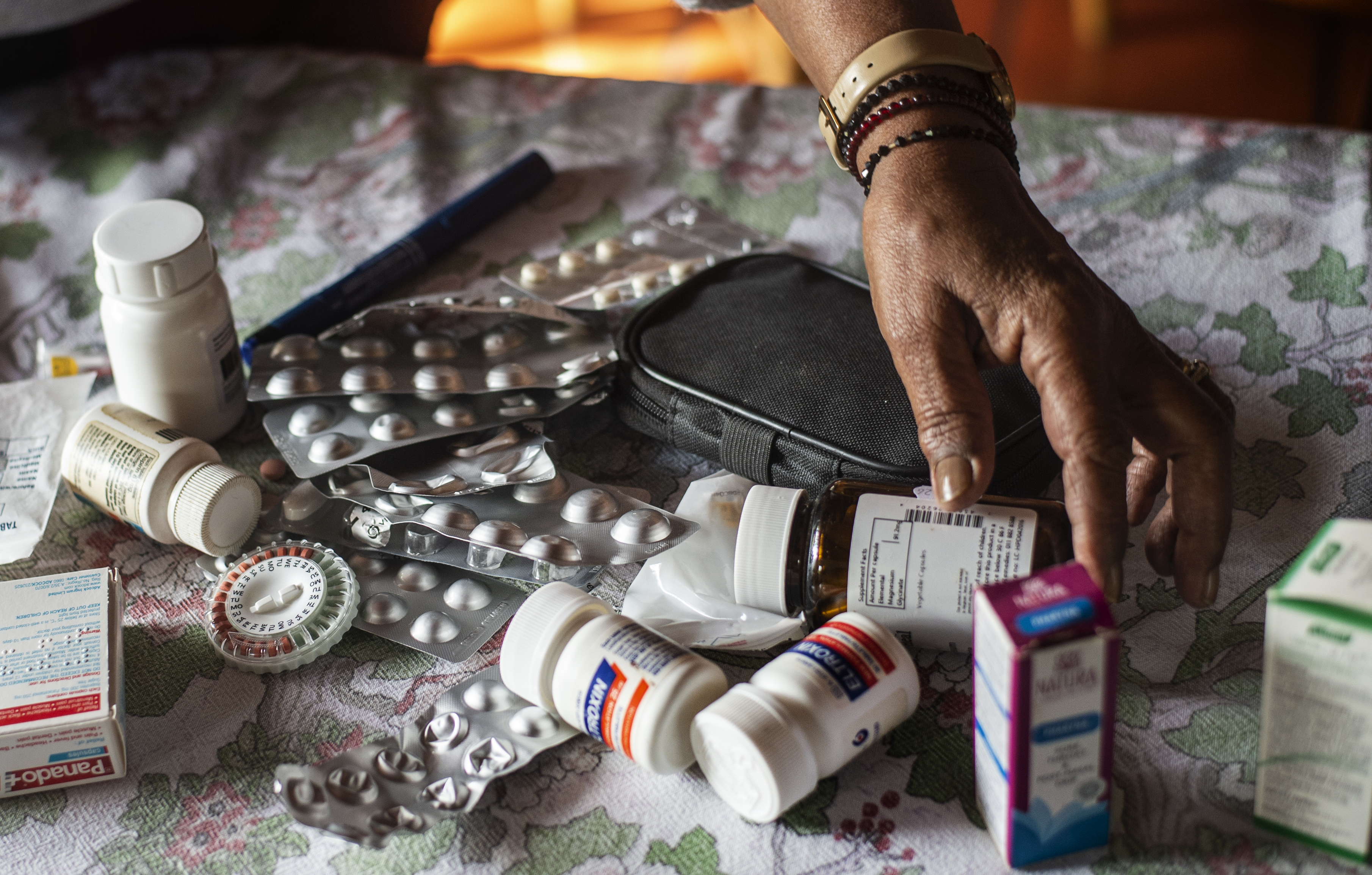
Soghra Walton displays the medicines she uses. Photo: Brenton Geach
“Pills can turn down the volume of pain, but treatment should ideally integrate principles of cognitive behavioural therapy with lots of education, goal setting, exercise, healthy eating and relaxation strategies,” she says, adding that chronic use of painkillers “can lead to a host of other problems, from dependence in the case of opioids, to serious gastrointestinal issues in the case of anti-inflammatories.”
The ideal approach to treating complex chronic pain, according to Parker, is to have an interdisciplinary team work with the patient to address all the areas that may be influencing their pain.
“At the minimum this should include the person with pain, their family or support person, a prescriber (commonly an anaesthetist), a nurse, a physiotherapist or occupational therapist, a psychologist, and a psychiatrist. For different conditions, other medical specialists can be included,” she says.
GroundUp spoke to pharmacists, public health experts and pain control specialists. All agreed that the state system is better suited to addressing chronic pain with a team approach than the private system, at least in theory.
“Private medicine is not good at complex, multi-system problems,” says retired anaesthetist Wade Hampton, who worked in private practice in Durban for several decades.
“In the private system all services are billed for, so pulling together a range of specialists becomes prohibitively expensive quite quickly. In big state hospitals you’ve got all those role-players on site, all employed by the government and so they can all talk to each other, and their inputs can be co-ordinated,” he says.
However, few state hospitals offer an interdisciplinary approach to chronic pain management: two hospitals in the Western Cape (Groote Schuur and Tygerberg), two in KwaZulu-Natal (Greys and Albert Luthuli), one in Gauteng (Helen Joseph) and one in Free State (Universitas).
“The challenge is partly one of human resources, because all the people you need - the nurses, physiotherapists, psychologists, and occupational therapists - are in poor supply. And then there is the issue of competency, because very few health professionals are adequately trained in pain management,” Farina says.
Teaching better pain management
Chetty, who is also the president of PainSA, an organisation devoted to improving the study and management of pain in South Africa, says a lack of training in progressive pain management techniques is largely to blame for South Africa’s poor response.
“Pain is an orphan nobody wants. There isn’t a single medical discipline that is not impacted by pain, and yet pain isn’t given the attention it deserves,” he says.
Currently, pain management is not recognised as a sub-specialty by the Health Professions Council of South Africa (HPCSA), which means there is no professional benefit to learning the skills necessary to manage pain comprehensively. Chetty and others have spent more than a decade trying to get pain management recognised as a sub-specialty, thus far without success.
In the absence of this, PainSA runs an essential pain management programme in six of South Africa’s ten medical schools, which it also extends to allied healthcare workers in training.
“We are finally starting to see some momentum,” says Chetty.
Meanwhile, Sograh Walton remains in pain, and at a loss for what to do about it.
Read Sograh Walton’s story here
Read more about chronic pain and how to manage it here.
Support independent journalism
Donate using Payfast

Don't miss out on the latest news
We respect your privacy, and promise we won't spam you.
© 2026 GroundUp. This article is published under the GroundUp Republication Licence Version 1.0. Email [email protected] to request permission to republish.