
“Abysmal” service at Pretoria Master’s Office
The Department of Justice says it is addressing backlogs
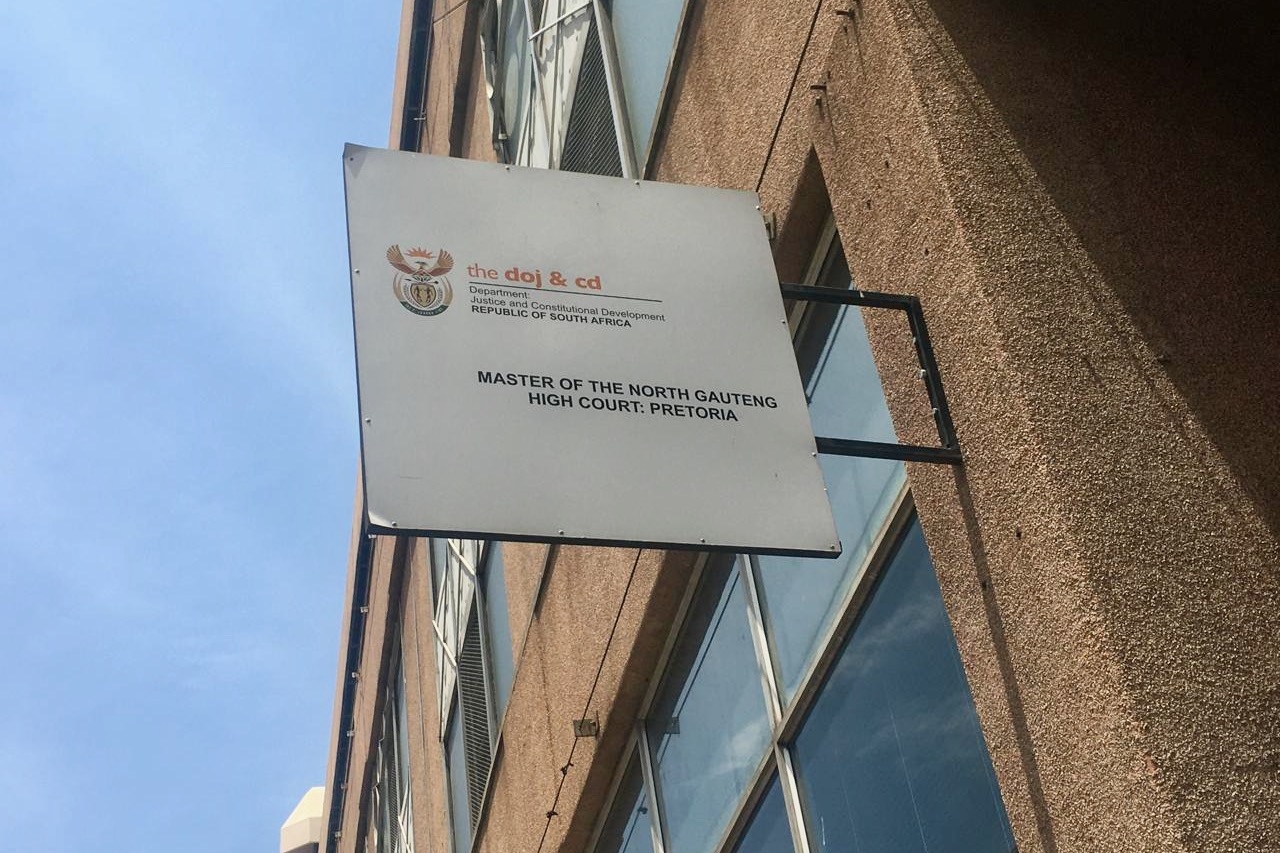
Attorneys GroundUp spoke to have described the Pretoria Master’s Office as “completely dysfunctional” and “abysmal”. Photo: Justin Brown
- The Pretoria Master’s Office is in disarray, with backlogs and disorganisation, with one attorney describing its service as “abysmal”.
- Allegations of corrupt practices such as the use of “runners” to queue-jump for a fee and the vulnerability of the office to fraud were also raised by attorneys.
- The Department of Justice says it is addressing the backlogs, filling vacant posts, strengthening complaints management, and using dedicated task teams.
Attorneys GroundUp spoke to have described the Pretoria Master’s Office as “completely dysfunctional” and “abysmal”.
The Master of the High Court oversees key legal functions, including curatorships, deceased estates, insolvencies, trusts and the Guardian’s Fund.
Attorney Richard Spoor, in a Twitter post, wrote that the office “can’t even locate the files”, “cannot process the most basic administrative tasks” and “as for exerting oversight over trusts, there is no capacity to do so”.
Other attorneys we spoke to who deal routinely with the Pretoria Master’s Office did not wish to be named, fearing retribution.
Only one Pretoria-based attorney said that while there were challenges, the office was heading in a positive direction because of improved leadership.
One source said when the office loses someone’s file, it asks the parties to create a duplicate. A legal expert says this leaves the door open for fraud.
“If you produce a dummy file, it might be completely fraudulent. I don’t think we have the faintest idea of the fraud the Master’s offices are dealing with.”
However, Department of Justice and Constitutional Development (DOJ) media liaison officer Samuel Modipane said, “In situations where a file cannot immediately be located, the office works closely with clients to reconstruct the record, supported by formal verification processes to ensure authenticity and safeguard against any risk of fraud.”
“Massive headache”
As with other Master’s offices we have reported on, there is a substantial backlog and a failure to complete processes within the specified timeframes, according to sources.
An attorney said, “They lose or misplace documents often. If there’s no guarantee that your documents will find their way onto the correct estate file, that’s a big issue.”
A source told GroundUp that a “massive headache” for the office is the struggle to access old files from the Veritas storage facility, where files are digitised and archived.
Another source confirmed that there is a long-standing problem accessing archived files. It can take months to get the paper file.
The backlog at the Pretoria Master’s Office had worsened since the introduction of the Veritas system, which required scanning, leaving files unavailable for processing applications in the interim, a source said.
“It is frustrating because we cannot meet deadlines,” the source said. “If administration becomes completely backlogged or choked, they are never going to catch up the backlog, and therefore they will not be able to stick to the processing time”.
Modipane said the Pretoria Master’s Office had identified where there are backlogs, particularly in the trust section, largely due to the transition to digitised records.
He said interventions include filling vacant posts, strengthening complaints management, and having workflow reviews and work-study processes. Additional measures include dedicated task teams to prioritise older matters and reduce the backlog.
Modipane said digitisation is a long-term reform that will significantly improve accessibility and efficiency at the Pretoria Master’s Office.
However, sources said there were IT challenges at the office, despite the delivery of some new computers, though it was hard to pinpoint if the problem was with the State Information Technology Agency (Sita), the Department of Justice, or the Department of Home Affairs.
Modipane said “continuous collaboration [between these various departments] is underway to enhance network stability and overall system performance.”
He said the department had already provided new computers to the Pretoria Master’s Office and was replacing the remaining outdated equipment.
Runners
Given the backlog at the office, a culture of “runners” has developed, who help their clients jump the queue.
“Runners are everywhere. How above board is it? Runners are secretive about who they go to [at the Master’s Office],” a source said.
The source said that “five years ago, everyone used runners”, but the Pretoria Master’s Office is now “policing” this somewhat better.
Another source alleged that officials are being paid directly for services.
“In the unfortunate situation where people are desperate and resort to paying for services, that creates an issue. Applications submitted normally and in the normal course will be put on one side, and other applications will be dealt with on an expedited basis because someone is paying for them. This practice is rife in Pretoria,” the source said.
Earlier this year, the DOJ told GroundUp that it maintains a zero-tolerance approach to corruption.
“Light at the end of the tunnel”
Like other Master’s offices, the office is going digital with online platforms for users.
“There is light at the end of the tunnel. We are moving in the right direction,” a source said. “The goal of the Master is to be on the same page with the South African Revenue Service regarding submissions, registrations etc. We will not need to go into the Master’s, we will do it from our office. The goal is to be at that stage in five years’ time … But there are a lot of problems.”
Further disruption is feared as the Pretoria Master may relocate to a new building.
Modipane said the new premises will provide an improved working environment for staff and a better service.
“The move will be undertaken in carefully managed phases to ensure business continuity and to minimise any disruption to services,” he said.
Attorneys also flagged inconsistent implementation of the Administration of Estates Act, which governs the winding-up of deceased estates.
“You have implementation inconsistencies between the different Master’s Offices, which is also a frustration with the practitioners.”
DOJ previously told GroundUp it was finalising uniform Masters’ Offices standard operating procedures to ensure consistent processes across the country, while still allowing Masters to exercise the discretion provided for in legislation.
Support independent journalism
Donate using Payfast

Don't miss out on the latest news
We respect your privacy, and promise we won't spam you.
Letters
Dear Editor
My son died in May 2024. I am still waiting for a letter of executorship, 22 months later.
Similarly, the Master in Pretoria has to issue his Trust with a new "Letter of Authority". This application was submitted 10 months ago. The turnaround time should be no longer than 21 working days. The net effect for the Trust is that the business of the Trust has been suspended now, because the bank has frozen the account due to failure of FICA clearance.
The hardship this office is causing for so many more victims of the mismanagement at this public authority is intolerable. It is utterly unfair to the citizens and taxpayers that this public office is so shambolic and totally uncompliant.
The promises of an improvement may not come into effect before the end of this decade, and I may no longer be alive. I am already in my seventies.
Dear Editor
My father passed away 22 years ago, in 2004. His estate has not yet been wound up due to the Master's Office misplacing files.
After lodging a complaint with the Chief Master, the file was found. It was then resubmitted to the Master's Office, but it was misplaced again. We are still waiting for the estate to be wound up.
Please can anyone assist.
© 2026 GroundUp. This article is licensed under a Creative Commons Attribution-NoDerivatives 4.0 International License.
You may republish this article, so long as you credit the authors and GroundUp, and do not change the text. Please include a link back to the original article.
We put an invisible pixel in the article so that we can count traffic to republishers. All analytics tools are solely on our servers. We do not give our logs to any third party. Logs are deleted after two weeks. We do not use any IP address identifying information except to count regional traffic. We are solely interested in counting hits, not tracking users. If you republish, please do not delete the invisible pixel.