
Lesotho journalist in hiding brings constitutional challenge
The Constitutional Court has invited organisations to join a case brought by Kananelo Boloetse and Section Two challenging an amendment made without a referendum
 Add GroundUp on Google
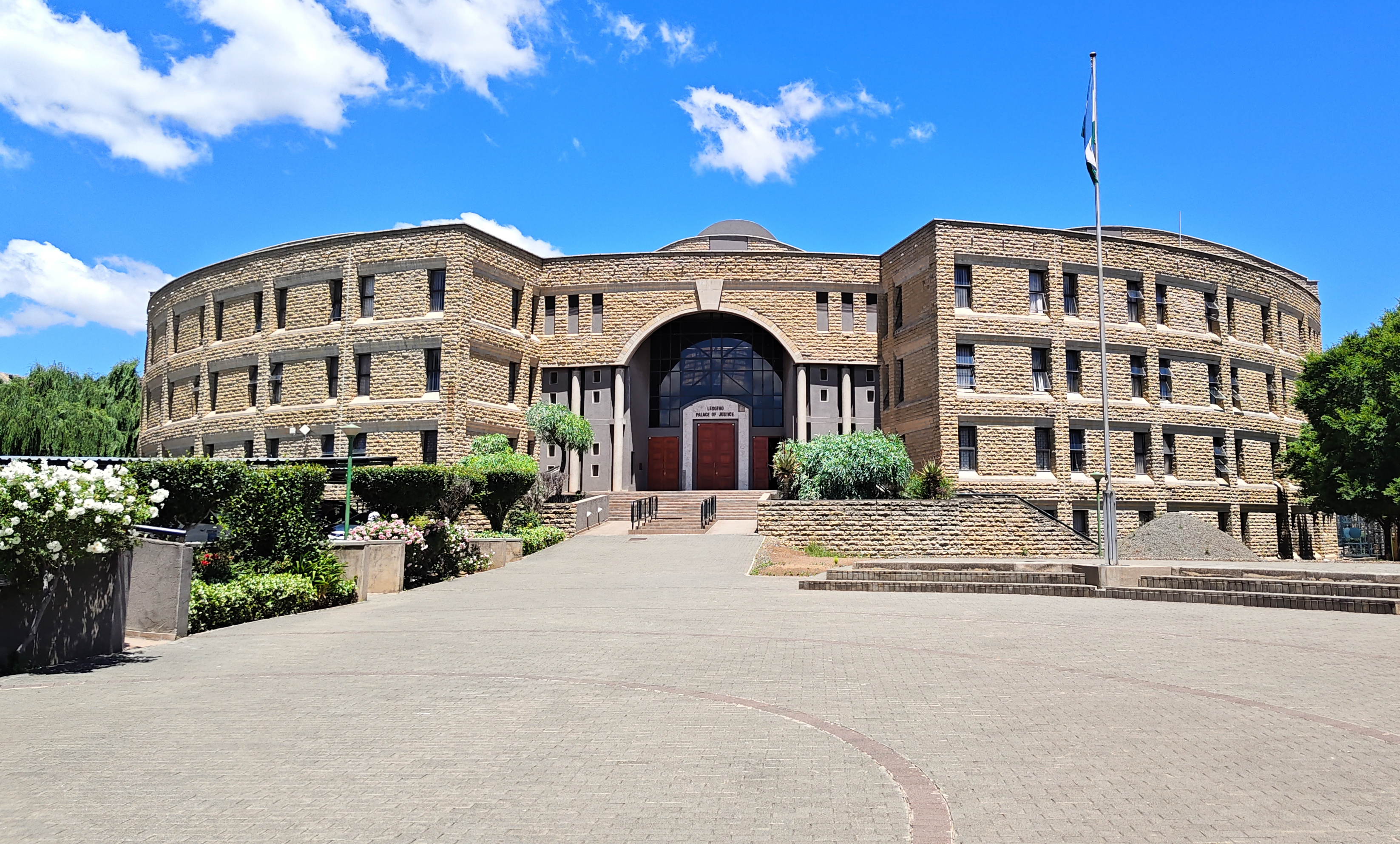
The high court, sitting as the Constitutional Court, gave organisations an opportunity to join a challenge brought by Kananelo Boloetse and Section Two over the validity of Lesotho’s Tenth Constitutional Amendment. Photo: Sechaba Mokhethi
- Journalist Kananelo Boloetse and the organisation, Section Two, are challenging the validity of Lesotho’s Tenth Constitutional Amendment, arguing that it required a referendum.
- The amendment introduced affirmative action provisions for marginalised groups and established a framework for public-interest litigation.
- National Assembly Speaker Tlohang Sekhamane argues the changes were reformative rather than transformative and that Parliament followed the correct procedure without needing a referendum.
- Boloetse, who was abducted and threatened in Maseru in September, has fled the country. He says fears for his safety prevent him from participating in person.
Journalist and human rights advocate Kananelo Boloetse is challenging how the Lesotho Parliament enacted changes to the Constitution without first submitting them to a referendum.
This week, the high court sitting as the Constitutional Court gave organisations with an interest in the constitutional challenge an opportunity to join proceedings.
The case was brought by Boloetse and the Advocates for the Supremacy of the Constitution, also known as Section Two, in September 2025. The applicants argue that Parliament bypassed a constitutional requirement for citizens to approve certain changes to the Constitution through a referendum.
Boloetse is a journalist and co-founder and chairperson of Section Two, an organisation that campaigns for constitutional supremacy, constitutional democracy and the protection of human rights.
He argued that constitutional changes made last year affected Chapter II of the Constitution, which protects fundamental human rights and freedoms, and therefore required approval through a referendum before the Bill was sent to the King for assent.
Four days after the amendment became law, Prime Minister Samuel Matekane presented it at the 45th Southern African Development Community (SADC) Summit in Madagascar as one of Lesotho’s milestones in implementing constitutional reforms recommended by SADC, a process that had dragged on since 2015.
A constitutional safeguard
In his affidavit, Boloetse said the referendum provision was intended to protect people’s sovereignty over Chapter II and ensure their freedoms and human dignity could not be changed without their approval.
The amendment introduced section 20A, providing for affirmative action in favour of marginalised groups, and section 22A, which establishes provisions for public-interest litigation.
Boloetse argues that these were substantive changes to the Bill of Rights.
“The Constitution guaranteed my participation in this critical process through a referendum, and that right has been denied,” he says.
In his responding affidavit, Speaker of the National Assembly Tlohang Sekhamane denied that the amendment “triggered a need for a referendum”.
“The Tenth Amendment was passed in line with the procedural requirements of section 85 and is valid. There was no need to send any part of it for a referendum.”
He said provisions of sections 20A and 22A are not transformative to the Constitution.
Ignored warnings
The dispute dates back to May 2024, when the Minister of Law, Justice and Parliamentary Affairs tabled the Tenth and 11th Constitutional Amendment Bills in the National Assembly.
According to Boloetse’s affidavit, Section Two and the Transformation Resource Centre made submissions to Parliament’s portfolio committee on Law and Public Safety Cluster in June 2024, raising concerns that Parliament was using its amendment powers to fundamentally reconstruct the Constitution under the guise of making amendments.
The National Assembly proceeded with the Bills, which were referred to the Senate in October 2024. The Senate approved the Tenth Amendment Bill around June 2025, after which it was returned to the National Assembly for consideration of further amendments. The National Assembly passed the Bill around August 2025. It later received royal assent and became law.
Boloetse said he only learned on 17 August 2025 that the Bill had already been enacted. He obtained and reviewed an electronic copy the following day.
The man behind the challenge
On 5 September 2026, he was abducted from his home in Katlehong, Maseru, by unidentified men who questioned him about his journalism and human rights work. He said they assaulted him and threatened to kill him.
He fled Lesotho after reporting the matter to the police.
Chief of Police Borotho Matsoso later said the police could not make progress in their investigations if Boloetse did not physically come to help with the investigation.
To which Boloetse said, “I went into hiding because my abductors had made it very clear that if they heard the news of my abduction on the radio or saw it on social media, they would return to kill me.
“Two months later, those responsible have yet to be identified. Their continued anonymity gives them an advantage, and I have reasonable grounds to fear that they may still be looking for me,” he says.
“It is for this reason that I could not be in court.”
The court concluded this week’s hearing by ordering other organisations with a direct interest in the constitutional challenge to join the proceedings. It postponed the case to 2 and 3 March 2027.
“How am I expected to engage meaningfully with these groups, consider their submissions, and discharge my responsibilities … when I still cannot live safely in my own country?” he told GroundUp.
“I cannot simply return home … I am therefore left confronting an extraordinary situation in which proceedings I helped institute in defence of the constitutional rights of Basotho continue, while my own ability to exercise the most basic freedoms in Lesotho remains severely constrained.
“I am not asking for special treatment. I am asking for a situation in which I can participate in the administration of justice without having to disregard legitimate concerns about my own safety,” he said.
Support independent journalism
Donate using Payfast

Don't miss out on the latest news
We respect your privacy, and promise we won't spam you.
Previous: Kou-Kamma heads for another coalition
© 2026 GroundUp. This article is published under the GroundUp Republication Licence Version 1.0. Email [email protected] to request permission to republish.