
I was shot in the head in 1986. I’m still paying the price
Why gun violence is a public health crisis
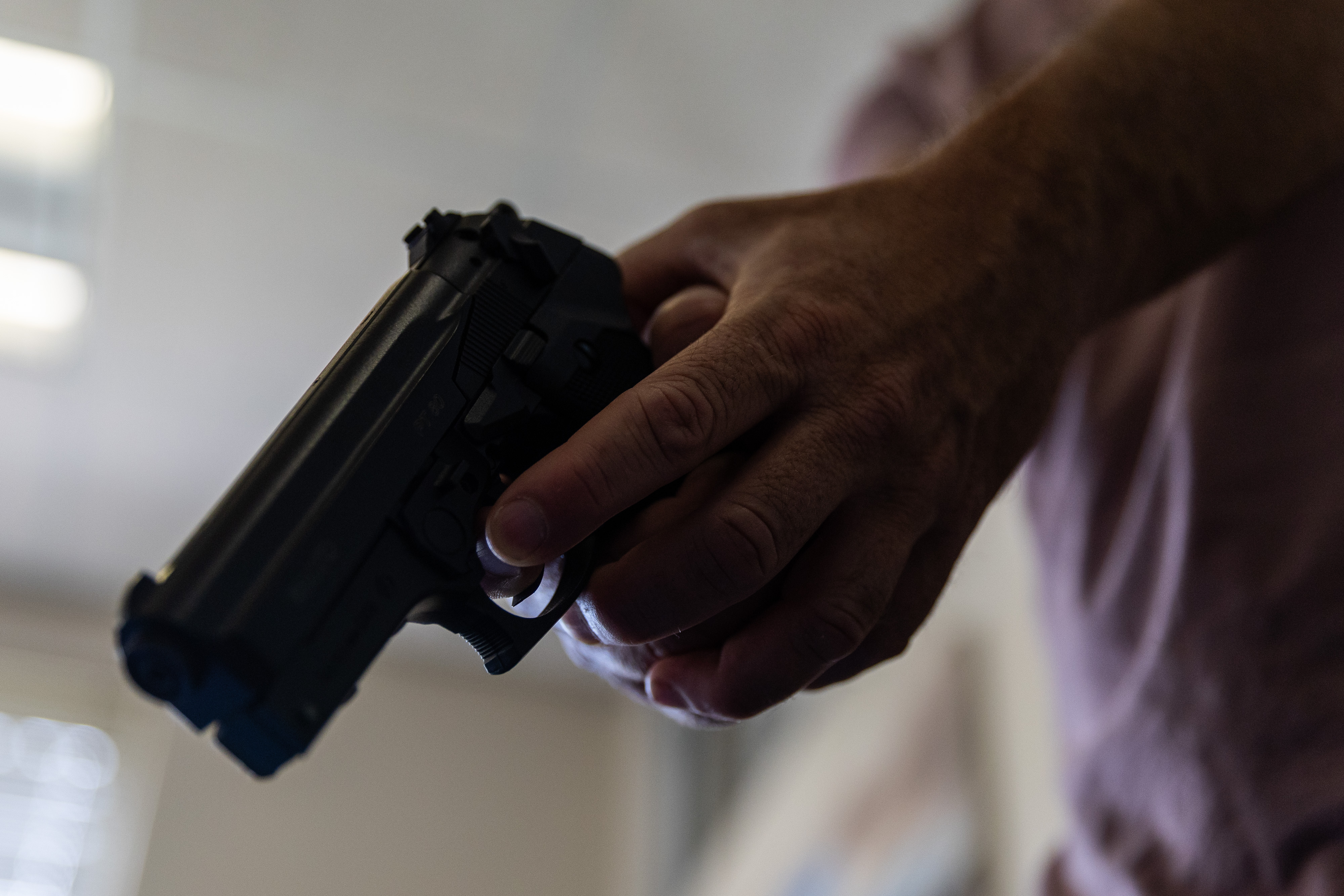
Gun violence must be treated as a public health emergency, says the author. Photo: Ashraf Hendricks
In 1986, I was shot in the head. The bullet paralysed the left side of my body—my arm, my hand, my leg. In an instant, simple tasks like tying my shoelaces became impossible. I became dependent on others for things most people never think twice about.
But the impact of that single gunshot wound extends far beyond my body.
In the months after the shooting, I relied entirely on a wheelchair and a three-legged walking stick. Physiotherapy became my lifeline, helping me learn to walk again. The healthcare system absorbed the costs of emergency treatment, hospital care, rehabilitation, ongoing therapy, and adaptive equipment. Nearly four decades later, I live with hemiplegia and still require medical support.
Yet these direct medical costs tell only part of the story.
I have never been able to properly hold my children, not when they were born, or hurt, or when I was filled with pride for who they are and what they have done. Their lives have been shaped by my disability. Wherever they go, they must explain what happened to their father. As they raise my grandchildren, I find myself breaking down as I try to explain what happened 40 years ago. The healing process never ends.
My mother died in 1998 from what I can only describe as a broken heart, blaming herself for bringing me into a world where I would be shot and nearly killed. I recently discovered that my own father was shot by police during the Sharpeville massacre. He was never acknowledged as a victim, and my mother died carrying that painful knowledge. I grew up not knowing my father because he was shot. And while I am unbelievably fortunate to have survived being shot, to have lived a full life and to have three wonderful children, my children, too, grew up not knowing the father I could have been—someone who could carry them when they were tired, someone who could play ball or teach them to ride a bicycle.
This is what gun violence does. It doesn’t just injure bodies—it traumatises families across generations. It creates cycles of pain, anger and grief that never fully resolve.
In South Africa, guns are the leading weapon used to murder and injure. Approximately 30 people are killed by firearms every day, while research estimates that for every person killed, between four and six people survive, often with permanent disabilities, like mine. The healthcare costs are staggering—emergency treatment, trauma surgery, rehabilitation, and long-term care for survivors like me.
Yet despite this enormous burden, gun violence is treated as a criminal justice issue, not the preventable public health crisis it is.
As a longtime gender rights activist, I am particularly troubled by the absence of firearms from the RESPECT framework developed by the World Health Organisation (WHO). RESPECT has been widely promoted as a reference point for national strategies about violence against women, including in South Africa. Yet despite strong evidence linking firearm access to intimate partner homicide and femicide, the framework does not mention guns at all.
Similarly, the WHO has no framework focused on men’s health, let alone one addressing firearms, despite their being a leading—and preventable—cause of men’s deaths.
This matters because WHO frameworks shape what countries understand to be central, evidence-based and actionable. It helps explain why South Africa’s 2020–2030 National Strategic Plan on Gender-based Violence and Femicide contains not a single mention of firearms—despite guns being the leading weapon used to kill women in this country, with women at particular risk of being killed with a licensed firearm in intimate partner femicide-suicide. Similarly, South Africa’s National Men’s Health Strategy doesn’t mention gun violence once, even though more men are shot and killed than die on our roads.
This is why the Global Coalition for WHO Action on Gun Violence has been formed. The Coalition—over 100 organisations from 40 countries, including South Africa—is calling on the World Health Organisation to treat firearm violence as the public health emergency it is.
The WHO has the mandate, reach and authority to change how the world responds to gun violence. With a presence in 150 countries, the power to set global health norms—as it has done with tobacco control—and a proven track record on violence prevention, it is uniquely positioned to lead.
The Coalition is calling on the WHO to reaffirm its leadership on firearm violence prevention; strengthen health-sector responses, including trauma care and rehabilitation; integrate firearm violence into frameworks like RESPECT; address gender-based and youth firearm violence; and champion a World Health Assembly resolution that mandates action and resources.
As someone who has lived with the consequences of gun violence for nearly 40 years, I know what this leadership could mean. Every gunshot survivor needs immediate trauma care—but we also need rehabilitation, mental health support and ongoing medical care. Our families need help processing trauma that spans generations. Our communities need prevention programmes that address root causes before anyone pulls a trigger.
The intergenerational pain and disability that gun violence creates is not inevitable. It is preventable. But only if we treat it as the public health crisis it is—not just in South Africa, but globally. The WHO has the power to save lives and spare countless families the suffering mine has endured. It is time to act.
Support independent journalism
Donate using Payfast

Don't miss out on the latest news
We respect your privacy, and promise we won't spam you.
Next: Fix our park, frustrated residents tell City of Cape Town
Previous: Philippi East massacre: second suspect appears in court
© 2026 GroundUp. This article is licensed under a Creative Commons Attribution-NoDerivatives 4.0 International License.
You may republish this article, so long as you credit the authors and GroundUp, and do not change the text. Please include a link back to the original article.
We put an invisible pixel in the article so that we can count traffic to republishers. All analytics tools are solely on our servers. We do not give our logs to any third party. Logs are deleted after two weeks. We do not use any IP address identifying information except to count regional traffic. We are solely interested in counting hits, not tracking users. If you republish, please do not delete the invisible pixel.