20 August 2026
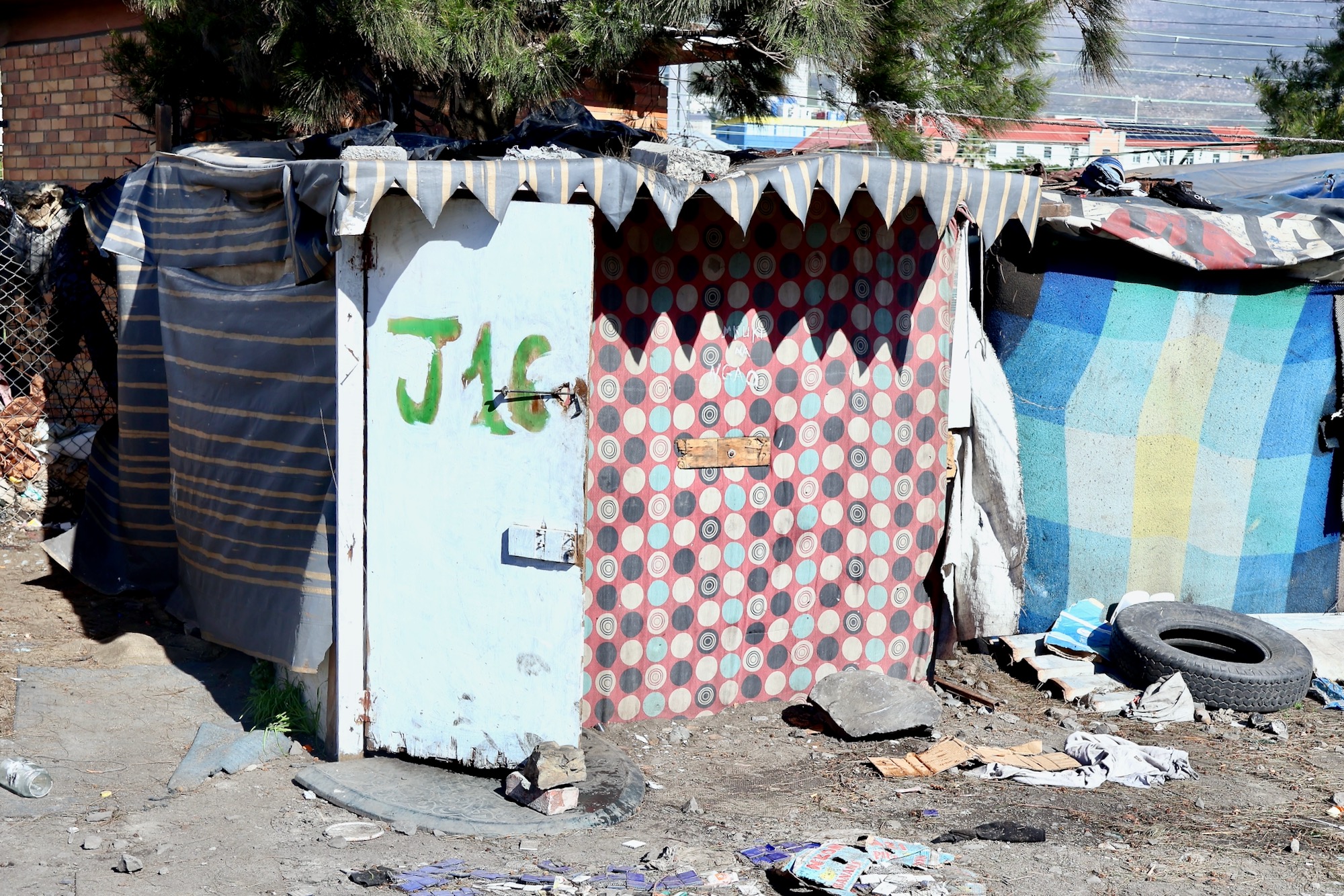
Informal homes erected on Transnet land in Woodstock, Cape Town. Some say they have been living on the site for more than a decade. Photos: Matthew Hirsch
More than 160 people living on ten Transnet-owned sites in Woodstock and Salt River are appealing an eviction order handed down in the Western Cape High Court by Judge Derek Wille last month.
The court had given the occupiers until 30 September to leave.
In its court papers, Transnet argued, “It is not in their [occupiers’] interests to reside at the properties which are not suitable for human habitation and pose health and safety risks”.
Transnet said it is in financial distress and requires the properties to implement its financial recovery plan.
The City argued that the occupations created crime hot spots. According to its court paper, over a period of eight months, there were more than 100 attacks on cyclists were recorded and more than 20-armed robberies took place near the sites.
Transnet in its heads of argument recounted the City’s position that people were “occupying the properties for purposes of engaging in criminal activities and that the unlawful occupation of the properties cannot reasonably be said to have been driven by the need for residential shelter close to economic opportunities”.
In a statement, housing activists Ndifuna Ukwazi said it was a “stereotypical, speculative and prejudicial stance” to link the occupiers with crime in the area.
In its court papers it said, “Neither the City nor the mayor are able to point to a single shred of evidence linking any of the NU respondents or the occupiers to these alleged criminal activities. This in circumstances where a substantial number of the occupiers, whom the City and the mayor claim to be involved in criminal activities, in fact co-operated with Transnet, the DHA, the City and NU in providing their names and personal circumstances in the various surveys conducted to date.”
Ndifuna Ukwazi filed a notice to appeal last week. It said the court had erred by failing to recognise that the City had provided no evidence of a direct link.
Judge Wille said an inspection “revealed a series of connected tunnels running under the properties. It is alleged that these tunnels are used to store dependence-producing drugs and stolen goods”.
“Self-evidently, the most plausible inference to be drawn, having regard to the lack of proximity to employment opportunities and numerous criminal incidents near the properties, is that the occupation of the properties serves as a base for criminal activity, given that no one other than the unlawful occupiers resides there. Thus, the most reasonable inference is that these incidents are perpetrated by the unlawful occupiers.”
He also said that “many of the occupiers have conceded under oath that they are not in this country legally”.
He ruled that “considering the peculiar circumstances of this case” – earlier referencing an unlawful occupation, criminality and many undocumented foreign nationals – neither the City nor Transnet were obliged to provide emergency accommodation.
Ndifuna Ukwazi in its appeal application stated, “The court erred in finding that it was just and equitable to grant an organ of state an order evicting hundreds of persons from their homes without provision for any form of emergency shelter at all for anyone, including children, disabled persons and the elderly, who would most likely be rendered literally homeless upon the execution of such an order.”
“The Court failed to have due regard to the practical, social and humanitarian consequences of executing a mass eviction and demolition order against hundreds of indigent occupiers who would have nowhere to go.”
In a statement, JP Smith, mayco member for safety and security, described the appeal as a “blow for public safety”.
“The City was hopeful that the judgment and the vacating of the affected areas would bring some respite to the members of the public using the N1, the cycling fraternity and the City in this regard.
“Protracted appeal litigation will likely cause delays and make it very difficult to effectively stop attacks on road users and cyclists that continue to emanate from this site, like the ones reported in this past week, and those we have seen escalating over the past few years as the occupation has grown and the criminals have become more emboldened,” he said.
The City intends to oppose the leave to appeal application.

Area J in Woodstock, when GroundUp visited in July.
The ten parcels are listed as A to J in court papers. GroundUp visited Area J in Woodstock in July, which had only been observed at a distance during a joint inspection with all parties to the legal dispute, according to the judgment.
There were several informal homes next to the railway tracks. Clothes were hanging on a washing line, and there was an outdoor communal cooking area. There was also a tuck shop selling groceries.
Residents we spoke to said they were not responsible for crime in the area.
The accusation “hurts a lot”, said Claudia Bowers. “Come and see how we live.”
“I call this home. I lost both of my parents at a young age. I’ve been homeless. We have built this little family. We are standing united.”
“The love that I didn’t get at home, I got it here,” Bowers told GroundUp.
She said she would accept relocation but only if the occupiers could stay together, which she repeatedly described as a family.
She said she had stayed at shelters before and did not want to return to that.
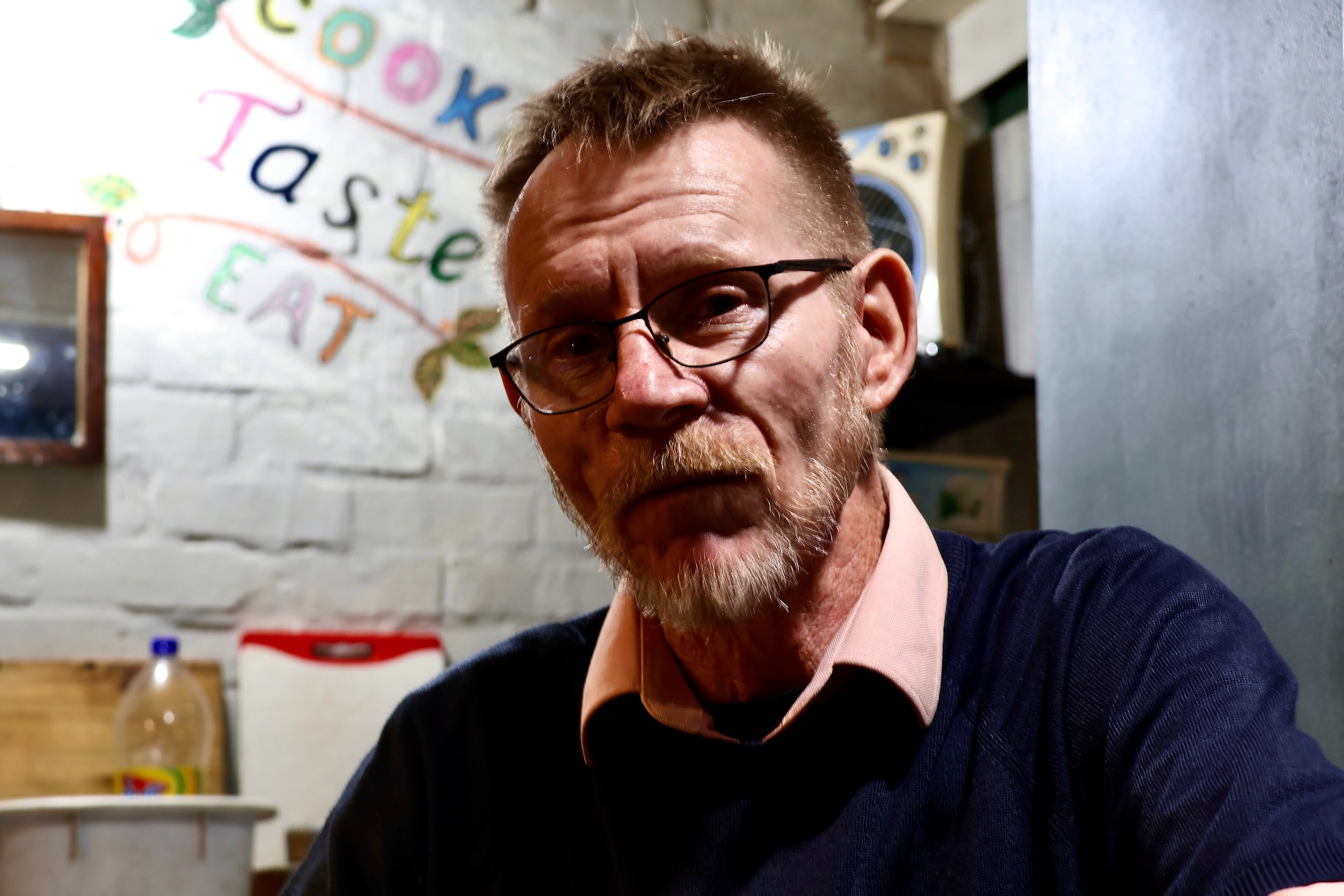
Gert Claasen, who stays in Area J, says he has trouble with his feet which makes it difficult for him to work.
“We’ve been discriminated against. How can they just assume everyone [here] is a criminal? That is inhumane,” said Gert Claasen.
“We respect each other. You will see someone who doesn’t have food for the day, and we will help each other,” he said.
Claasen said he has been living at the site since 2018. He said more people moved to the site during the Covid pandemic.
Claasen earned a living from woodwork and steelwork in Kuils River before moving to the site. But he had problems with his vehicle and his tools were stolen.
“The biggest problem is that there is no housing,” said Natalie Manuel. She said she has been on the housing list for nine years and has been staying at the site for seven years.
Manuel relies on a disability grant for income.
Ally Al-Habsy, originally from Tanzania, said he is legally in the country and has been living here for nearly 30 years, but he is struggling to get his permit from Home Affairs.
He survives by selling, among other things, homemade umbrellas.
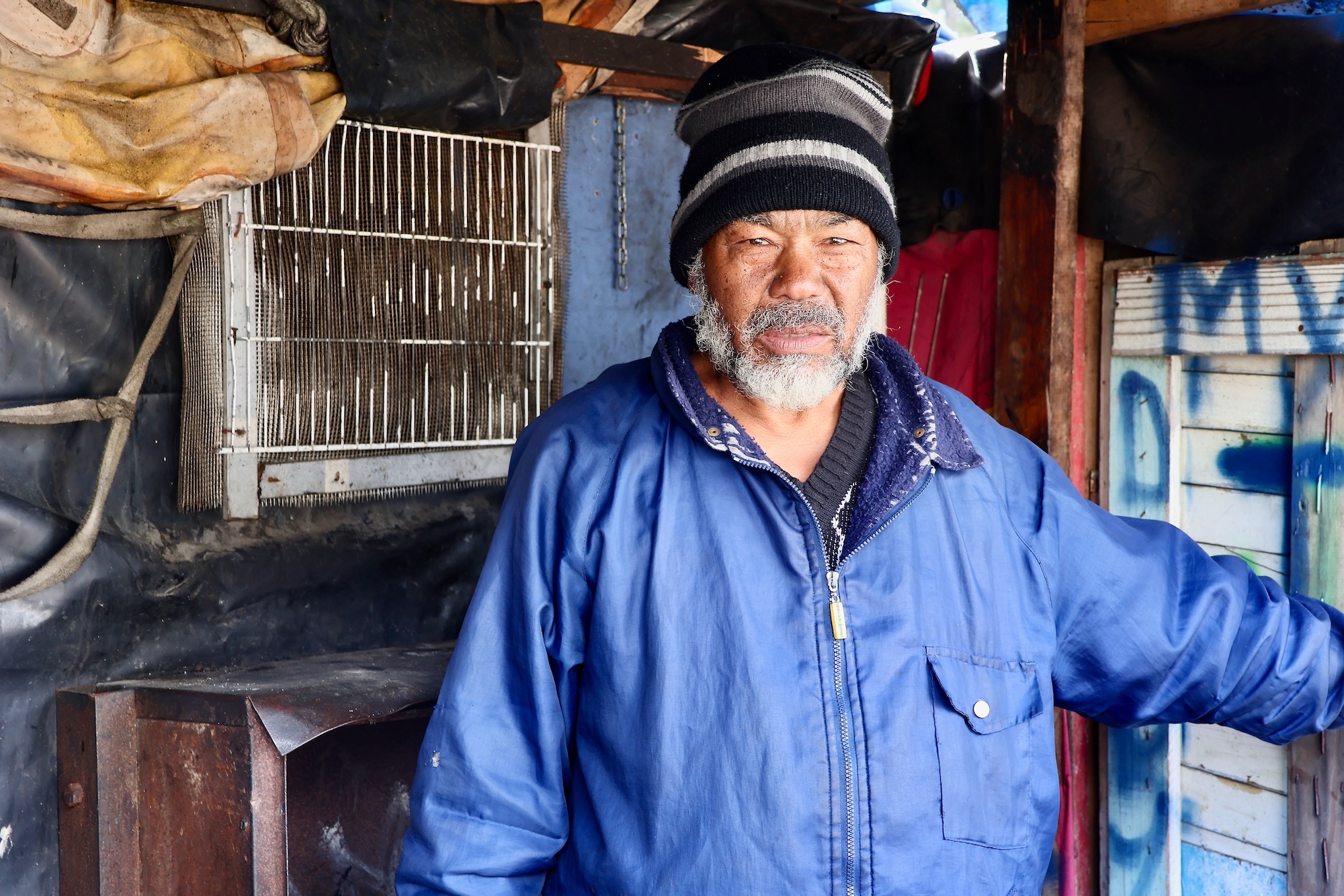
Ally Al-Habsy said he is unhappy with the High Court eviction order. “We are old people. We have our kids,” he told GroundUp.
