24 August 2026
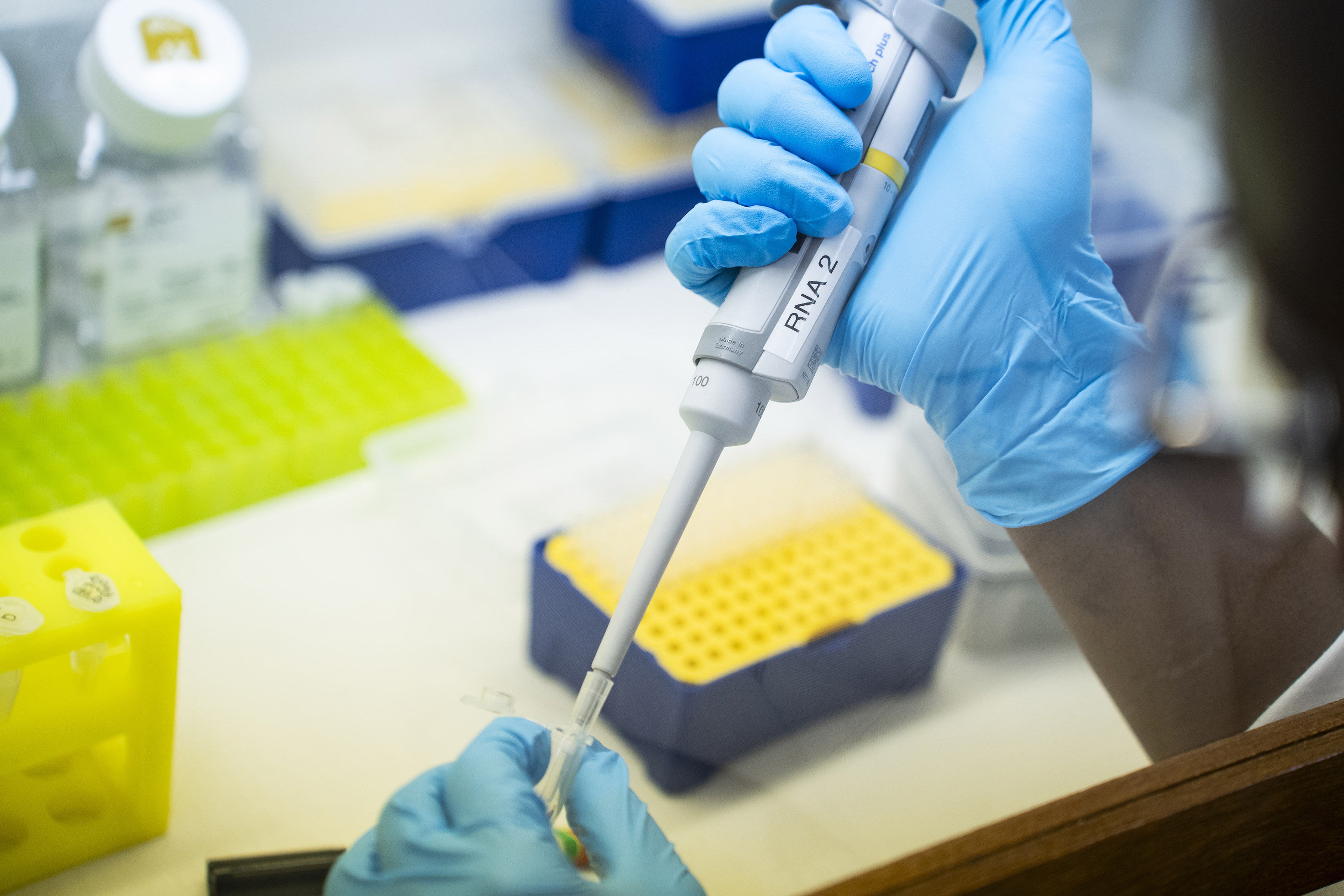
The United States National Institutes of Health has lifted its ban nearly 18 months after an order to stop work with South Africa created a crisis for HIV and TB research. Archive photo: Ihsaan Haffejee
The United States National Institutes of Health (NIH) has lifted its ban on South Africa, nearly 18 months after its February order to stop work with South Africa created a crisis for HIV and TB research.
In January 2025, the United States began halting funding of South African projects, including NIH grants and US Agency for International Development (USAID) aid.
The scientific journal, Science, reported that an internal memo dated 17 August, signed by NIH director Jay Bhattacharya, had lifted the ban. We have since obtained the memo, which is marked “Not for distribution outside government”. It states funding for “meritorious research projects” in South Africa may proceed.
The memo states that NIH grants are “distinct from the objectives traditionally associated with foreign aid or assistance”.
A brief from May 2025 by Médecins Sans Frontières (Doctors Without Borders), US advocacy organisation Treatment Action Group, and the South African Medical Research Council (SAMRC) found that critical research initiatives and decades of investments in research infrastructure were affected by the NIH stop-work order.
The brief noted that research in South Africa, mostly led by South African scientists with NIH funding, has in the past two decades “shaped global health policies that have revolutionised TB and HIV prevention, diagnosis, treatment and care, benefiting both the local population and communities worldwide, including people who live in the United States”.
Ntobeko Ntusi, president and CEO of the South African Medical Research Council, confirmed that the decision comes after 12 months of negotiating with the NIH “to reverse their position on South Africa”.
“Part of the mandate of the NIH to engage in international research collaborations should be viewed in light of the fact that South Africa is one of only few countries that co-funded biomedical research with the NIH, rather than merely being a recipient,” said Ntusi.
“I welcome this apt decision of the NIH because no country can ever solve the challenges of global health alone … We need scientific collaboration to drive scientific progress,” he said.
Linda-Gail Bekker, director of the Desmond Tutu HIV Centre, said the centre had to retrench people when the funding stopped, since it was largely NIH funded. It had a partnership with NIH for decades.
Bekker said there has been a long hiatus from receiving research protocols from their networks in the US, such as the Advancing Clinical Therapeutics Globally (ACTG), HIV Vaccine Trials Network (HVTN), and others.
She said their networks are coming to the end of seven-year trials for their clinical trials units. “We haven’t had confirmation that South Africa will be included. But we feel more optimistic than we did before,” said Bekker.
She said they have received some funding from the SAMRC in reprieve of the lost NIH money but not anywhere close to the same volume.
In August 2025, the SAMRC announced that it had raised around R600-million in rescue funds to support research projects and groups affected by the cuts. This amount includes around R400-million from National Treasury, R100-million from the Gates Foundation, R100-million from the Wellcome Trust, and R14.4-million from the ELMA Foundation.
Bekker said the scientific advancements in South African HIV and TB research are also “good for the whole world” and the benefits have been “bidirectional”.
Landon Myer, at UCT’s School of Public Health, warned that South Africans should be “cautiously optimistic”. He did not think things were going back to the way they were before NIH funding halted.
Myer said it was difficult to know what the memo means in practice. “Time will tell,” he said.
Within the NIH there have been a large number of layoffs and resignations and budgets have been limited, possibly undermining their bureaucratic capacity, he said.
Myer confirmed Bekker’s view that many of the world’s major advances over the past two decades in understanding the science of HIV arose from South African scientists and from studies conducted here, the vast majority of them funded by NIH.
The memo also stated that the Fogarty International Center is “no longer supporting research training and career development applications from South Africa” due to SA being an upper-middle-income country. Myer said over decades the Fogarty training invested heavily in South African scientists which in turn led to so many “scientific accomplishments” here.
Co-published with Spotlight
