4 February 2026
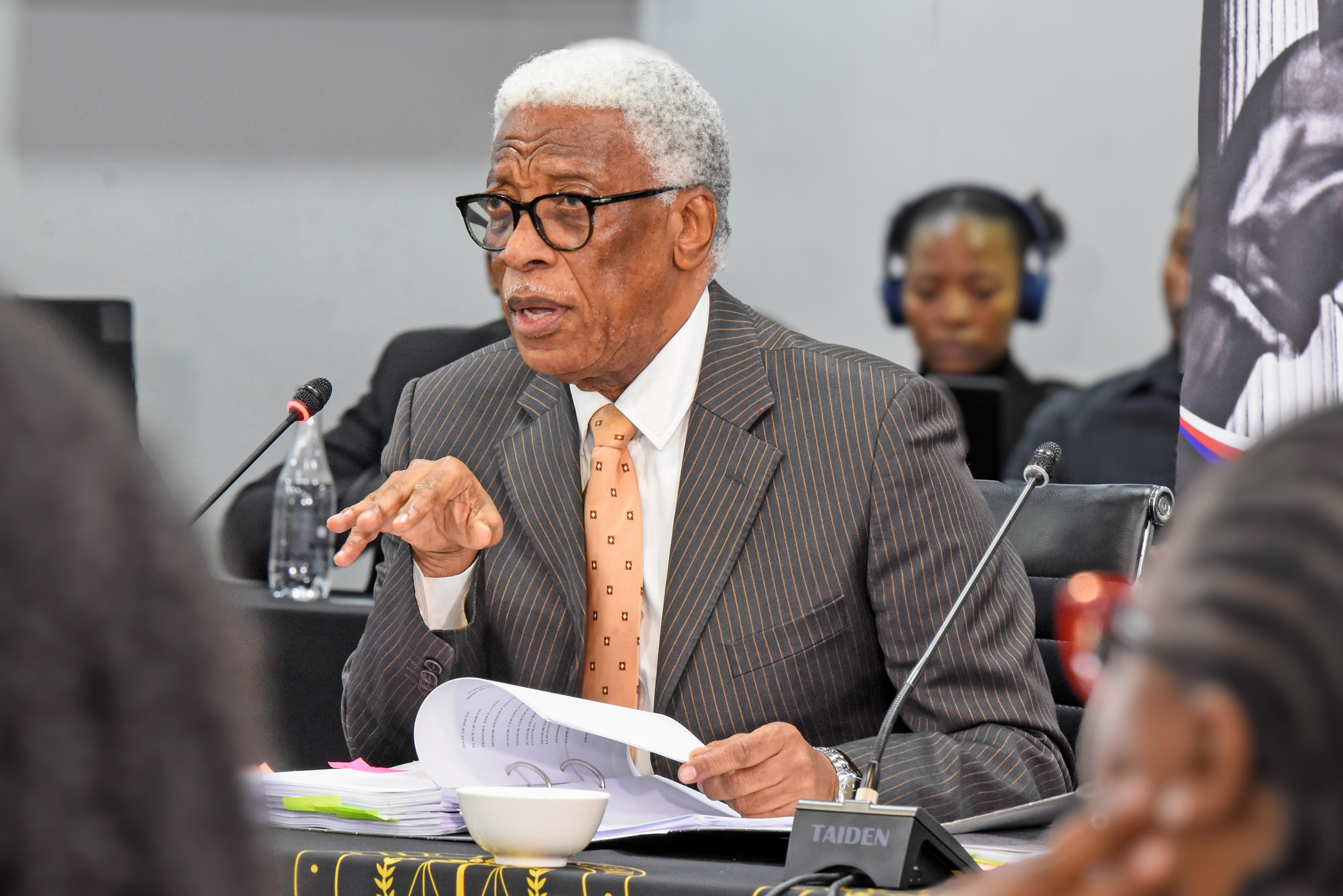
Eastern Cape Judge President Selby Mbenenge. Archive photo: Office of the Chief Justice.
The Judicial Conduct Tribunal’s findings in the case involving Eastern Cape Judge President Selby Mbenenge have prompted a flood of questions, confusion, and, in some quarters, deep unease. Much of this turns on a misunderstanding of what the tribunal actually decided, and what still lies ahead.
The JSC still needs to consider the tribunal ruling and take a final decision on the guilt or otherwise of the judge. Before they do so, the JSC will call for written submissions from both Judge Mbenenge and the complainant, Andiswa Mengo. In their submissions, they will argue for and/or against the tribunal ruling, including on the question of guilt and that of sanctions.
The Judicial Service Commission Act recognises three categories of judicial misconduct, arranged by seriousness:
Judge Mbenenge was found not guilty of Category C misconduct, meaning he is not liable for removal from office through impeachment. That is significant. But it is not the end of the story. The tribunal did find him guilty of Category B misconduct, which is still serious and attracts sanctions under section 17(8) of the Judicial Service Commission Act.
This distinction matters. A finding short of impeachment is not an acquittal in the ordinary sense, nor does it imply that the conduct was trivial or incorrect.
The Tribunal made strong credibility findings against Mengo, including that she was untruthful on key aspects of her complaint. These are not findings the Judicial Service Commission (JSC) can simply revisit or overturn. At most, the JSC may soften the language used, but the substance of the findings on her credibility will remain.
That has two consequences. Firstly, it makes it unlikely that the JSC will overturn the Tribunal’s finding of misconduct against Judge Mbenenge. Secondly, those credibility findings may influence the type and severity of sanctions ultimately imposed.
Neither she nor Judge Mbenenge have any opportunity to appeal at this stage.
The decision on sanctions rests entirely with the JSC. Section 17(8) of the JSC Act lists a range of options, including a fine/compensation, suspension, a written warning, or compulsory training.
Past practice offers some guidance. Judge Motata was fined R1-million, although that was overturned by the SCA, which said he should have been found guilty of gross misconduct and referred to impeachment. Chief Justice Mogoeng was ordered to apologise publicly. Other judges have had to undergo sensitisation or training programmes.
But the decisive consideration should not be consistency alone. The overriding question is what sanction or outcome will restore and strengthen public confidence in the judiciary. That requires the JSC to weigh the Tribunal’s factual findings, the submissions of both the complainant and the judge, and the broader constitutional context.
Judge Mbenenge has indicated that he intends to return to work immediately. That position is difficult to reconcile with the law and practice.
The Tribunal’s report is not the final decision. The disciplinary process is incomplete until the JSC has considered the report and made its own determination. This is in terms of section 19(2) read with section 20 of the JSC Act. Therefore, there’s still a long way before the judge is cleared to go to work.
Besides, in 2024, the JSC declined to suspend Judge Mbenenge precisely because he offered to take special leave until the disciplinary process is complete and he is cleared of all allegations. This was a highly unusual step, as most judges are suspended while a tribunal investigates. Mbenenge was the first judge facing a tribunal not to be suspended. At the time, Judges Matter raised a concern with the JSC’s strange break with past practice in favour of Mbenenge.
It would be extraordinary if, having relied on special leave to avoid suspension, the judge could now simply resume duties while the JSC process is still underway.
The concern that this decision may discourage victims from coming forward is real. However, it is difficult to predict its effect.
What is clear, however, is that since this complaint was lodged, Chief Justice Maya has introduced a new, victim-centred policy governing complaints of this nature. The policy provides complainants with greater support and multiple pathways for resolving sexual-harassment complaints. That institutional shift may help to lower barriers for future complainants, even in the wake of a difficult and contested case such as this one.
The reputational consequences of this matter weigh heavily on the JSC’s next steps. Public confidence in the judiciary is fragile and hard-won. Whatever decision the JSC arrives at, it must ultimately maintain and strengthen public confidence in the judiciary.
At the same time, fairness demands respect for legal processes and their outcomes, even where those outcomes are unpopular or contested.
If the JSC ultimately confirms the Tribunal’s findings, that decision, like any other lawful decision, must be respected, even while it is criticised.
There is, however, a deeper concern with the Tribunal’s reasoning. The decision does not sufficiently engage with Constitutional Court jurisprudence on equality, power and sexual harassment.
Our highest court has been unequivocal on this point:
“Sexual harassment occurs at the intersection of gender and power, producing a potent stench of subordination, disempowerment and inequality that so seeps through the fabric of our society that it stains its core. Eradicating the scourge of sexual harassment will be a Sisyphean task if its perpetrators are compensated lavishly for their misconduct.”
Yet the Tribunal suggests that we cannot distinguish between “rich and poor, powerful and wretched, senior and junior”, nor prohibit relationships across those lines. That framing echoes formal equality, the idea that treating everyone the same produces fairness.
Constitutional jurisprudence rejects that approach. Substantive equality requires decision-makers to recognise power imbalances and structural disadvantage, and to account for them. Ignoring differences in power does not produce equality; it entrenches inequality. The law demands outcomes that protect the weaker party, not neutrality that favours the powerful.
This unresolved tension, between formal neutrality and substantive equality, sits at the heart of the discomfort many feel about this decision.
How the JSC responds will determine not only the fate of one judge, but the credibility of the judiciary’s commitment to equality, dignity and accountability.