13 October 2026
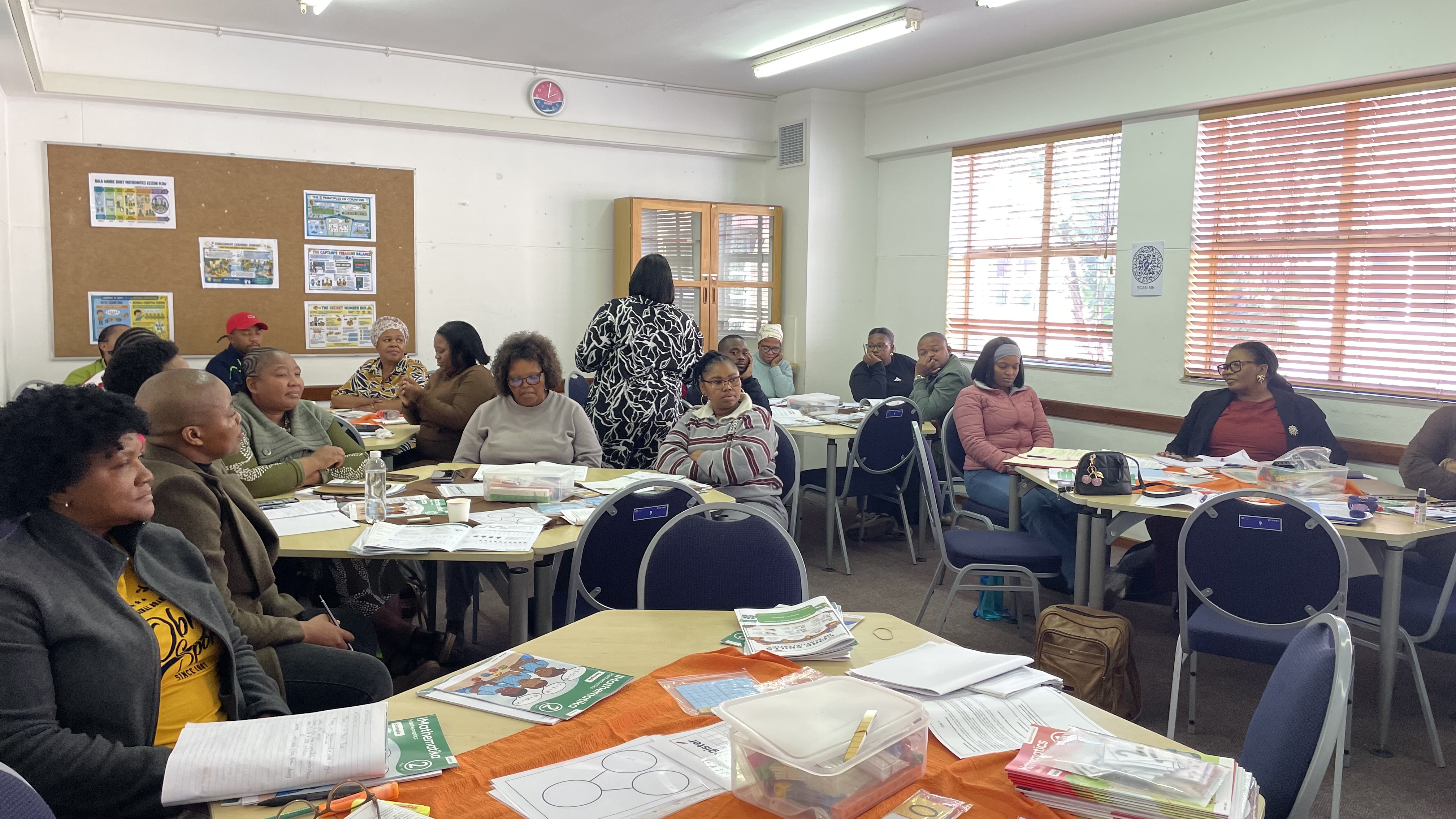
Thousands of teachers in the Western Cape have been trained to teach arithmetic in isiXhosa. Photo: Sindisiwe Tshona
Next year, thousands of grade 1 learners across the Western Cape will be taught arithmetic in isiXhosa.
Nearly 3,500 grade 1 and grade 2 teachers were trained in September and October to teach numeracy in children’s home languages. This is part of the Bala Wande programme, set up by Funda Wande in partnership with the Western Cape Education Department (WCED).
Of the 3,467 teachers trained, 3,242 teach grade 1 and 225 teach grade 2.
The grade 1 programme was piloted in schools in 2026, reaching about 8,000 learners, said WCED spokesperson Bronagh Hammond.
Next year, Bala Wande would be used in all grade 1 classes in the province, she said, reaching about 112,000 learners. Grade 2 teachers from 70 pilot schools had also been trained and would use their training in 2027, affecting about 9,000 learners, she said.
Bala Wande aims to build stronger mathematics foundations and a love for mathematics.
“We aim to … move beyond traditional approaches and offer various approaches to create a classroom where every child understands mathematics,” said Ntsiki Nyamza, senior curriculum planner of isiXhosa at WCED.
Funda Wande was established in 2017 by Nic Spaull with support from Allan Gray Orbis Foundation. Its literacy programme reaches more than 250,000 learners and more than 970 teachers.
The Bala Wande programme is structured as a “cascade” model. Grade 1 was piloted this year and will be rolled out next year; Grade 2 will be piloted next year and rolled out in 2028; Grade 3 will be piloted in 2028 and rolled out in 2029.
“This cascade model keeps the organisation from overwhelming the system, and it lets the learners progress through the grades together,” says Funda Wande’s Nobuhle Mhlongo. From next year an external evaluation will track learners until the end of 2029, to measure success. “Because it’s a longitudinal study, people will have to wait until 2030 for the results,” said Mhlongo.
“Teachers need to leave this training confident that they can teach the material, especially since it’s new to them. We are hoping for … teachers to be excited about what’s coming,” she said.
Athabile Tshongweni, a Grade 1 teacher at Sonwabo Primary School, says she is finding Funda Wande’s programme interesting and helpful. “The training has been practical, it’s not just about theory.”
“It’s all about the kids,” says Mhlongo. “At the end of the day, we want to see the learners learning.”