4 March 2026
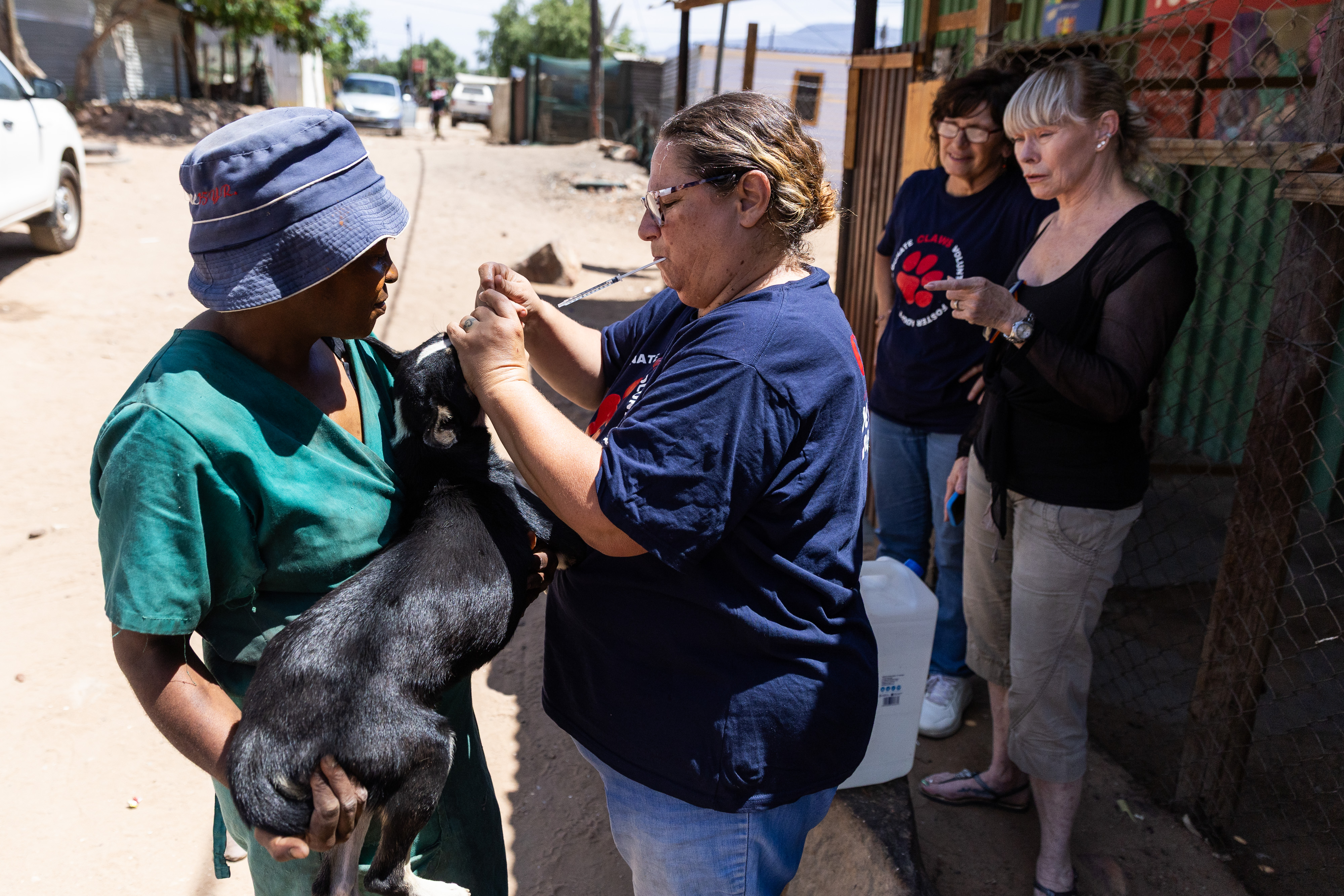
Retha Koopman, a volunteer with the Clanwilliam Animal Welfare Society, is assisted by a resident to administer tick treatment. Photos: Ashraf Hendricks
Volunteers in Clanwilliam say they are “overwhelmed” with cases of animal neglect and abuse, and without any support from the Cederberg municipality, they are reaching breaking point.
The Clanwilliam Animal Welfare Society (CLAWS) has been operating since 2009. The organisation relies entirely on public donations. It is the only animal welfare organisation operating within rural Cederberg, treating sick animals and doing sterilisations.
Fiona Craig, CLAWS chairperson, says they have seen an uptick of animal abuse in the town. “Some of it is literally indescribable,” says Craig.
Recently, a stray dog called Viskop was stoned to death by children at an informal settlement in Khayelitsha, Clanwilliam. “It almost killed me inside,” says Retha Koopman, a CLAWS volunteer, who regularly fed the dog.
CLAWS has also seen cases of animals that were stoned and starved, and some ill with tick-bite fever, mange and parvovirus. They were also recently informed of a litter of puppies that were dumped in a rubbish bin on the main road.
With limited funding and donations, the group regularly visits the community and informal settlements to attend to sick and injured animals, and offer vaccinations and treatment for ticks, mange and fleas. They have also caught, fed, and sterilised several feral cat colonies.
“About every person I know has been given a cat from Clanwilliam by me. I have five of them myself,” says Craig.
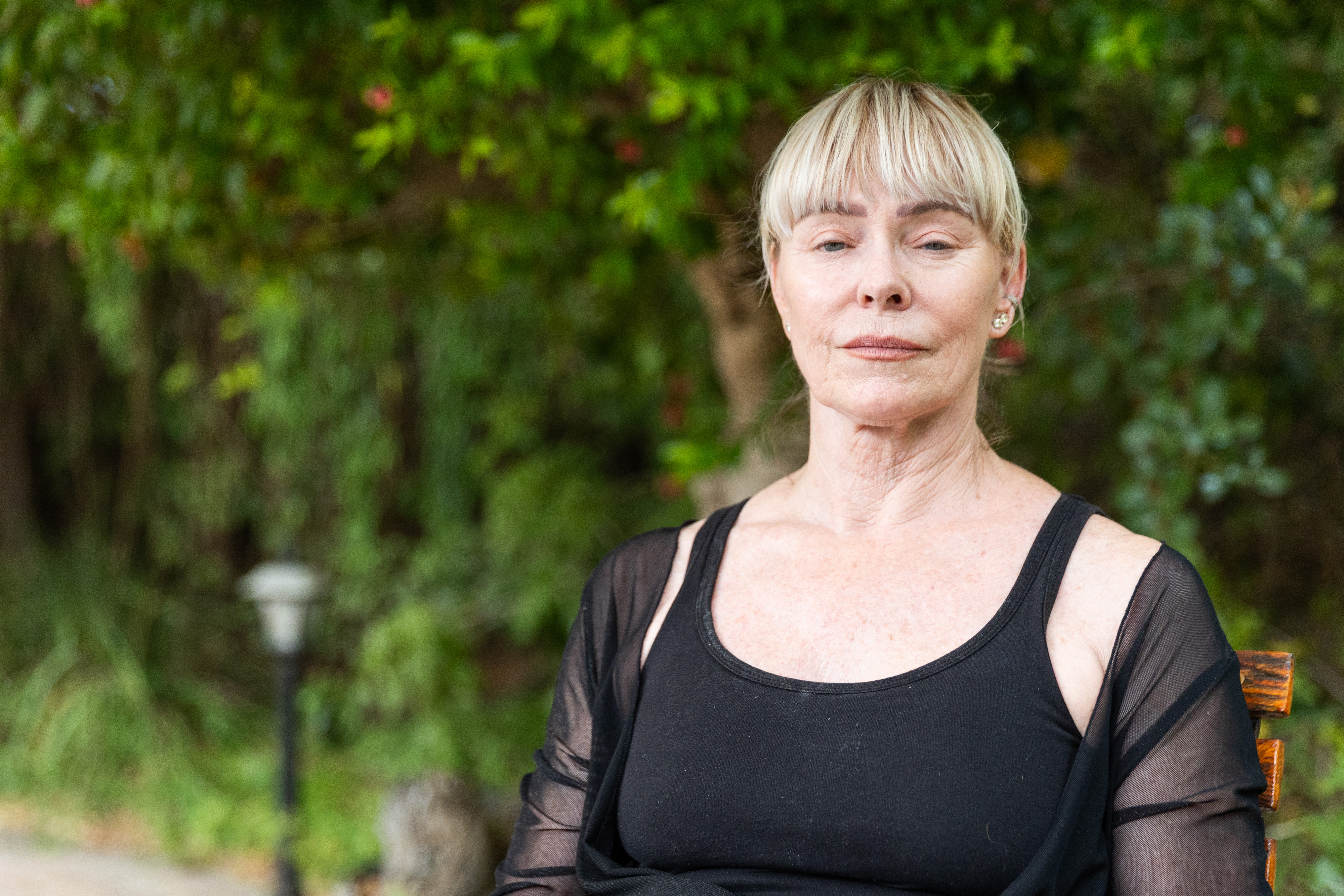
CLAWS chairperson Fiona Craig says they offer animal welfare services with no assistance from the municipality.
Attempts to get any kind of assistance from the municipality have often been stonewalled. CLAWS has to “beg and plead for help” despite animal welfare being a project which benefits the whole community, says Craig.
Janine Mitchell, deputy chair, says they have previously asked the municipality for space to run their sterilisation campaign. When the municipality eventually responded, CLAWS was given a dilapidated premises with broken doors and windows and without running water, or electricity.
“We’ve always just been trying to get as many animals sterilised as possible with as little help as possible,” she says.
Mitchell believes the municipality should play a more active role in animal welfare as a community and public health service.
During an outbreak in 2021 of distemper, a fatal disease affecting dogs, Mitchell says dozens of dogs died or had to be euthanised. CLAWS received no help collecting the animals nor a safe site for mass burial.
Mitchell herself was burying ten to 15 animals in a day. “It’s not nice when you don’t get help … You are actually doing a service that is for the whole town.”
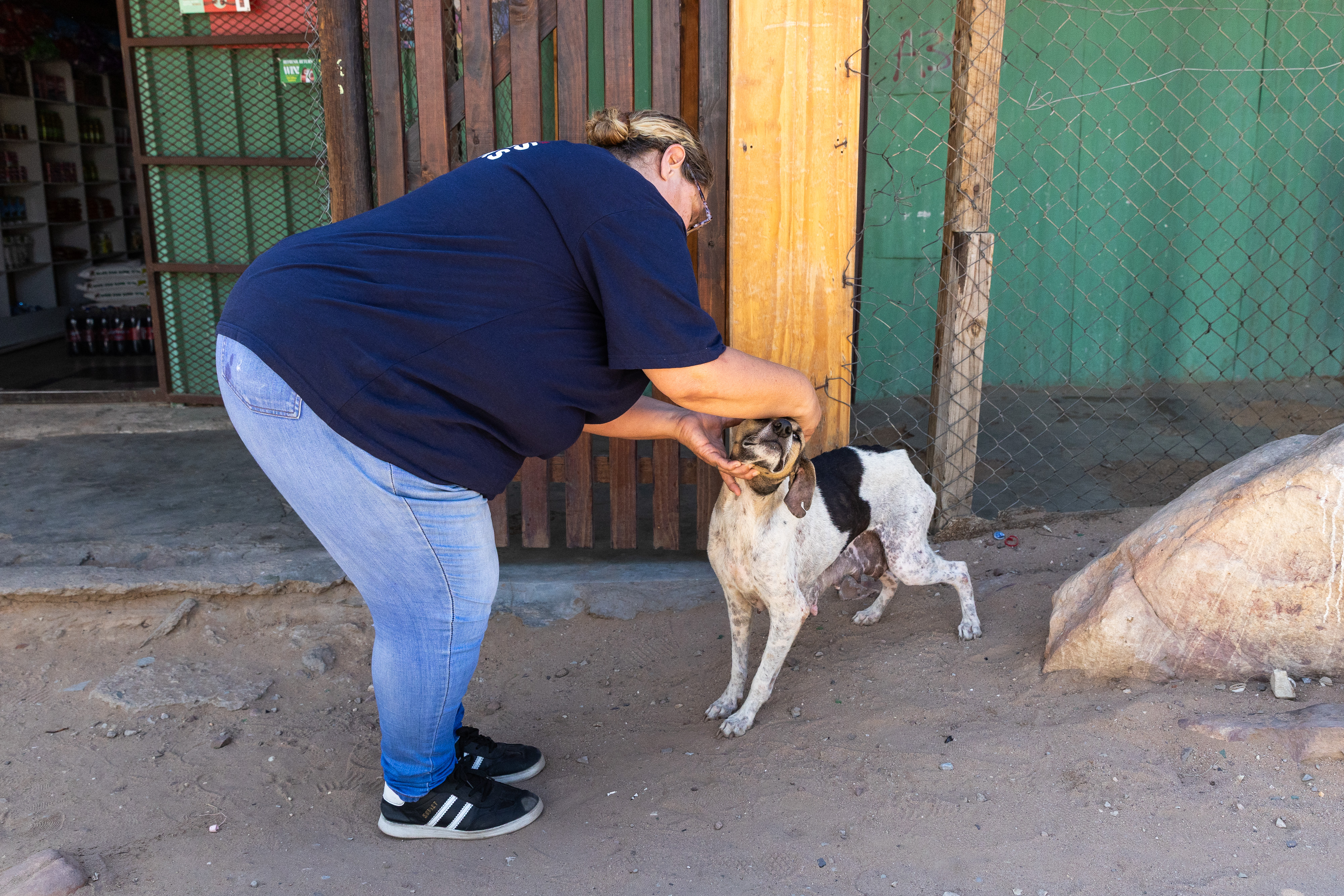
CLAWS volunteer Retha Koopman inspects a stray dog for ticks and illnesses at the Khayelitsha settlement in Clanwilliam.
For nearly a decade, there appears to be no evidence in the Cederberg municipality’s financial statements that funds were ever allocated to “animal care and diseases” or the “licensing and control of animals”. No budget was allocated for animal care or control for the medium-term ending in 2028.
Local municipalities are responsible for functions such as seizing animals, providing municipal pounds, facilities for the accommodation, care and burial of animals, and licensing of dogs.
A Cederberg municipality’s Animal Keeping and Impounding By-law is meant to regulate the number of animals at a property. It was also intended to enforce laws about animal fighting, and possession of animals suffering from abuse or disease.
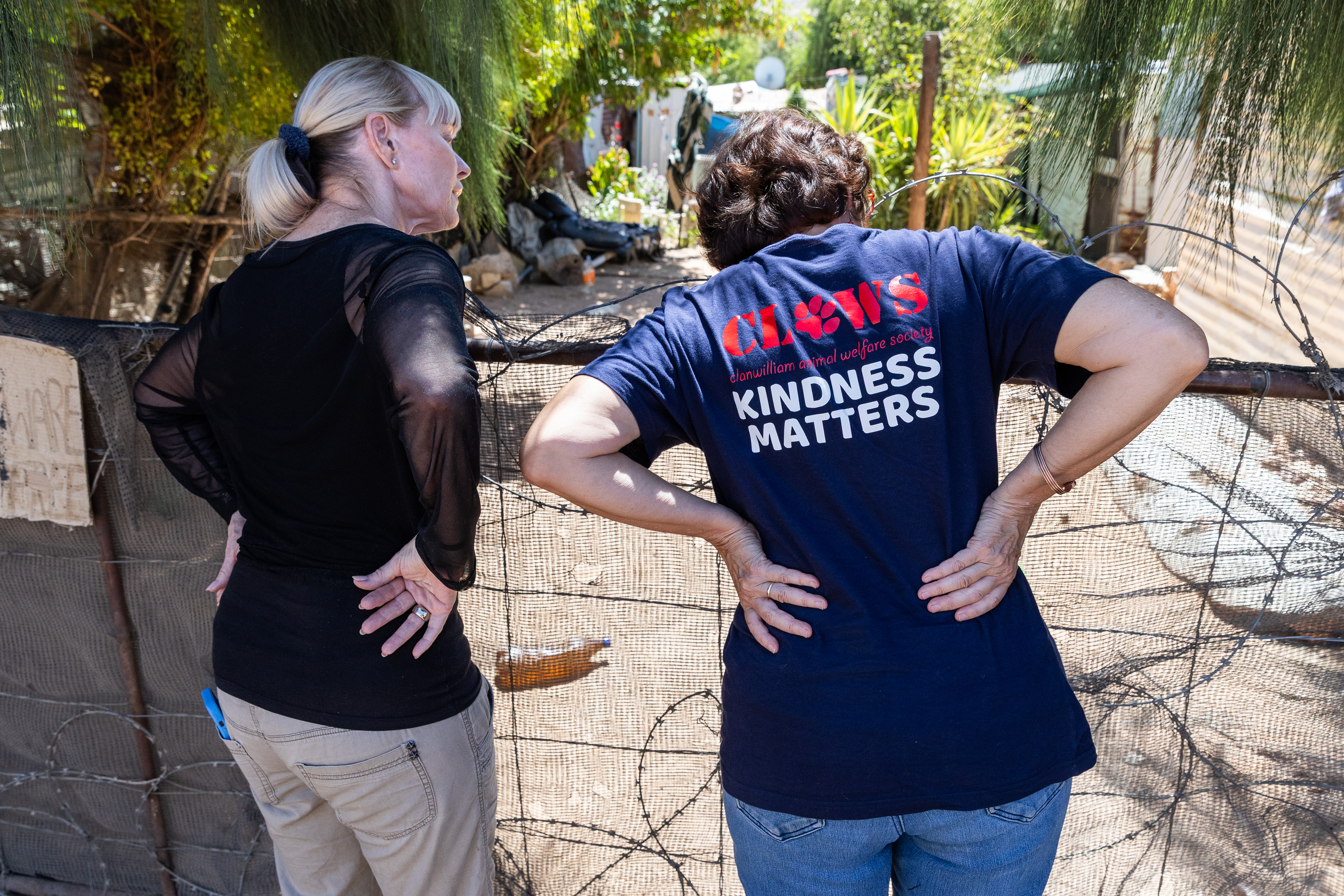
Craig and volunteer Susanna Mezza check on animals at a Clanwilliam informal settlement.
Cederberg is not the only municipality failing to provide animal welfare in rural communities.
A recent report by FOUR PAWS SA into local municipalities in the Western Cape found that many of them are failing to provide support for animal welfare services.
But on the West Coast, Saldanha Bay municipality appoints the Society for the Prevention of Cruelty to Animals (SPCA) to manage the municipal pound and provide veterinary care. The municipality awarded a tender of nearly R4-million to the SPCA for the period from 2021 to 2024, according to an annual report. This contract has been renewed for three years.
The municipality also updated its bylaws, stipulating that all dogs and cats six months and older must be sterilised, unless a municipal permit is obtained.
The Swartland municipality also contributes to the local SPCA annually. It contributed an average of about R330,000 to the SPCA in 2023 and 2024, according to its annual financial statements. It is also looking into opening a municipal pound by June 2026.
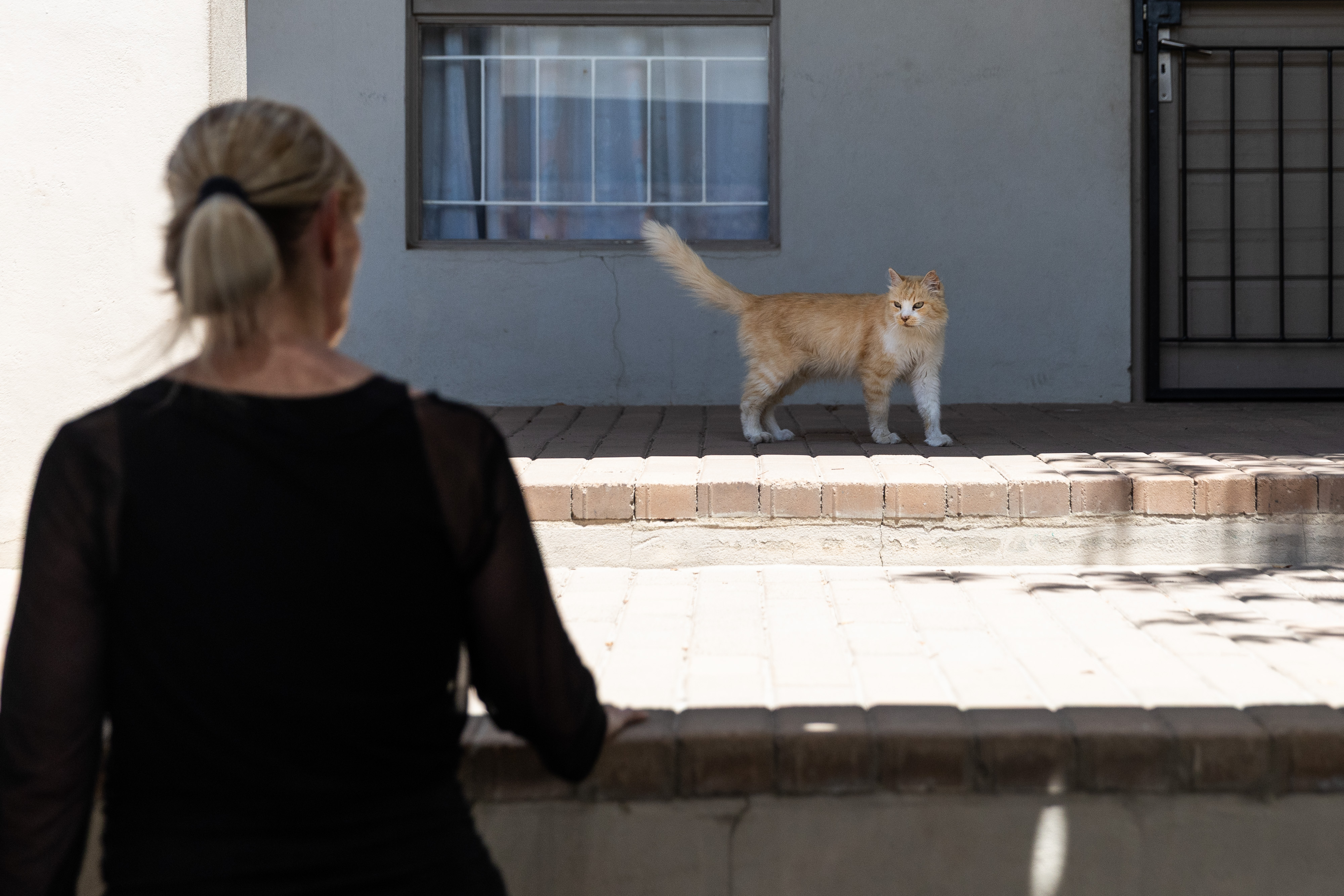
Craig runs several projects looking after feral cats in Clanwilliam.
Fiona Miles, director at FOUR PAWS SA, said there is “a widespread misconception within municipalities that they do not carry an obligation to safeguard animal welfare”.
“Many local governments fail to recognise their legal obligation to humanely manage animal populations, enact and enforce bylaws, and prevent public health risks linked to stray populations,” said Miles.
Miles said organisations are carrying these duties without adequate support, often experiencing insufficient funding, high demand due to unsterilised animal populations, overwhelming caseloads, and burnout amongst volunteers.
The Cederberg municipality did not respond to repeated follow-ups to requests for comment.