22 July 2026
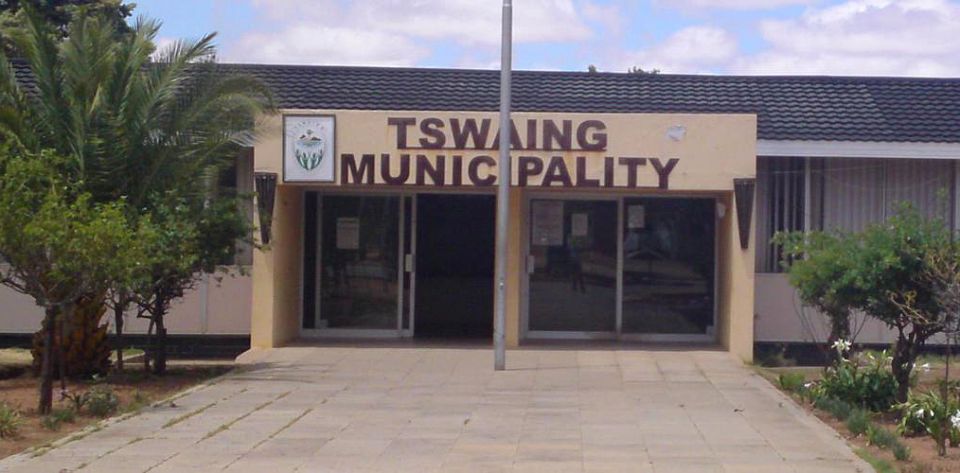
The Tswaing Municipality has not paid many employees since April. Photo from Tswaing Municipality’s website.
“We are going hungry. I have five children to support, including a one-year-old, but we don’t have any money for food or anything”, said Robert (not his real name), a technical worker in the Tswaing Local Municipality in the North West.
He is a full-time employee on the frontline of service delivery, but he has been forced to rely on relatives and others for necessities such as food and nappies.
“It is a horrible situation that is causing me depression,” he said.
He is one of more than 100 workers at the struggling municipality who have gone three months without pay.
In May, only the highest-earning employees, in salary levels 6-14, were paid. General workers, councillors and senior managers were not. The municipality said it lacked sufficient funds.
At the time, the municipality requested a grace period until 12 June, warning that if funding could not be secured, outstanding May and June salaries would only be paid by 15 July. The 15 July deadline has since passed without salaries being paid.
Salaries also went unpaid in February, when essential municipal services were disrupted.
The cash-strapped municipality, which has been under the microscope of both provincial and national government for some time now, was one of the 69 local governments to have its equitable share withheld by National Treasury due to poor financial discipline.
Robert said he and the other workers who have not been paid have been told salaries will only be paid when the municipality receives its equitable share.
North West provincial secretary of the South African Municipal Workers’ Union (SAMWU) Vincent Diphoko said municipal officials had committed to paying workers when they received the funds, “hopefully by the end of this week”.
“This should never have happened. Workers should always be paid without delay,” said Diphoko.
Tswaing Local Municipality had not responded to queries from GroundUp by the time of publication.
In a memo to municipal councillors, Mayor Norah Mahlangu said on 21 July that the municipality had managed to pay R8.6-million worth of pension fund contributions after receiving that amount from the National Treasury on 16 July.
“Proof of payments have been submitted to Treasury this morning and we are waiting to hear from them on when will the balance be released,” she said.
The municipality and the provincial government are locked in a legal battle. The North West High Court in Mahikeng recently dismissed Tswaing’s urgent bid to halt the implementation of a report that flagged widespread maladministration.
The report was ordered by North West Cooperative Governance MEC Gaoage Molapisi on the instruction of Cooperative Governance Minister Velenkosini Hlabisa.
Molapisi directed the municipality to begin revoking the appointments of three senior officials as recommended in the report. But the municipality rejected the report, challenged its findings in court and sought to block its implementation.
The court dismissed the municipality’s bid for an urgent interdict and must still decide whether the investigation was procedurally fair to those implicated. One of the implicated officials, advocate Lesang Lobakeng, has since been appointed acting municipal manager.
The Auditor-General’s recent 2024/25 local government report highlighted Tswaing’s financial crisis.
The report said the municipality’s financial health remains “unfavourable”, citing an unfunded budget, ballooning unauthorised, fruitless and wasteful expenditure, current liabilities exceeding current assets by nearly a quarter of a billion rand, creditors waiting more than 120 days for payment, and more than 80% of debt deemed irrecoverable.
The AG also raised concerns over nearly R950 million in unresolved irregular expenditure and found Tswaing had incorrectly disclosed R711 million in unauthorised expenditure, with errors preventing the full extent of the misstatement from being determined.
On 14 July, MEC Molapisi said a provincial intervention is necessary. He said a newly appointed Provincial Executive Representative would oversee the implementation of the municipality’s Financial Recovery Plan, with powers to assume certain executive functions, oversee financial management, enforce spending controls and drive governance reforms.
He warned that failure to cooperate with the intervention team or implement the recovery plan “would result in the dissolution of the Council.”
