3 November 2026
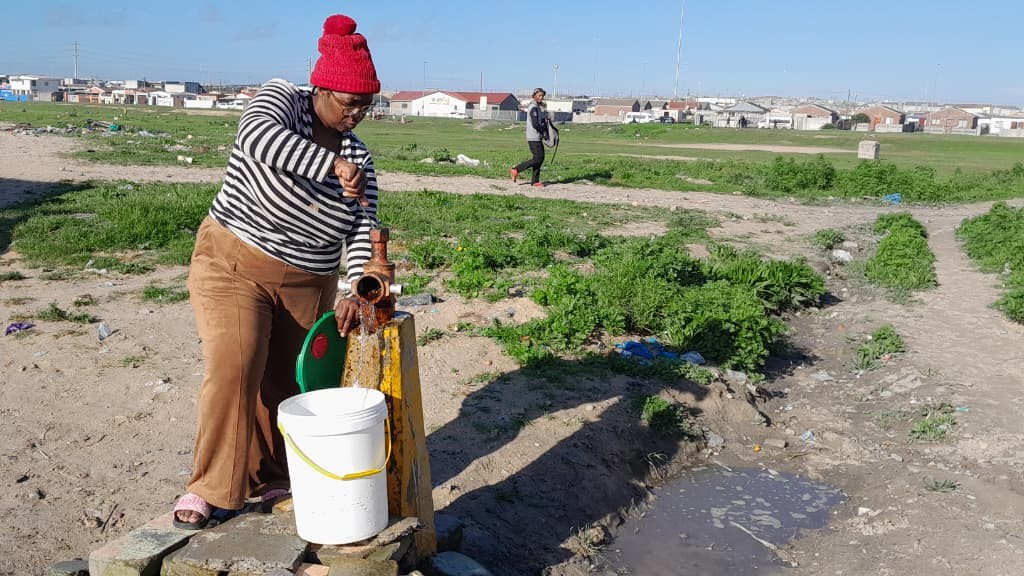
Siyakhana resident Nzondi Javu collects water from a fire hydrant. Photos: Vincent Lali
Families in Siyakhana informal settlement in Khayelitsha have no taps or toilets. They drink from a rusty fire hydrant, defecate in buckets and spend child grants to buy water.
In November 2023, the City told GroundUp it was “looking into all feasible options to assist the community”. At the time, residents said they were talking to the City about relocation. Last month, the response from mayco member for human settlements Carl Pophaim was the same: the City was “investigating all available options to assist residents where feasible”.
Pophaim said the City was in the process of identifying land for relocating the families. He did not say which sites it has looked at since 2023, or why they were rejected.
He said taps and toilets cannot be provided because “permission is required from the land owner”, which is the national Department of Public Works and Infrastructure. The department’s regional manager Dumisani Gqibela told GroundUp that the department was approached by the City, and “various meetings were held and engagements are currently ongoing”.
Over the long term, the department plans to transfer the property to the City and the Housing Development Agency, said Gqibela.
Siyakhana sits beside Oscar Mpetha Road. It formed during the covid lockdown in 2020, when families occupied land that had been earmarked for the Mahama infill housing project in Mandela Park.
The settlement has been the site of repeated violence. Residents say backyarders hoping to benefit from the housing project attacked them and petrol-bombed their homes. GroundUp reported attacks between August and November 2023.
Community leader Nzondi Javu said 187 families originally settled in Siyakhana. About 165 fled to other areas after Mandela Park backyarders threatened and attacked them to make way for the Mahama project.
A City survey this year found about 43 structures in the settlement, used for “residential, business and recreational activities”, said Pophaim.
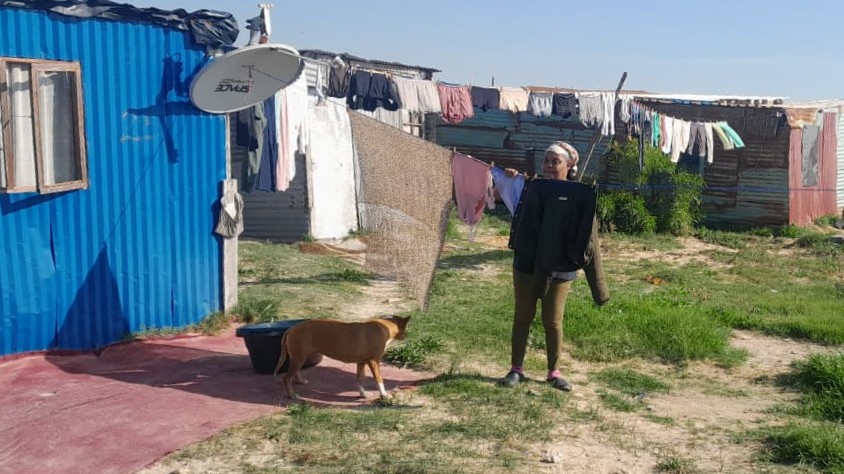
Noxolo Fadana hangs up washing in Siyakhana informal settlement.
Javu lives in Siyakhana with her three children, about a 15-minute walk from a fire hydrant where she collects water to drink, cook and do laundry. She and other shack dwellers fear for their health because they say the water is dirty.
“The water comes out dirty first and then becomes clearer. You must wait until it comes out clean,” said Javu.
On rainy days she collects water from the leaks in her roof instead of going to the hydrant.
Javu survives on her children’s social grants. She said she buys water at a nearby shopping centre to cook and to bathe her eight-month-old baby.
“[Sometimes] two days pass without washing her properly. I just wipe her with a damp cloth because I have no clean water,” said Javu.
“I buy water for my baby because I fear the fire hydrant water may make her sick,” she said. “Buying water bankrupts me because I don’t work.”
She sometimes borrows from loan sharks to pay for water. “I owe one mashonisa R600 now,” she said.
Community leader Noxolo Fadana, a caregiver in Pinelands, said carrying water from the hydrant has taken a physical toll.
“Balancing a water container on my head and walking to and from the fire hydrant causes me backache and exhausts me,” she said.
She and her three children relieve themselves in a bucket inside their shack. It is emptied into a nearby drain.
“You have to step out and empty the bucket at night sometimes because you can’t stay with a bucket containing faeces until morning,” said Fadana.
In August 2023, James Vos, then acting mayco member for human settlements, said the occupied land was “lost” for housing and that the City was now trying to evict Siyakhana residents.