4 June 2026
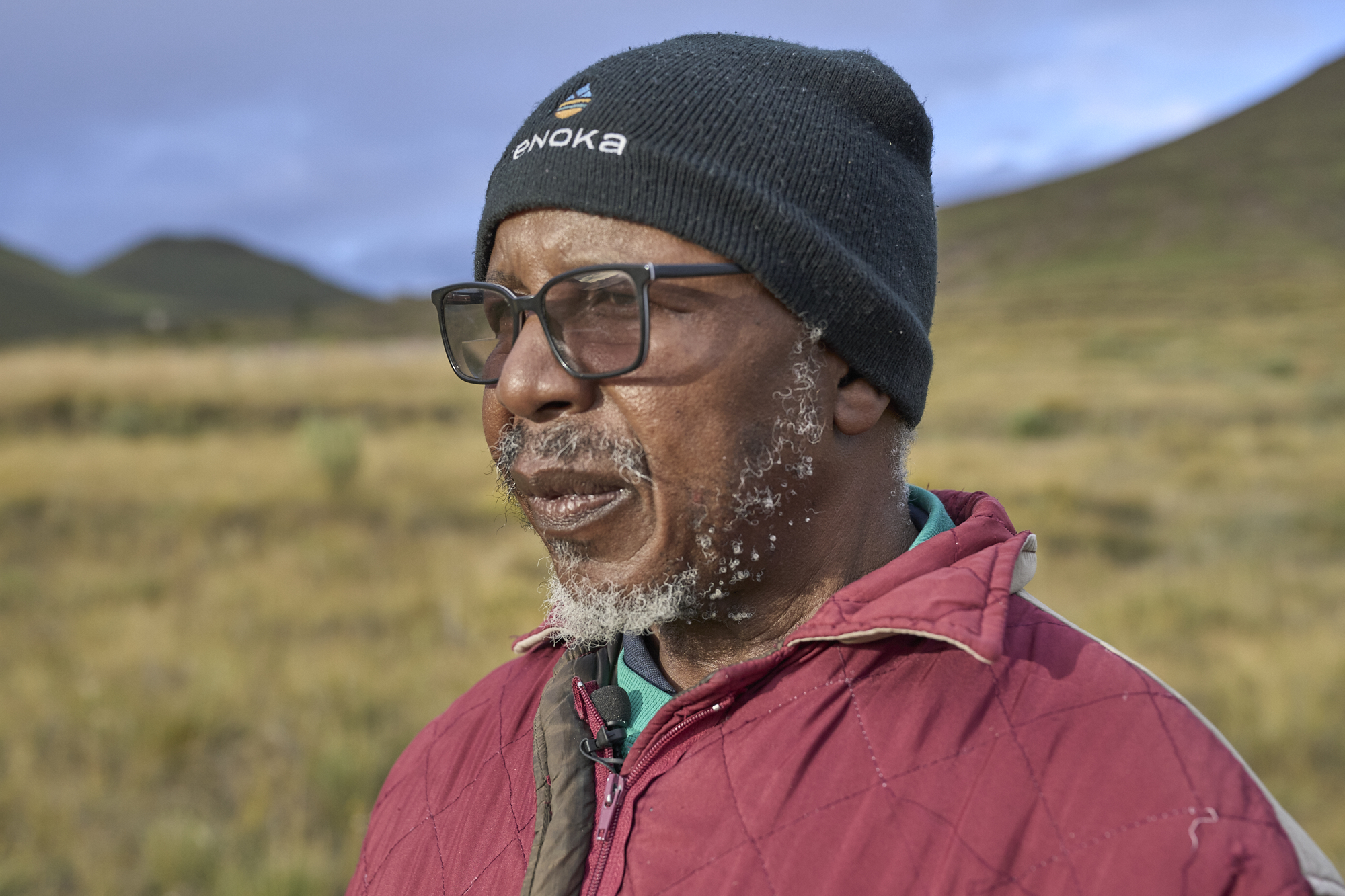
Farmer Khotsang Moshoeshoe on the grazing land he owns in Mokhotlong. Photos: Barry Christianson
On a cold pasture in Mokhotlong in Lesotho’s high mountains, sheep farmer Khotsang Moshoeshoe stands on a carefully managed field of lucerne and grass. The 7.2-acre pasture is part of an effort to improve the quality of the wool he produces for international markets.
Moshoeshoe keeps about 160 sheep, including 112 ewes, and specialises in producing superfine wool, a high-value fibre sought after on the global market.
“Superfine wool is the wool that the market needs so much,” he said. “It is hard to get this wool down south. You mostly get it in Australia.”
He says the wool fetches premium prices compared to other grades. “As we speak, the price per kilogramme ranges from about M200 to M230 for superfine wool. Fine wool ranges between M190 and M210, while medium wool ranges from M140 to M170.”
Out of the roughly 300kg of wool he produces annually, he says about a third is superfine.
Unlike many farmers who rely on communal grazing areas, Moshoeshoe converted his own plot into a private pasture.
“Communal pastures are poorly managed, so you cannot have the results that you want,” he said. “Here I normally supplement very little because I’m doing about 85% grazing and 15% supplementary feeding.”
The pasture allows him to keep winter-lambing sheep close to home between April and September before they are moved back to the sheep posts in the mountains after shearing.
Moshoeshoe says the investment has improved both lambing success and wool production.
Previously, he struggled to keep large numbers of sheep near the village because of restrictions on communal grazing. “That’s what made me think about converting this field into a grazing area,” he said.
He has also invested heavily in erosion control. Deep gullies once cut through parts of the land, but he rehabilitated them using diversion furrows and planted grasses with strong root systems.
“If we maintain the present standard, this place can go over 100 years without being eroded,” he said.
The pasture is unfenced, but villagers help protect it from stray livestock. Anyone who catches trespassing animals receives half of the fines charged to owners. “Everybody in the village is a ranger,” Moshoeshoe said.
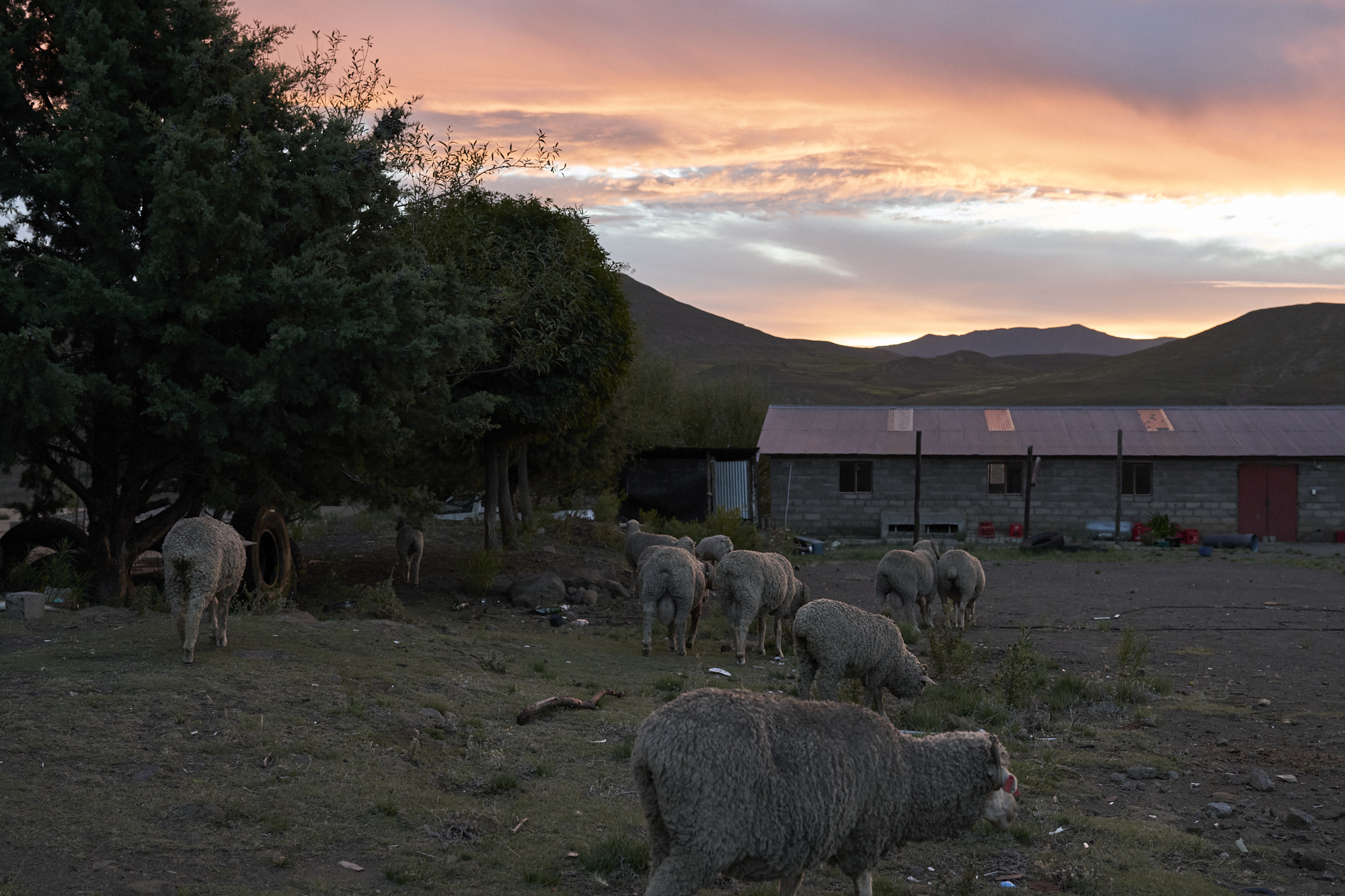
Sheep return to Mohale Moshoeshoe’s home in Mokhotlong after grazing in the fields all day.
Once sheep are shorn, wool begins a long and tightly controlled journey from mountain sheds in Lesotho to international buyers.
Khauhelo Kheethoa, office administration and field coordination officer at Lihoai Consultancy, a Lesotho-registered subsidiary of South African agricultural company BKB, coordinates much of that process.
Kheethoa said the company’s role is to connect farmers to international buyers while ensuring wool complies with export regulations. “We are not just selling Lesotho wool,” he said. “We want to sell to the right people who are willing to pay the right prices.”
At shearing sheds across the country, wool is sorted according to international grading standards before being packed into bales and transported to stores. From there, Kheethoa says, loads are prepared for export through Gqeberha in South Africa to the world.
The wool is tested at the International Wool Textile Organisation testing centre before samples are presented to buyers who bid at weekly auctions.
Kheethoa says paperwork and logistics are critical because payments depend on accurate documentation linking every bale to individual farmers. Buyers pay BKB, which pays individual farmers.
Wool is only paid for once it has been cleared for export and loaded onto ships.
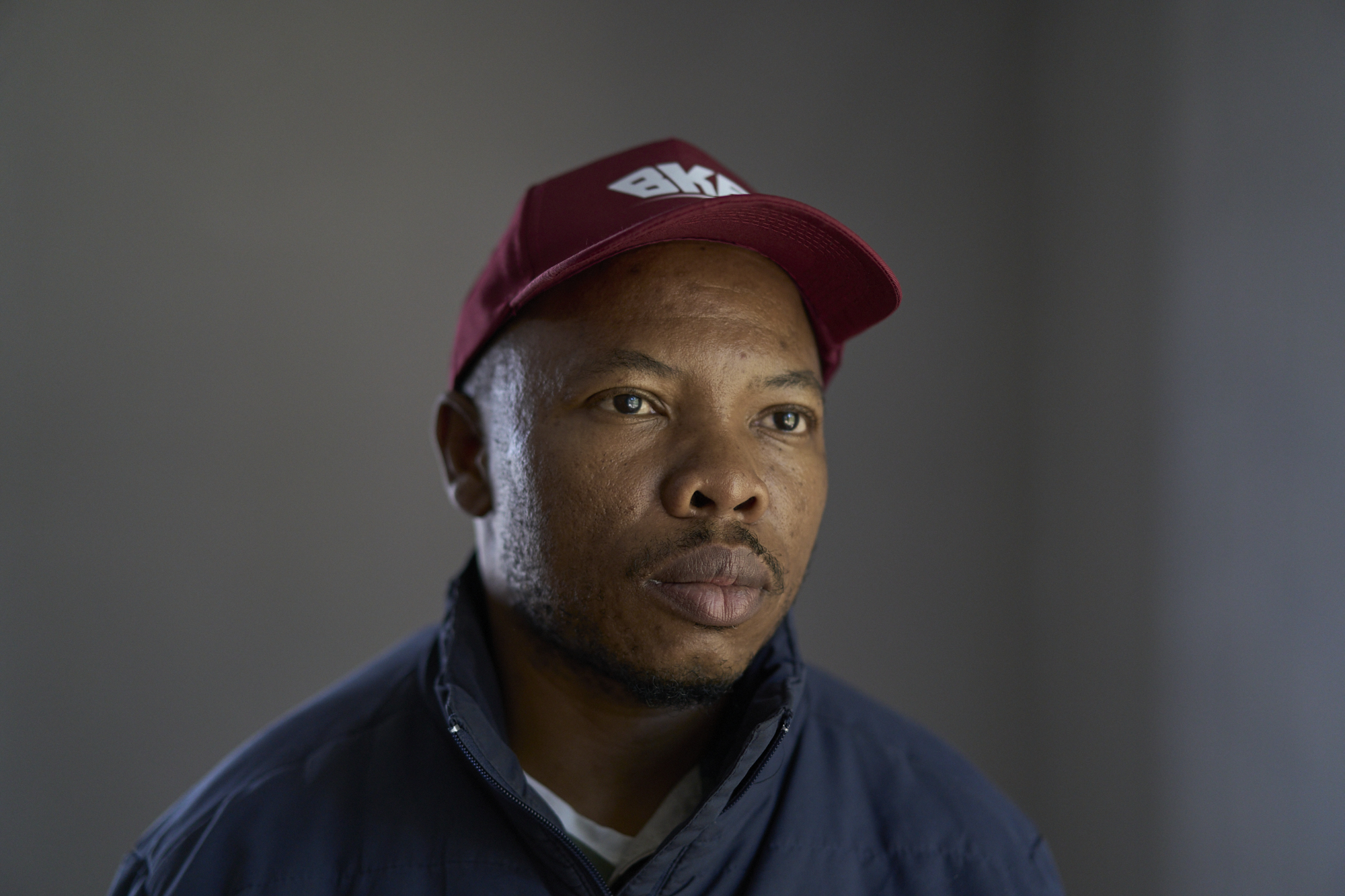
Khauhelo Kheethoa, photographed at Lihoai’s offices in Maseru.
BKB makes money through a regulated 4% brokerage commission deducted from wool sales.
Kheethoa said part of that income is reinvested into farmer support services. “If I improve the quality, I improve my 4%,” he said. “So part of it is ploughed back to the farmers.”
Those services include farmer training, guidance on international standards, and support for programmes such as Responsible Wool Standard certification.
Kheethoa said buyers increasingly demand proof that wool is produced ethically and sustainably. “Farmers must justify that they are producing good wool and that their practices meet international market requirements,” he said.
According to Kheethoa, sheds and district associations instruct BKB to deduct certain amounts per kilogram from sales to pay for wool packs, shearers, transport, loaders, guards and district operations.
“For wool to move from the shed to the stores and then to auction costs money,” he said. “Farmers themselves must take care of those costs.”
The government also deducts a dipping levy of about 4% per kilogramme to fund medication for sheep scab, a disease that damages wool quality.
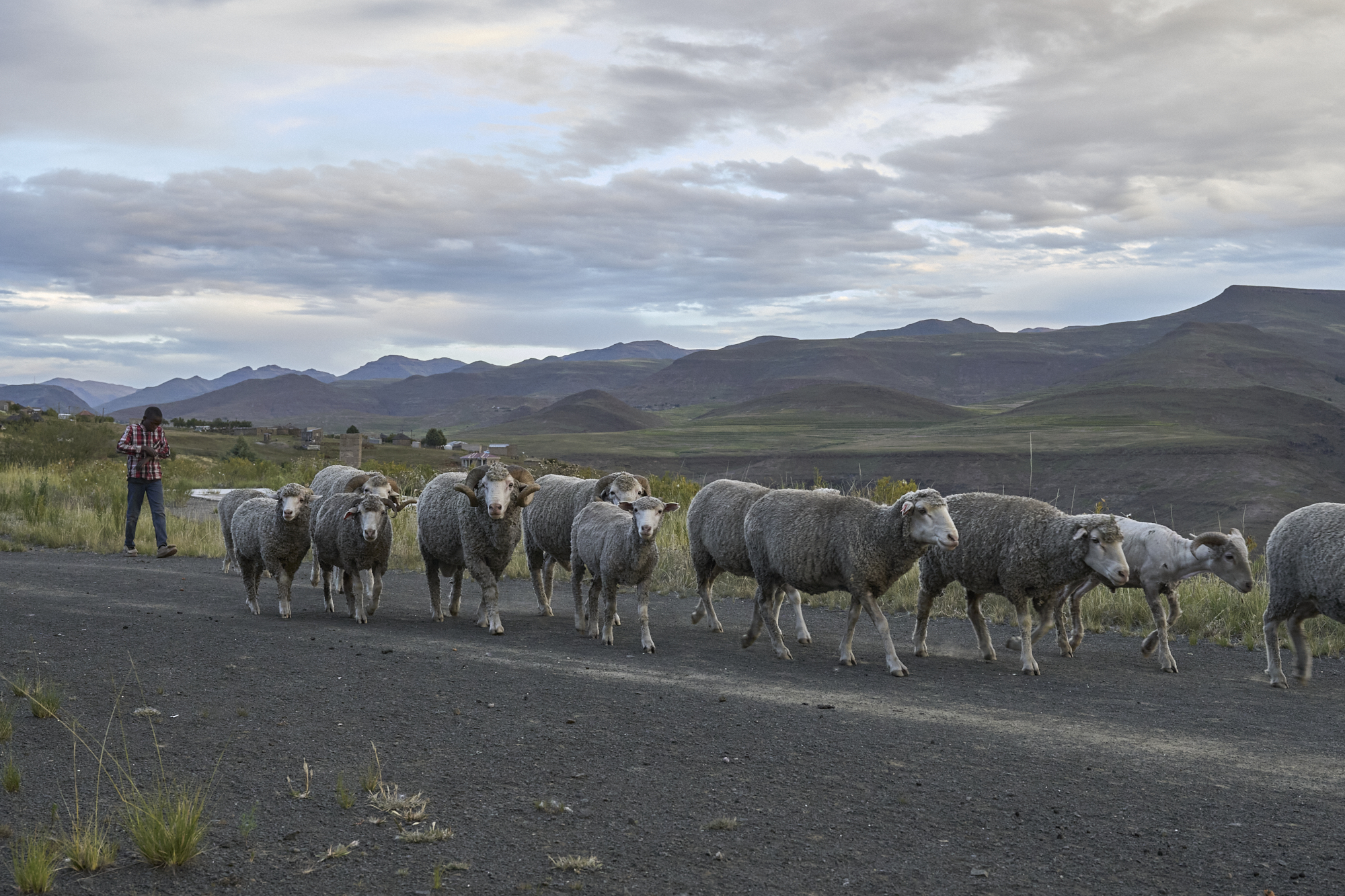
Sheep return home after grazing all day.
Wool farmers remember the impact of regulations introduced by the previous government in 2018, which prevented the direct export of wool. Farmers were forced to sell through a Chinese middleman.
Moshoeshoe and other farmers in Mokhotlong held on to their wool for nearly three years while farmers challenged the regulations in court.
“We didn’t sell any wool,” he said. “We stockpiled it, waiting for the right moment to come so that we could send wool to the market where we could get competitive prices.”
Many farmers survived by selling livestock.
Mokoinihi Thinyane, chairperson of the Lesotho National Wool and Mohair Growers Association, said the wool was sent to China and farmers were paid badly if at all.
According to Thinyane, by the time the association won a court battle and wool exports were resumed through auction in 2019, M40-million was owed to farmers. “Some died from stress-related heart problems. Others have still not been paid to this day,” he said.
He said there were reports of one Mokhotlong farmer who found papers in the street, mistook them for wool payment cheques and tried to cash them at Standard Bank.
“Many unpaid farmers simply gave up because they no longer knew what to do,” he said.
After the disputes, BKB established Lihoai Consultancy as a locally registered company in Lesotho.
Kheethoa said this brought services closer to farmers and created opportunities for Basotho truck drivers and transport companies because regulations now require locally registered vehicles and drivers to transport wool.
Then came the Covid pandemic, and reduced demand from factories in China and India sent wool prices downwards, said Kheethoa.
More recently, outbreaks of foot-and-mouth disease in southern Africa have delayed wool clearances and payments.
Climate change is also becoming a growing threat. Heavy rains disrupt shearing schedules, while snowstorms and droughts kill sheep and reduce wool production. “If we lose many animals, the quantities of fibre decline,” Kheethoa said.
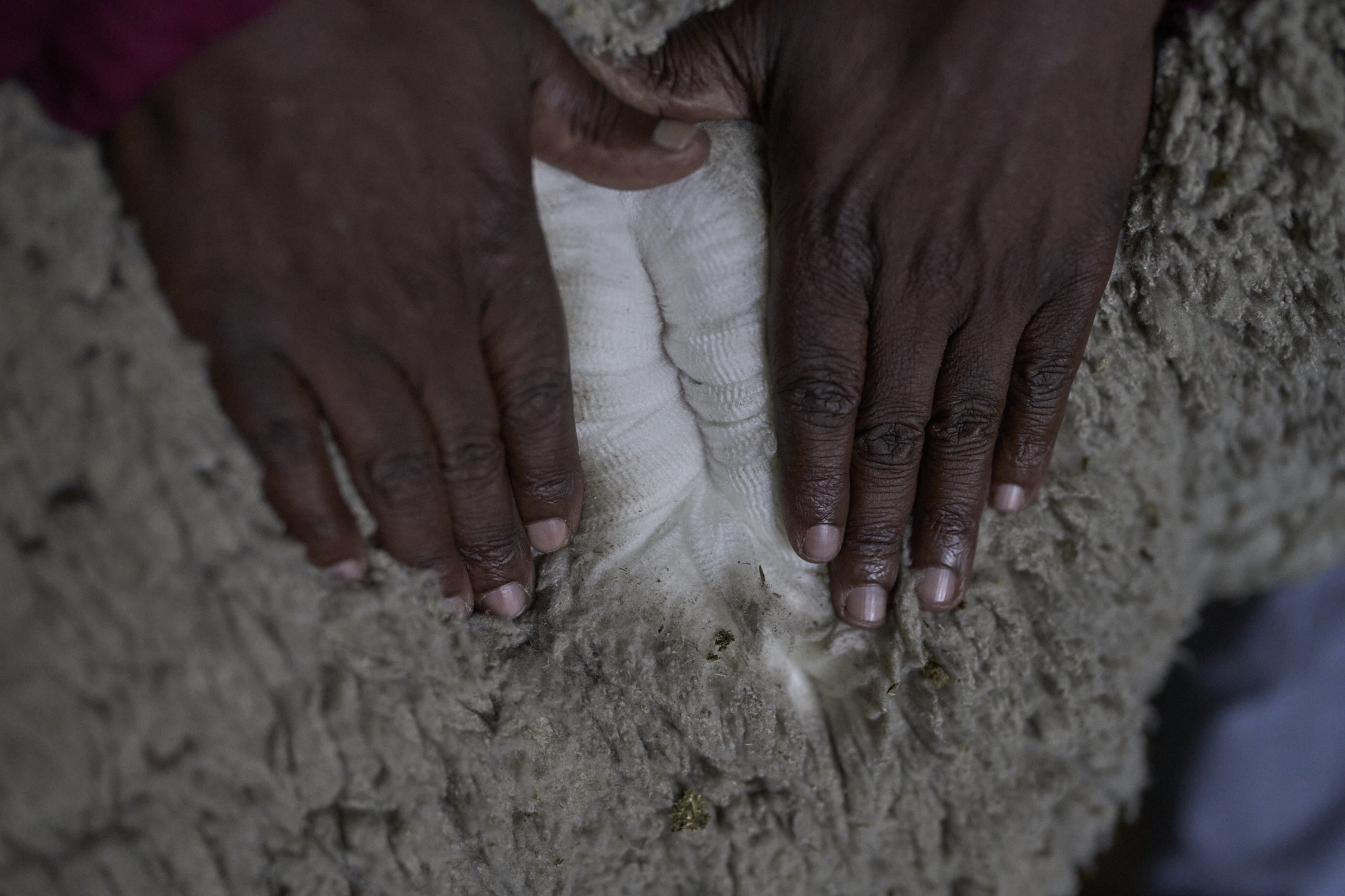
Superfine wool is in high demand, says Khotsang Moshoeshoe.
