8 May 2026
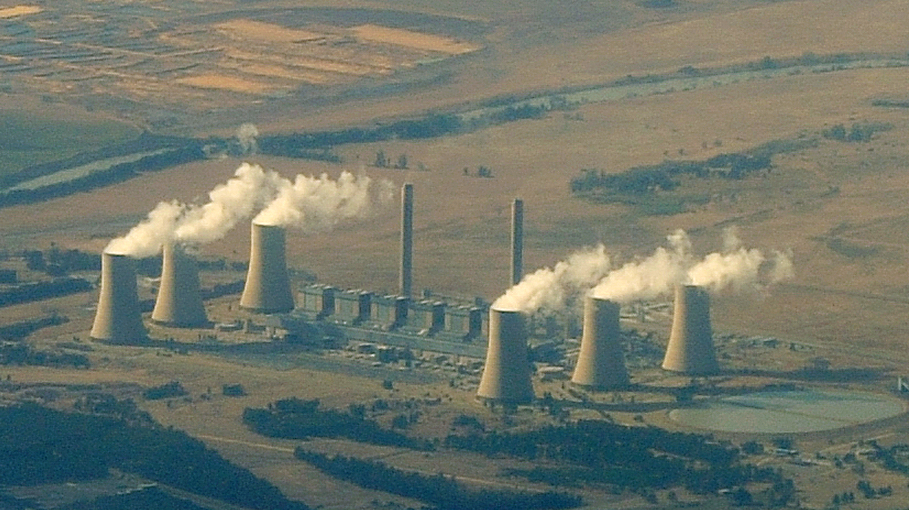
The CSIR’s 2024 power generation statistics found that the power Eskom sells to South Africans is more than three times as expensive, on average, as what new wind and solar can deliver (R1.95 per kWh vs 50-60 cents per kWh). Above: Eskom’s Lethabo power station in the Free State. Photo: Simisa Bearbeitung (Auschnitt, Farben): Pechristener via Wikimedia
Single mother of three and domestic worker Angel Mbatsha now pays R16 more per day for transport since Israel and the United States launched their war on Iran on 28 February. She pays R106 a day, 25% of her wage, to take three taxis from her home in Nyanga to her work in Glencairn, 38km away.
“Every day, people are talking about how expensive transport is now,” says Mbatsha. “My taxi fares are one worry; another is my children’s transport to school. I don’t know how I’ll afford that anymore.”
Millions of South Africans are facing growing financial pressure as a result of a distant war. The costs may rise further still, as petrol and diesel prices increased sharply again in early May and the temporary reduction in the fuel levy lapses in June.
A recent World Bank report found that South Africa’s low-income commuters spend up to half their incomes on transport. A key driver of this price burden is South Africa’s dependence on oil, whose price is set internationally.
Continued reliance on fossil fuels has left South Africans exposed to volatile international oil markets. We produce almost no oil. Our fuel is imported or refined from crude bought on global markets.
Dependence on oil is a dangerous way to run an economy. Analysts warn that the knock-on effect of rising oil prices will see the cost of food and other essentials rise too.
Renewable energy offers far more security through locally produced electricity that is cheaper to generate, more affordable to use, and not subject to price shocks.
And yet, at the Southern Africa Oil and Gas Conference in Cape Town in March this year, minerals and petroleum resources minister Gwede Mantashe reiterated his long-held support for local oil and gas extraction, calling it “the sustainable long-term solution”. Local oil and gas production would boost “energy security” and end “energy poverty”, he claimed.
Aside from Mantashe’s statements, there are other indications that the South African government is intent on oil and gas development: more than 90% of South Africa’s coastline has been earmarked for exploration, and a new state-owned petroleum company has been launched to expand fossil fuel production.
This flies in the face of South Africa’s commitments to a Just Energy Transition and to cut greenhouse emissions in line with the Paris Agreement on climate change.
Renewable energy offers far more security through locally produced electricity that is cheaper to generate, more affordable to use, and not subject to price shocks.
Locally produced oil is unlikely to be sold for much less than imported oil, as rising prices at the pump in the oil-producing United States are proving. And if the government tried to force cheaper local fuel, investors would think twice about putting billions of rands into new wells here. Domestic oil and gas projects will keep us tied to the international price rollercoaster we’re already experiencing.
Experience across Africa shows that when governments suppress fuel prices, the public purse pays for it through tax and royalty revenues or direct subsidies.
Oil and gas projects typically take more than a decade from investment decision to production, while utility-scale wind and solar can be built in just a few years.
Numerous studies show that a massive roll-out of wind and solar is now the cheapest way to add new electricity in South Africa. The CSIR’s 2024 power generation statistics found that the power Eskom sells to South Africans is more than three times as expensive, on average, as what new wind and solar can deliver (R1.95 per kWh vs 50-60 cents per kWh).
Cheaper renewable energy will not immediately reduce the transport costs of commuters like Angel, but it is the foundation for a healthier economy. When electricity is cheaper, everybody benefits.
Modelling from the Cobenefits policy report, drawing on CSIR data, directly challenges the claim that South Africa must choose between jobs and clean energy. It finds that a renewables-led pathway would create about 145,000 jobs in the sector, more than the roughly 100,000 currently employed in coal.
Cheaper electricity would also ripple through the economy, supporting around half a million additional jobs in renewables-linked industries and up to 1.6 million more jobs overall by 2050.
While the full electrification of public transport remains years away, South Africa’s first electric minibus taxi, the eKamva, is expected to pilot in Cape Town later this year.
Transport technology platform GoMetro estimates that electric minibus taxis could cut operators’ running costs by 40% to 70%, depending on fuel prices and route conditions.
A world at war reminds us how fragile fossil-fuel dependence is. Our government is tempted to answer this by drilling more, but a different path is already mapped out: a just transition to renewable energy.
New licences and new budgets could either lock us into oil and gas, or accelerate renewables. South Africans should demand that Parliament, Cabinet and regulators stop fast-tracking new oil and gas; channel funds into projects for the Just Energy Transition; and prioritise communities’ needs in every energy decision.
We can’t control wars in distant lands, but we can decide whether our children grow up in a country still chained to oil and gas or powered by the free and plentiful wind and sun.
Views expressed are not necessarily those of GroundUp.

