23 May 2026
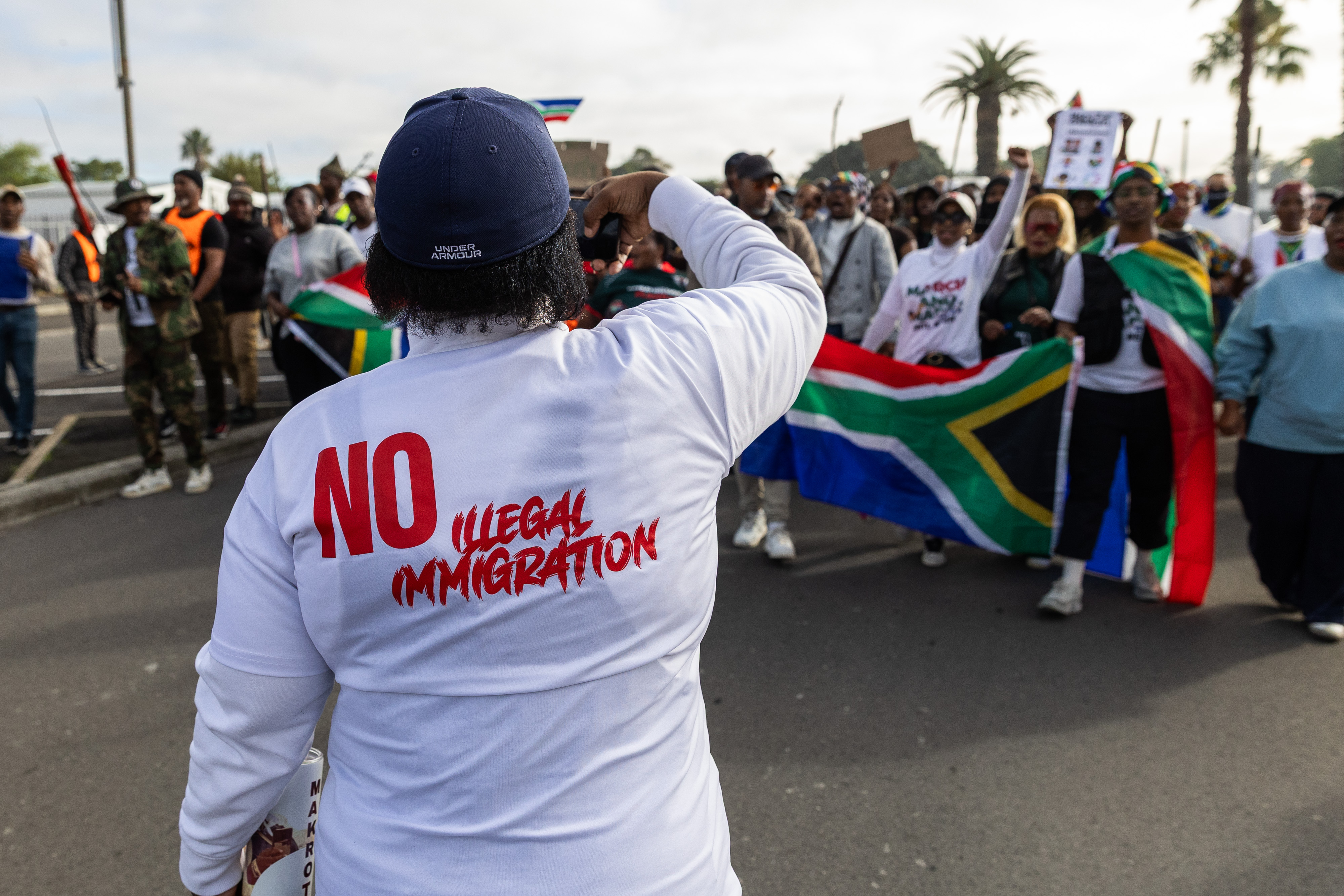
About 100 March and March supporters walked from Du Toit Park in Bellville to the Parow Police Station on Saturday. Photos: Ashraf Hendricks
Bellville’s busy Voortrekker Road came to a standstill on Saturday morning as about 100 people marched from Du Toit Park to the Parow Police Station to demand the arrest of undocumented immigrants.
The march comes amid mounting tensions between anti-immigrant group March and March, and migrants in parts of the country. This week, GroundUp reported how a group of mostly Congolese immigrants in Durban have been camping outside government buildings, fearing for their safety.
Video: Ashraf Hendricks
On Saturday, protesters held placards that read “Enough is Enough” and “Go fix your countries! We are fixing ours!”
When we tried to speak to protesters, we were told that they were instructed not to speak to the media. Only March and March leader Jacinta Ngobese-Zuma is authorised to speak to the media, they said.
Along the route, many businesses were closed, apparently in anticipation of the march. Public order police kept the marchers separate from curious onlookers.
Ngobese-Zuma has rejected allegations that these marches against undocumented foreigners are xenophobic. Speaking to marchers, she said, “We are the rainbow nation … and then everyone saw this harmony as an invitation. They took advantage of our Ubuntu. Ubuntu is suspended until further notice.”
“We don’t want a situation where foreign nationals are always painted as the victims, and we are the villains. It’s our country, and we’re tired of explaining that there is no xenophobia in the country,” she said.
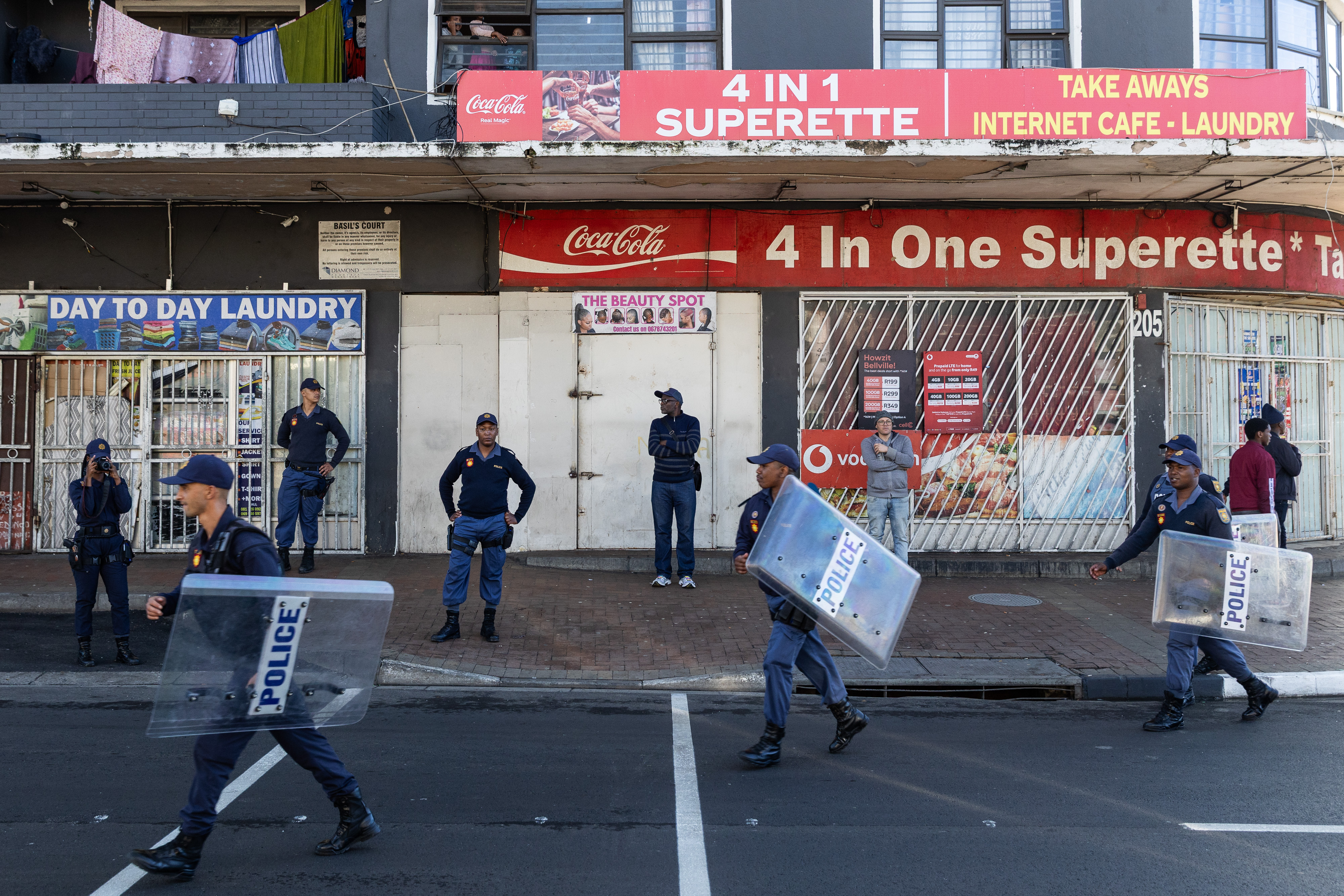
Heavy police presence during the march on Voortrekker Road.
The group dispersed from the police station after 2pm.
Speaking to GroundUp on Friday, Commissioner of the South African Human Rights Commission (SAHRC) Aseza Gungubele said that while people had a right to march, they should do so peacefully. “We don’t condone any form of violence or harassment of anyone. We have seen the scenes of 2008, we lost so many lives.”
He confirmed that they had written to the police to express concern about the anti-immigrant marches.
“There are legitimate concerns … and general issues of service delivery. We raise it with the relevant authorities. But that does not mean you must scapegoat it,” he added. Gungubele stressed that one of the biggest problems was misinformation being spread on social media.
While releasing the quarterly crime statistics, Police Minister Firoz Cachalia addressed the anti-immigrant marches.
“Our laws include the right to protest, but do not permit vigilantism, criminality and chaos in public. The police have a responsibility to maintain public space and will enforce the law to ensure that public order is maintained.”
He said he would be responding to concerns raised by the SAHRC.
Dozens of civic organisations, including Kopanang Africa Against Xenophobia, Chronicles of Refugees and Immigrants and Africa Unite, condemned the recent anti-immigrant protests in a joint statement ahead of the march.
“March and March pretends to oppose only undocumented migration, but in practice, it fuels hostility and violence towards migrants as a whole, especially poor African migrants. We stand with migrants, refugees, undocumented people, and all those targeted by xenophobic politics.”
The activists called on the police, politicians, and the media to “act responsibly” and “prevent intimidation and xenophobic violence”.
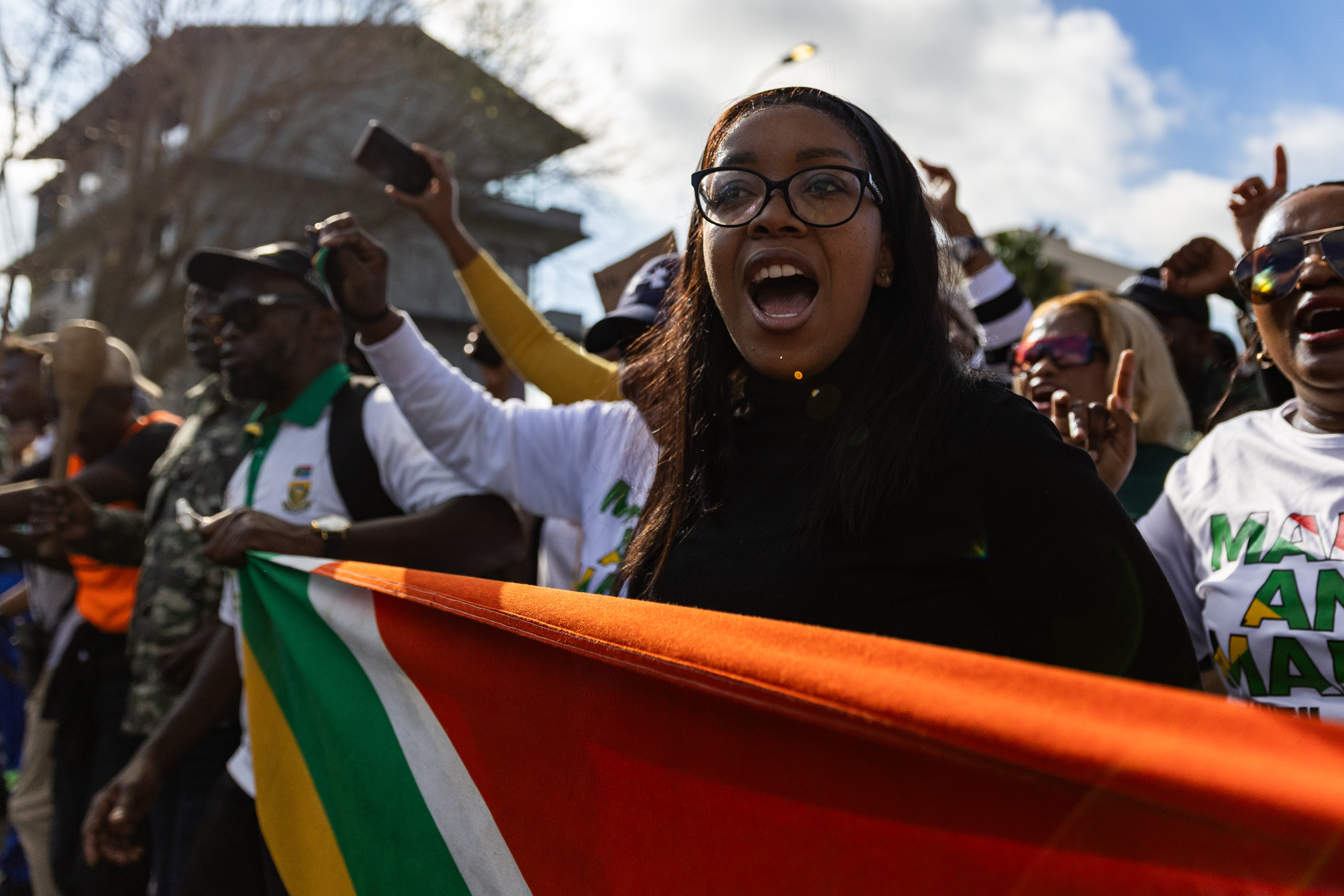
March and March leader Jacinta Ngobese-Zuma.
