
3 June 2026
Nombulelo Sondaka says officials defrauded her of R160,000 from her husband’s life insurance in 2012. Her testimony triggered a Hawks investigation. Photos: Seth Thorne
A receptionist from the Pimville housing office in Soweto is due to appear in the Lenasia Magistrates’ Court on 11 June to face charges of fraud and corruption. This follows an ongoing probe, started in December 2019, by the Gauteng Directorate for Priority Crime Investigation (Hawks), into the fraudulent sale of RDP houses and private homes.
Gauteng National Prosecuting Authority spokesperson Abram Mohlatlole said two municipal officials were initially charged and appeared in the Lenasia Magistrates’ Court on 20 August 2025. However, one has since died.
Lerato Qoza, from Khuluma Mphakathi, a collective that supports victims of the alleged municipal corruption in Pimville, said they have identified at least 15 families who say their homes were fraudulently sold, and a further 30 cases of residents being threatened with eviction from their own homes.
The allegation is that officials targeted elderly residents and bereaved families or families in dispute. Wills were fabricated and title deeds altered to enable the fraudulent sale and transfer of properties. The buyers can afford to defend their ownership in court, while the victims cannot afford the legal costs to reclaim their homes.
“People’s lives are being destroyed because officials are greedy,” said Qoza. “Officials who caused this pain are still doing it as the City has not taken action.”
The City of Johannesburg has not answered questions from GroundUp sent a week ago.
GroundUp spoke to several Pimville residents who say they were victims of corruption at the municipal housing department. We have not been able to verify that the officials investigated by the Hawks were involved in all of these stories.
Nombulelo Somdaka’s testimony to the police set off the Hawks’ investigation. In 2013, her husband died and she received a R160,000 life insurance payout. She and her children were living in a shack at the time.
This was the first time she had owned such a large amount of money and she wanted to use it to purchase a house.
She went to see the Pimville housing department and was told by officials that she could buy an RDP house from them, even though it is illegal for a municipal official to sell an RDP house.
She gave the money in cash to an official at the housing department — one of the accused in the current case, who has since died. But instead of being given an RDP house, she was offered a stand and told that a house would be built for her. No stand or house was ever transferred to her and the officials she dealt with started ignoring her when she tried to follow up.
Somdaka still lives in a rented shack, alienated from her children, she says, because they say she lost their father’s money.

Pensioner Talina Rorwana says her title deed was altered by hand.
Pensioner Talina Rorwana lives with her daughter and grandchildren in a room she rents in a house in Pimville. The family home she grew up in, owned by her father, who died in 1996, is now a tavern after being transferred to her stepsister without Rorwana’s permission.
Rorwana’s mother died when she was a child. Her father died when she was in her thirties. The house was left to her and her brother. Her brother lived in the house until he died in 2006.
But then Talina’s stepsister — the daughter of her father’s ex-wife — showed up, claiming that the house had been left to her.
Rorwana found that the title deed was altered by hand, with a pen line drawn through her name. She says the scam was facilitated by the suspects in the Hawks probe.
Rorwana says she cannot afford the legal costs to bring a case. “All I want to do is return home”, she says.

Rebecca Nteke says her family home was transferred without their knowledge and she was evicted by the Red Ants.
Rebecca Nteke says their family home was left to her and 12 other children and grandchildren by her late grandparents.
Her uncle stayed in the house and looked after it. He died in 2001. Nteke alleges that her uncle’s wife bribed a municipal official to have her and her relatives’ names removed from the title deed. They were then evicted by the Red Ants.
The house is currently owned by the wife’s son, who rents it out, she says.
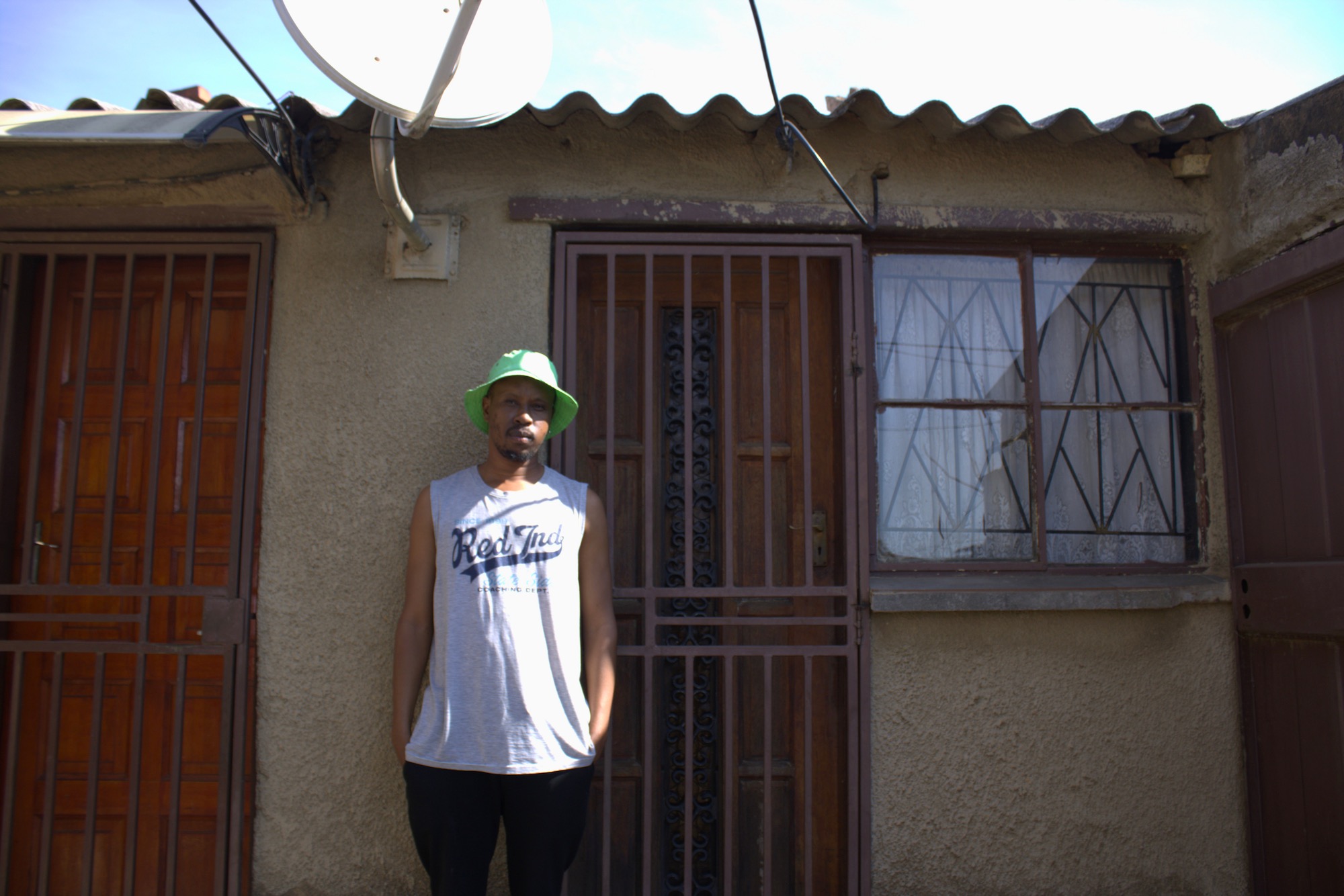
Ntokozo Zulu says when he returned to his family home, the locks had been changed and it was being used as a storeroom.
Ntokozo Zulu says his family home also changed ownership fraudulently after his aunt died in 2022. Returning to the family home, they found the locks had been changed. The new owners use it as a storeroom. Zulu now rents a room in a house for him and his daughter.
Sifiso Mdunge says his childhood home was also fraudulently sold. In early 1996, his mother locked up their house, and they went to their grandmother’s funeral in another part of Soweto. They spent three months at her house.
When they returned home, they found it occupied by strangers, allegedly with the permission of municipal officials.
Mdunge’s mother died that same year, he says, from “heartbreak”. He and his young adult siblings have been trying to reclaim the property.
Citing countless trips to municipal offices and being sent from pillar to post, he says he often met with the two implicated officials. He said title deeds and historic proof of ownership vanished.

Charlotte Tjabane alleges her family home was sold from under her by a cousin with the help of municipal officials who took cash payments.
Charlotte Tjabane alleges her family home was sold from under her by a cousin with the help of municipal officials who took cash payments. At the time, Tjabane’s brother’s wife and kids, aged 12, 13 and 15, were evicted by the South African Police Service (SAPS), who accompanied the new owners.

Joyce Dineka has been struggling to hang on to her house after strangers emerged in 2017, claiming the house had been left to them.
Joyce Dineka’s grandmother, who had owned her home since the 1980s, left it to her family when she died in 2013. But a group of strangers emerged in 2017, claiming the house had been left to them in a will.
The Dineka family say the municipal records had been altered to reflect the strangers as the home owners. The family is now in a legal battle in the Protea Magistrates Court that has dragged on for years.
Dineka says she is struggling to keep up with the flurry of legal demands they are receiving.
She still lives in the house with her sick mother and children. She says they are constantly harassed and threatened with eviction. A court sheriff was sent to accompany the “new owner” to order them out, but they have not vacated the property.
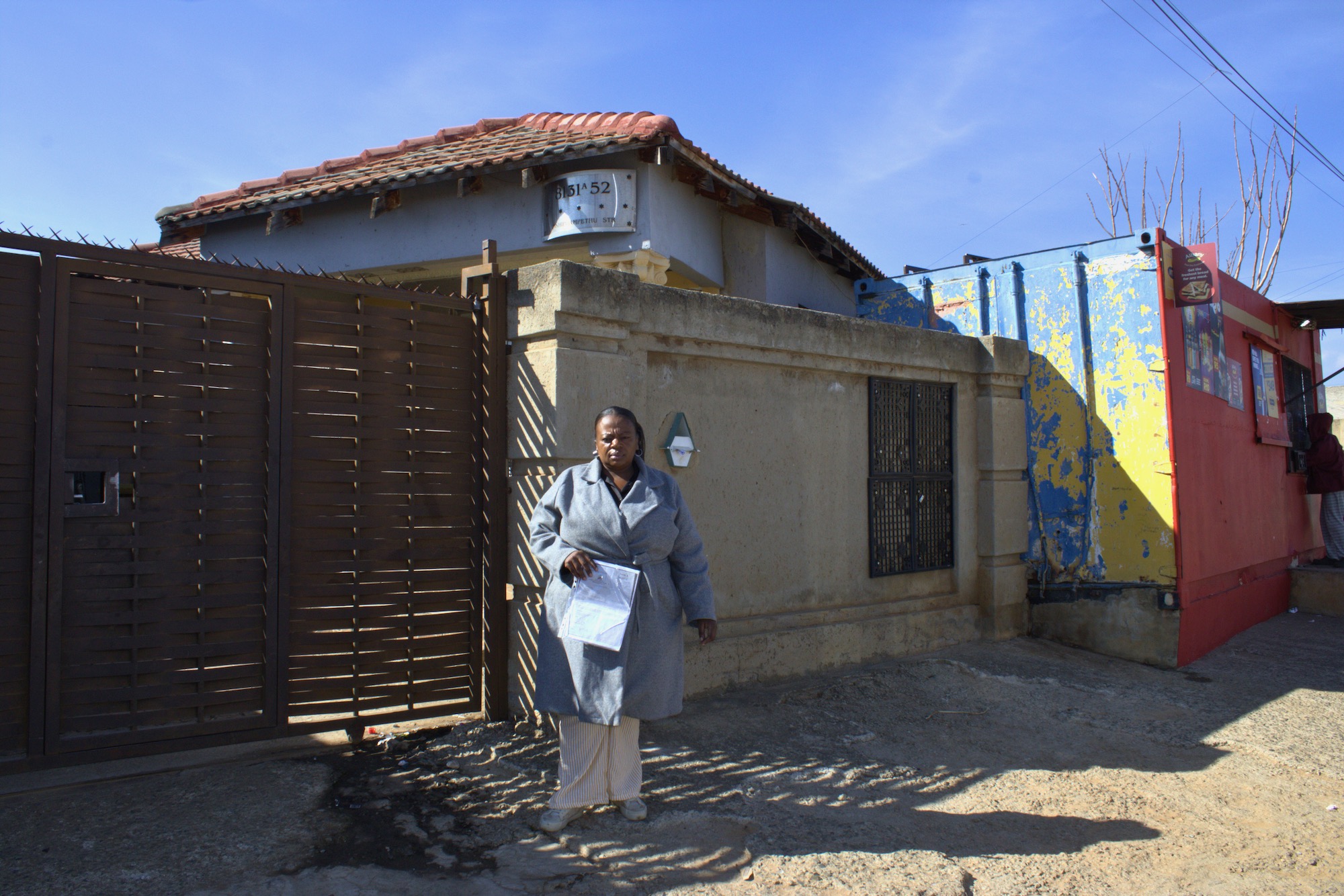
Dibuseng Ziba’s family home was turned into a spaza shop by people unknown to her. She claims she is the rightful owner.
Dibuseng Ziba is struggling to reclaim her family home. She says she has given a written statement to the prosecutors in the current case before the court.
She and her siblings, “young kids at the time”, were displaced after her grandmother’s death in 1987. A subsequent family dispute led to a young Ziba leaving the home to stay elsewhere.
When she tried to reclaim the house, she says, the officials said the title deed with her grandmother’s name had been “lost” in 1996. Municipal records say the property belongs to people unknown to Ziba. It is now a spaza shop.
Ziba says that since she lost her home, she has spent her life moving from shack to shack and rented rooms.
