19 October 2026
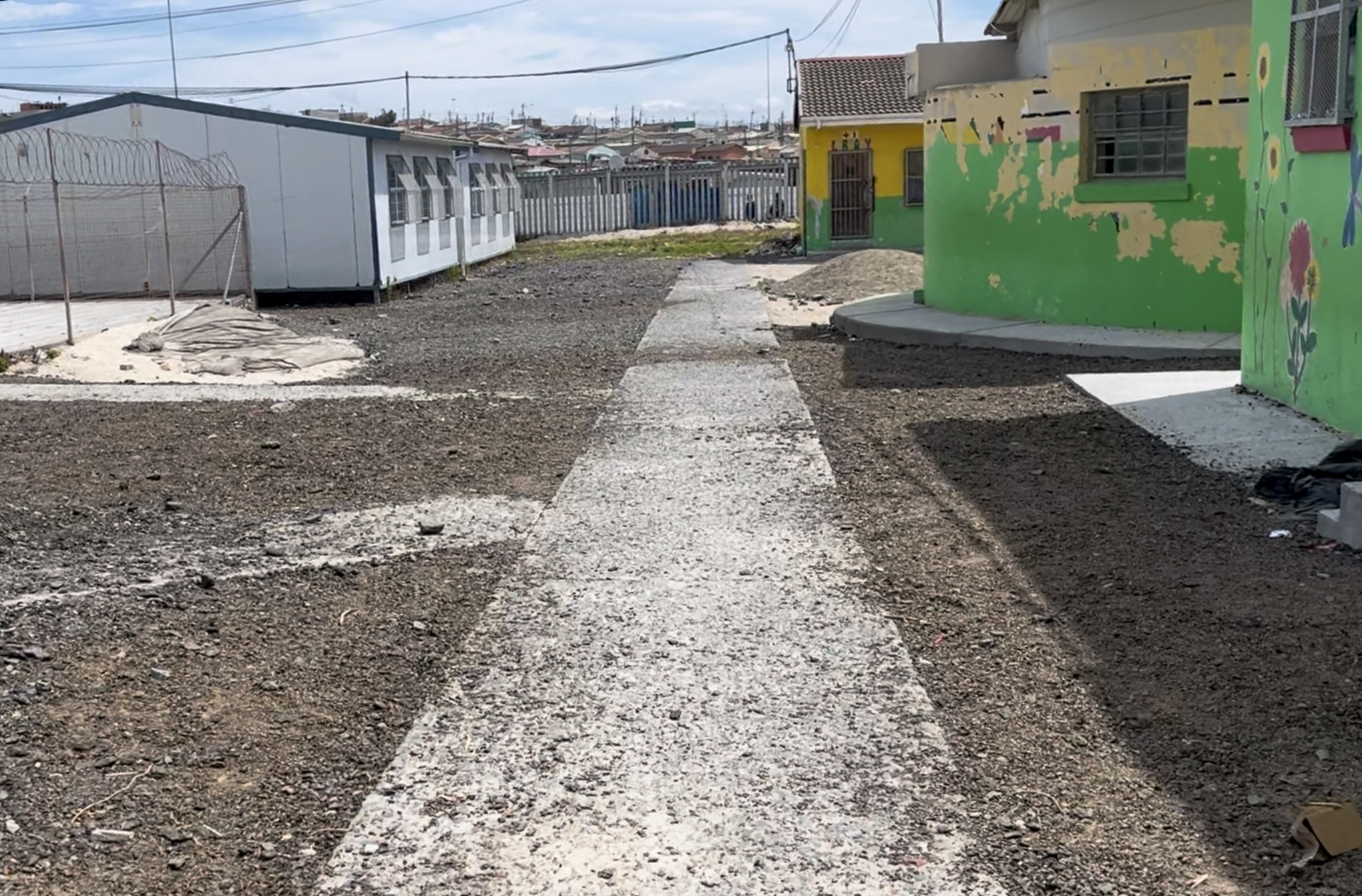
Parents at Kuyasa Primary in Khayelitsha, Cape Town, say the school needs a dedicated sewerage pipeline to separate it from the surrounding community’s system and prevent future incidents. Kuyasa’s SGB organised tar rubble to be poured inside the school premises after sewage was cleared. Photo: Velani Ludidi
Classes at Kuyasa Primary School in Khayelitsha, Cape Town, have resumed after being suspended because the grounds were soaked with sewage. Now, the ground is dry, but parents are demanding a long-term solution.
In August, classes were suspended for days after stagnant, foul-smelling sewage flooded the no-fee school with more than 1,500 learners. Parents protested by preventing schooling from continuing until the sewage overflow was attended to. They said this has been a problem since 2019.
Last week, grade 7 learners gathered in a hall with dry floors for their farewell assembly. The hall bore little resemblance to conditions two months earlier, when raw sewage seeped through the school.
The City of Cape Town intervened to repair the sewer infrastructure outside the school, and the Western Cape Education Department (WCED) implemented emergency measures, including cleaning, sanitising and remedial work required to meet health and safety standards. The department also provided the school with additional hygiene supplies, including toilet paper and hand sanitiser.
A health inspection has since been conducted, and the school has been declared safe for use.
“In addition, the department has established direct contact with the City official responsible for sewage reticulation in the area to ensure that any future incidents can be addressed promptly,” said WCED spokesperson Bronagh Hammond.
“The City has indicated that blockages are regularly caused by inappropriate materials being disposed of in the system, including bricks, rubbish and paper products.”
To prevent similar incidents, Hammond said the department and the City will conduct an awareness initiative at the school and the broader community on the responsible use of the sewage network.
As a safety precaution, tar rubble was spread across parts of the school grounds, an initiative by the School Governing Body (SGB).
But parents and the SGB remain concerned that the underlying drainage problems have not been resolved. They believe the school needs a dedicated sewerage pipeline, separate from the surrounding community’s system, to prevent future incidents.
Residents we spoke to say there are some improvements, such as municipal teams responding regularly to clear blocked drains.
Although these measures brought relief, parents hope authorities use the end-of-year school holidays to implement long-term solutions.
“We want a lasting intervention rather than relying solely on repeated drain-clearing operations whenever blockages occur,” said SGB deputy chairperson Thandiswa Bolani.
Bolani said they were expecting a meeting with the provincial infrastructure department on its plans for a permanent fix.
“The tar rubble you see was brought by us after we realised that the company that came to clear the sewage was not going to clear the ground and make it safe for children. We will continue making attempts to get the attention of the various departments because we do not want to find ourselves having to protest again,” said Bolani.
Parent Nomsa Ludziya said: “We are noticing the work, but a permanent solution is needed. Our children got sick the last time and teachers were complaining that the foul smell was making it difficult to teach.”
The August sewage spill exposed a dispute over responsibility for the infrastructure serving the school.
At the time, WCED said the latest leak was separate from an earlier sewage overflow originating outside the school.
Hammond said investigations had established that the latest problem originated within the school’s sewerage system. “This indicates that the school is dealing with a new and separate issue,” Hammond said at the time. The department arranged for emergency cleaning and sanitisation. The City agreed that the latest blockage was located within the school, making it the school’s responsibility to clear.