11 February 2026
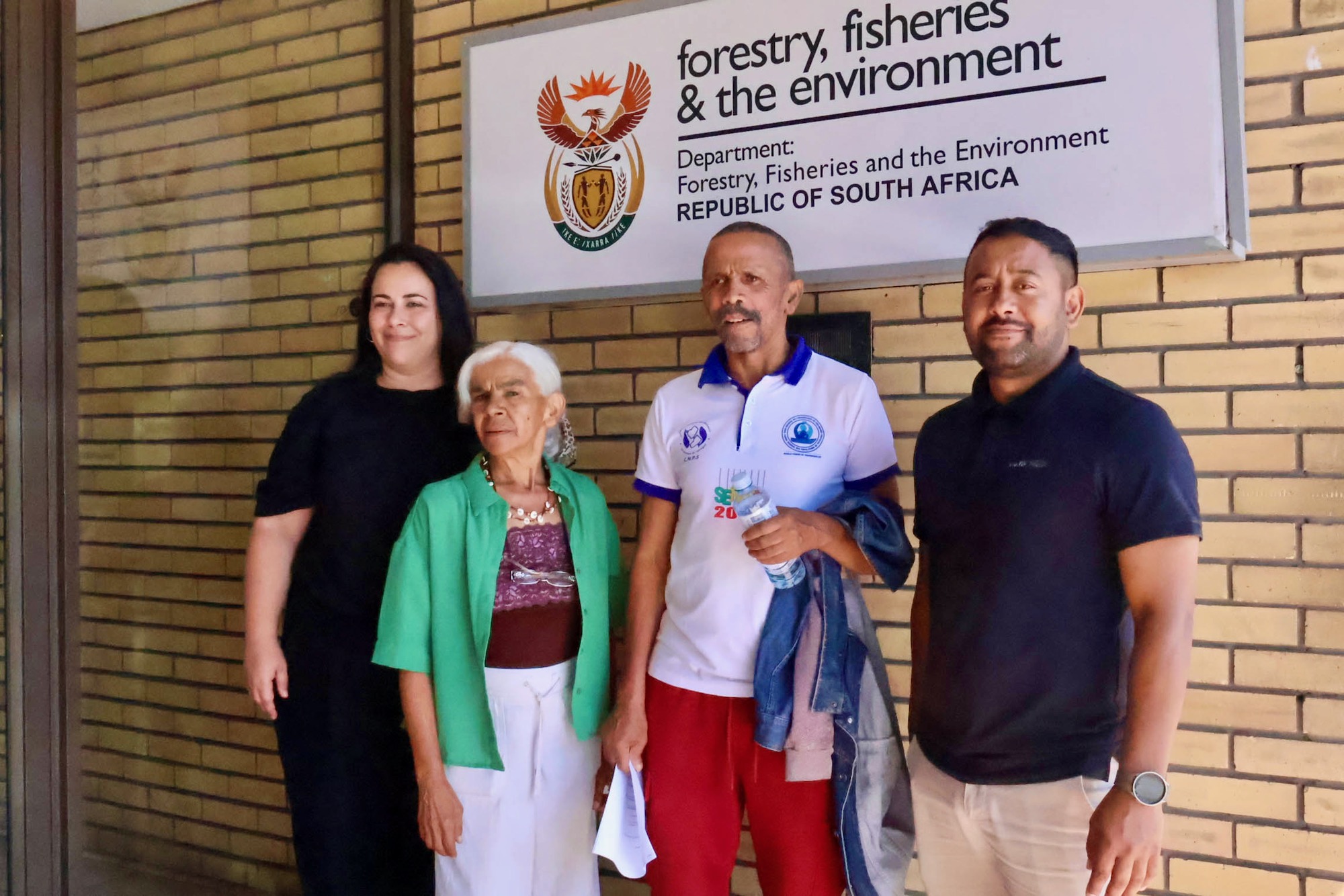
From left to right: Carmen Mannarino (Masifundise Development Trust), Hilda Adams (West Coast Small Scale Fishers Forum), Andre Cloete (Coastal Links), and Faez Poggenpoel (Western Cape Small Scale Fisheries Representative Forum). Photo: Liezl Human
Small-scale fishers are calling for the Department of Forestry, Fisheries, and the Environment (DFFE) to review its recent decision to reduce the number of linefish boats that small-scale fishing cooperatives may use to fish.
Linefish quota is measured by “total allowable effort” (TAE), which is the number of vessels allowed to go to sea to catch fish.
The DFFE 2026/27 linefish decision reduced the TAE for small-scale cooperatives from over 547 to just 77.
On Tuesday, small-scale fishers presented a memorandum of demands to the Portfolio Committee on Forestry, Fisheries, and the Environment at the DFFE offices in Cape Town. It was signed by 46 cooperatives and nine organisations, including the West Coast Small Scale Fishers Forum, Masifundise and Coastal Links.
“Fishing is not just a job. It is our culture, our identity and intergenerational knowledge passed down over generations,” Andre Cloete, chairperson of Coastal Links Western Cape, told the committee.
“We are traditional small-scale fishers. We are overlooked again … Every time we have to fight for our place in the sea.”
He said fishers wanted to know how the department arrived at its decision, since the fishers had received no answers to their communications, nor been given an opportunity to discuss the quotas.
The fishers are demanding the reversal of the TAE decision, saying the allocation is “unsustainable, unjust, and made without meaningful consultation”. They want the department to engage properly with the communities.
They also want a redistribution of the commercial sector’s linefish allocation, which received 378 of the total 455 vessels.
The DFFE said this split “is in line with best available scientific and management recommendations”.
In a letter, the fishers said linefish is the “backbone” of fishing communities and they depend upon it for survival.
Fishers also asked for an exemption when their permits expire on 28 February.
Hilda Adams, chairperson of the West Coast Small-Scale Fishers Cooperative Forum, said if the DFFE didn’t react quickly, they would not have valid permits to fish this March.
Adams said small-scale fishers use small boats and use less damaging fishing gear.
In a recent statement, the Masifundise, a small-scale fishing advocacy group, said communities are worried that the decrease in TAE will “leave hundreds of households without income, deepen hunger in already vulnerable coastal areas, and create conflict within cooperatives forced to decide which members may fish and which may not”.
DFFE director-general Nomfundo Tshabalala, addressing the fishers at the portfolio committee meeting, said, “We are in full support of ensuring that the livelihoods of the fisheries in the coastal areas are uplifted.”
Tshabalala acknowledged that the department needed to find a “balance”.
“Whatever we come up with as a recommendation is informed by science … We need to balance that with the livelihood and ensure we do not deplete the species in the case [of] traditional linefish.”
Tshabalala committed to respond to the memorandum within five days, and recommended the fishers formally appeal the decision.