21 March 2026
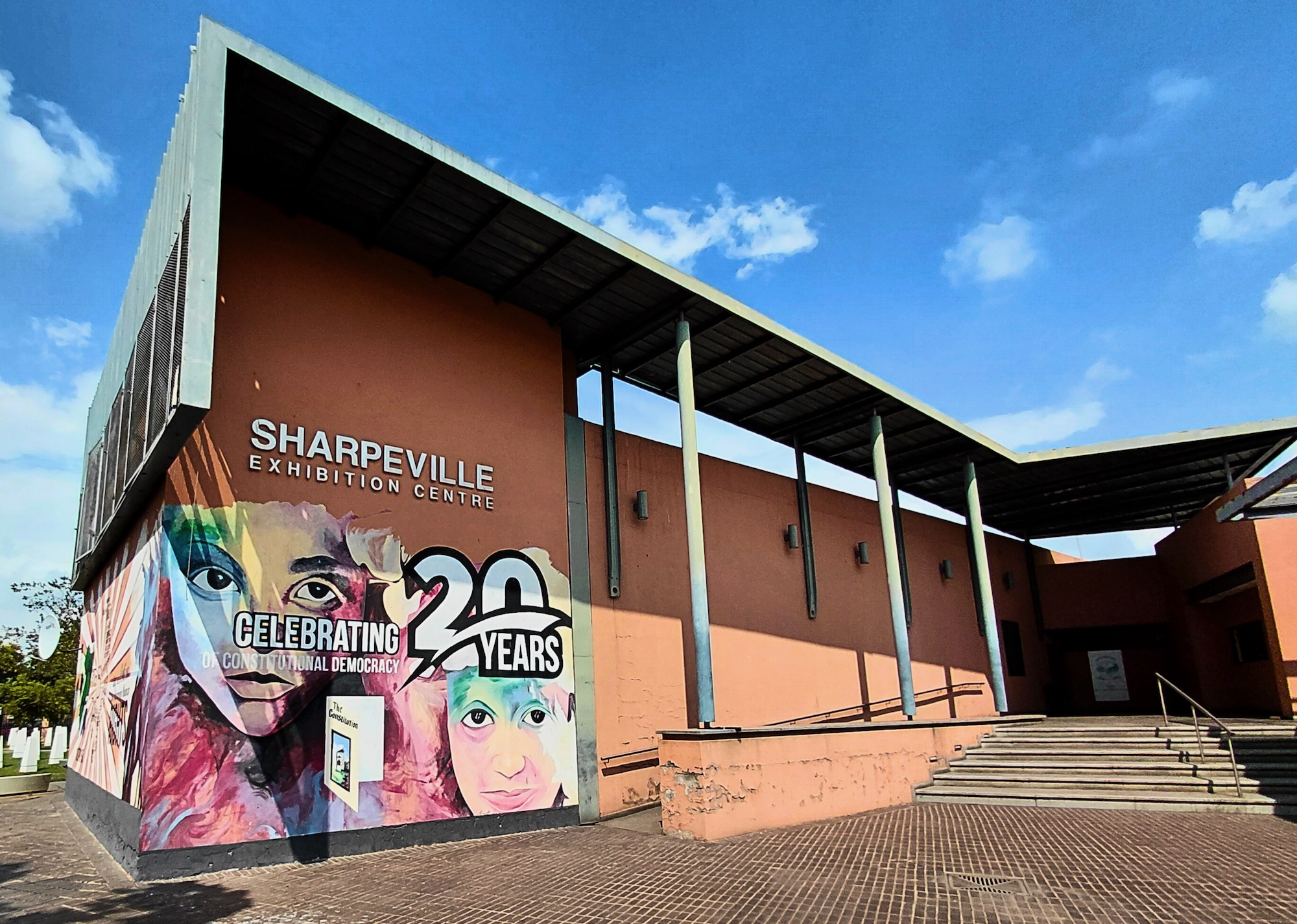
The Sharpeville Exhibition Centre, with visible signs of decay. Photos: Seth Thorne
Sharpeville township is an indelible part of South Africa’s history. It is the site where, in 1960, at least 91 people were massacred for protesting against the apartheid pass laws.
Today, the official memorials show signs of neglect, the roads are potholed, and there are numerous eyesores. Earlier this week, residents blocked the main road with burning tyres because some areas had not had electricity for months.
Amid this, some local activists are stepping up.
“Without Sharpeville, its people and its history, I am nothing,” says Modisane Mabale, a performing artist and community activist.
Through his initiative, Street Arts Government, he is reclaiming abandoned and vandalised spaces, turning places once plagued by sewage spills and illegal dumping into community hubs.
One such space – two rooms in a derelict apartheid hostel – has been transformed into a performance venue.
“There is no electricity in this area, but we make do,” says Mabale.
He believes communities should “not wait for the government”, and community-led action is more effective.
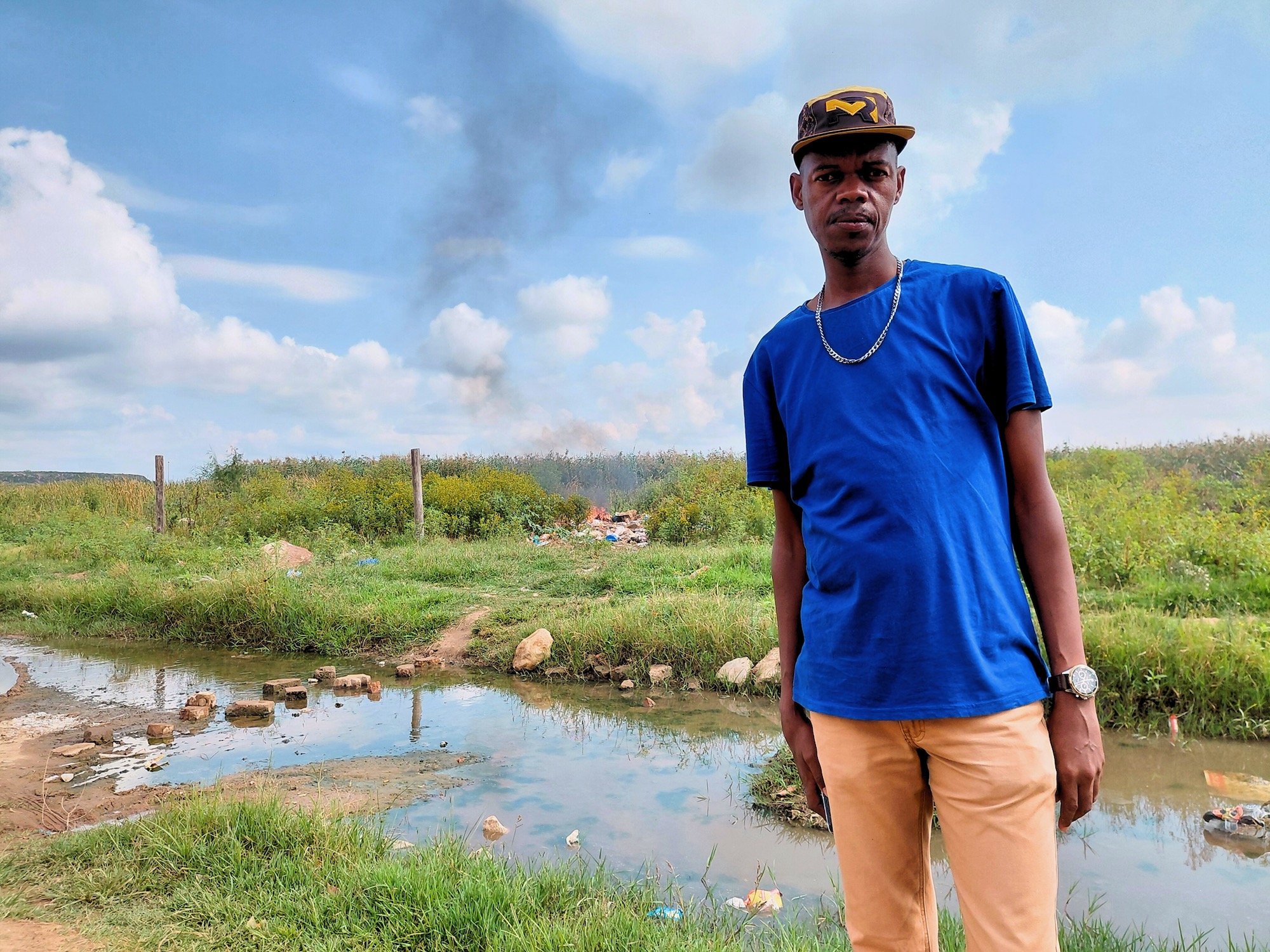
Performing artist and community activist Modisane Mabale stands in front of a street covered in sewage and illegal dumping. He hopes to reclaim this area for performances, sport and more.
Another community initiative is driven by Thabiso Moletsane, who founded the Innovative Social Movement as a non-profit organisation.
Moletsane chose to remain in Sharpeville after completing his social science degree, focusing on young people who dropped out of school.
He says he remembers how the Sharpeville community stepped in to help him when times were tough. He was raised by his grandmother after he was orphaned as an infant, and his early life was marked by poverty.
His organisation provides training in skills such as baking and sewing through Sector Education and Training Authorities (SETAs) accredited programmes.

Thabiso Moletsane, founder of NPO Innovative Social Movement, hopes to provide skills for the people of Sharpeville.
Nearby, the Kitso Information Development Centre — housed in the former notorious police station — provides daily meals to over 300 people and runs free training in robotics, coding and electrical training, accredited through institutions such as the Vaal University of Technology.
It is supported by the Gauteng Department of Social Development.
Tshepo Makhumele, who works at the centre, says much of the produce for the meals comes from the centre’s vegetable garden.
But just a short distance away, the Sharpeville Exhibition Centre and the Garden of Remembrance – where victims of the 1960 massacre are honoured – are showing signs of deterioration.
Bright murals celebrating 20 years of democracy and Oliver Tambo contrast sharply with the cracked walls, peeling paint and general neglect.
Opened in 2002 and declared a heritage site in 2011, the site now has faded signage and a non-functioning fountain. Inside the museum, some displays are damaged or have fallen, and we found no guide to assist visitors.
“I have a huge problem with that as many people visit, and do not truly understand what they are witnessing. It happens all the time,” said Mabele.

A photo in the exhibition centre propped up on the wall.
Dambile Ndaba, a Sharpeville resident and community worker, said the current condition of the memorial site does not do justice to the “deceased heroes” of 1960.
Interest in Sharpeville peaks on Human Rights Day with municipal interventions Mabele describes as “window dressing”. Efforts are often focused on main roads used by officials, while longstanding issues in the township remain neglected.
“What the government should do is engage with the community of Sharpeville, Heritage Organisation, the Victims and Saviour Families, and appoint the relevant people that will educate and keep the heritage and the spirit of Sharpeville massacre alive,” said Ndaba. “We live with their spirits everyday.”
Sedibeng District Municipality, responsible for the maintenance and upkeep of the museum, did not respond to our questions.
In May 2010, the municipality awarded a contract of over R9-million to construction companies to upgrade the Exhibition Centre and its Garden of Remembrance.
Sharpeville is located within the failing Emfuleni Local Municipality (ELM), which was placed under provincial administration back in 2018 due to financial mismanagement and high debt.
According to the Auditor-General’s most-recent assessment, ELM has 91% bad debt (unlikely to be recoverable). The municipality had R836- million in lost water, about 62% of all water flowing through municipal pipelines.
Emfuleni municipality did not respond to our queries.
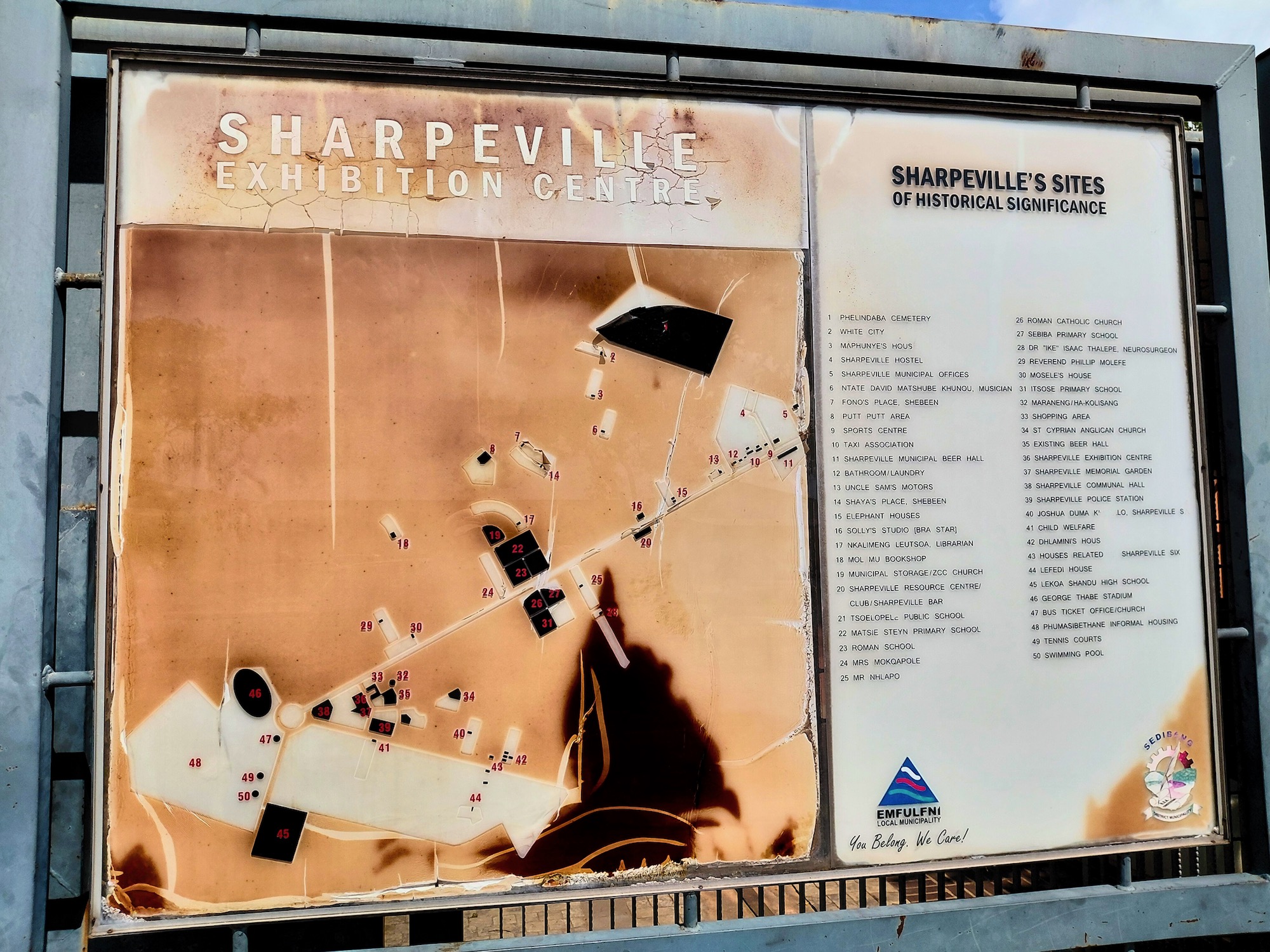
The burnt sign at the entrance of the Sharpeville Human Rights Precinct.

This used to be a working fountain at the entrance of the Memorial Gardens, a provincial heritage site.
