14 April 2026
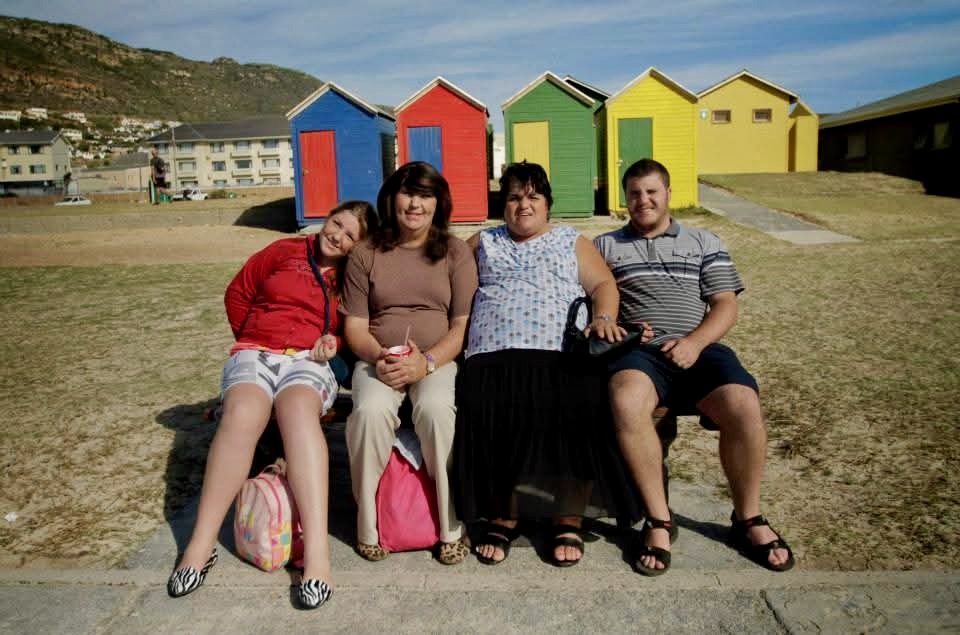
Christien Odendaal (second left) with her children and late wife. Photo supplied
Christien Odendaal spent decades feeling trapped by her body.
“From five years old, I knew I wanted to be a girl, but I was trapped in a male body,” she says.
Growing up in rural KZN, expressing such feelings led to abuse and isolation.
“It completely broke me,” she says. “I tried to commit suicide a few times.”
But eventually, at the age of 47, she informed her wife and two children that she would begin her gender transition.
Odendaal contacted the Triangle Project. Months of counselling and years of hormone replacement therapy (HRT) followed, and eventually surgery at the Transgender Healthcare Clinic at Groote Schuur Hospital.
“I feel like the person I was always meant to be,” she says. “God answered my prayers.”
At 52, Odendaal was one of the oldest patients treated by the clinic, the only state-run facility in South Africa offering integrated gender-affirming care. The clinic provides a pathway that includes psychological support, hormone therapy, and, for some, surgery.
Access to the clinic is through referral from the Triangle Project, an LGBT+ organisation. Next come meetings with the clinic’s psychologists, endocrinologists, social workers, plastic surgeons and other professionals.
But while new access to counselling and hormone therapy is available, surgical care remains severely constrained.
“We can help four people a year and at the moment we are seeing between five and ten new patients a month,” says Dr Kevin Adams, a plastic surgeon at the clinic.
Patients joining the list today may have to wait 20 to 30 years for surgery.
Delays caused by the covid pandemic, budget pressures in the public health system, and the closure of NGO-run services following cuts to international funding, have worsened the backlog.
“Plastic surgery has lost more operating time than most other departments,” says Adams. “We don’t have enough time to do these operations.”
Larger operations, like vaginoplasties, can take a full day. Smaller cosmetic surgeries are less time-consuming but are considered low priority.
For many patients, the care is not elective but essential. Gender dysphoria – the distress caused by a mismatch between one’s gender identity and assigned sex – can make everyday life deeply distressing. Routine acts such as getting dressed or using the bathroom can cause anxiety and alienation.
A study by the South African Society of Psychologists found that nearly one-third of transgender youth had attempted suicide, with those unable to access gender-affirming care particularly at risk.
Carol Lennon, chief nurse at Triangle Project, says, “Many new patients are thinking about suicide … Many times they’re kicked out of their church, their family home or they lose friends. It can become very traumatic.”
But with psychological support and hormone therapy, many patients stabilise enough to begin navigating the long wait for surgery. For some, this care is experienced as life-saving – a way to reconcile identity and body after years of distress, says Lennon.
Jackye Majawie is one such patient. She grew up in Worcester in a deeply religious community where transgender identity was never discussed. “I didn’t know anything about transgender people,” she says.
After moving to Cape Town in 2006, Majawie sought help from Triangle Project. “I saw other trans people there and had conversations with them. I admired what I saw, so I reached out for help,” she says.
That journey led her to Groote Schuur’s Transgender Clinic.
After years of counselling, hormone therapy, and more than a decade on a surgical waiting list, Majawie is at last preparing for further surgery. She joined the list in 2014.
The wait has been long and taxing.
“I don’t have the means to go private,” says Majawie. “If you want it to be done, you just have to wait.”
“It’s very difficult when you look in the mirror and you see something you don’t want,” she says. “Even touching down there can be very complicated.”
For Majawie though, who has an appointment with Dr Adams this month, her wait may be nearing an end.
“To be fully transformed into a body that I feel comfortable in. That will be a wonderful experience for me,” she says.

Jackye Majawie speaking at an event. Photo supplied.
