15 December 2025
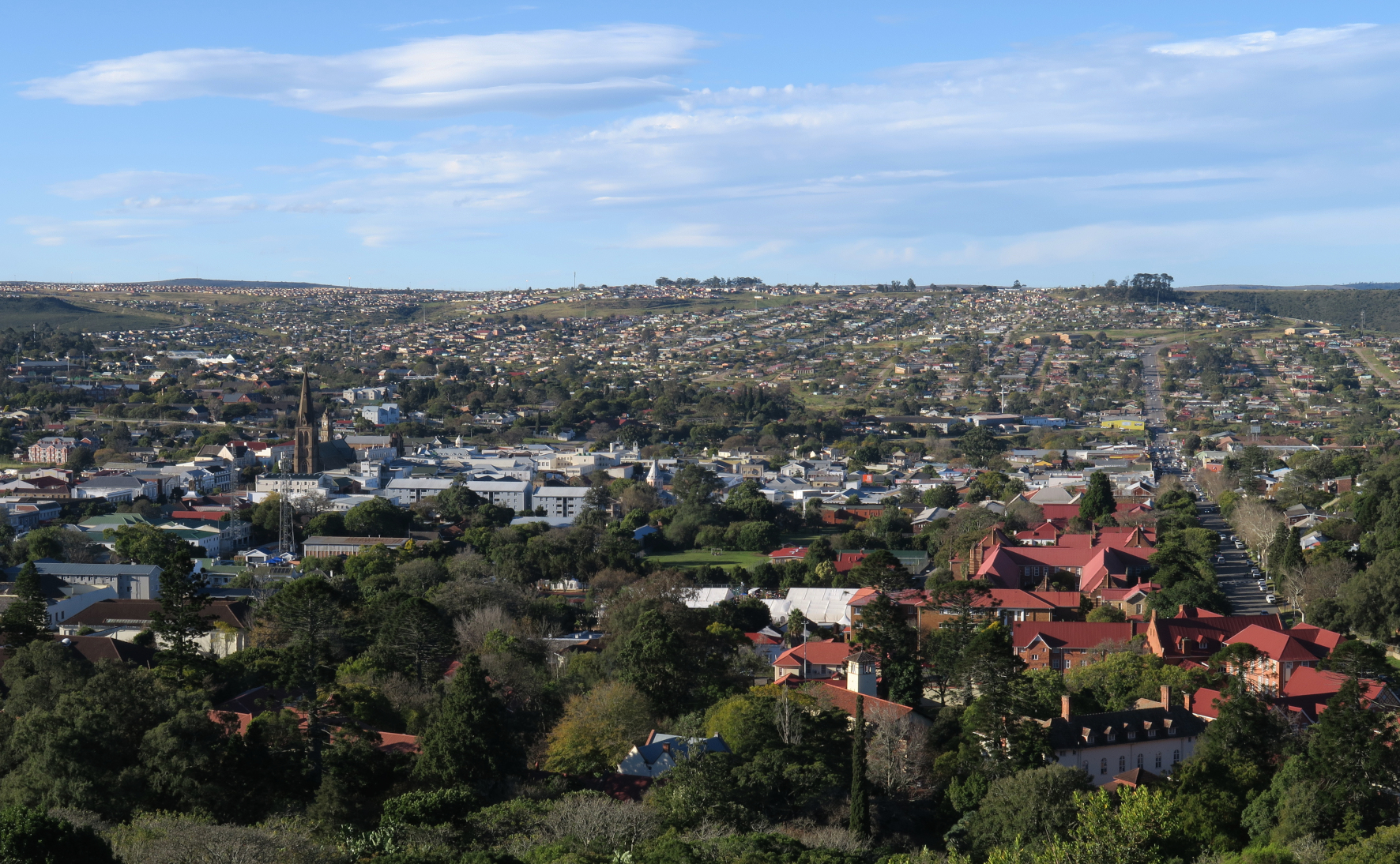
Two contrasting educational programmes in Makhanda shed light on how to get Xhosa-speaking children to read for meaning in a country with a literacy crisis. Archive photo: Steve Kretzmann
The extent of South Africa’s literacy crisis has been laid bare with the Department of Basic Education’s new early learning reading benchmarks, covering 11 official languages. The benchmarks, which will be tracked over years to come, are the result of a R50-million survey that took seven years to develop and research.
Only 31% of Grade 1 children can recognise the 40 basic letter-sounds needed to begin reading fluently, according to the Funda Uphumelele National Survey. By Grade 4, less than half read at the expected level in their home language.
The survey, which tested nearly 28,000 early grade learners across 710 schools, attributes poor outcomes partly to the difficult switch from mother tongue learning to English in Grade 4. Guided by global research showing that children learn better in their home language, the DBE has identified two key levers for improvement: extending mother tongue instruction beyond Grade 3, and placing coaches in classrooms to support teachers.
The Mother Tongue-based Bilingual Education programme has been launched with R57-million budgeted, including for textbooks and readers. But the coaching component — which the DBE considers critical — remains unfunded.
According to Dr. Stephen Taylor, the DBE’s Director of Research, Coordination, Monitoring and Evaluation, coaching at national scale would require between R200-million and R500-million a year. He estimates a per-learner cost of R731, covering 20-30% of schools at a time on a needs-based approach.
Dr Nompumelelo Nyathi-Mohohlwane, DBE’s Director of Reading, agrees that change requires hands-on support: “I speak isiZulu, but I couldn’t teach the language,” she says, adding that teacher training was needed in specific African language reading techniques.
Assessment specialist Professor Anil Kanjee from Tshwane University of Technology - who served as Technical Advisor for the survey - cautioned that teachers struggle to apply benchmarks in practice: “So teachers have the benchmarks - what do they do with them? How do they use them in large classes, or integrate them into lesson plans?”
Who will fund coaching is up for debate. Taylor says that “financial pressures in many provincial departments are a challenge, making it unlikely they will be able to find new funding for scaling up reading support”.
Recent reports reveal billions of rands withheld, mismanaged, or stolen by provincial education departments - money that could have funded coaching interventions at scale many times over. The Eastern Cape Department of Education alone withheld R5-billion over five years, and KwaZulu-Natal R9-billion over 15 years, with R-billion spent on ghost teachers. This has sparked an audit of all education departments by National Treasury and the Education Labour Relations Council.
In an open letter in October, research advocacy group Bua Lit Collective urged DBE Minister Siviwe Gwarube to accelerate the Mother Tongue-based Bilingual Education programme, arguing that children “thrive when taught in their mother tongue”.
Makhanda-based GADRA Education called this claim “profoundly misleading” arguing that “African-language learners are not thriving; they are struggling.” Their evidence: a 2025 Grade 4 city-wide reading and comprehension study in Makhanda showing that only 25% of isiXhosa-medium learners in 10 no-fee schools could read for meaning, compared with 51% of children in four English-medium no-fee schools.
FUNS data shows a similar pattern nationally: 29% of isiXhosa learners read for meaning by Grade 4, compared to higher rates in English and Afrikaans.
With the support of Rhodes University and various other literacy outreach programmes, Makhanda schools have hosted several reading interventions. Two of these interventions, with contrasting approaches, show results, at very different costs: QondaRead, an ongoing English-medium programme, and Funda Wande, a national isiXhosa literacy and coaching initiative which took place in Makhanda schools between 2021 and 2023.
QondaRead, privately funded by GADRA Education, operates in four English-medium no-fee schools, reaching 900 learners with 25 teachers. It provides a phonics programme, decodable readers, daily lessons, and teacher support. Unlike coaching-intensive models, QondaRead gives teachers one day of training, then the materials take over.
In 2024, three of four Grade 1 classes reached or approached the benchmark of 40 letter-sounds per minute, far above the FUNS average of 25%. The QondaRead 2025 report shows an impact equivalent to learners getting a full year’s worth of learning - a year ahead of where they would typically be in terms of reading outcomes.
“The reality is that many teachers themselves feel underprepared when teaching reading,” explains Kelly Long, QondaRead’s director, who spent six years building the system. “We saw an opportunity to embed the pedagogy in the materials themselves - through PowerPoint presentations, instructional videos, and carefully sequenced activities.” The materials are also designed to give teachers the flexibility and autonomy to work interactively with learners.
At Ntaba Maria Primary, Robyn Nel uses a mini projector and tablet to teach 40 children. “When GADRA approached us, it was like manna from heaven,” she says. “We had no books, and no reading system.” Her isiXhosa-speaking Grade 1s now learn to read in English using QondaRead’s materials.
The programme is cost-effective: a full five-year package for Grades R-1 costs about R30,000 per teacher, roughly R172 per learner. In Grades 2-3, the cost drops to R22,000 per teacher and R126 per learner. But QondaRead only exists in English, is limited to one city, and is supported by a wealth of published materials.
Partnering with the DBE, Funda Wande operates in the Eastern Cape in three-year cycles. In 2019 to 2023, the programme reached 57 no-fee schools and more than 10,000 learners. Every week, coaches modelled lessons, observed teaching, and provided immediate feedback while helping teachers implement daily phonics, guided reading, and writing routines.
Independent evaluations show smaller gains than QondaRead: a 2022 study found Grade 2 learners in schools with workbooks, coaching and teacher assistants reading at levels roughly 2-3 months ahead of similar schools without the intervention.
Archie Mbolekwa was among four Makhanda schools to receive Funda Wande support. After coaches withdrew, taking materials with them, principal Lindisipho Funani watched results decline. Teachers now rely on photocopies.
“I would welcome Funda Wande back to boost the teachers and bring back high-quality readers,” Funani says.
The Eastern Cape Department of Education has printed and distributed over 800,000 editions of Funda Wande’s VulaBula anthologies for Grades 1 to 3. These graded readers — developed with experienced isiXhosa teachers and academics — are specifically designed for teaching reading for meaning. When interventions end, coaches take the remaining materials; there is no mechanism to ensure ongoing supply. Unlike English-medium schools that can draw on commercial publishing infrastructure, isiXhosa schools depend on government distribution.
Funda Wande’s Eastern Cape project lead, Fundiswa Sayo, believes coaching drives change, but she acknowledges coaching is expensive. Currently active in 79 schools on the Wild Coast, the organisation is rationalising costs - coaching heads of departments rather than all teachers in some cases. Cost per learner has dropped from R2,332 (2024) a year to a budgeted R1,682 (2026).
Commenting on the QondaRead report, Nyati-Mohohlwane says the gains are “plausible” because the programme is highly structured and teachers implement it consistently. However, she cautions against placing its results alongside those of Funda Wande. QondaRead’s results have not been evaluated through a randomised controlled trial, whereas Funda Wande’s results have been. “Once you use independent assessments, the effects are usually smaller, but more reliable.”
Long doesn’t disagree but points out that QondaRead addresses an immediate need: “Policy reform is a long game. If we wait for that to fix the problem, we will lose another whole generation. We need interim solutions that help the child sitting at the desk today.”
Kanjee sees merit in both approaches to his implementation question.
On the DBE’s proposed coaching model, Kanjee thinks that diagnostic tools will help teachers assess learner needs and progress. Since 2021, he has trained over 22,000 teachers through the DBE’s Teacher Union Collaboration programme, using “lead teachers” embedded in schools to help colleagues interpret assessments and adjust teaching.
Improving reading outcomes in no-fee schools remains slow, hard work - whether through structured materials, intensive coaching, or union-led capacity building. Against the odds, South Africa remains committed to reaching its goal that by 2030, every 10-year-old child will be able to read for meaning. What happens next depends on clear policy and mechanisms to ensure resources reach classrooms.