19 August 2026
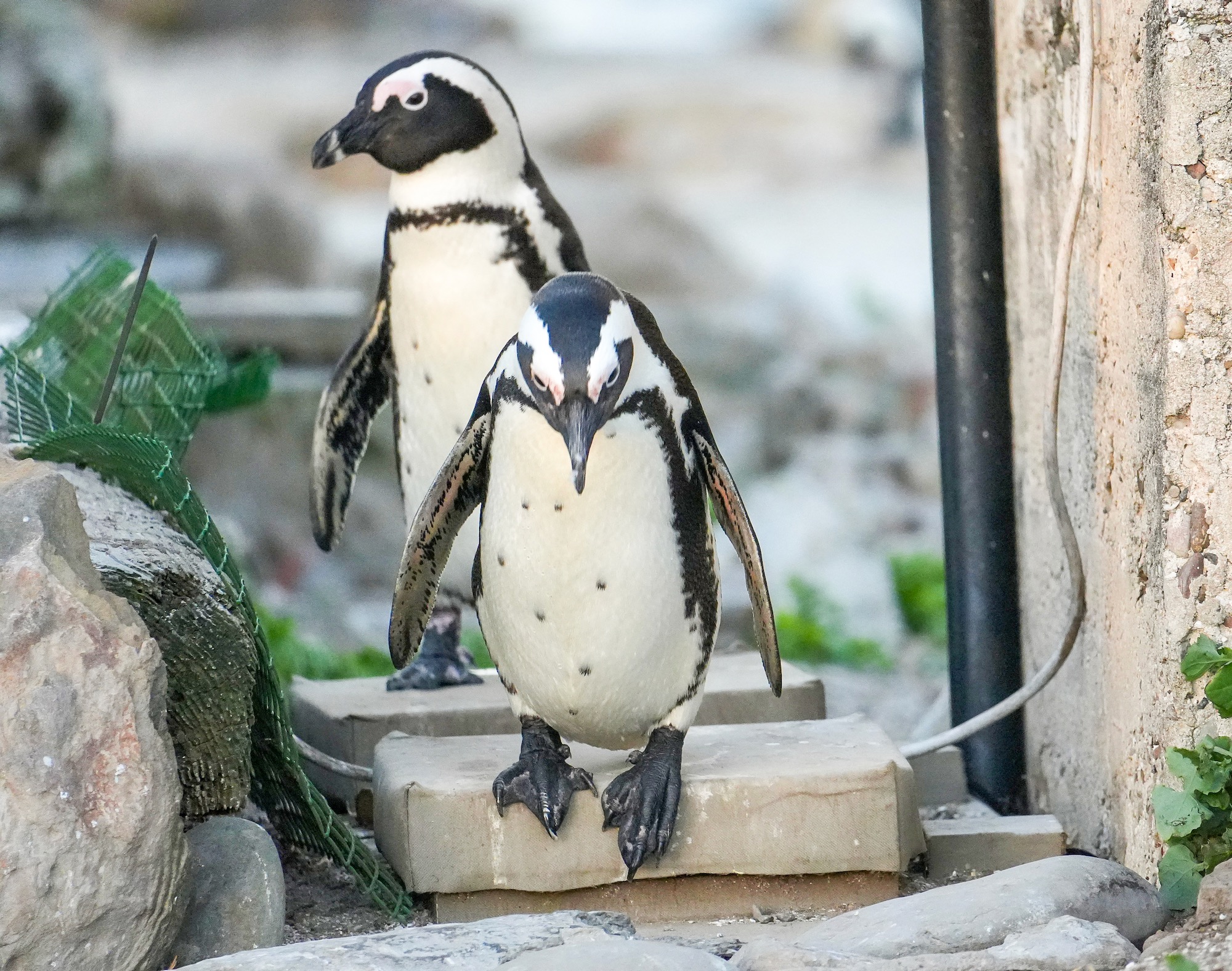
African Penguins crossing a weighbridge on Bird Island in Algoa Bay. The weighbridge records the weight and direction of the birds and forms part of a larger Automated Penguin Monitoring System at breeding colonies to track this critically endangered species. Photo: Eleanor Weideman
Seabird researchers and marine scientists are watching anxiously to see whether the mass death of sardines along the Cape coastline may have a ripple effect on the already critically endangered African Penguin population.
The researchers say it is too early to draw any firm conclusions, but there have been worrying findings so far of weight loss in birds at three of the seven penguin breeding colonies – Dyer Island, Stony Point (Betty’s Bay) and Robben Island – that coincides with the sardine die-offs of recent weeks. However, the data has also shown some subsequent recovery from this weight loss.
The current sardine die-off in South African waters could be partly the result of a viral infection caused by the pilchard herpesvirus pathogen, although this is still to be fully confirmed by laboratory studies. (The terms sardines and pilchards are used interchangeably for the same species.)
This is the first time that this virus has been reported in South African sardines.
Researchers are particularly concerned because two similar mass sardine die-offs in Australian waters in the 1990s associated with the virus coincided with large mortalities in the Little Penguin population and significantly reduced its breeding success in the following years.
The African Penguin is listed as “critically endangered” and the species is being intensively monitored at its breeding sites. Current estimates put the population at about 19,800 mature individual birds and only 8,750 to 9,900 breeding pairs.
Monitoring includes the use of small weighbridges – automatic scales – that are part of a larger Automated Penguin Monitoring System that weighs birds and tracks the direction of their movement along well-established pathways in the breeding colonies without disturbing them.
Currently there are weighbridges at five of the seven African Penguin breeding colonies (one is currently out of commission), and there are plans to install two more.
Weight is one of the critical indicators of a penguin’s health. These birds weigh 2.2–3.5kg, or as much as 4kg in some populations or before moulting.
Dr Alistair McInnes, Seabird Conservation Programme Manager for bird conservation group BirdLife South Africa, a key partner in the monitoring programme, said they were still analysing recent data from the weighbridges that coincided with the sardine die-off.
“These are very preliminary results and there’s nothing we can be confident with yet,” he cautioned.
But data from Dyer Island had “definitely” revealed a considerable decline in the average weight of birds passing over that weighbridge, McInnes said.
“That was the situation for at least ten to 12 days, although it now seems to have recovered somewhat.”
The Stony Point colony at Betty’s Bay also experienced a decline in the birds’ average weight, although this has occurred slightly later than at Dyer Island, he added. Only a few birds had crossed that particular weighbridge so the results were not definitive, but some of them had recorded “significant” weight drops.
Results from the Robben Island colony appeared to show a dip in the average weight, but this situation had recovered within a week, McInnes said.
“So there’ve been mixed results with different levels of recovery. I wouldn’t read too much into this because there are various factors that could affect the results, such as whether the penguins were feeding predominantly on sardines or on anchovies.”
Sardines are particularly important to African Penguins outside the breeding season, when the birds are no longer confined to the waters around their colonies and when they can track large sardine schools that can travel more than 30km a day, he explained.
“Maintaining good condition during the non-breeding period has a significant bearing on the survival of adult birds and hence their population numbers.
“But still, it’s a big worry, and we’re just hoping that the managers will take a sensible precautionary approach to dealing with this and maintain the sustainability of the industry and of the communities that rely on it. The last thing we want to see is crashes [of pelagic fish stocks like sardines] like those that occurred in Namibia and California.”
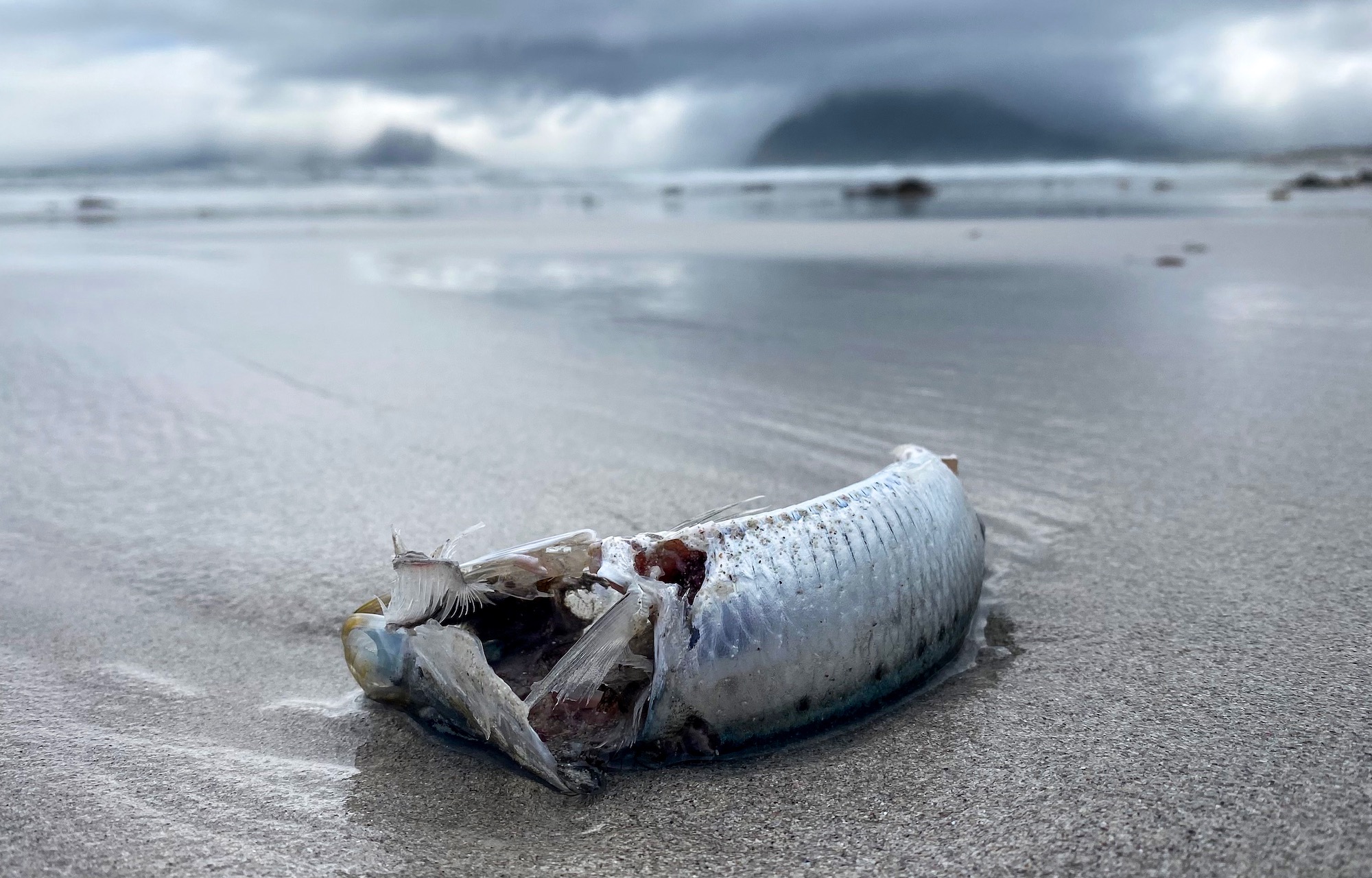
Dead sardines infected by the viral pilchard herpesvirus pathogen have washed up on Cape beaches between Saldanha Bay and Gansbaai in recent weeks. Photo: John Yeld.
The first reports of dead and dying sardines between Saldanha Bay on the West Coast and Gansbaai on the southern Cape coastline and as far as eight nautical miles (15km) offshore of Hout Bay were made on 1 August, and examination and diagnostic testing started two days later.
Last Friday, 14 August, the Department of Forestry, Fisheries and the Environment (DFFE) announced that laboratory investigation had confirmed the presence of pilchard herpesvirus genetic material in sampled sardines.
But it pointed out that the virus had been detected both in dead sardines and, at lower levels, in some apparently healthy sardines collected from the West Coast, and that the role played by this viral infection in the recent sardine mortalities remained under investigation.
“This suggests that the presence of the virus alone may not be sufficient to cause mass mortality. Scientists are therefore also investigating whether an environmental stressor, such as harmful algae, low oxygen or unusual oceanographic conditions, may have triggered or intensified the event. This remains a hypothesis requiring further evidence,” the DFFE statement read.
Preliminary findings suggested that toxins that had been tested for were unlikely to have been the primary cause of the sardine deaths.
“However, they do not entirely rule out harmful algae or environmental conditions as factors that may have placed additional stress on the fish.”
The Department has convened an urgent briefing with representatives of the small pelagic fishing industry, and said a task team would be established to urgently formulate a high-level coordinated response plan for sardine mortality associated with the virus in South African waters.
The routine October/November hydro-acoustic biomass survey to determine the state of the sardine stocks would be the first opportunity to assess the possible overall effect of the virus episode on the sardine population.
The DFFE said there was no evidence that the virus infects people or other animals.
The DFFE said the virus finding alone “does not indicate that healthy sardines caught commercially or canned products are unsafe, and does not currently justify a general suspension of fishing or canning”.
But, it said: “Members of the public should not collect or consume dead or dying fish. They should also not feed dead or dying fish to pets. The department will provide further information as results become available.”
There has been a small note of good news recently for African Penguins.
The 2026 annual census conducted in June at the Boulders Beach colony in the Table Mountain National Park near Simon’s Town recorded 790 breeding pairs – a 13% increase of 92 breeding pairs from the 698 recorded the previous year.
The Boulders colony is “a key breeding site for the conservation of this critically endangered species”, South African National Parks said in a statement.
McInnes said there had also been “small but welcome” improvements in penguin numbers at Robben Island and Dassen Island on the West Coast. However, figures at the two southern Cape colonies – Stony Point and Dyer Island – were “not looking good”, and numbers at colonies in Algoa Bay (Bird Island and St Croix) had also decreased.
“So overall, the African Penguin population is still declining, and it’s very difficult to estimate any overall trends,” he said.
The Small Pelagic Scientific Working Group is due to meet Thursday. The link between the virus and sardine mortalities and the possible impact on penguins are likely to feature. The working group operates under the leadership of DFFE and members include government scientists, industry representatives, and academic researchers from institutions like the Marine Resource Assessment and Management (MARAM) group at UCT. Several conservation groups including BirdLife South Africa have observer status.
The DFFE had not responded with further comment at the time of publication.
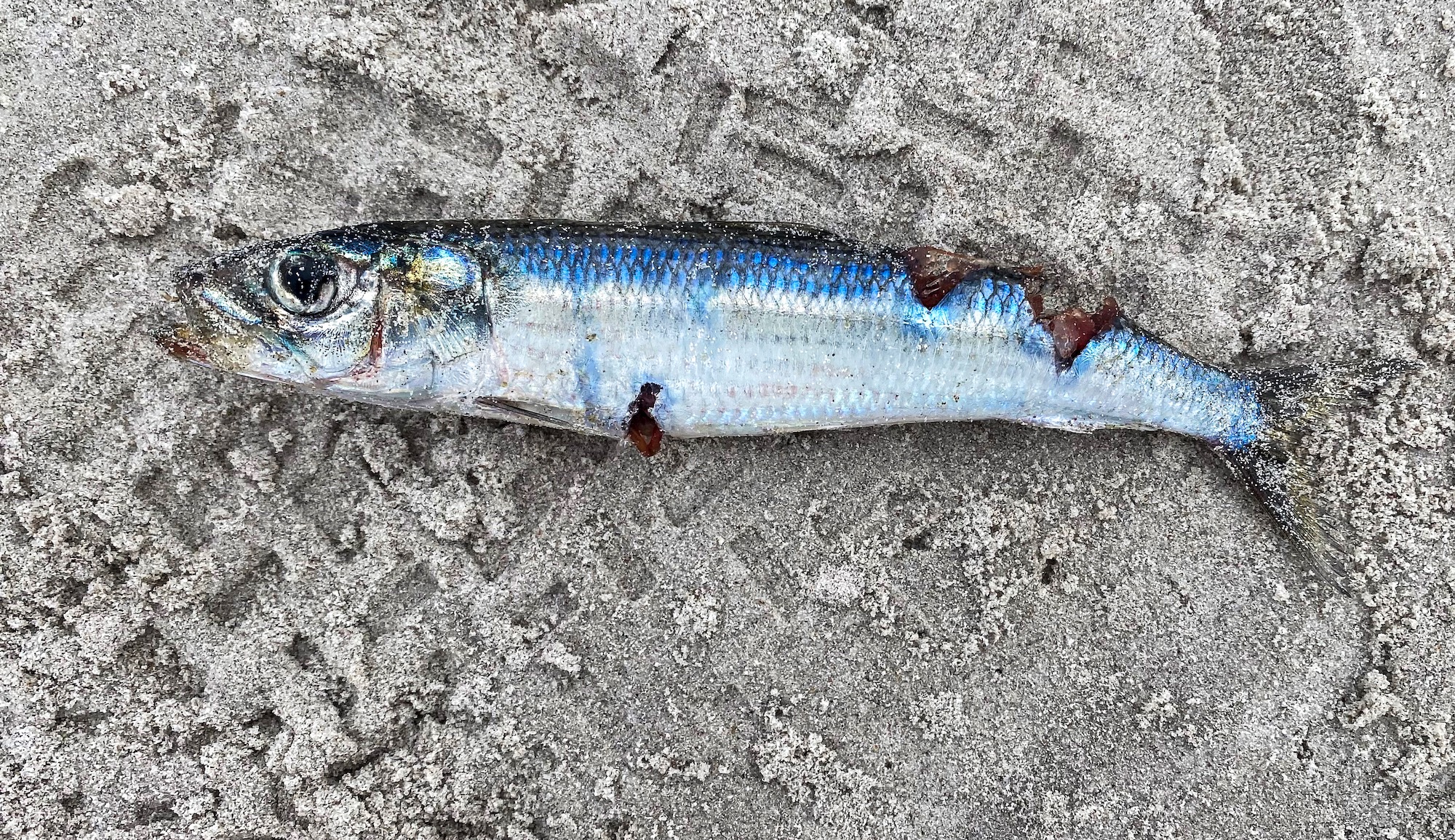
A mass sardine die-off, possibly from the pilchard herpesvirus pathogen, could reduce food stocks for the already critically endangered African Penguin. Photo: John Yeld
