9 September 2026
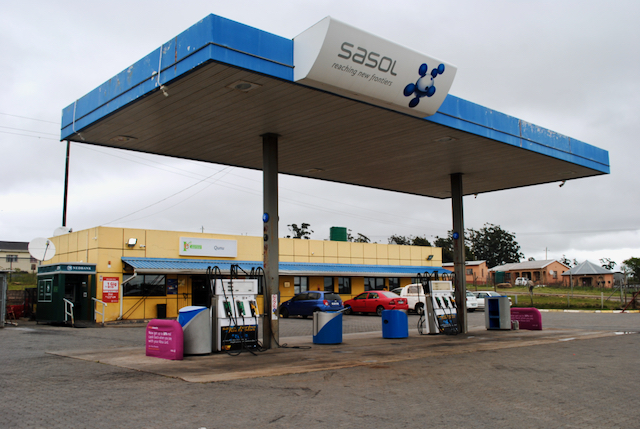
Air pollution from Sasol’s fuel-from-coal plant in Secunda, Mpumalanga, could cause 1,000 deaths a year, a study has found. Archive photo: Mkhuseli Sizani
Air pollution from Sasol’s Secunda plant could cause 1,000 deaths a year, a new study by the Centre for Research on Energy and Clean Air (CREA) has found.
Researchers Daniel Nesan, Jamie Kelly and Kaiyu Chen used emissions data from Sasol’s annual reports to model the effects of pollution from the Secunda fuel-from-coal plant in Mpumalanga. The study, “The hidden cost of coal-to-liquids in South Africa: Health impacts of air pollution from Sasol Secunda”, was published on Monday, the International Day of Clean Air for Blue Skies. The findings were shared via a livestream.
Based on the data reported by Sasol, the researchers simulated air pollutant concentrations using an international air dispersion model, and then modelled each health effect.
They found that in one year, pollution from the plant could cause 2,030 asthma emergency room visits, 1,100 pre-term births, 260 new asthma cases in children and 820 babies born with low birth weight, among other health issues. Children were found to be particularly vulnerable.
The mortality estimate is based on exposure to fine particulate matter (PM2.5) and nitrogen dioxide (NO₂). The plant emits large volumes of sulphur dioxide, a precursor of fine particulates, and hydrogen sulphide.
“We’re just quantifying the effects that are often left invisible,” Nesan said.
Air pollution from Secunda also imposed major economic losses, the researchers said. They calculated that pollution-related illnesses caused 468,000 days taken as sick leave each year, and the total health burden of the Secunda plant cost the South African economy R19-billion every year.
Nesan said the extent of the impact is due to the level of emissions released by the Secunda plant. “Just in terms of the total emissions that it releases into the atmosphere, it’s quite substantial.”
Sasol has committed to reducing emissions, but in the last financial year, the plant released an estimated 112 kilotonnes of SO₂, along with other air pollutants.
The Secunda plant is not obliged to comply with the 1,000 mg/Nm³ minimum emission standard for SO₂ that was set out by the government. Instead, it operates under higher limits outlined in its atmospheric emission licence.
A Sasol spokesperson told GroundUp that the company is studying the findings and methodology of the CREA report.
“We are committed to improving air quality in the Highveld Priority Area while supporting South Africa’s energy transition,” the spokesperson said. “We operate in accordance with the requirements of our Atmospheric Emission Licences (AELs) and remain committed to compliance with applicable air quality regulations.”
Thomas Mnguni from the environmental justice organisation groundWork said he hoped the study’s findings would help communities near Secunda understand what pollutants they are exposed to and hold those responsible to account.
“This provides them with an extra tool for their advocacy,” Mnguni said.
CREA laid out a set of recommendations for the Minister of Forestry, Fisheries and the Environment, including:
Mnguni said it was important to weigh the job creation at the Secunda plant against the need for stricter regulations. He said a middle ground had to be found to improve life for nearby communities.
“That report has also given a clear indication as to how many lives could be saved when industry is compliant with emissions standards,” Mnguni said.
