14 May 2026
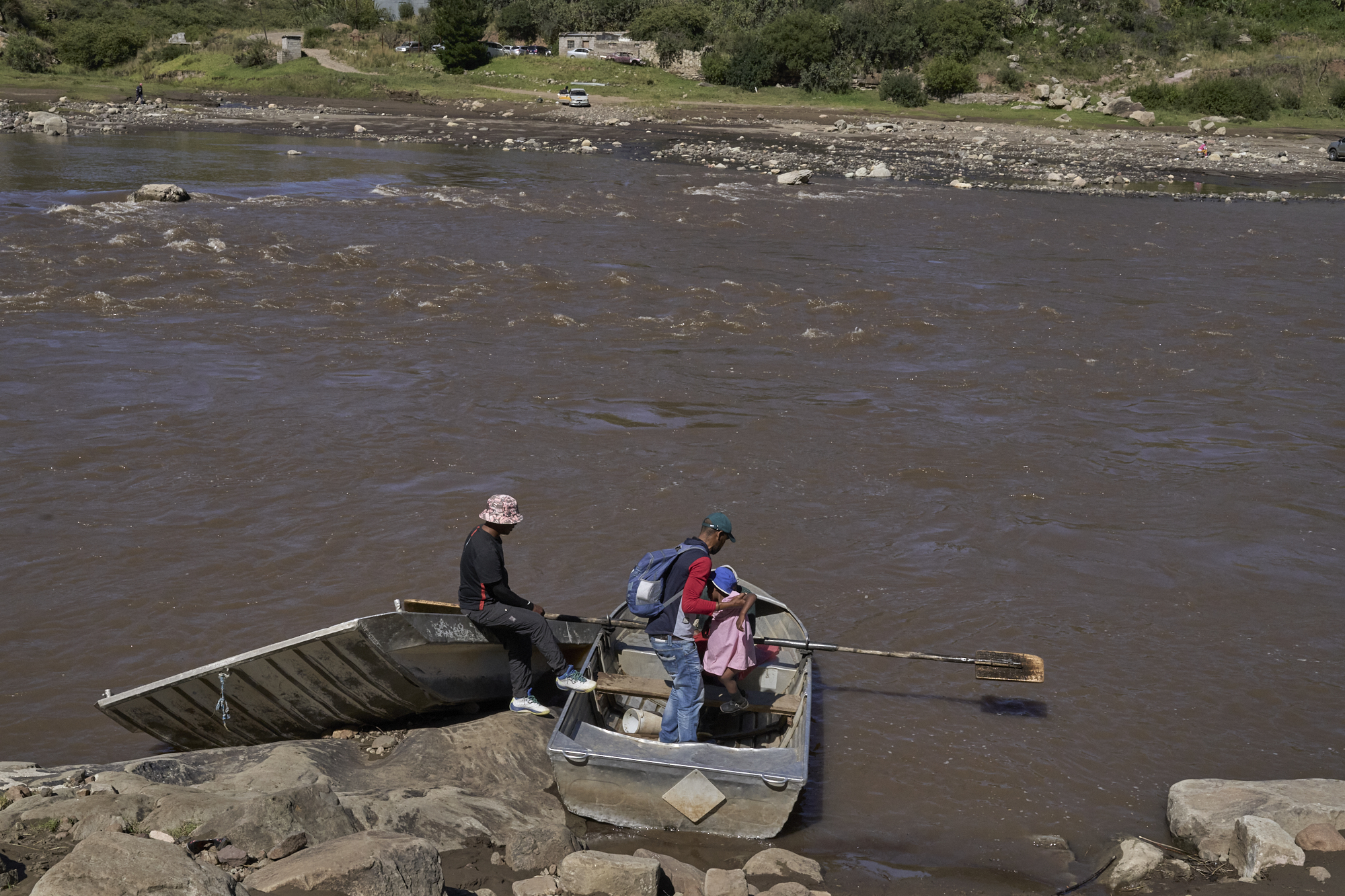
Mothe Mahlomaholo crosses the Senqu River on a boat with his daughter, Keletso Mahlomaholo, on the way back from Tebellong Hospital. Keletso was born with a twisted leg and needs corrective surgery. Photos: Barry Christianson
It’s 9am and a dozen patients are already waiting on the banks of the Senqu River at Whitehill in Qacha’s Nek, Lesotho, for the boat service to get them to Tebellong Hospital on the other side.
Some have children strapped to their backs. Others have come for chronic medication. All are waiting for the free hospital boat because the private boats charge them.
Maliseme Ramolibeli from Whitehill is going to hospital for a routine check-up and to collect her chronic medication. “I am waiting for the hospital boat because we don’t have money.”
She says that the boatman usually arrives by 8am.
For patients like Ramolibeli, their access to healthcare begins with waiting.
Video: Ashraf Hendricks
Ramolibeli has been crossing the Senqu by boat to reach Tebellong Hospital since she got married and moved from Qacha’s Nek town to Whitehill in 1979. She has gone there for pregnancies, routine care and chronic treatment.
Crossing the river has become routine. But this has never made it safe. “We fear this river, but we have no alternative,” she says. “The hospital that serves us best is on the other side. We trust in God and pray every time we cross.”
When the river is flooded, Ramolibeli says she misses her check-ups. “I was supposed to cross on 10 March, but the river was flooding, and we could not cross.”
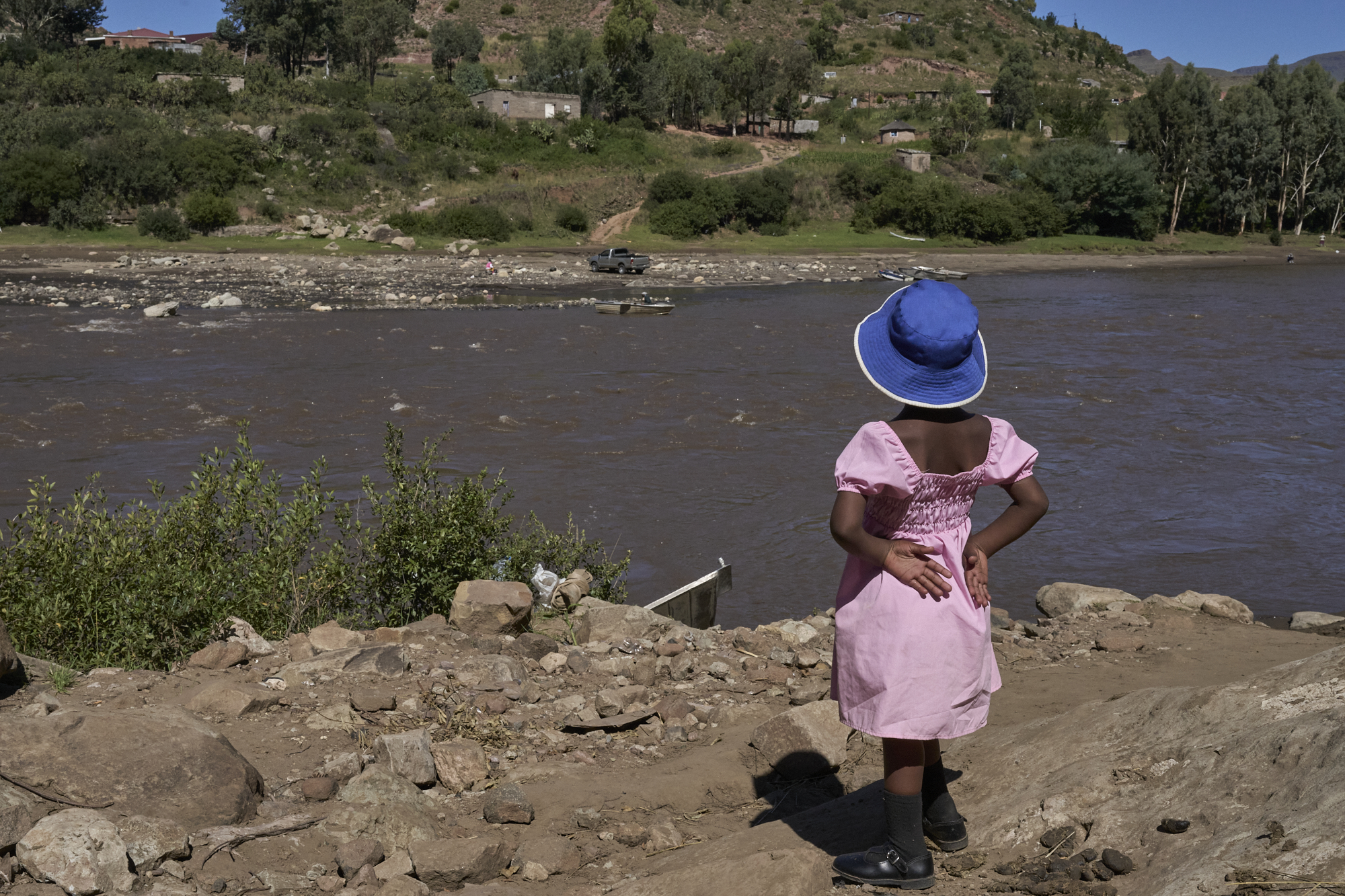
Keletso Mahlomaholo stands on the banks of the Senqu River waiting for a boat to ferry her across after returning from the hospital.
Manthabeleng Baholo from Ha Noosi says many people choose Tebellong because they cannot afford the cost of going elsewhere. “We prefer to go to Tebellong Hospital because Machabeng Hospital is costly to reach,” she says. Transport from White Hill to Machabeng, over 40km away, costs M40 (M1=R1).
“We need a bridge,” Baholo says.
Once patients have made it across the river, their journey is still not over. “We wait here in the rain for the boat with children on our backs,” says Rorisang Thaha. “After crossing, we walk up the steep hills because we cannot afford a hospital vehicle.” Thaha says the hospital vehicle costs M55 for a normal trip and M100 for emergencies at odd hours.
The river is not only a barrier for patients. It also shapes how Tebellong Hospital operates.
Hospital administrator Libuseng Malataliana says, “When there are floods, our patients and some staff are unable to come to the hospital. We then refer our patients to a hospital in Maseru. We have to wake up around 3am to cross the river early enough to reach Maseru on time.”
“Crossing the river when it’s dark is most challenging,” Malataliana says. “Boatmen don’t have equipment that can help them in terms of light. They just cross that river with their knowledge … somehow we don’t hit the big stones,” she says.
In some cases, Malataliana says, women in labour give birth at the river with the help of the boatmen.
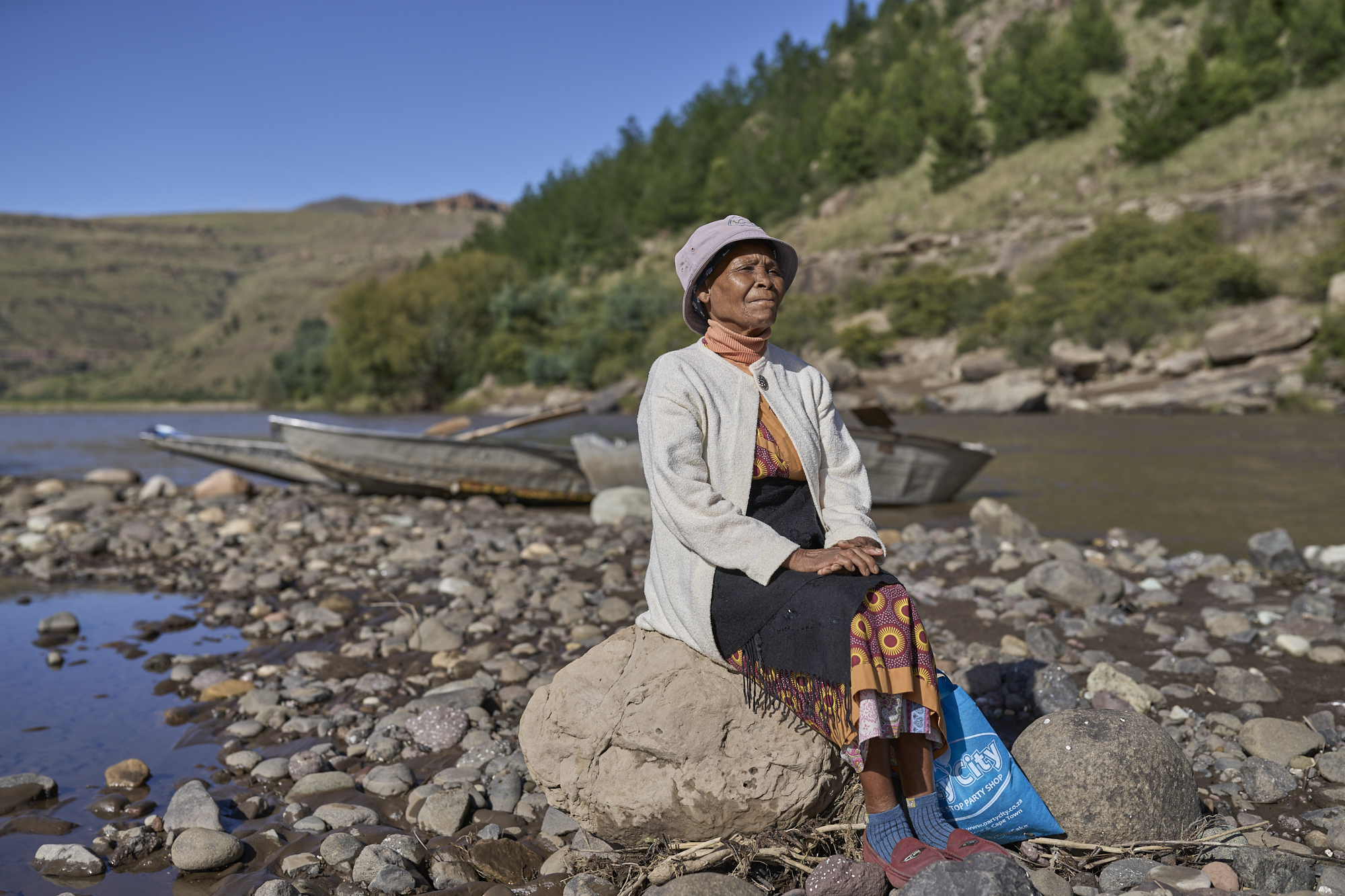
Maliseme Ramolibeli of Whitehill sits on the banks of the Senqu River waiting for a boatman to ferry her to Tebellong Hospital.
Ntšolo Molefe, coordinator of nursing services at Tebellong, says moving critically ill patients across the Senqu requires the assistance of several members of staff.
Some patients are too frail or too heavy to be carried, making urgent transfers difficult. “Some injuries worsen during the transfer process, from the vehicle to the boat, and then again into a vehicle on the other side of the river,” she says.
Molefe recalls one patient with a spinal cord injury whose condition had worsened by the time they reached Maseru. Premature twins who needed oxygen had to be disconnected from the oxygen to cross the river. One twin died during the crossing. The second died on the way to Maseru.
When the river is flooded, Molefe says, patients are sent on the longer route, taking a rocky road. This adds over two hours to the trip.
Ntšolo Molefe is the coordinator of nursing services at Tebellong Hospital.
Medication shortages are a challenge for the hospital says Malataliana. She says chronic patients are beginning to feel the impact. “The little we have … we are trying to manage.”
The hospital is owned by the Lesotho Evangelical Church in Southern Africa under the Christian Health Association of Lesotho (CHAL).
Following our visit to the hospital in March, CHAL deputy executive director Libete Selapane told parliament that CHAL was M152-million in debt, much of it owed to the National Drug Service Organisation for medicine and to the Revenue Services Lesotho in unpaid PAYE. He said the debt was already affecting services.
Under an agreement signed in March 2026, government committed to providing medical supplies directly to CHAL facilities and to settling CHAL’s debt.
While past promises of a bridge have never materialised. But in last year’s national budget, the government committed to its construction. A tender was issued in June, stating the project would start in November 2025 and run for 24 months.
But at Tebellong, there are still no signs of construction.
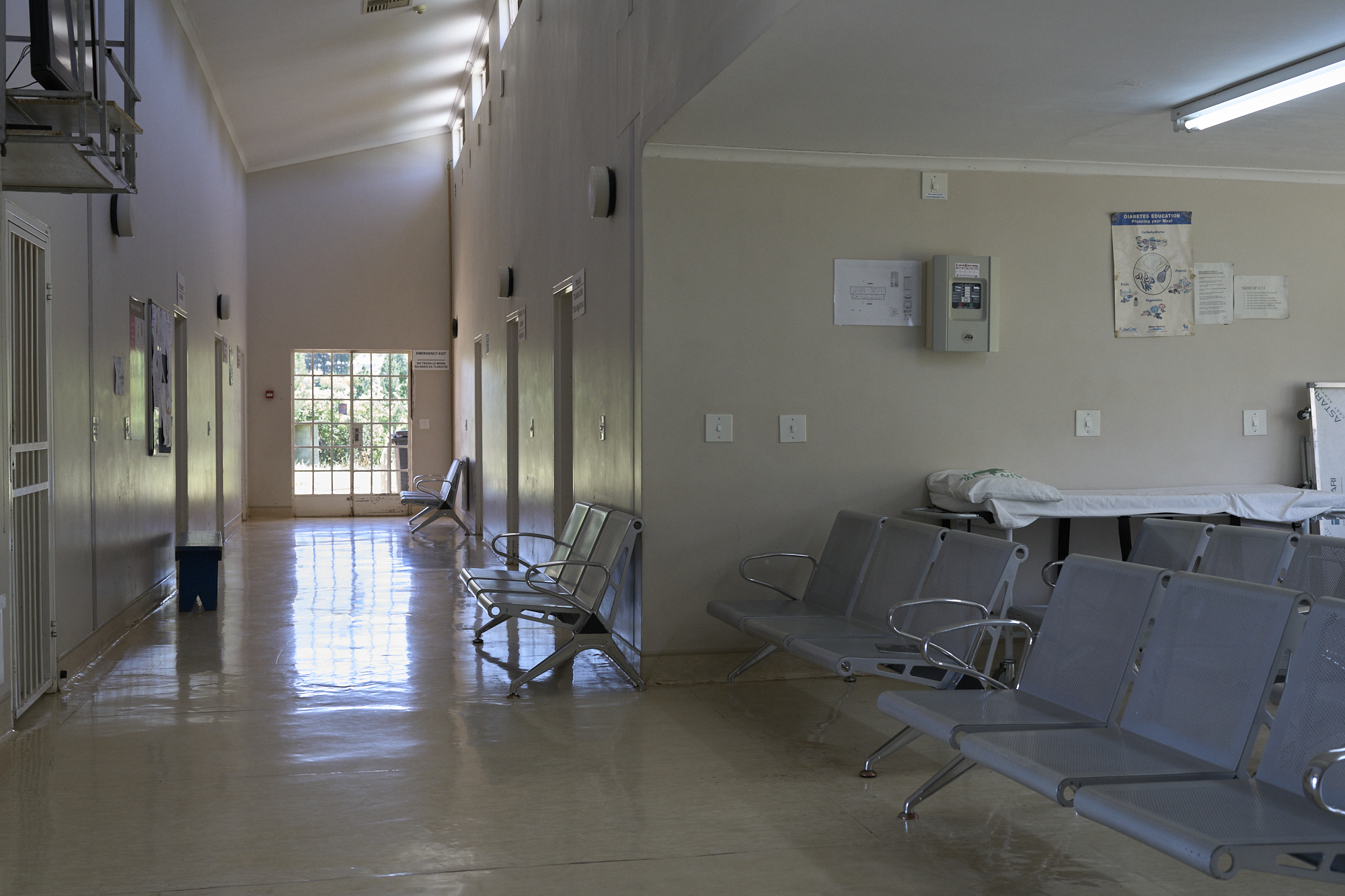
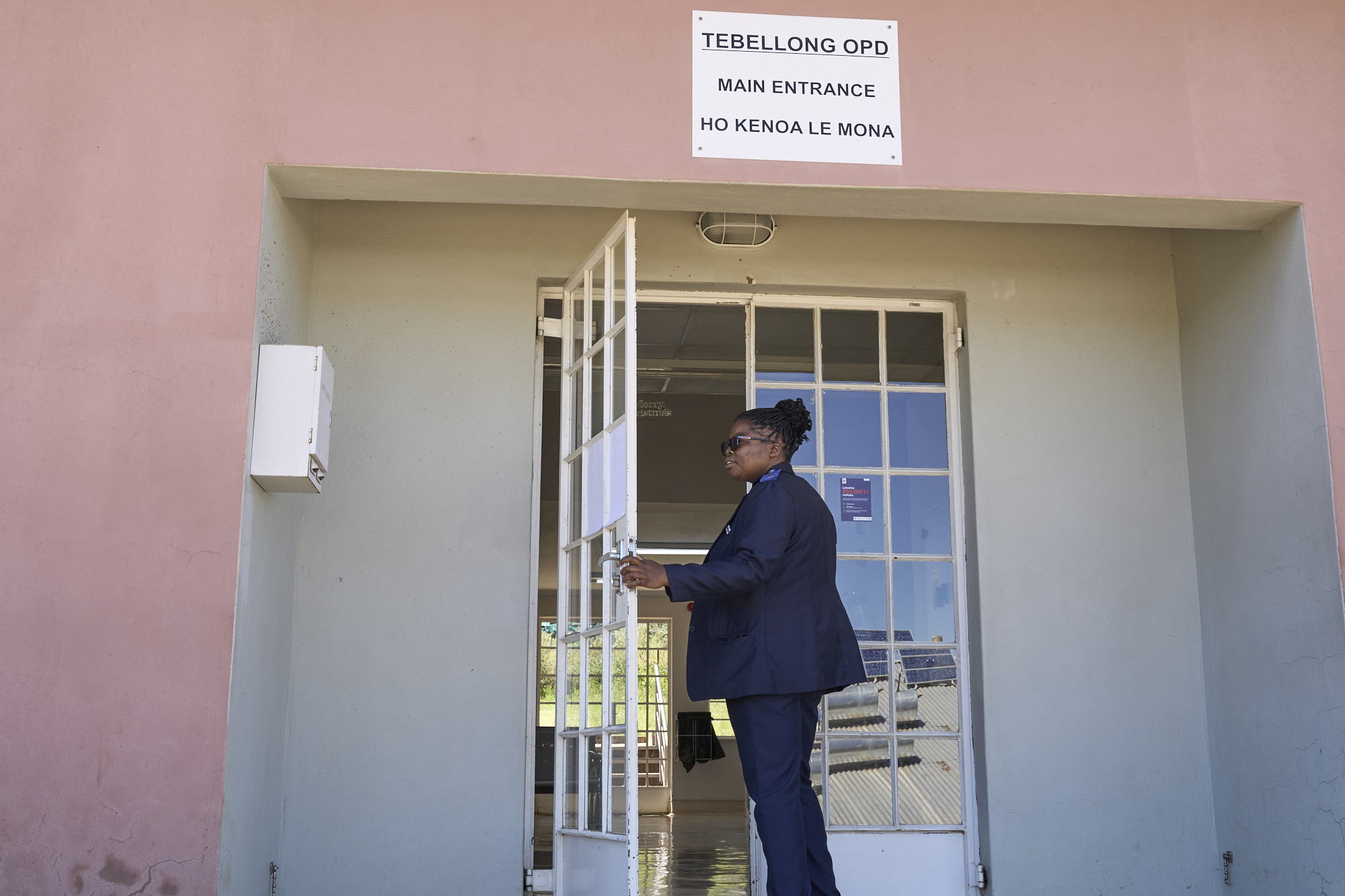
A quiet corridor inside Tebellong Hospital, one of the main health facilities serving remote communities in southern Lesotho.
