8 September 2026
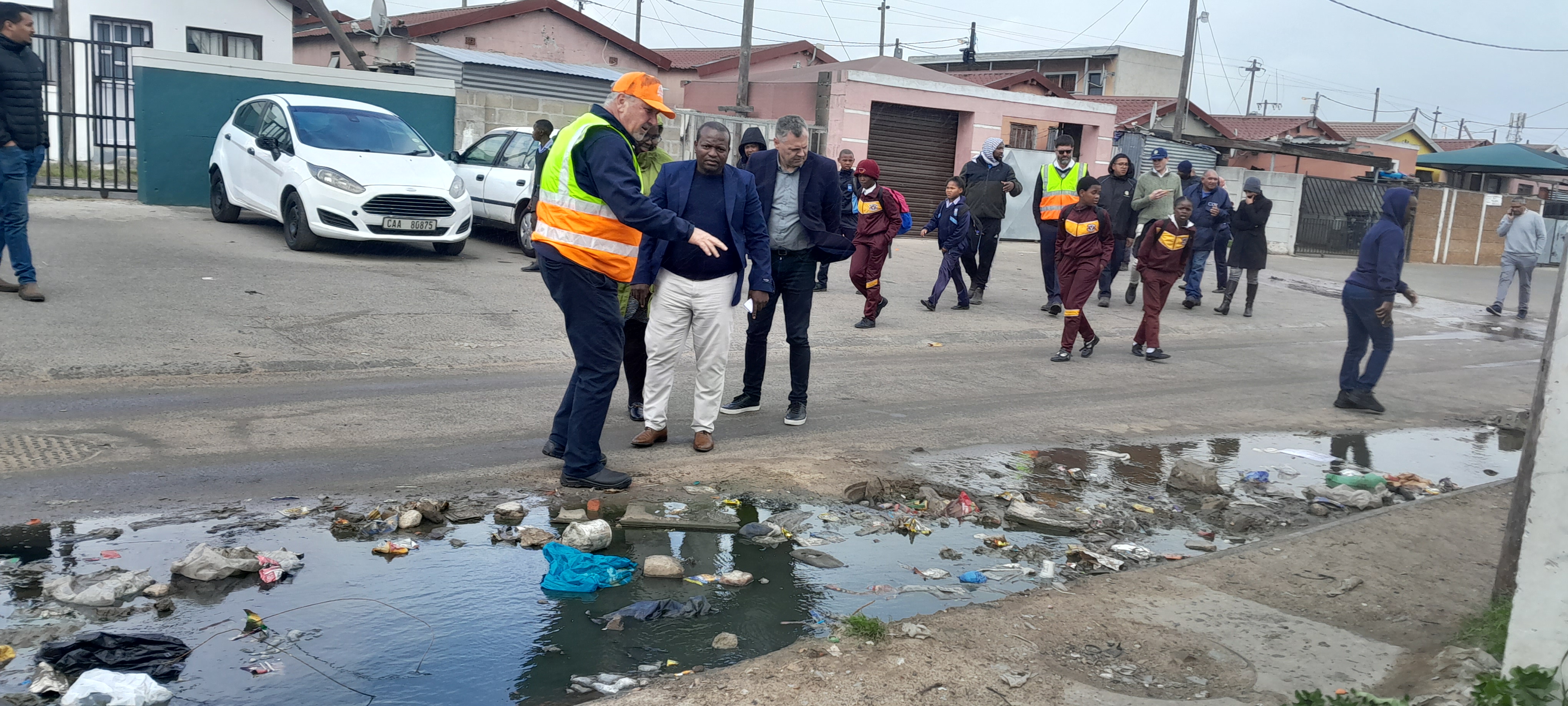
Henk Boshoff, commissioner at the SA Human Rights Commission, inspects a stream of sewage and waste in Bloekombos with community leaders and officials from the City of Cape Town and national government. Photos: Vincent Lali
Learners from Wallacedene Primary jumped over green streams of sewage along Sono Street where Henk Boshoff, commissioner at the SA Human Rights Commission (SAHRC), was assessing sanitation services across Bloekombos and Wallacedene.
It’s been a year since Boshoff visited the community after the commission had received complaints from residents about recurring sewage blockages and poor waste management.
During the visit last year, Boshoff pointed out sewage in the streets and that the rubbish lying around looked like it hadn’t been collected “in a long time” and that “the stench is terrible”.
He urged the City to find permanent solutions to poor sanitation in the area.
Mayco member for water and sanitation, Zahid Badroodien, in a statement in August 2025, said the maintenance team had attended to 1,270 sewer blockages in Wallacedene and 546 in Bloekombos. Most of the blockages were caused by nappies, solid waste and other objects like tyres in the sewer system, the council said.
Boshoff returned on 3 September, accompanied by several officials from the City, including Badroodien, and representatives from the national departments of human settlements and water and sanitation.
He told City officials that he had noticed sewage spills and a “refuse removal challenge” as he entered the community.
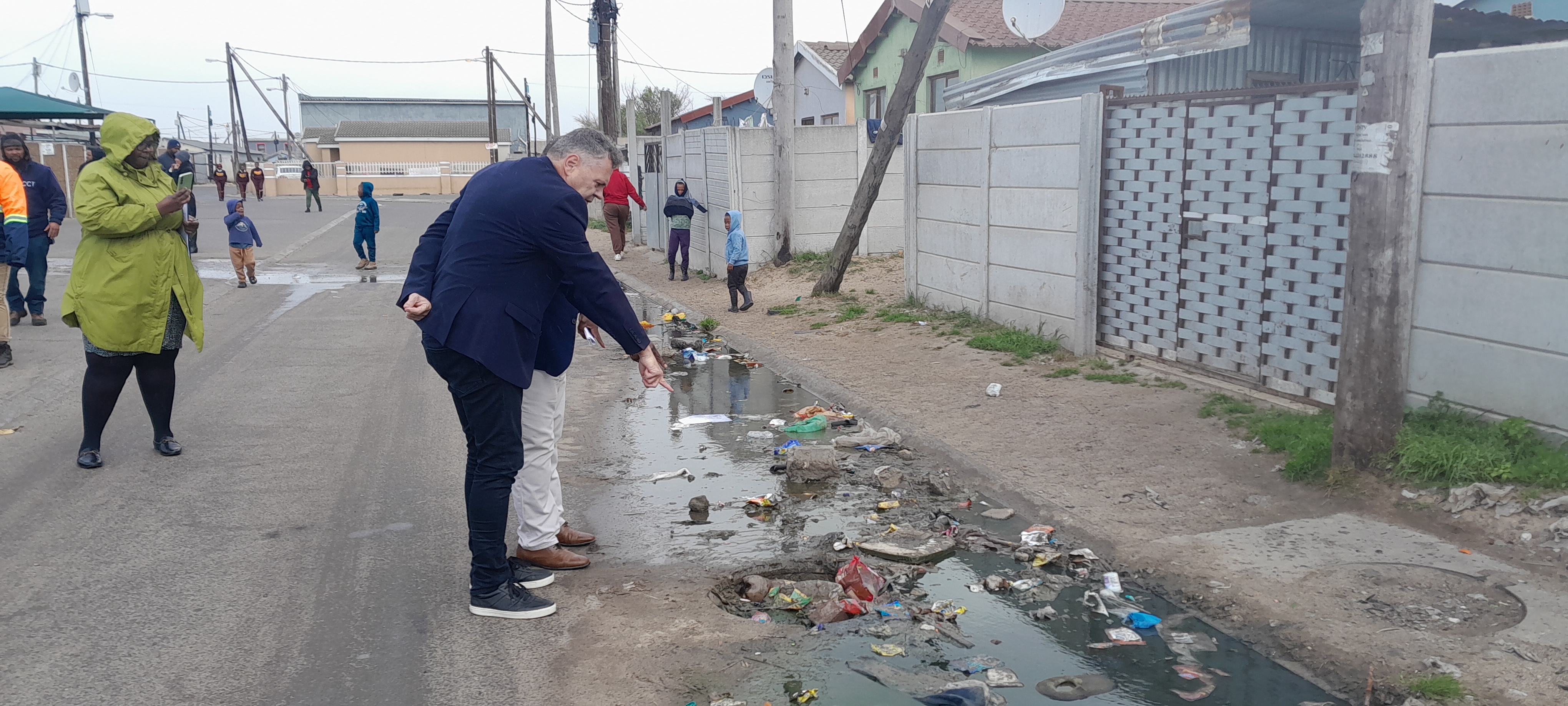
Henk Boshoff pointing out a sewage spill.
Badroodien said the council collected waste weekly, but illegal dumping remained a serious concern. “Perhaps the one-week frequency of collection is not sufficient.”
He said the City had increased the frequency of rubbish collection in Dunoon which improved waste removal in the area.
“If things are being thrown into sewers, those sewer pipes are never going to do what they need to do. Those blockages and sewer overflows will always be there,” said Badroodien.
Community leader Mluleki Tomsana disagreed with him. Tomsana said: “Rubbish and objects move into the drains because the streets are not cleaned and rubbish is not collected thoroughly.”
Tomsana said the problem gets worse after heavy rains. “All of that uncollected rubbish and sand just washes straight into the sewage system.”
Zolani Mqongqana from the City’s housing office said they had managed to remove nine shacks built on sewage pipes to access sewerage lines. He said shacks in Mqongqana Social Distance informal settlement, built above a pipeline in need of repair, should also be moved. He said there is simply no space to move the families to.
Neziwe Maphisa, who sells braai meat, said sewage overflows from a damaged drain near her stand. “Our customers say they like our meat, but our place is dirty,” she said.
Community leader Linda Phito listed several streets that stank because of sewage leaks. “Customers still breathe the stench while they eat at a restaurant beside Bhabhalaza street.”
He said he wanted the Human Rights Commission to get the City to install toilets and water taps.
Boshoff told GroundUp that the officials had provided him with a report on their work and statistics on money spent on fixing the drainage system so far.
“For now, I’m satisfied that work is being done by the City of Cape Town. But we are not where we want to be. There are still sewage spills, rubbish, litter all over Bloekombos,” he said.
Boshoff said he intends to meet with solid waste management officials about removing waste later this month.
Asked if there were still human rights violations, he said: “Definitely, human rights violations in the sense that human dignity is not respected in Bloekombos.”
Boshoff said: “We have seen people living in sewage, and that is not acceptable.”
When GroundUp asked the City to respond to our questions about the findings, it responded days later only saying, “City of Cape town teams are working on solutions that will be shared in due course, after the City has engaged with the SAHRC.”
