11 February 2026
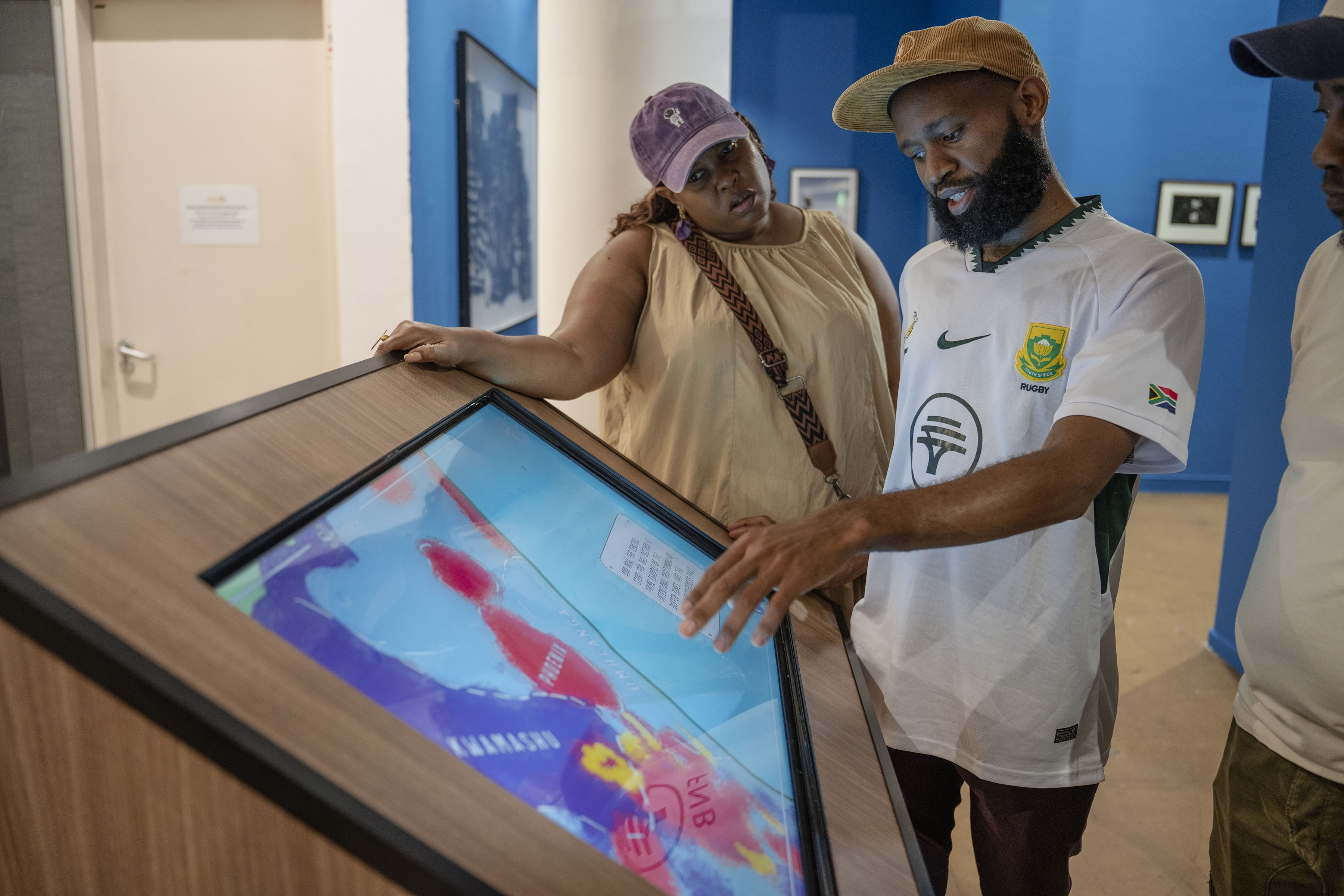
Wandile Mthiyane shows people how to use a digital interactive tool on display at Museum Africa, part of a newly opened exhibition called Nkosi Sikelel’ iAzania. Photos: Ihsaan Haffejee
The legacy of apartheid’s spatial planning and its continued impact on the lives of millions of South Africans, is explored in a new exhibit, Nkosi Sikelel’ iAzania, at Museum Africa in Johannesburg.
“Even though apartheid officially ended in 1994, its spatial and economic structures are still visible in where people live, who owns the land and who has access to opportunities,” says curator Zama Phakathi.
“And for us to address the present and have hope for the future, it’s important that we understand history also as a way of preserving it and educating future generations about where we come from as a people.”
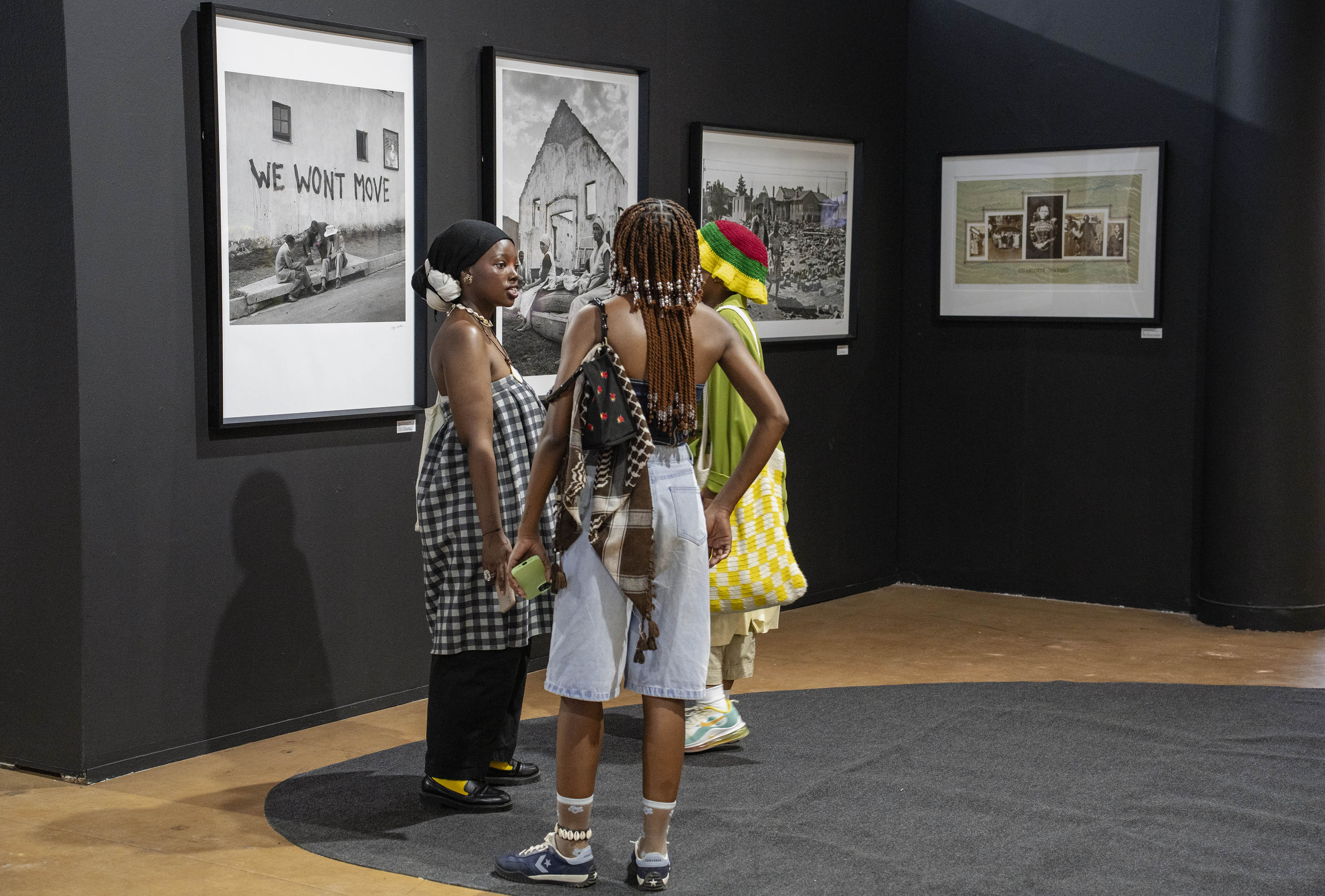
Attendees view the historical photographs by Jürgen Schadeberg which documented the forced removals from Sophiatown.
Forming part of the exhibition is The New Apartheid: How Space Still Segregates – a digital touchscreen map of South Africa. By touching a location, one is taken to data, infographics, maps and residents’ stories, related to apartheid history and its impact to this day.
The map, created by graphic designer Emma Rodseth-Terblanche and architect Wandile Mthiyane, proved very popular with patrons at the opening.
Touching on Soweto, one is taken to the story of a young woman who has to catch three taxis to get to work in Johannesburg’s northern suburbs. The cost to her in time and money brings home the reality of apartheid’s onerous legacy.
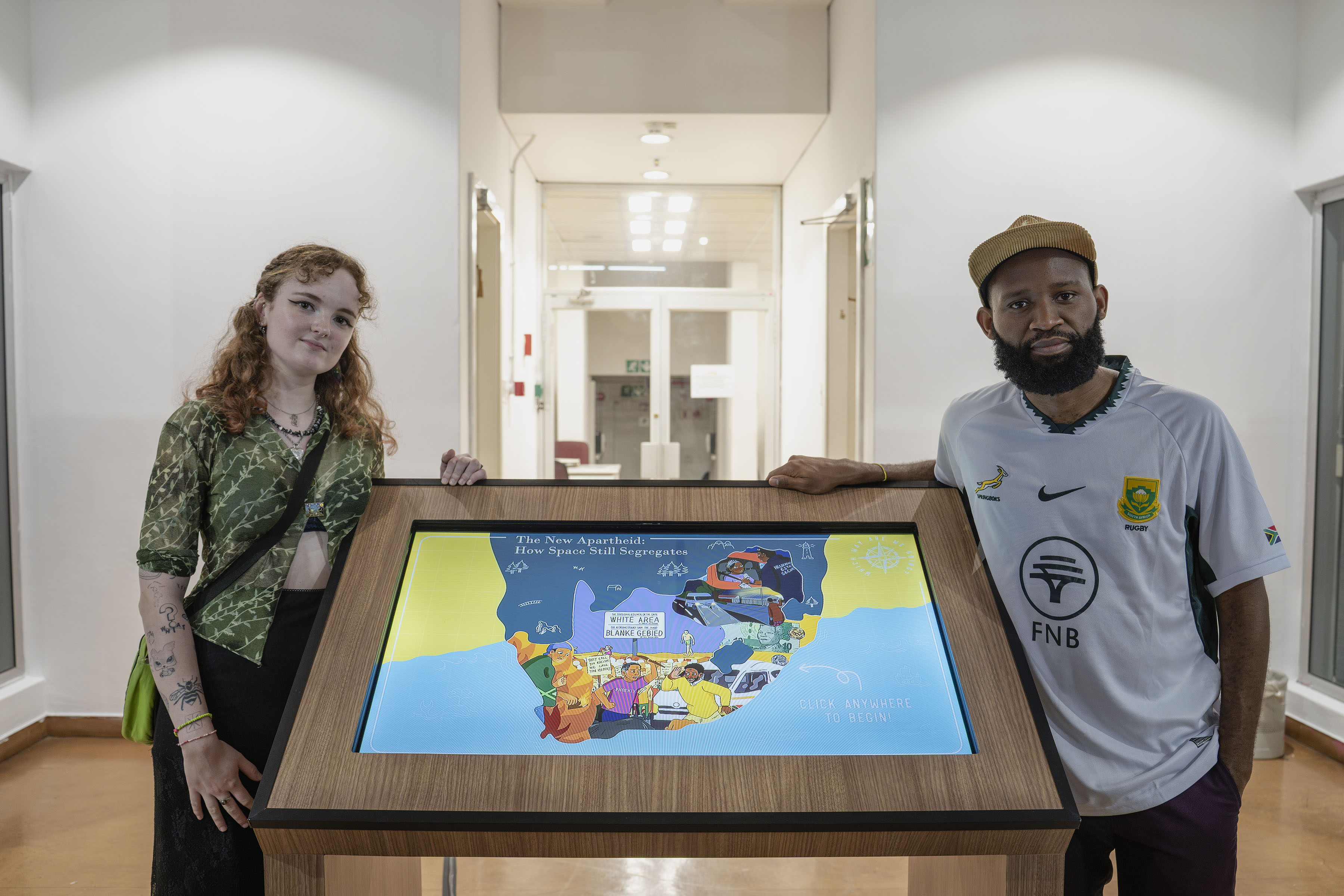
Graphic designer Emma Rodseth-Terblanche together with architect Wandile Mthiyane and their digital interactive map.
Rodseth-Terblanche says her work involves activism and social justice.
“I like to make projects that can teach people things and create awareness and maybe contribute to making the world a bit of a better place,” she says.
The exhibition also features work from renowned South African photographers, including Ernest Cole, David Goldblatt and Sam Nzima, and artworks from the likes of Gerard Sekoto, Sue Williamson, Willie Bester and others.
Nkosi Sikelel’ iAzania runs until 27 February at Museum Africa. Entrance is free.
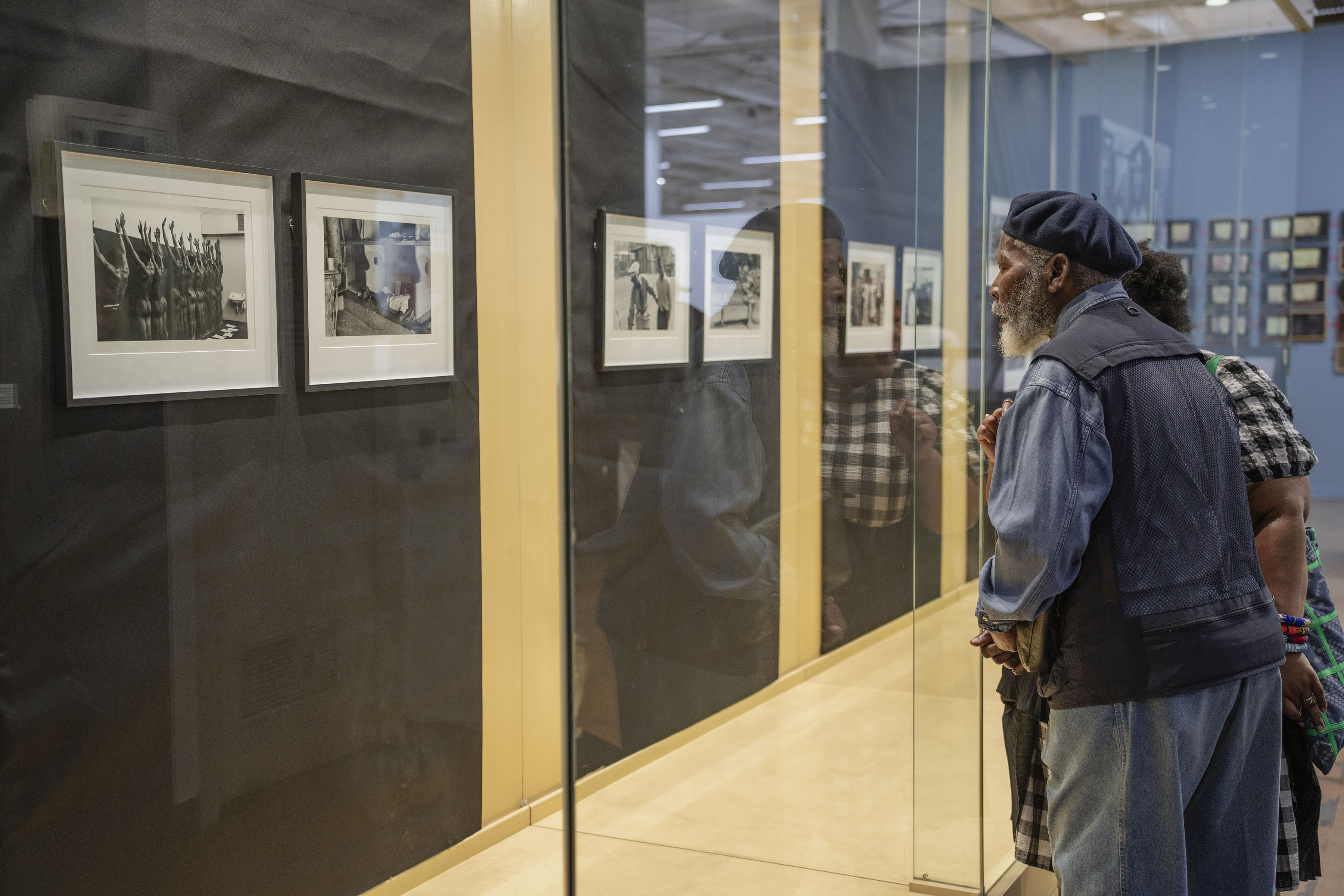
People view photographs from Ernest Cole’s “House of Bondage” photographic series.