9 April 2026
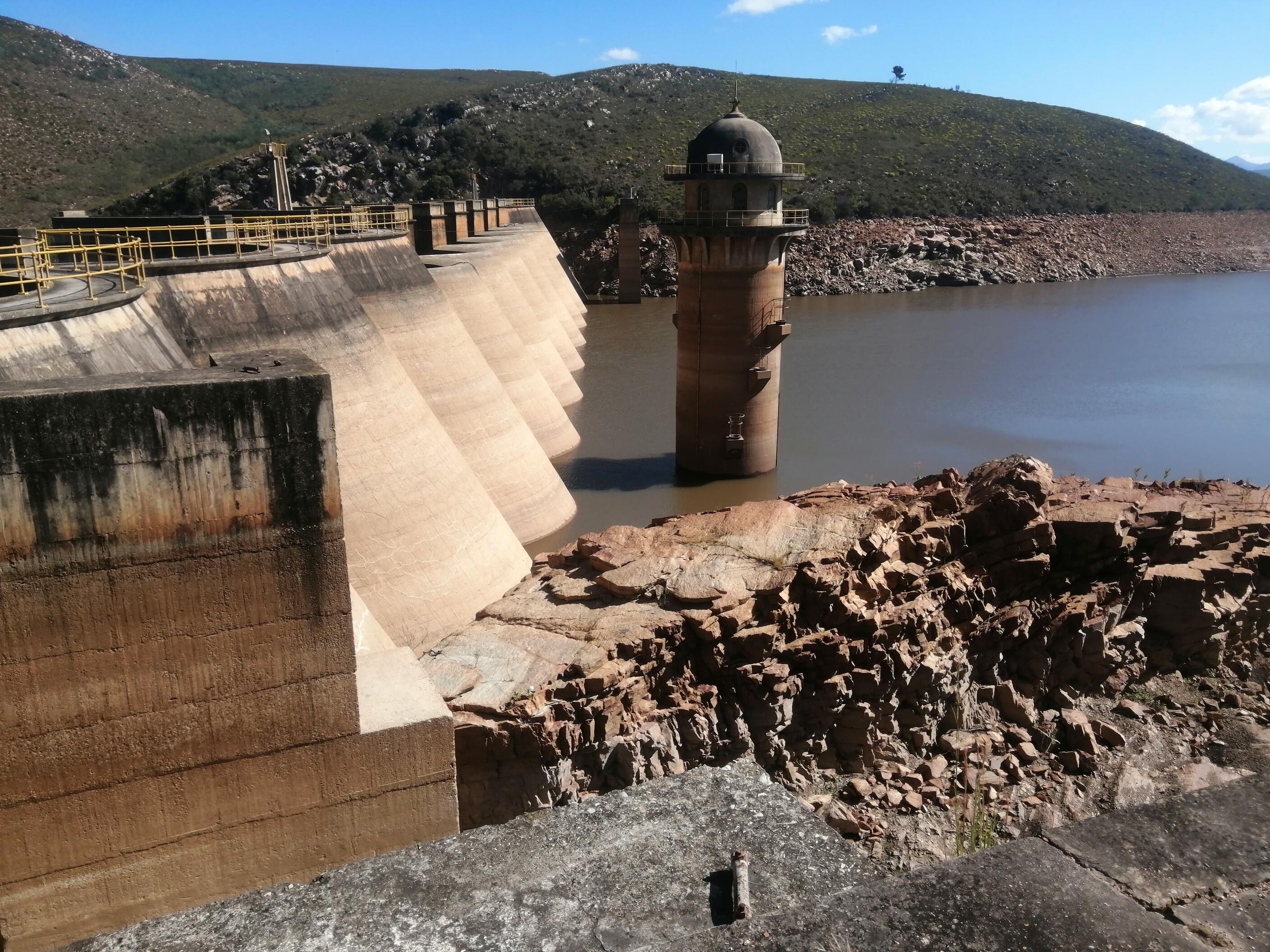
The Churchill dam in May 2021. It is currently at 31.5% of capacity. Archive photo: Mkhuseli Sizani
The amount of available water in the dams supplying Kouga and Nelson Mandela Bay has slipped below 30% of total dam capacity.
As at 7 April, the municipality’s largest supply dam, Kouga (capacity 126ML (megalitres)) is at 31%, and the second largest dam, Impofu (105ML) is at 21.5%. The combined available capacity in the other supply dams is 40%, but these dams only hold 18% of the total supply.
The total available water in the dams stands at 81,876ML. Current consumption stands at 373ML per day, according to the mayor.
“This is no longer an early warning. It is a crisis unfolding in real time,” says Denise van Huyssteen, CEO of the Nelson Mandela Bay Business Chamber. She said the situation is exacerbated by the fact that unaccounted water stands at 63%, “making Nelson Mandela Bay the highest water-losing metro in the country”.
“The reality is stark: we are running out of water, and the system is failing to safeguard what remains … We need the municipality to take urgent action to rein in the water losses by addressing infrastructure backlogs such as fixing leaks, proactively maintaining the reticulation system, dealing with meter tampering and incorrect billing issues, and also properly securing pump stations to prevent vandalism.”
Nelson Mandela Bay Metropolitan Municipality Mayor Babalwa Lobishe has blamed the situation on an extended drought, overconsumption of water, leaks, and vandalism of infrastructure.
In February, the drought affecting the Eastern Cape, including the metro, was declared a national disaster.
Lobishe said current water consumption in the metro, at 373-million litres per day, is “significantly above sustainable levels” as it is 93-million litres “above the allocated limit, placing additional strain on already depleted water resources”.
Meanwhile, in November, the Department of Water and Sanitation (DWS) had recommended a 10% restriction on the allocation for NMBM and Kouga Local Municipality from the Kouga-Loerie sub-system and a 25% restriction on the Kromme sub-system.
DWS also recommended restrictions on the allocation for irrigation of 20% on Gamtoos Water from Kouga-Loerie sub-system and 30% from the Kromme sub-system.
“If consumption patterns are not urgently reduced, Nelson Mandela Bay could face severe supply constraints, less than three years after the devastating drought that nearly brought the metro to Day Zero,” said Lobishe.
She said a comprehensive Drought Mitigation Plan was being implemented, with more than R80-million set aside this financial year to refurbish pipelines, rehabilitate pump stations and repair leaks.
“Infrastructure alone will not solve the crisis if water consumption remains this high. I am therefore making a clarion call to all residents, businesses, and institutions to drastically reduce their water usage,” said Lobishe.
Lobishe said key interventions included expanding the capacity of the Nooitgedagt Water Treatment Works to reduce pressure on the western dam systems, and implementing alternative supply options such as treated effluent reuse.
The plan also includes pressure management, bulk metering, and intensified public awareness campaigns aimed at reducing consumption.
Wisane Mavasa, spokesperson for the Department of Water and Sanitation (DWS), said the Algoa System has experienced below-normal rains in the catchment areas throughout 2025 and into 2026, while there is over-abstraction of water by industrial and domestic water users.
He said the municipality has a high proportion of non-revenue water, which indicates ineffective maintenance and management of water as well as ineffective billing and revenue collection.
He said the metro had also reported a shortage of human resources “to respond timeously to leaks and pipe bursts”, which “are huge contributors to water losses in the system”.
Mavasa said that the National Treasury had allocated funding to support the metro in addressing non-revenue water, including an upgrade to a bulk water transfer pipeline, which will enable the metro to transfer water from the eastern to the western side of the city. It will also fund boreholes to augment the water supply.
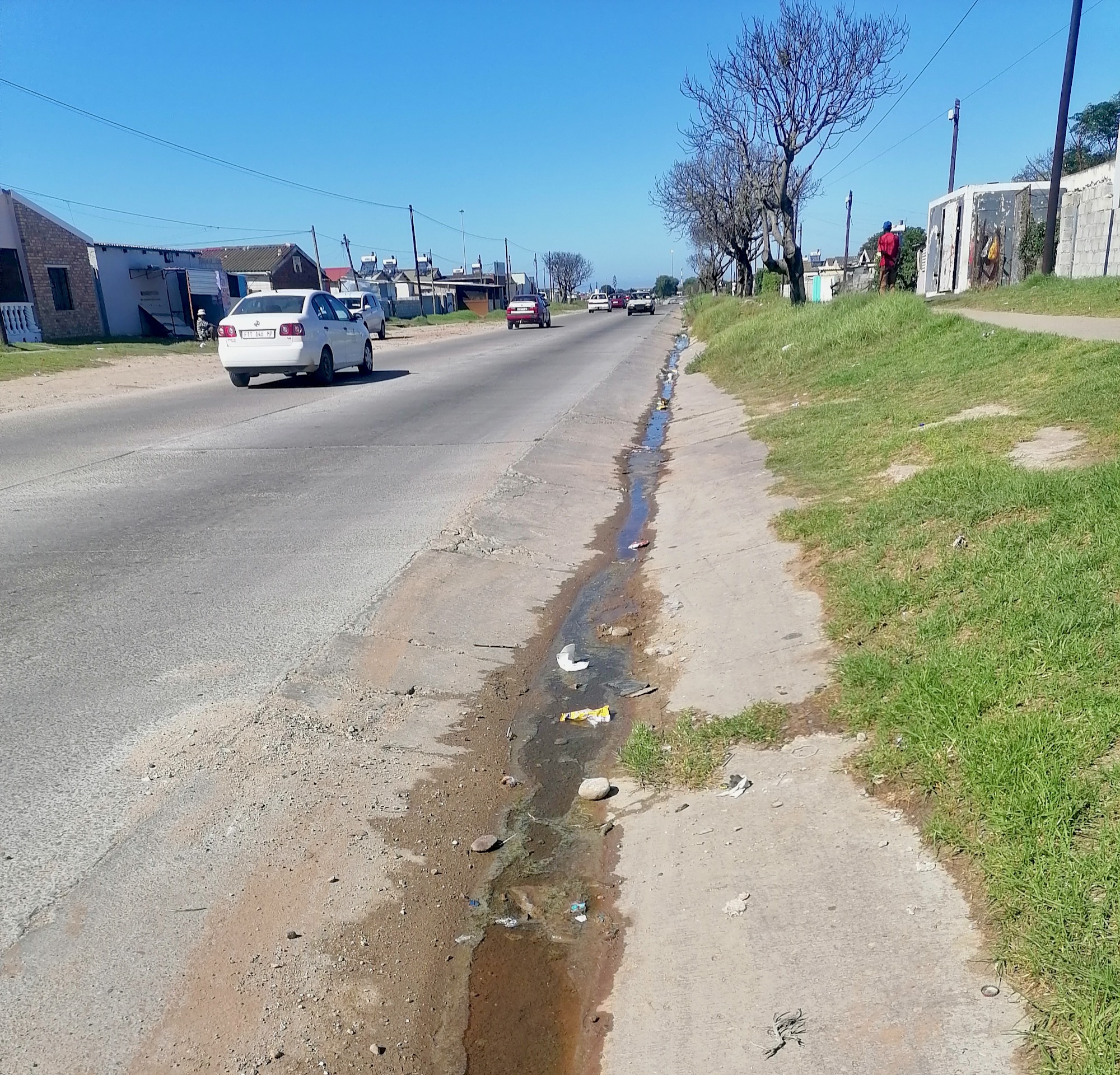
Since at least December, water has been flowing from a damaged underground water pipe in Motherwell for hundreds of metres down Tyityaba Street into a storm drain at Crossroads taxi rank. Photo: Joseph Chirume
