6 March 2026
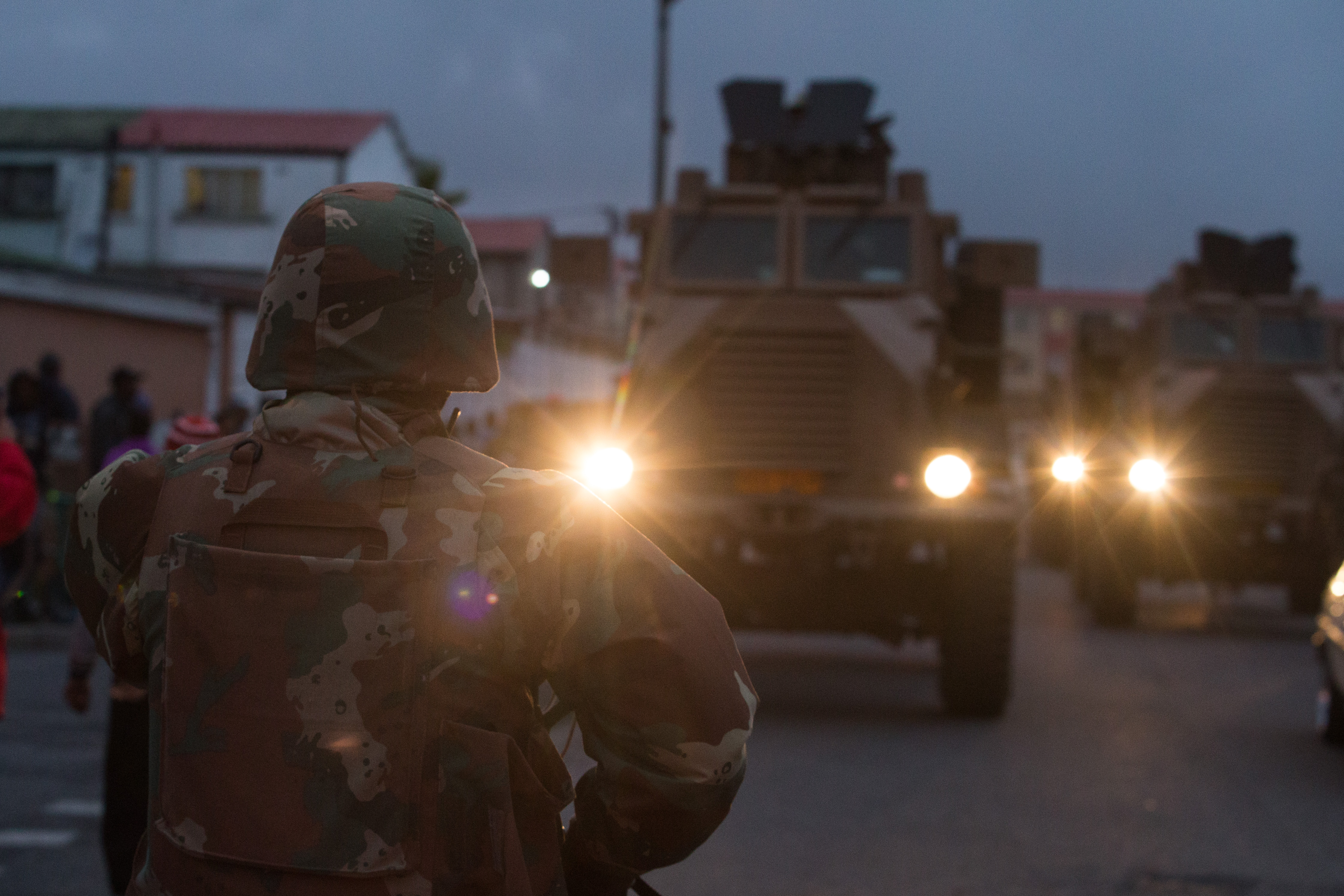
This is a photo of the SANDF when the army was deployed to assist SAPS with crime operations on the Cape Flats in July 2019. The army will again be deployed to several provinces this year. Archive photo: Ashraf Hendricks
Members of Parliament have criticised the South African National Defence Force (SANDF) for having no clear timeline on when soldiers will be domestically deployed in several provinces.
On Friday, the SANDF briefed the Joint Standing Committee on Defence on its state of readiness for the deployment.
This follows the announcement by President Cyril Ramaphosa during his State of the Nation Address last month that the army would be deployed to assist the South African Police Service (SAPS) to fight crime.
According to the presentation by the SANDF, the operation will focus on illegal mining, gangsterism and criminal activities in Gauteng, the North West, Free State, Western Cape and the Eastern Cape. They will be working in a joint taskforce with law enforcement.
“The police will guide us and tell us how we handle ourselves when there’s a crime scene,” said Lieutenant General Siphiwe Sangweni. “To a criminal, visible patrols make a difference. We have the authority to ask a citizen where they are going.”
But MPs were not impressed with the lack of detail. They raised questions about how much it will cost and how it will be funded. Officials estimate the cost will total hundreds of millions of rands over a year.
The employment papers are already on the President’s desk. Once signed, it will be taken to the National Treasury for approval.
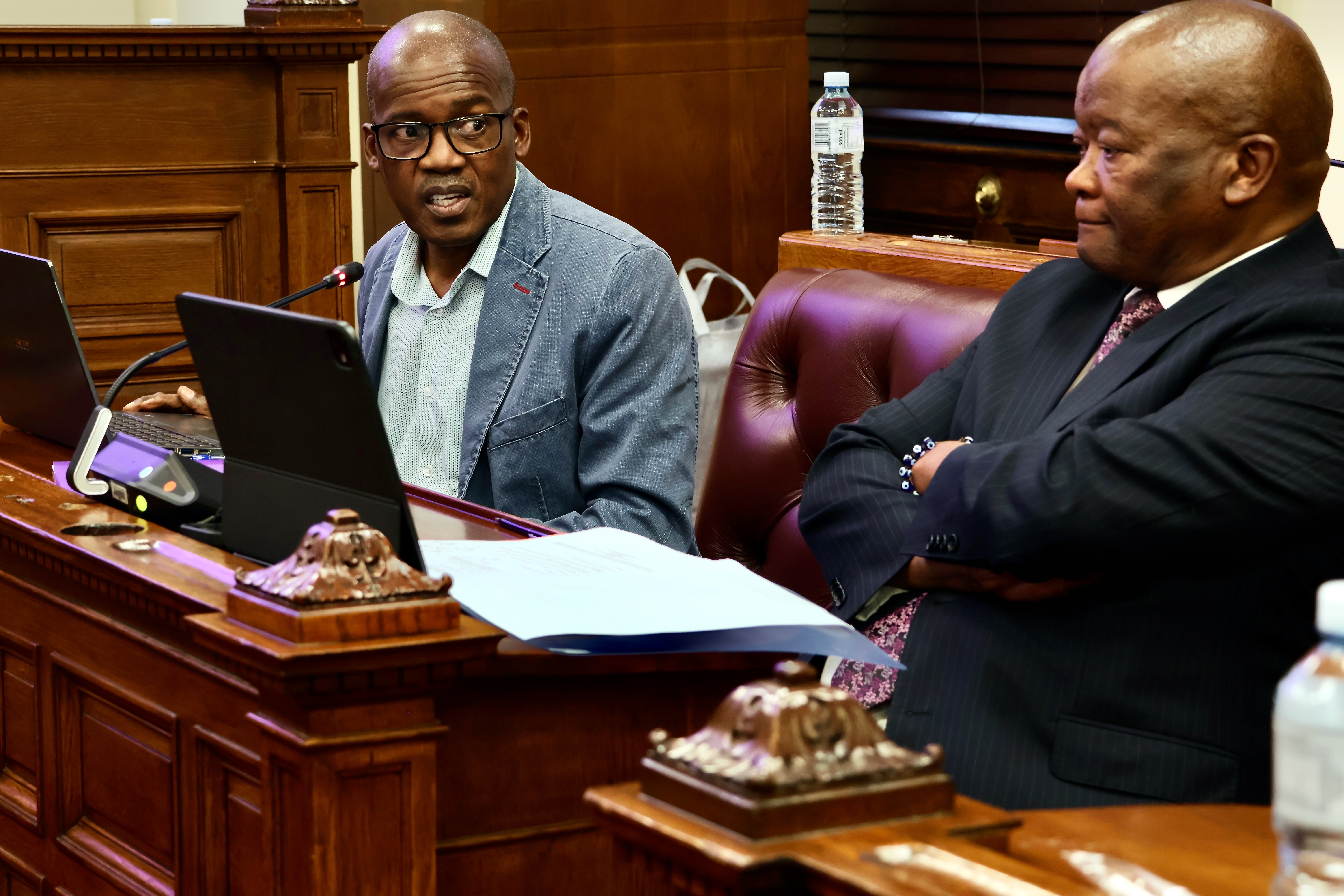
Lieutenant General Siphiwe Sangweni and Bantu Holomisa, Deputy Minister of Defence and Military Veterans, in Parliament on Friday. Photo: Matthew Hirsch
Carl Niehaus (EFF) said the army was going “into a hornet’s nest” and placed the SANDF in a complicated position. “Past deployments have shown that success really depends entirely on the two services functioning in a seamless combined manner.”
“Without this proper combined parallel work, there are risks of inadequate training, operational friction, and the endangerment of civilian lives,” he said.
Nicholas Gotsell (DA) asked, “How are you [SANDF] going to determine whether you are going to Manenberg, Heideveld or Mitchell’s Plain?”
On Wednesday, SAPS presented its own plan in Parliament, saying the deployment of the SANDF was “a strategic response” to restore public confidence and a safer environment for communities.
According to SAPS, the deployment will run from 1 March 2026 to 31 March 2027.
Windy Plaatjies (ANC) said the army’s presentation did not instil confidence that there was a proper collaborative plan with SAPS. “Your presentation is far from one another on some matters. That to me is already a serious problem moving forward,” he said.
Lieutenant General Michael Ramantswana, chief of staff of the SANDF, told MPs, “There are certain things that you have to leave to the military and the service. An operation plan will be classified. I cannot just share it.”
In February, academics told Parliament that while the deployment may present a short-term response to high levels of violent crime, it is also a sign that the police force is struggling to carry out its mandate.
Bantu Holomisa, deputy minister for defence and military veterans, told GroundUp he would recommend the SANDF return next week with SAPS to address some of the MPs concerns.
