26 March 2026
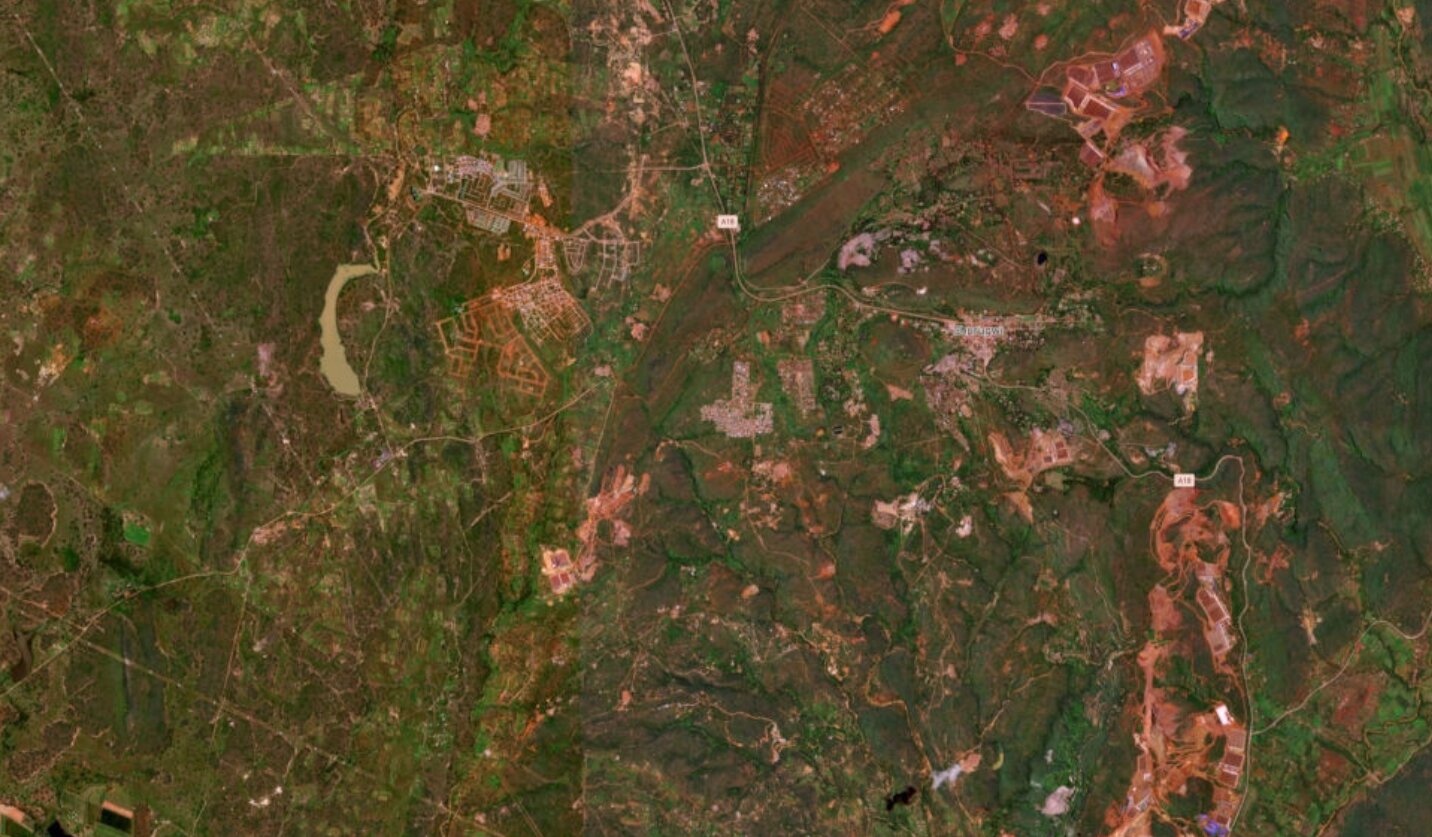
Satellite imagery shows how open-cast gold mining in Shurugwi, Zimbabwe, has stripped 12 square kilometres of pristine vegetation from the Boterekwa Escarpment. Interact with the satellite imagery here.
A gold mining company linked to President Emmerson Mnangagwa’s son has stripped vegetation from the land in central Zimbabwe, and polluted rivers and streams.
Satellite imagery confirms what residents and environmental activists in Shurugwi have long feared. In just five years, open-cast gold mining by Chenxi Investments (Private) Limited has stripped about 12km² of pristine vegetation from the town’s most famous tourist attraction. Part of the Boterekwa Escarpment, also known as Wolfshall Pass, and the Dunraven Falls, now lie scarred and bare.
Images from Google Earth and Copernicus Sentinel, interactive designed by Adam Oxford/Area of Effect
Since the company started mining in the area in 2021, residents, traditional leaders and environmental activists have complained. Rivers and streams are polluted by mining sediment and chemical run-off from heaps of crushed ore.
But the company has dismissed the complaints, insisting its operations are lawful.
Chenxi’s chairman, Collins Mnangagwa, son of President Emmerson Mnangagwa, is widely perceived as untouchable, and critics believe this has protected the company and allowed it to continue mining.
We travelled to the area and saw how heavy machinery is levelling hillsides and burying indigenous trees in massive dumps. Chenxi uses a method known as heap leaching, piling crushed low-grade gold ore into large heaps and spraying it with sodium cyanide to dissolve gold and silver. The solution is then processed through resins, washed and re-dissolved before final recovery of solid gold. The process can take several weeks or months and leaves toxic waste if not properly contained.
A 2022 investigation by the NewsHawks revealed that Chenxi had partnered with Ansh Blue 4/8 (Private) Limited, which is owned by a local businessman identified only as Mahara. Mahara had approval for underground shaft mining but expanded operations with Chenxi into open-cast mining and heap leaching at the Boterekwa Escarpment.
Ansh Blue, which was the licence holder at the time, was found by the Environmental Management Agency (EMA) to have illegally embarked on open cast mining on the picturesque mountain range.
Benson Basera, provincial EMA manager in 2022, confirmed that the mining activities were illegal. “The miner has an environmental impact assessment for shaft mining,” he said.
Basera said EMA ordered the mining company to stop unapproved open-cast and vat leaching operations, fined Ansh Blue ZW$300,000 for doing this without an Environmental Impact Assessment, and noted that the illegal work had disfigured the scenic area.
But despite the fines and orders to halt illegal activity, operations continued, and Chenxi obtained licences from the Ministry of Mines.
Chenxi now operates under its own licence, making its mining activities lawful. But Chenxi director Simon Karimanzira acknowledged that the company has also incurred fines.
The Shurugwi Residents and Ratepayers Association says the damage is shocking.
“Boterekwa is a national treasure. People from across Zimbabwe came for scenic viewing and picnics, but that beauty is being destroyed,” said spokesperson Pardon Machocho.
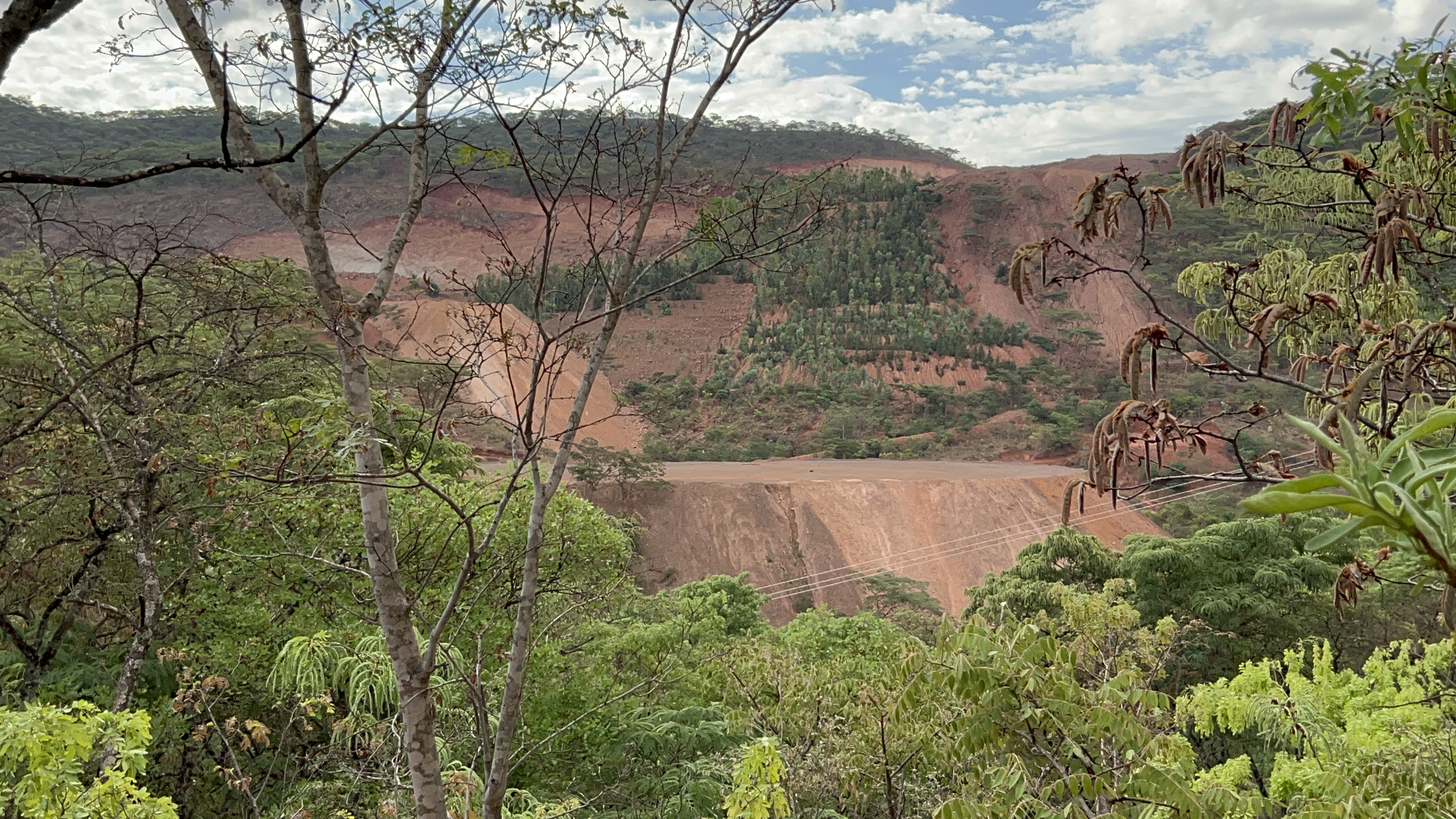
Mining on hill slopes has left the Boterekwa Escarpment scarred and vulnerable to soil erosion. Photo: Mary Taruvinga
Ratepayers association chairperson Bulle Madzitire said, “Before Chenxi arrived, mining was done by artisanal miners. It was on a small scale, so it did not cause major concern. Chenxi’s giant operations, backed by the first family, are entirely different.”
“When it is raining, all the cyanide and toxic waste is washed into rivers and dams,” says Farai Maguwu, executive director of the Centre for Natural Resource Governance, which has been campaigning to stop the environmental destruction for years .
“This is a major problem, not only for Shurugwi but the whole country. Our rivers are now polluted. I will also not be surprised if this kind of mining does not result in landslides in the near future. It’s just a question of time before nature hits back,” he said.
“In private, officials at government institutions in Shurugwi express concern with Chenxi’s operations but the feeling is that those running the company are above the law. There is no political will,” Maguwu said.
He said the EMA and National Water Authority remained silent.
“This is because their hands are tied. They are afraid to ruffle the feathers of people and families behind the project,” said Maguwu.
Bhasera said the agency monitors Chenxi and produces quarterly reports for the Minister of State.
“Mining requires coordinated action by government, local authorities, and communities to ensure sustainability. We are one part of the process, but all stakeholders must act together,” he said.
Karimanzira said EMA fines were a normal part of mining. “We comply with regulations and seek guidance where needed. We are committed to rehabilitation, slope stabilisation, and tree planting, including hosting National Tree Planting Day.”
Shurugwi villagers complain that the company has blocked access to and destroyed indigenous forests where they used to pick mushrooms and wild fruits.
Resident Misheck Moyo said, “Chenxi has taken over large areas around Boterekwa and we no longer have access to our ancestral lands, including grazing areas. Our lifestyles have been destroyed and we are no longer free in our movement because they have placed armed guards around the mines.”
This is the second of two articles about Chenxi’s mining operations in Shurugwi. Read part one here.
This story was produced by Pachena and syndicated by the IJ Hub on behalf of its member centre network in Southern Africa.
