16 September 2026
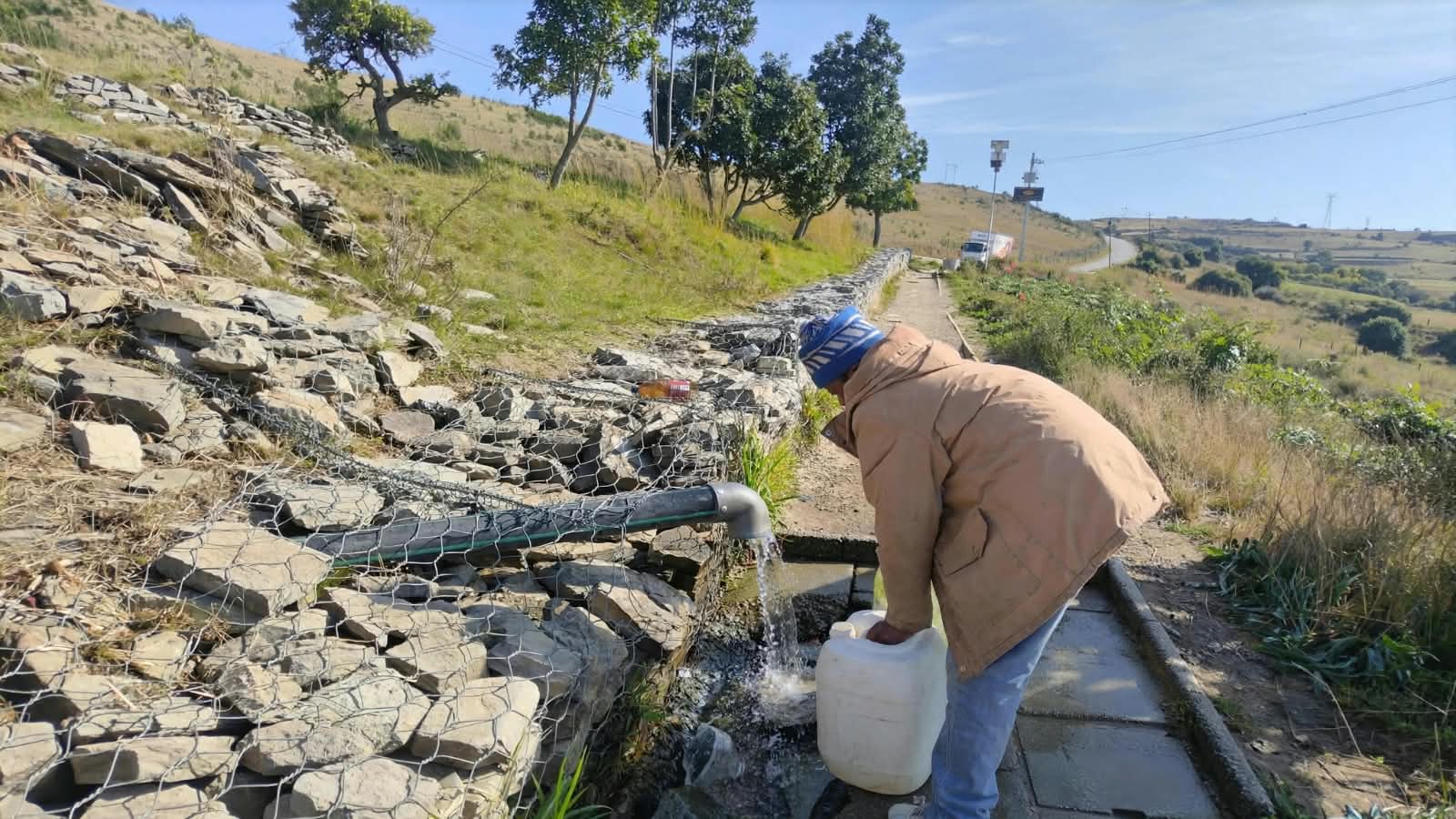
The water shortages in Makhanda were meant to be remedied by the upgrade of the James Kleynhans Water Treatment Works to go from ten-million litres per day to 20-million litres per day. But the project is yet to be completed. Photo: Loyiso Dyongman
There is water in the taps in Khonziwe Tom’s house in Makhanda only two or three times a week, and when it does flow, it is only for a few hours very early in the morning.
“If you don’t wake up early, you might miss it,” says Tom, who lives in Fingo on the east side of town.
Sometimes there is water during the day, but then Tom and many other residents are at work or school. By the time they get home the taps are dry again.
Water trucks are also unreliable.
“The water delivery truck takes a long time to arrive and when it does arrive the drivers are often in a rush, saying they have to hurry to another area,” says Tom.
The lack of reliable water means she often has to spend her stretched salary on buying water.
Tens of thousands of Makhanda residents are in this situation.
In Extension 6, Xolani Jacobs says he normally gets water between 4am and 5am, but it stops around 9am though sometimes it stretches until 11am. But one can never be certain, he says.
“For example, on 11 September we did not get water until 3pm and sometimes we don’t receive water for two days,” he says.
Frequent and unpredictable water outages have plagued Makhanda residents for at least 14 years, and have led businesses, institutions and residents who can afford it to fund their own water supply, independent of the municipality.
The water shortages were meant to be remedied by an upgrade to the James Kleynhans water treatment works (WTW), taking it from a ten-million-litre-per-day plant to a 20-million one.
Makhanda is also supplied by the Waainek WTW on the west of the town, but it is a smaller eight-million-litre-per-day plant. Its raw water sources are Settlers Dam and Howieson’s Poort. The Glen Melville Dam, which supplies Kleynhans, is fed by the Orange-Fish tunnel scheme.
Upgrade work to Kleynhans began in 2015 and was supposed to be completed by 2018 at a cost of R102-million. Years later, it is still not finished, and according to implementing agent Amatola Water it has so far cost R279-million.
Work on the third and final phase of the project began in March and is to be completed by September 2027 at an additional cost of R223-million. This will mean a R400-million overrun overall even if the current phase stays within budget.
Six months into the 18-month Phase 3 upgrade, the work is 12% complete, according to Amatola Water spokesperson Nolitha Mbangcolo.
While the first two phases saw Amatola having to terminate and replace contractors, Mbangcolo said there were also delays at the beginning of the current phase. She said the nature of the project is complex as it involves refurbishing an operational plant while maintaining water supply to communities.
But supply is not yet at 20-million litres per day, despite the completion of Phase 2.
Treated water is pumped from Kleynhans up to Botha’s Hill reservoir through pipelines under repair. The repair is part of the Phase 3 refurbishment, along with associated pipework, mechanical and electrical work, telemetry and related infrastructure upgrades.
“There have also been challenges relating to the finalisation of certain work, procurement lead times, approvals and coordination with Makana Local Municipality in its role as the operator of the existing plant,” said Mbangcolo.
Amatola was in talks with the municipality about operation and maintenance issues, such as pump maintenance, sludge removal, backwashing and availability of operational procedures.
The municipality is required to have five pumps at the Kleynhans WTW – three duty pumps and two on standby – should any of the duty pumps fail.
Municipal spokesperson Anele Mjekula did not respond to questions on how many pumps are operational or on standby, or what the pumping capacity is.
Previously, a R2.3-million pump for Waainek WTW went “missing” for almost four years because the engineering company contracted to make the pump had not been paid in full.
Questions about corruption or maladministration in water-related contracts have led to probes by the Special Investigating Unit (SIU) since October 2024.
In a presentation to Parliament’s standing committee on public accounts in August, the SIU stated that their investigation resulted in two referrals to the National Prosecuting Authority, with one docket registered so far.
