26 June 2026
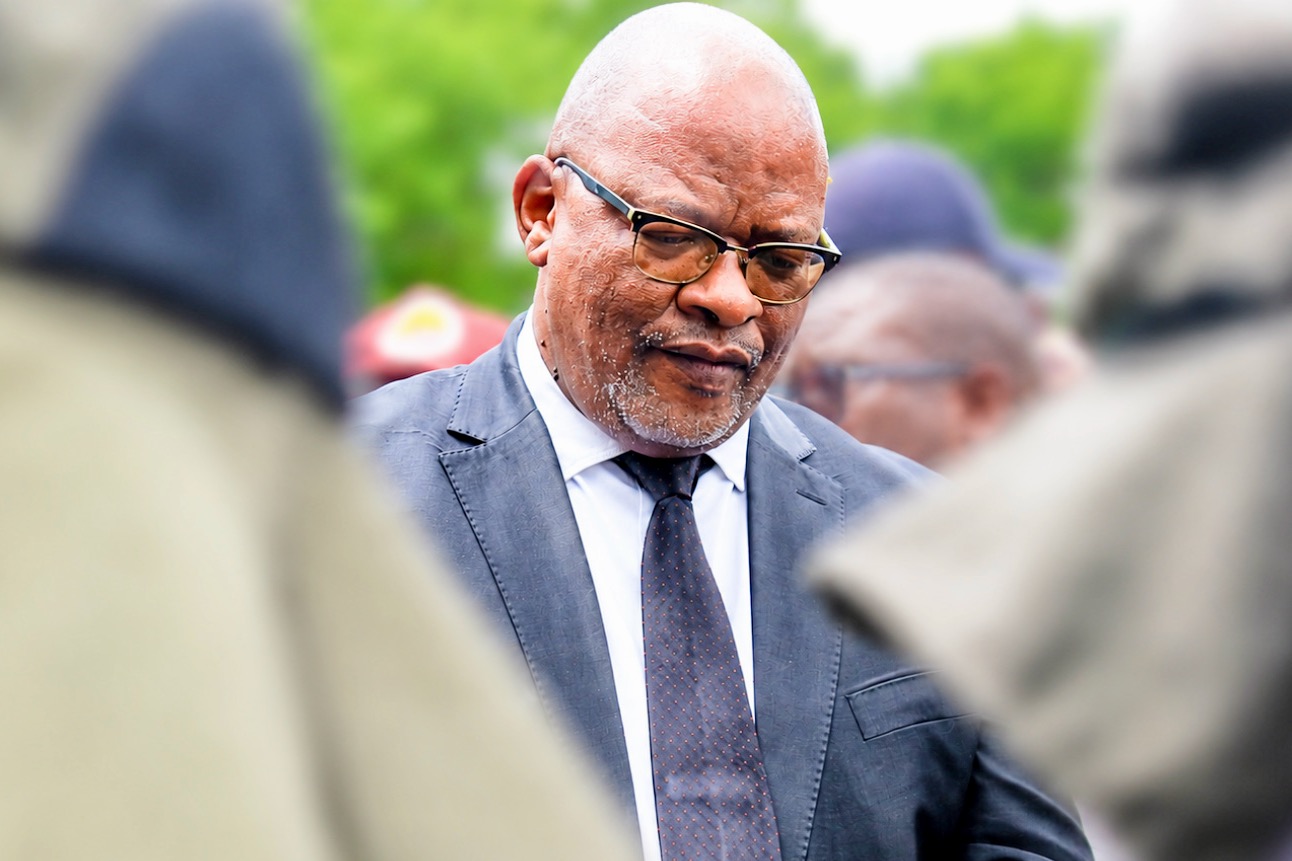
Lesotho’s foreign affairs minister Limpho Tau. Photo: Sechaba Mokhethi.
Lesotho’s foreign affairs minister, Limpho Tau, says South Africa has a moral obligation to help lift Lesotho out of poverty because of historical injustices that contributed to the kingdom’s economic underdevelopment.
Tau made the remarks during a media briefing in Maseru on Wednesday.
Last week, Tau met South African Minister of International Relations and Cooperation Ronald Lamola in Pretoria. In a statement after that meeting, Tau said he had reminded Lamola of three major historical factors that had shaped Lesotho’s economic fortunes: the loss of Basotho land during colonial expansion in the 19th century; the recruitment of Basotho men as cheap labour for South Africa’s mines; and the impact of apartheid-era military aggression against Lesotho.
“South Africa has a moral obligation to see that Lesotho and the Basotho nation are assisted through mechanisms aimed at rescuing Lesotho from poverty and the lack of economic growth caused by this painful history,” Tau said.
Tau said relations between the two countries stretch back nearly 200 years to the reign of King Moshoeshoe I. With the arrival of white settlers in the 1800s, the Basotho lost large tracts of fertile land and valuable grazing areas.
After the discovery of diamonds in Kimberley and gold in the Witwatersrand in the 1880s, the introduction of hut taxes by the British colonial administration forced many Basotho men to seek paid jobs at South African mines. This deprived Lesotho of labour for agricultural production, which sustained Basotho communities.
“Because this tax had to be paid in cash, which many Basotho did not have, able-bodied Basotho men were compelled to seek employment in the mines,” Tau said.
Lesotho became a labour reserve, supplying cheap labour to the mining industry, helping South Africa grow its economy.
Tau also noted apartheid-era military raids carried out by the South African Defence Force in Lesotho, including the December 1982 raid on Maseru that killed more than 40 people. He said he had reminded Lamola that after the attacks, the United Nations Security Council Resolution 527 and Resolution 580 called on South Africa to compensate Lesotho and affected families for damages resulting from the raids.
“South Africa has not yet fulfilled those obligations,” Tau said.
Tau said the two ministers agreed that Lesotho would prepare a detailed document setting out its concerns and expectations regarding their bilateral relations.
This document would propose a framework defining the nature of future relations between the two countries and outline measures South Africa could take to help Lesotho expand trade opportunities and create jobs.
“For nearly two centuries, Basotho have experienced the loss of fertile land, the transformation of Lesotho into a source of low-paid labour and the oppression of Lesotho and Basotho people,” Tau said.
He said Lesotho would continue raising these issues until the two countries reached an understanding for a more equitable relationship, including discussions around compensation and economic support.
Tau said Basotho had played an important role in South Africa’s liberation struggle and that this contribution should not be forgotten.
Tau added that they also discussed growing safety concerns and asked for assurances for Basotho living and working in South Africa ahead of planned anti-immigration demonstrations next week. Thousands of Basotho either live and work in South Africa or depend on cross-border economic activity.
Tau said Lamola assured him that 30 June would remain a normal working day. While some South Africans intended to hold peaceful marches, the government was preparing to maintain law and order and security agencies were on high alert.
Tau said the Lesotho government, through its diplomatic missions in Pretoria, Johannesburg, Durban, Klerksdorp and Welkom, is monitoring the situation closely.
“I appeal to all Basotho living in South Africa not to panic, but to avoid areas where demonstrations and marches may take place,” he said.
GroundUp contacted Minister Lomola’s office and spokesperson and the Department of International Relations and Cooperation but at the time of publication has received no reply.
