24 August 2026
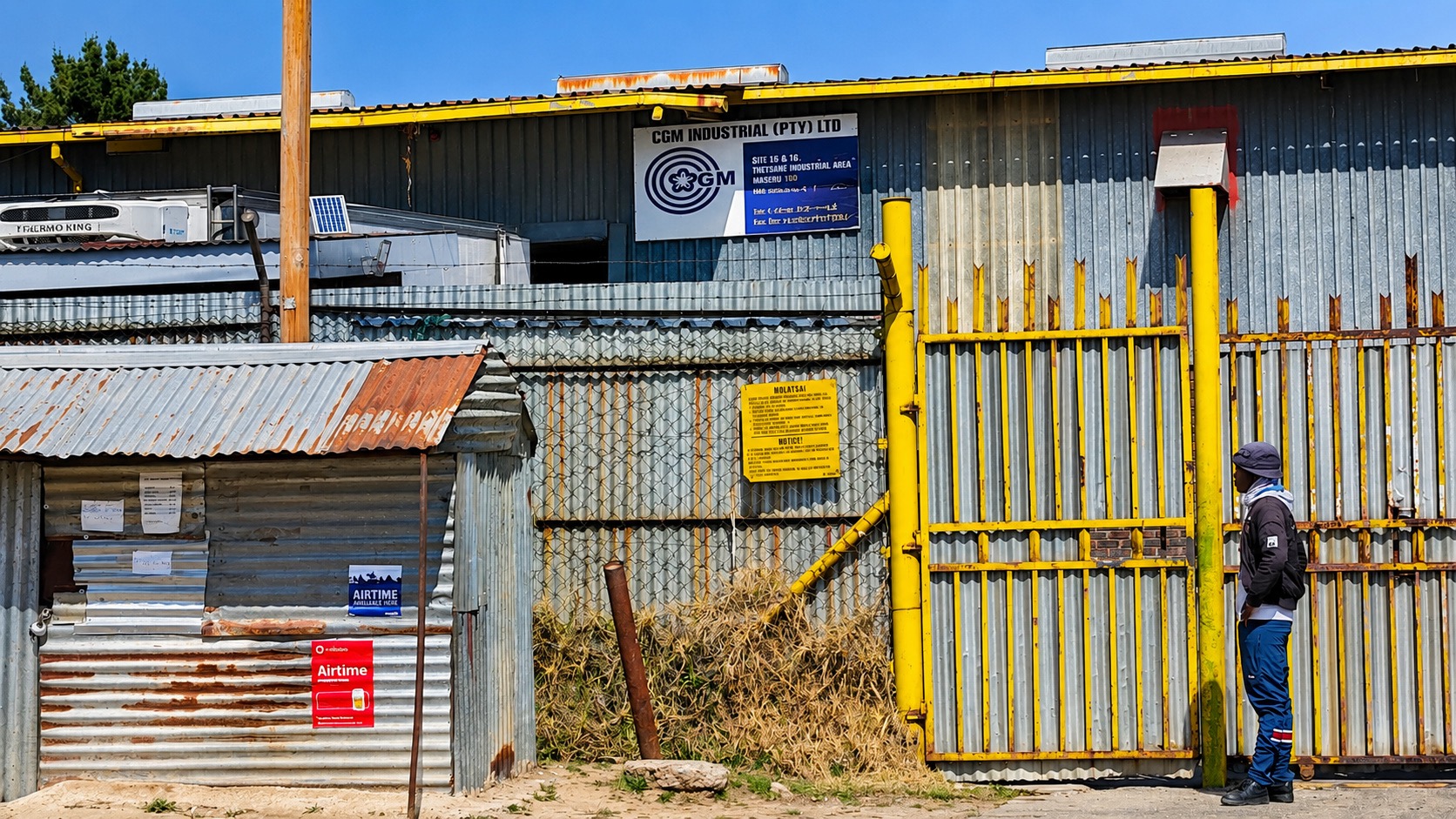
CGM Group factory at Thetsane Industrial Area in Maseru. Photo: Sechaba Mokhethi.
The forfeiture of assets in Lesotho and South Africa bought with illicit proceeds diverted from one of Lesotho’s largest clothing companies is being hailed as a milestone by authorities for cross-border asset recovery.
Three months later, however, none of the assets covered by the forfeiture orders has been realised as respondents have lodged appeals.
In May, courts in Lesotho and South Africa delivered two related judgments within five days of each other. The Lesotho Court of Appeal upheld the forfeiture of a Masowe property worth about M1.6-million (M1=R1), as well as about M177,000 in cash, while the Free State High Court ordered the forfeiture of three Ladybrand properties worth R5.75-million.
Both courts found the properties and cash were the proceeds of criminal activity, related to the criminal diversion of M700-million from CGM Group companies and its subsidiary, Presitex, one of Lesotho’s largest garment manufacturers. Presitex employs about 3,000 people according to its website.
Eugenia Shi-Chang, whistleblower and shareholder of Presitex, had laid complaints against CGM and Presitex’s former chief executive Madhav Vassant Dalvi, with Lesotho’s Directorate on Corruption and Economic Offences (DCEO).
Shi-Chang had left the company in 2009 and returned in 2023. Upon her return, she found that Dalvi and his associates had orchestrated a scheme to divert millions from Presitex and related companies to entities created or controlled by them.
The DCEO investigation led to criminal charges, including theft, fraud, money laundering and abuse of office, against Dalvi, his wife Sushama, their son Chaitanya, other former employees and managers, and clothing companies including Denimagic and Alchemy Textiles.
Dalvi, his wife, and his son, as well as several other of the accused, fled the country before they could be remanded. The remaining accused appeared in the Maseru Magistrate’s Court in 2024.
Extradition processes were triggered in February 2024. “They were served to South Africa and the two embassies of India and the United Arab Emirates (UAE) in South Africa,” the DCEO said.
However, the DCEO says that only South Africa has responded to a request for mutual legal assistance. “In short, we believe [extradition] proceedings have not yet begun.”
The May judgments do not deal with the criminal case. The courts considered only whether the properties were sufficiently connected to unlawful conduct to justify their forfeiture.
On 25 May, Lesotho’s Court of Appeal upheld a 2025 high court order forfeiting a house in Masowe, Maseru, and about M177,000 seized by the DCEO. The Court of Appeal said the High Court had correctly concluded that the house and cash were proceeds of crime.
The DCEO investigation found that the property was bought and developed using funds diverted from Presitex.
The property is registered in the name of Maneo and Clark Poopa, but was being subleased to clothing company Denimagic for 82 years at a nominal rental of M1 a year, while Presitex was paying Denimagic M24,000 a month to occupy the same property. Dalvi’s son, Chaitanya, was living in the house.
The court described this arrangement as commercially irrational.
The court also rejected Denimagic’s claim that the cash came from legitimate clothing sales because there was no evidence supporting those transactions.
The Court of Appeal’s ruling has yet to be implemented, because Presitex has lodged an application to exclude its interest in the property.
Five days after the Lesotho Court of Appeal judgment, the Free State High Court in Bloemfontein delivered judgment in a separate civil case where South Africa’s National Director of Public Prosecutions sought the forfeiture of three properties in Ladybrand.
Funds diverted from Presitex and related companies in Lesotho had been used to buy the properties. Two of the properties were registered in the names of Madhav and Sushama Dalvi, while a third was registered to Alchemy Textiles, a South African company partly owned by Sushama and established to procure textile accessories for the CGM Group in Lesotho.
The court found that these properties constituted proceeds of crime. The court examined various transactions identified during the DCEO investigation, including a M9.6-million “performance bonus” paid to Dalvi while he was chief executive of Presitex.
Dalvi had participated in the board resolution approving the bonus from which he personally benefited, rendering it unlawful. On that basis, the court declared the three Ladybrand properties acquired with the funds forfeitable.
National Prosecuting Authority (NPA) spokesperson Mojalefa Senokoatsane told GroundUp that a curator has been appointed while the NPA is awaiting directions from the court on the filing of heads of argument and, if necessary, a hearing date, as Dalvi and Sushama have applied for leave to appeal.
DCEO’s director-general Mantso Sello said the judgments demonstrate that proceeds of crime can be traced across borders, helping combat corruption, money laundering and other economic offences.
The Dalvi family, their lawyers, Denimagic, Alchemy and Presitex did not respond to our questions.
