26 February 2026
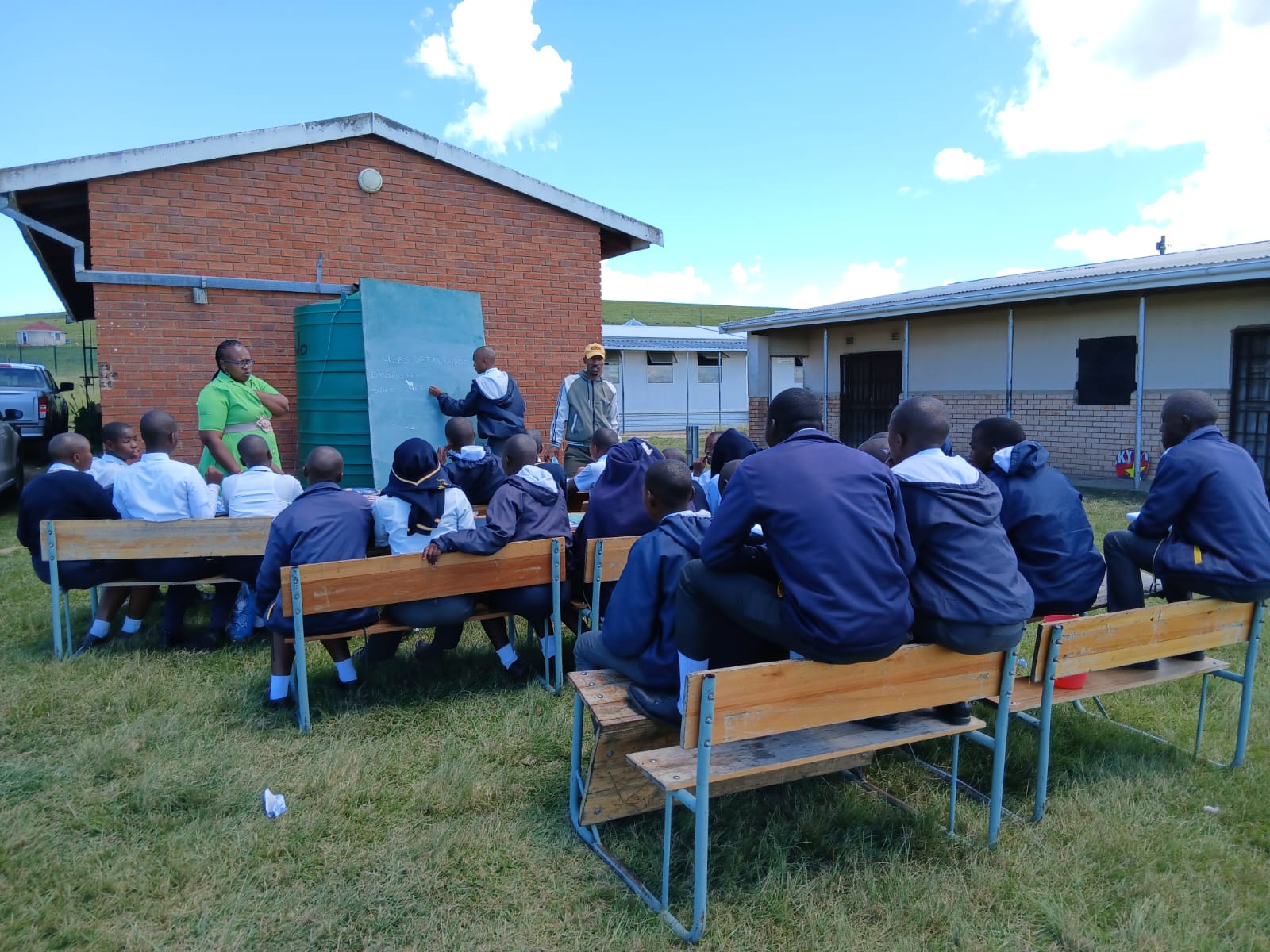
Grade 10 learners at Dolophini Senior Secondary School in Ngcobo in the Eastern Cape are being taught outside because classrooms are overflowing. Photos: Nombulelo Damba-Hendrik
Learners at Dolophini Senior Secondary School in Ngcobo in the Eastern Cape are being taught outside because classrooms are overflowing.
The school, built in 1990, has 487 learners in grades 8 to 12. There are eight classrooms - five brick classrooms, two prefabricated classrooms and one mud classroom.
The classrooms have not been maintained and are falling apart. Some have broken ceilings.
The school also has a shortage of desks. In some grades, four to five learners have to share one long wooden desk.
There are 94 grade 10 learners split into two classes. They are taught outside, even in scorching heat. GroundUp saw learners shielding their heads from the sun with books and jerseys.
Learner Olona Atoni said learning outside is “stressful”. She said some learners get headaches and some faint during lessons.
She said when it rains they squeeze into other classrooms. “But if the other class is writing a test, we have no choice but to stay outside. When the rain stops, we wipe our desks and continue with the lesson,” she said.
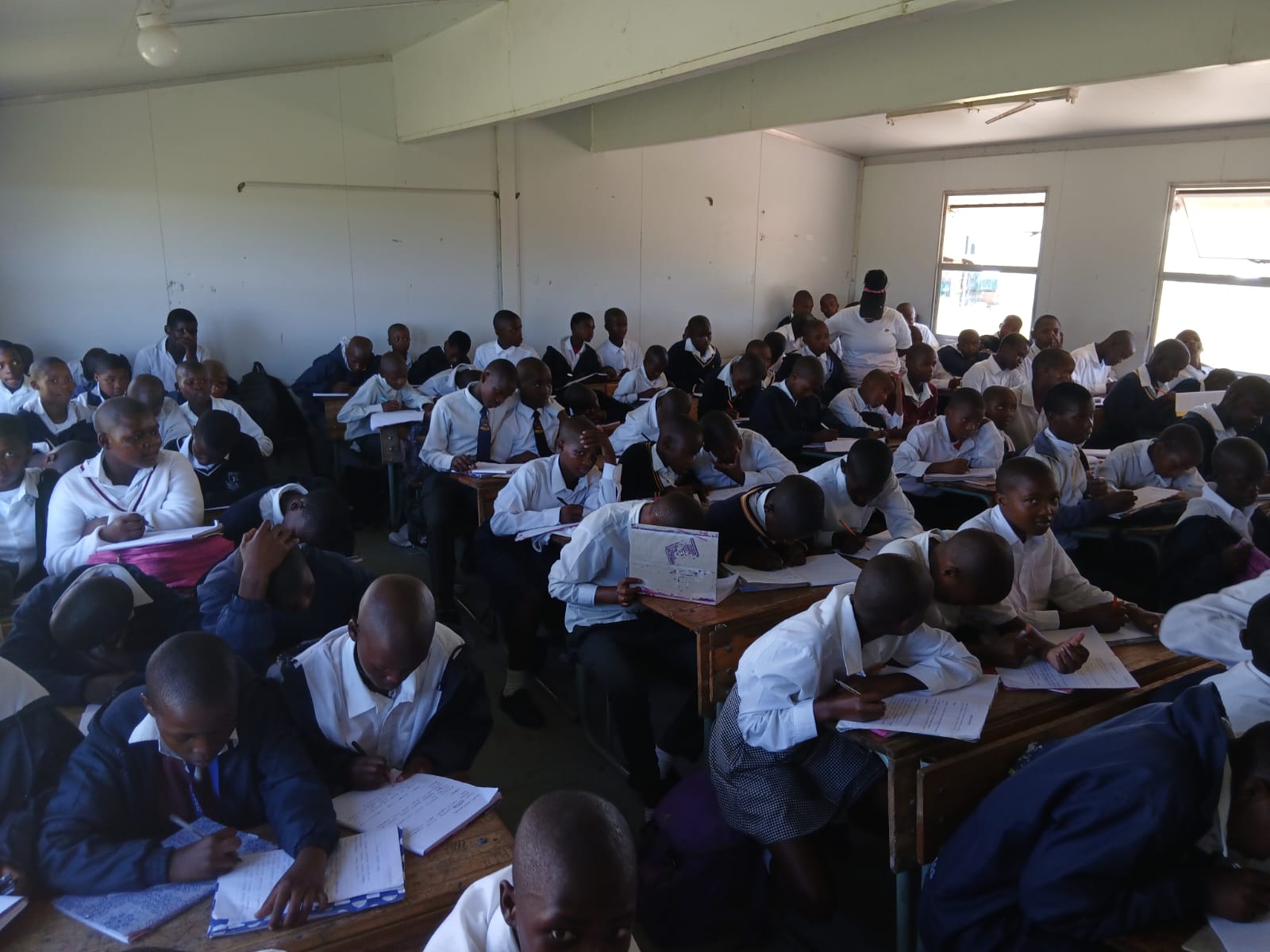
The overcrowded grade 8 class at Dolophini Senior Secondary School in Ngcobo.
The grade 8 class is the biggest with 100 learners; grade 9 has 75; grade 11 has 85.
The nearest high school is about 50km away and specialises in technical studies.
Parent Nonceba Mateyu said conditions are even worse in winter.
“Sometimes storms come unexpectedly and our children have to run for cover. Almost every day you will find a learner at the clinic because they are always getting sick,” she said.
Mateyu said the school also needs a computer lab. “Our children only see computers when they get to university, with no basic skills,” she said.
During exams, she said, some grade 12 learners sleep at the school. “The same classrooms they sleep in are used by other grades during the day. This is a very sad situation.”
School governing body treasurer Xolile Jezile said the community has tried to maintain the school. “The school does not have tap water. We rely on rainwater. We have three 5,000-litre tanks but they run dry when it does not rain,” he said.
Eastern Cape Department of Education spokesperson Malibongwe Mtima said the school was on the 2025 financial year planning list. But he did not say when the school would be assisted.