15 January 2026
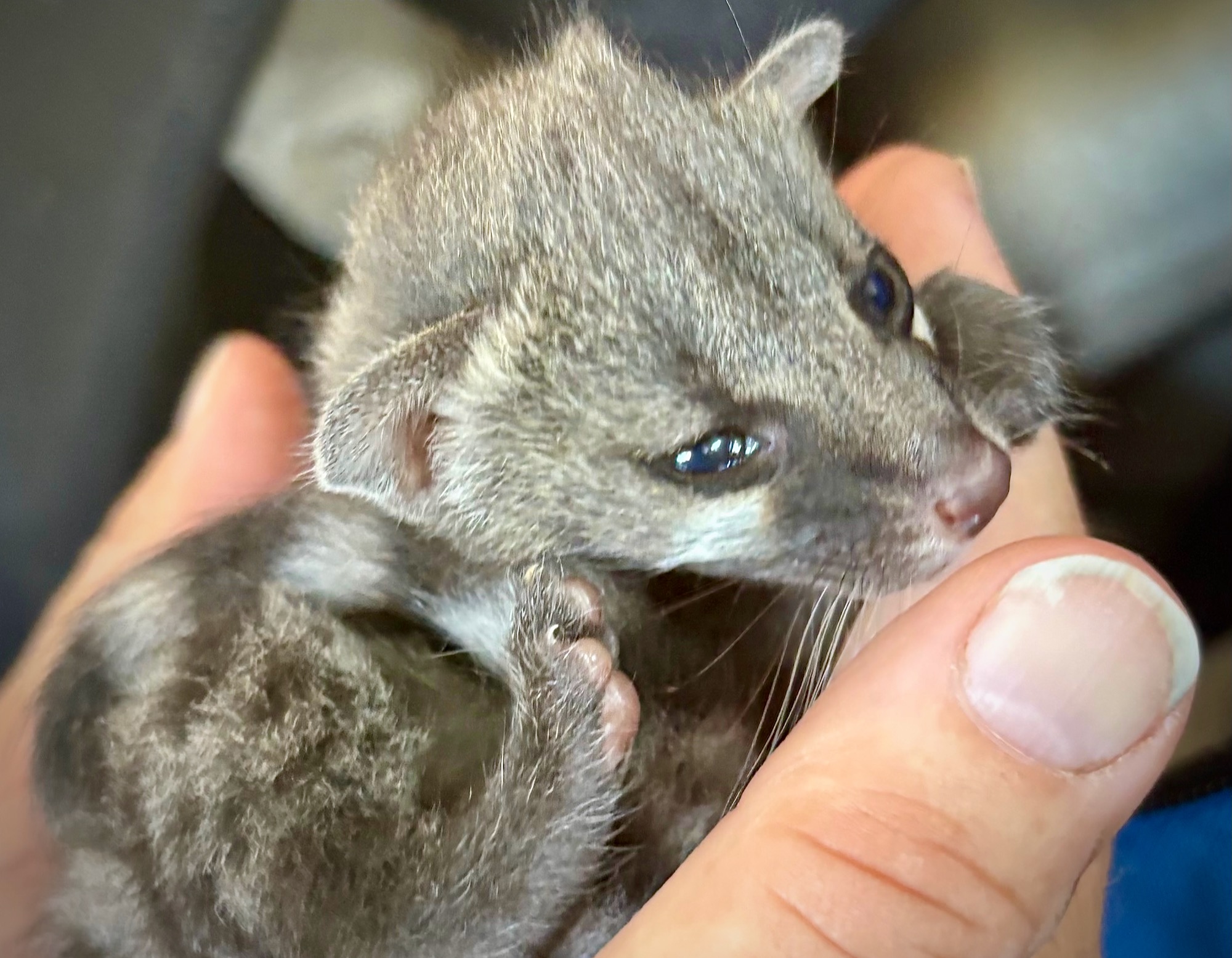
An orphaned baby genet at the Kogelberg Biosphere Wildlife Rescue and Training Centre. Photos: Liz McGregor
Antiseptic cream is gently smoothed over a burnt patch on the back of a grass snake. A tortoise in a charred shell is given another day in case it revives. Alongside is an orphaned baby genet that can fit into one’s palm.
All these animals were rescued from wildfires that have ravaged the Western Cape. These animal survivors have been brought to the Kogelberg Biosphere Wildlife Rescue and Training Centre from Caledon, Stanford and the Grootbos Private Nature Reserve.
“In a fynbos fire, the fire burns so hot and so fast that just about nothing survives,” says Michelle Watson, the centre’s co-founder. “First, the smoke inhalation slows them down. As soon as the fire hits, they are instantly incinerated. I am almost thankful that they don’t suffer for long.”
She said hundreds, “possibly thousands” of animals, including bat-eared foxes, mongooses, genets, dassies, badger, antelope, frogs, caracals and porcupines, have died in recent fires.
“The only species that seem to survive are the ants. They just dig down.”
She said sometimes tortoises on the periphery of a fire escape by withdrawing into their shells.
Snakes tend to curl up under a stone and “are cooked”. Birds die from smoke inhalation.
Of particular concern is the endangered blue crane, South Africa’s national bird, which nests during fire season. The chicks on the ground are unable to fly to safety.
The rehabilitation centre opened a year ago in response to the wildfires that ravaged the mountains in Kleinmond in 2022. It is funded by donations and staffed mostly by volunteers.
“It’s a hospital for animals,” says Watson, an accredited wildlife rehabilitator. “We treat the patient, allow them to recuperate, and then release them back into the wild.”
The centre is housed in a small, white building between Pringle Bay and Betty’s Bay on land leased from the municipality. It is owned by the Kogelberg Wildlife Company. It contains an emergency clinic, recovery room for burn victims, and a kitchen.
Together with Kogelberg Biosphere CEO and her co-founder, Corlie Hugo, they run monthly educational and training workshops for learners and volunteer wildlife responders.
Watson says well-meaning people pick up animals in burnt areas, but this can be dangerous and also problematic. For instance, she says when a tortoise is picked up, its location needs to be pinned.
“If the area is burnt, the affected animal can be returned to an area within a ten-kilometre radius … If people do find a burnt tortoise, the first thing they must do is pour water over them. Take a wet towel and put it over the tortoise. Keep it wet, keep it cold, keep it hydrated.”
The centre also has netted enclosures, giving injured birds room to exercise their flying muscles. A jackal buzzard, hit by a car, was stretching its wings. There was also a grysbok, a duiker, a couple of young cranes and owls.
The owls are fed dead prey but allowed to go out at night. “If they haven’t caught anything, they come back in. They will do that until they have figured it out and the wildness kicks in. We had ten, now down to five. So they are slowly leaving,” says Watson.
Sprinklers are attached to each of the enclosures and there are fire breaks to protect one of the biggest threats to the centre itself – wildfires.
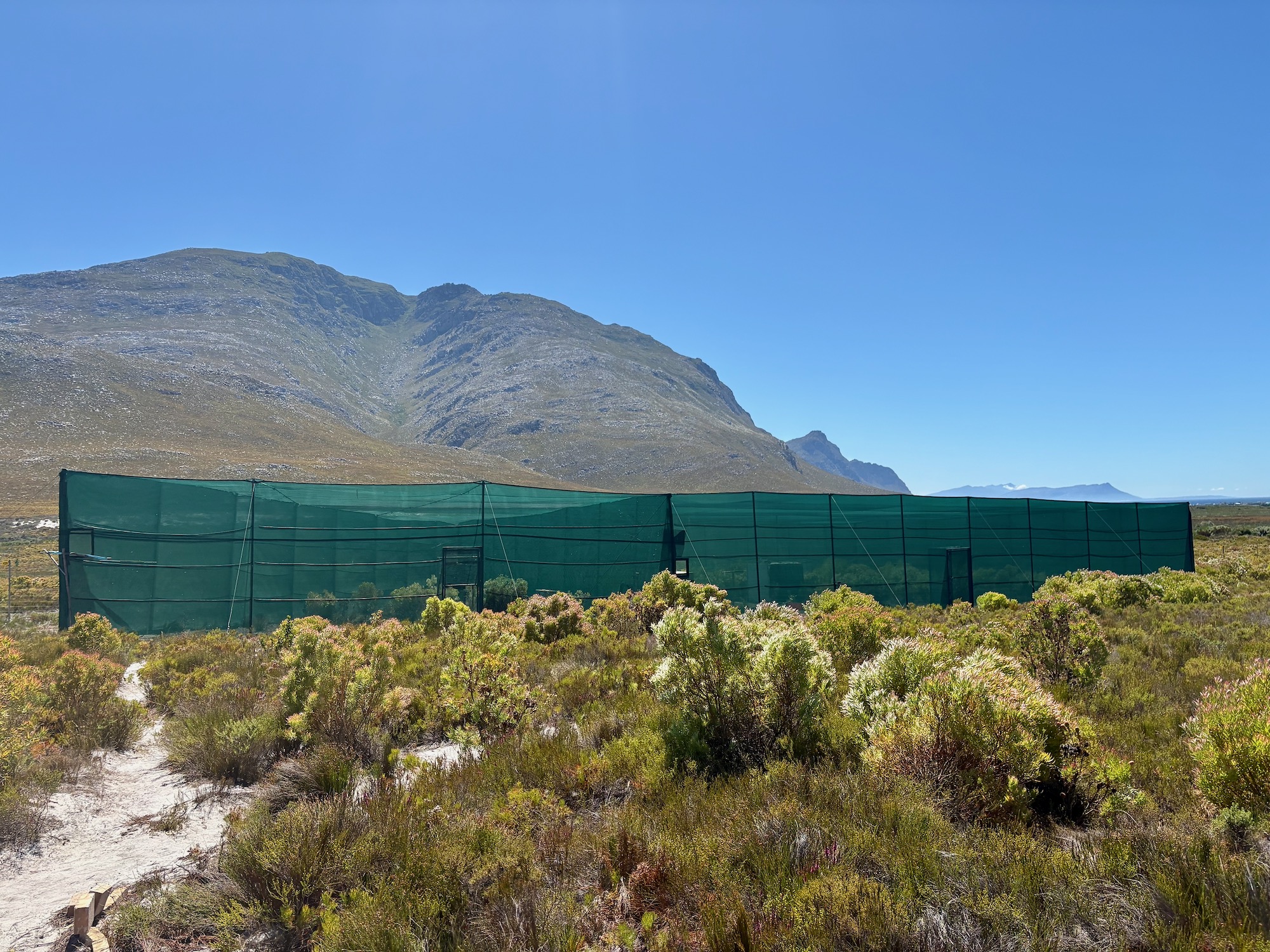
One of the enclosures for rehabilitating wildlife.