26 May 2026
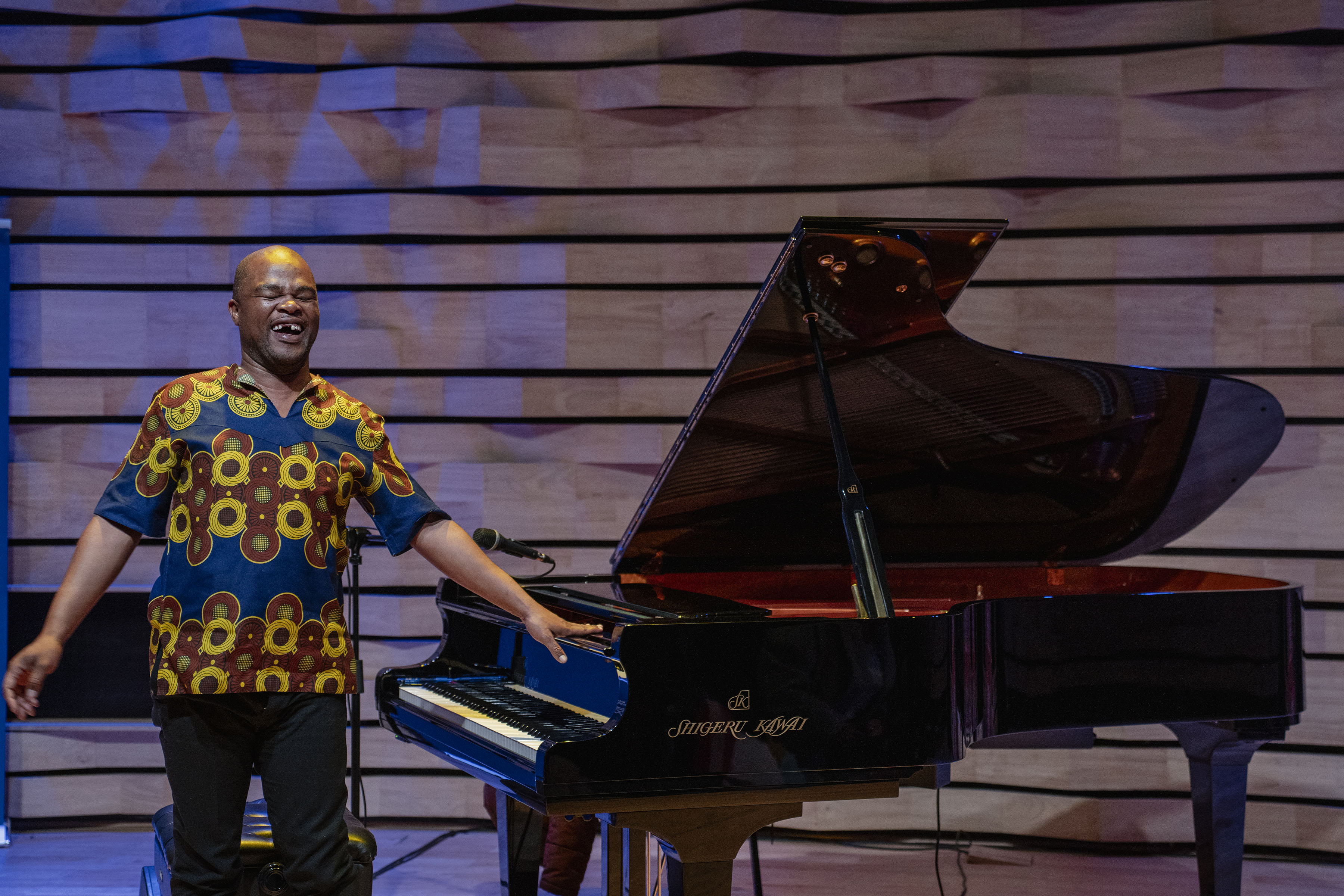
Yonela Mnana receives a standing ovation after his performance at the Piano Festival held at Wits University. Photos: Ihsaan Haffejee
South African jazz pianist and composer Yonela Mnana is using music and performance to challenge perceptions of blindness while reshaping conversations around contemporary jazz.
Born blind in the Eastern Cape and raised in Pretoria, Mnana says he experienced and understood the world through sound long before he formally learned music.
Alongside his growing reputation as a performer and scholar, Mnana remains deeply committed to music education, particularly for children with disabilities and young people with limited access to arts programmes.
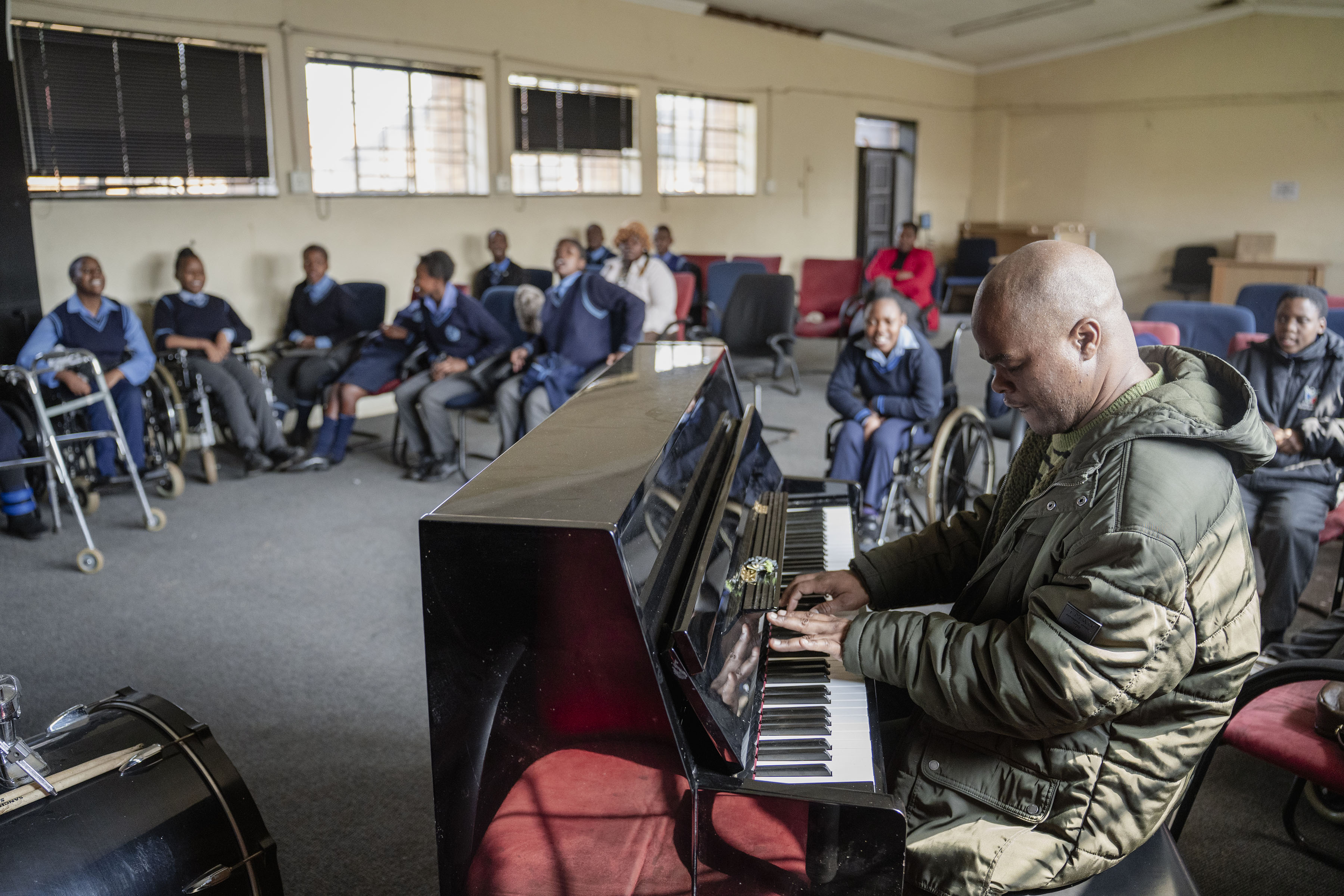
Yonela Mnana sitting at the piano and conducting a choir lesson at the Ezibeleni School for the Physically Disabled in Thokoza. For Mnana, inspiring young talent has become just as meaningful as the music he creates.
Since 2008, Mnana has been involved in music programmes created to address the lack of arts education in township schools. He spends several days every week teaching aspiring young musicians at the Morris Isaacson Centre for Music in Soweto and the Ezibeleni School for the Physically Disabled in Thokoza.
Video by Ihsaan Haffejee
Working mainly as a piano instructor, Mnana has taken on a broader mentorship role, helping students with personal challenges and emotional support.
Under his guidance, the Ezibeleni School choir has achieved consistent success in district, regional and provincial competitions over the past four years, despite limited resources and transport difficulties.
He describes the school as more than a music institution, calling it a safe space and “home” for many children facing difficult social conditions.
“Music education should not be a luxury,” Mnana said. “It should be something every child can access, regardless of disability or background.”
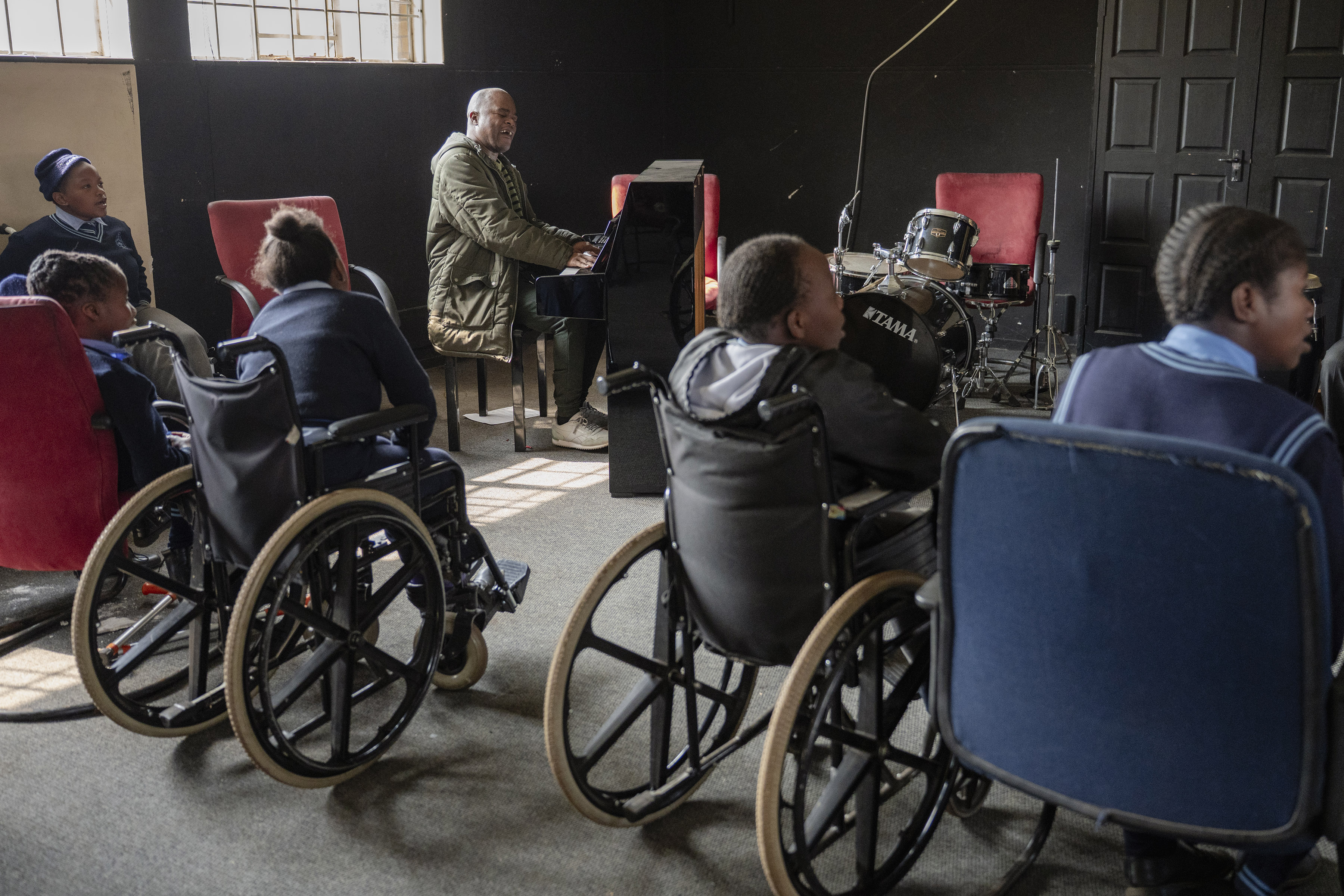
Yonela Mnana sitting at the piano and conducting a choir lesson at the Ezibeleni School for the Physically Disabled in Thokoza.
Mnana says teaching children and helping them build confidence through music has become one of the most rewarding aspects of his career. Several of his former students are now pursuing music professionally. He believes music helps children develop discipline, confidence and a sense of belonging.
Mnana says society often focuses more on his blindness than on his work as a musician.
“The world was musical before it was visual,” he says.
He describes a childhood shaped by church hymns, traditional music and artists such as Brenda Fassie, Don Laka and Vusi Mahlasela.
“I didn’t know I was blind until people started telling me I was blind,” he says. “I think my blindness bothered other people more than it bothered me.”
Mnana said many schools and institutions remain inaccessible to visually impaired students because of limited braille music resources, expensive assistive technology, and teaching methods that rely heavily on visual instruction.
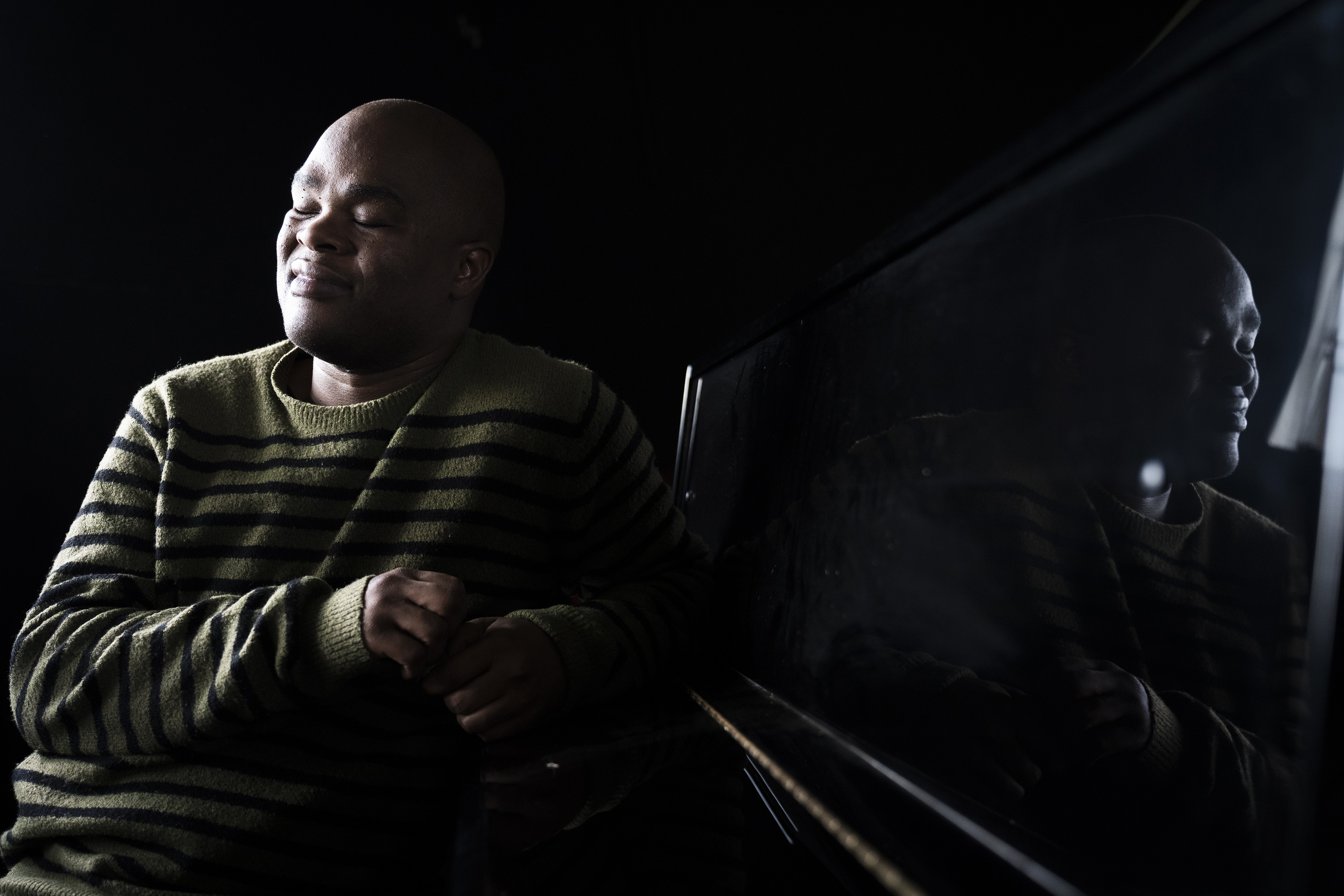
Yonela Mnana is one of the most distinctive voices in contemporary South African jazz.
Mnana began formal music training in 1998 after joining a school band and experimenting with several instruments before focusing on piano.
“Playing piano is a challenge. It’s just you against these 88 keys,” he said. “I don’t want to merely repeat what has already been done. I want to be a creator.”
He developed much of his musical vocabulary through listening to recordings and vocal performances.
“I learned standards from vocalists because I couldn’t sit and read charts the way others did,” he said. “So listening became my way of studying.”
His music blends African traditions, classical piano training, jazz and soul influences into what he describes as a “melting pot” of styles.
Mnana completed both his undergraduate and master’s degrees with distinction at the University of the Witwatersrand. He is currently pursuing doctoral research focused on South African solo jazz piano traditions and the intellectual history of local jazz music.
He laments that South African jazz musicians are framed merely as imitators of American traditions rather than innovators with their own musical language.
“South African jazz is not a copy,” he says. “It is its own language, its own history, its own spirituality.”
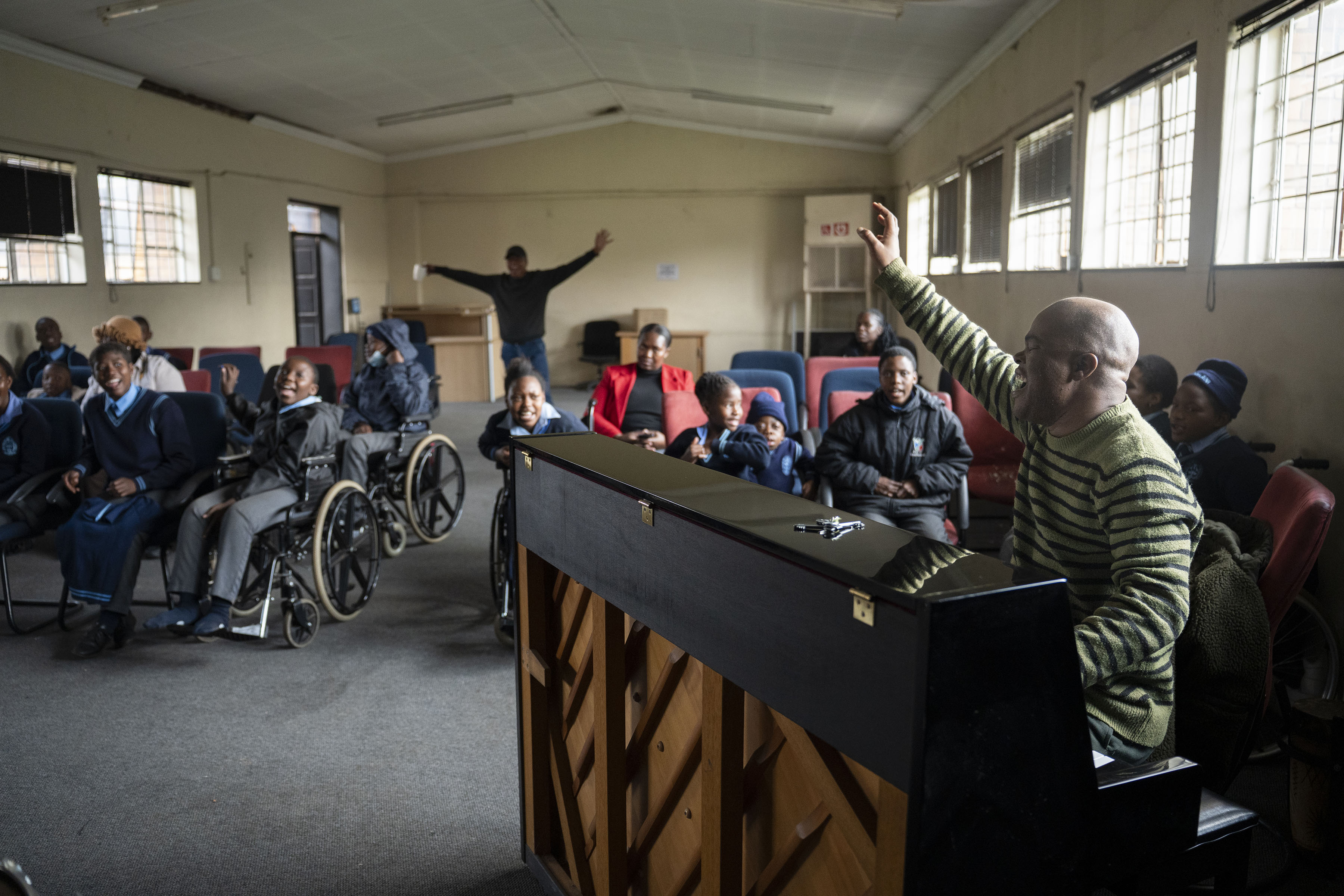
Yonela Mnana raises his hand as he conducts a choir lesson at the Ezibeleni School for the Physically Disabled in Thokoza.
Mnana sees music as a form of political and social engagement, as a social intervention that should go beyond entertainment.
“Music must ask questions, heal, provoke and connect,” he says.
At a recent performance at the Piano Festival in Johannesburg, he questioned the poor logic behind the recent anti-immigrant protests that have been spreading across the country.
He is known for “Jazz in the Dark”, an immersive performance concept in which audiences are sometimes blindfolded to experience music without visual distractions.
Despite his academic achievements and growing international recognition, Mnana says his focus remains on education and creating opportunities for young musicians.
In a world obsessed with visibility, he has built a remarkable career teaching audiences how to listen.
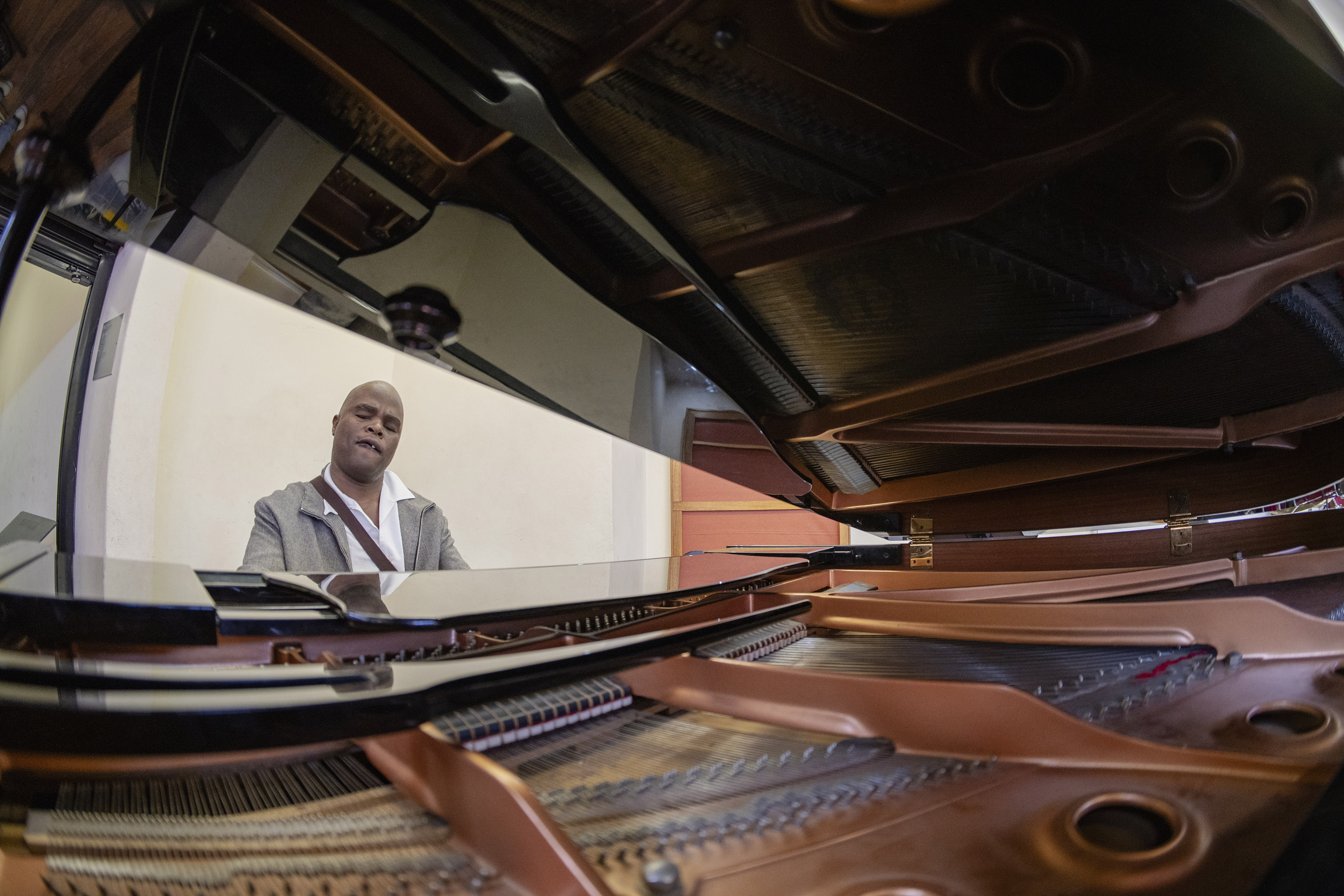
Yonela Mnana playing the piano.
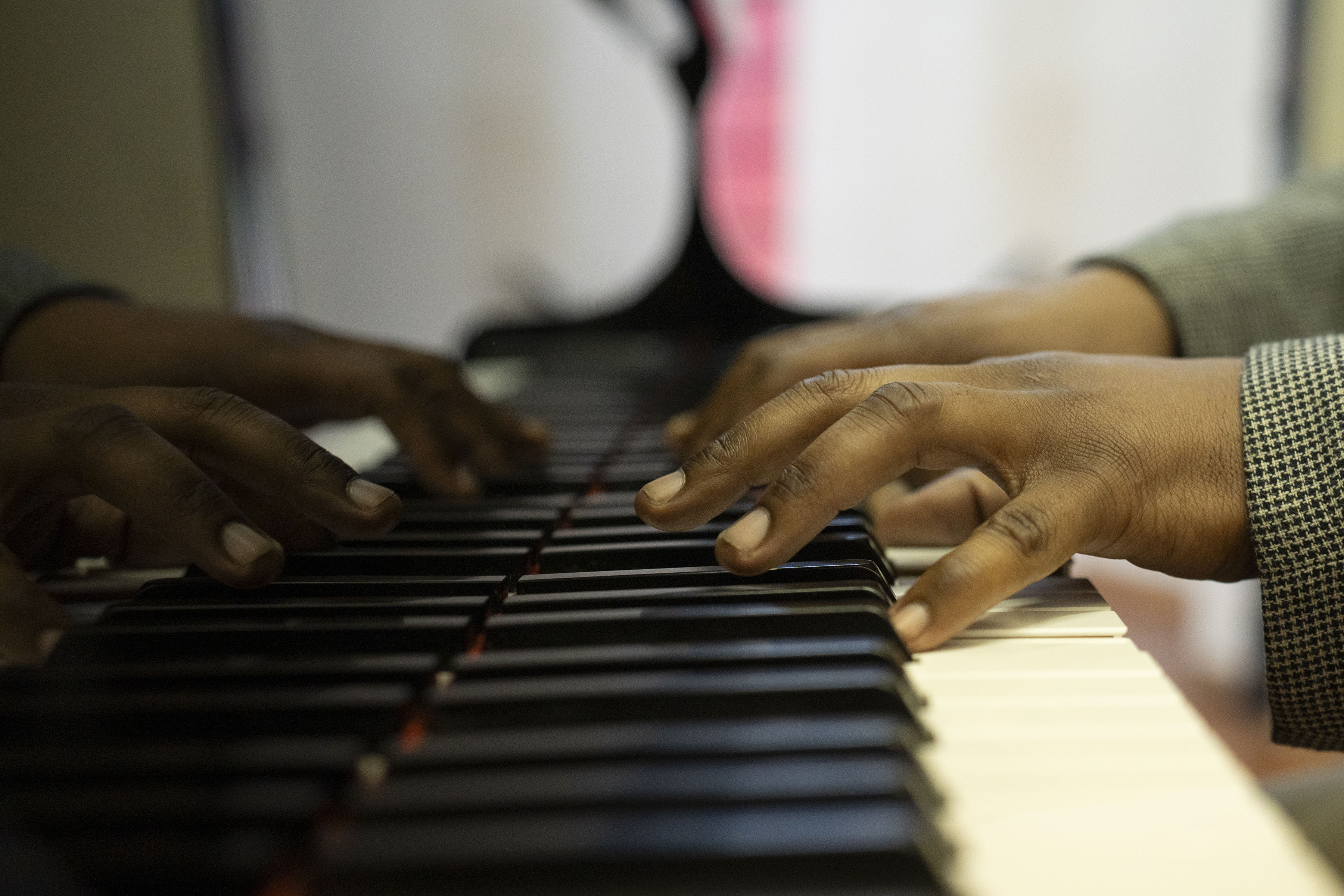
Yonela Mnana playing.
