20 August 2026
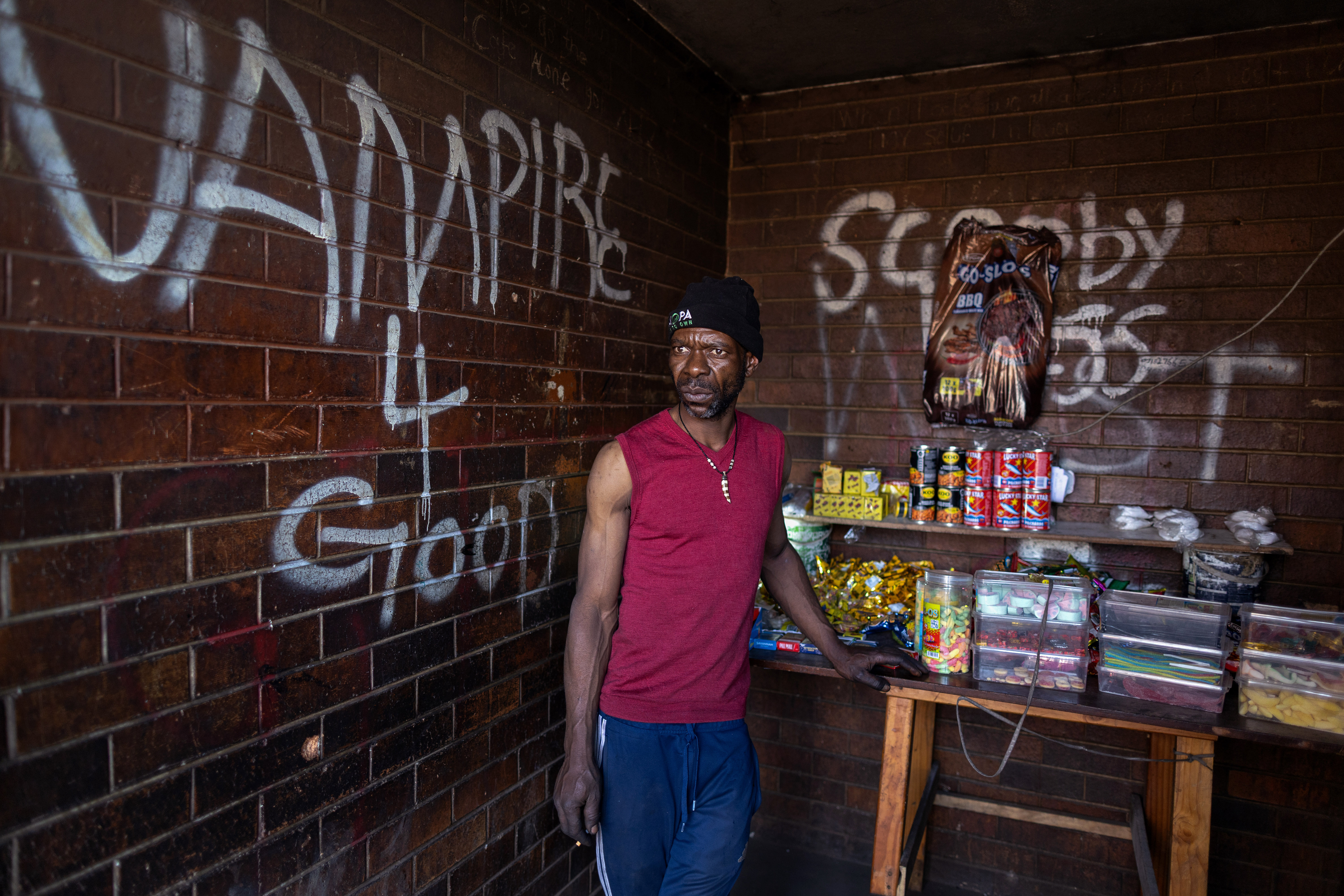
Naboth Madoro is one of several hundred people who live in Wembley Stadium, a space demarcated by the City of Johannesburg as temporary housing for people who were evicted or lost their homes in fires. Photos: James Oatway
Hundreds of people who lost their homes in evictions or fires in Johannesburg’s inner-city are living under tents and shacks in and around Wembley Stadium.
They were moved there years ago by the City of Johannesburg for temporary emergency accommodation (TEA). The first residents arrived in 2016. People are only supposed to stay in a TEA for six months before moving to permanent housing. But the City has no plan to move the people at Wembley Stadium.
In fact, none of the TEA facilities across the City is in good standing, and residents have not been moved from any of them into independent living or another form of housing.
“When we got here there was electricity, and the toilets and water were working. There were even security guards here. Now we have none of those things,” said Ethel Musosoza, who was moved to the stadium following her eviction from Chung Hua Mansions on Jeppe Street in 2017.
At least 350 people live on the property. Rubbish is piling up outside the building. Rats run through the site. The walls are covered in graffiti. Residents describe drug use and violence as part of daily life.
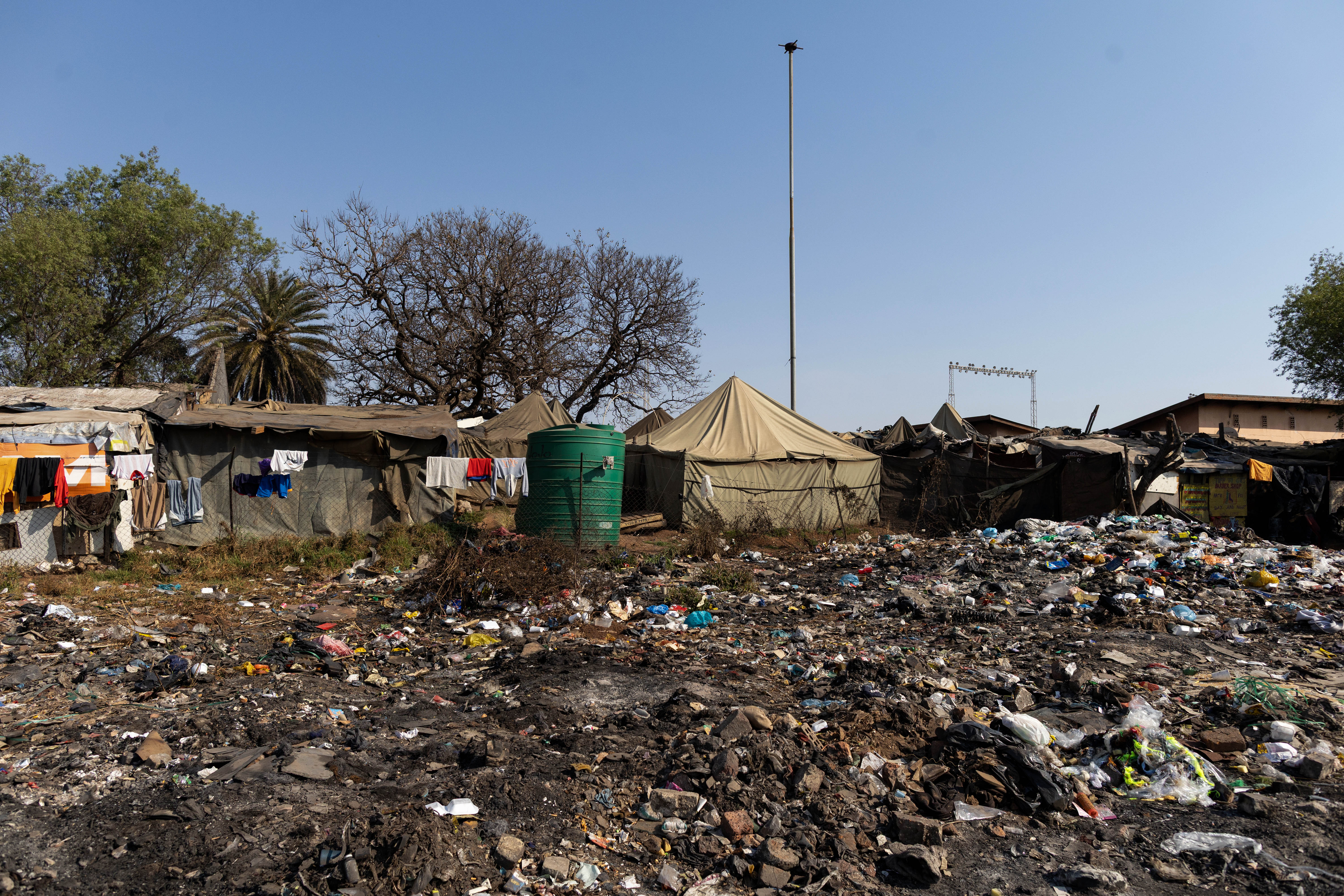
People live in squalid conditions in and around the main building at Wembley Stadium.
“It is very tough here for us … it’s dark and dirty and unsafe. It is even worse when you are a woman,” Musosoza said in the dimly lit room that she shares with her two children, her mother-in-law, and her aunt. “It feels like the government has forgotten about us.”
Other residents of the stadium were evicted from Fattis Mansions, another inner-city building, in July 2017. The Johannesburg High Court had ordered the City to assess those at risk of homelessness and provide suitable temporary emergency accommodation, including appropriate toilet facilities and security.
Some of them were initially housed in tents, with the City later saying it had to procure additional tents because it did not have enough available.
Another devastating fire at the Cape York building in 2017 led to more people being moved to the stadium. By July 2018, the City acknowledged that conditions in the tents were unsustainable and announced 70 prefabricated units at Wembley, with ablution facilities, running water and electricity.
There are container homes, but residents say these are reserved for South Africans – many of the people who were displaced from inner-city buildings are immigrants. The container homes are in a better condition than the main building, tents, and shacks where most of the residents live.
A man from Tanzania who lost his passport and most of his possessions in an inner-city fire in 2018, sells food and other snacks in the dark corridors of the building to survive. He did not want to give his name.
“I can’t go anywhere else because I don’t have enough money. I can’t get a job because I don’t have a passport anymore. The government people said they will help us get new passports after the fire but we are still waiting,” the man said.
“We are here because we have no other options,” he added. “What must I do? Where must I go? I don’t have family here so it is very difficult. All of us do what we can to try and survive here.”
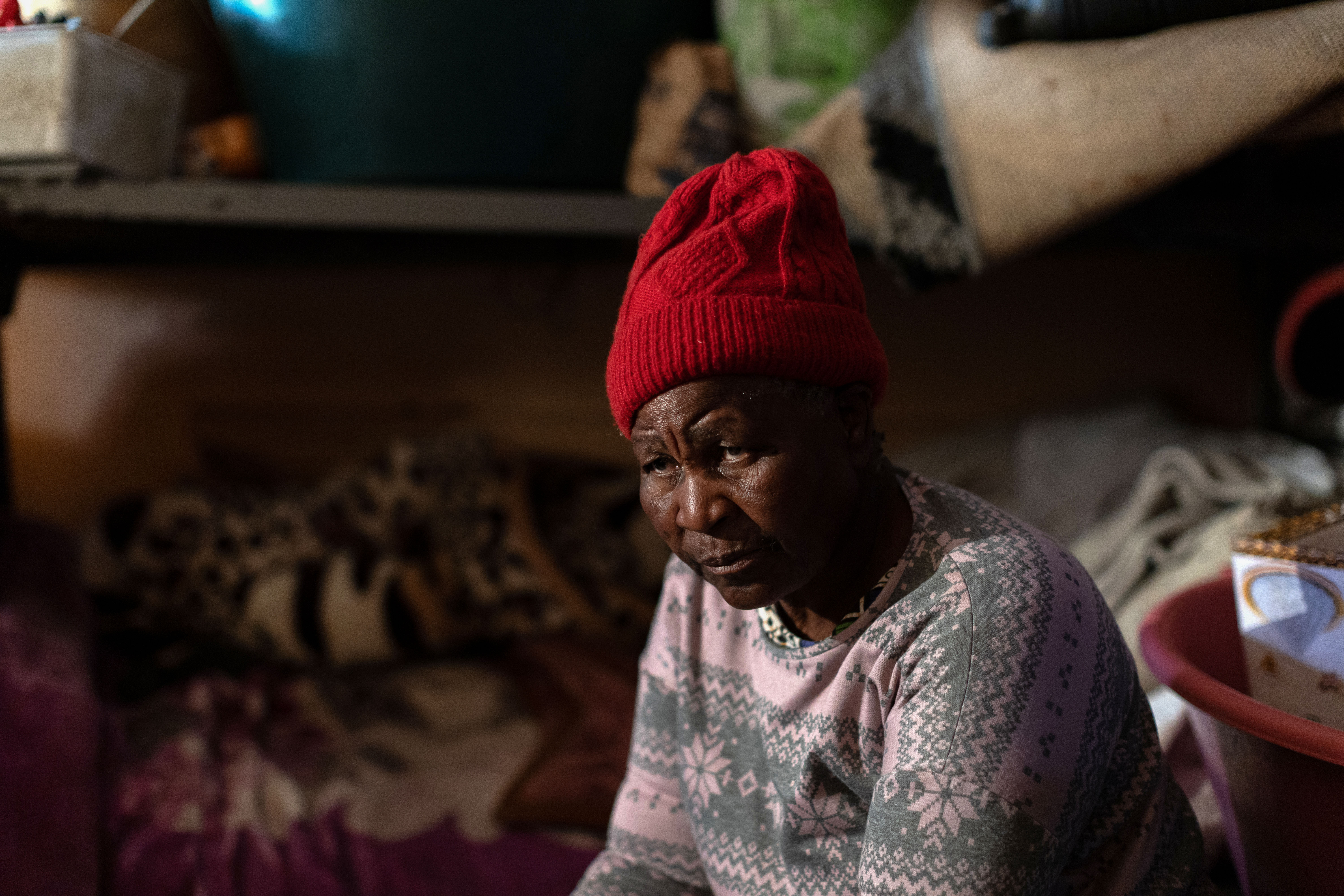
Veronica Kembo lives in Wembley Stadium.
The City of Johannesburg declined to answer questions about Wembley. “I have indicated that I cannot answer questions regarding Wembley. I have received a legal opinion not to do so. I cannot go against that advice,” a member of the City’s human settlements communication team said. The person said they may not be quoted by name.
Johannesburg’s own TEA policy says qualifying residents should generally remain in emergency accommodation for no longer than six months, although the period may be extended. One of the policy’s principles is “transition”, requiring the municipality to help residents move towards more permanent housing.
TEA is meant to continuously serve new people facing housing emergencies and must not be regarded as permanent housing “under any circumstances whatsoever”, the policy states.
It also requires the department to develop an exit strategy within 90 days, including a maintenance plan and possible permanent resettlement options.
The City’s spokesperson said the main reason people stay in TEA for a long time is that there aren’t enough housing units available.
Funding for TEA facilities has also fallen significantly, from R30-million in 2020/21 to just R3.3-million in 2024/25, and R9.1-million in 2025/26.
Socio-Economic Rights Institute of South Africa (SERI) senior communications and advocacy officer Edward Molopi said people often become stuck in TEA because the circumstances that push them towards homelessness do not improve enough for them to find somewhere else to live.
Over time, he said, accommodation intended as a short-term intervention effectively becomes permanent. The City also has a responsibility to maintain TEA sites, and more TEA is needed, he said.
The Khampepe Commission of Inquiry into the Usindiso fire also pointed to a shortage of housing. The Commission recommended that Johannesburg reconsider resources allocated to temporary emergency accommodation and social housing.
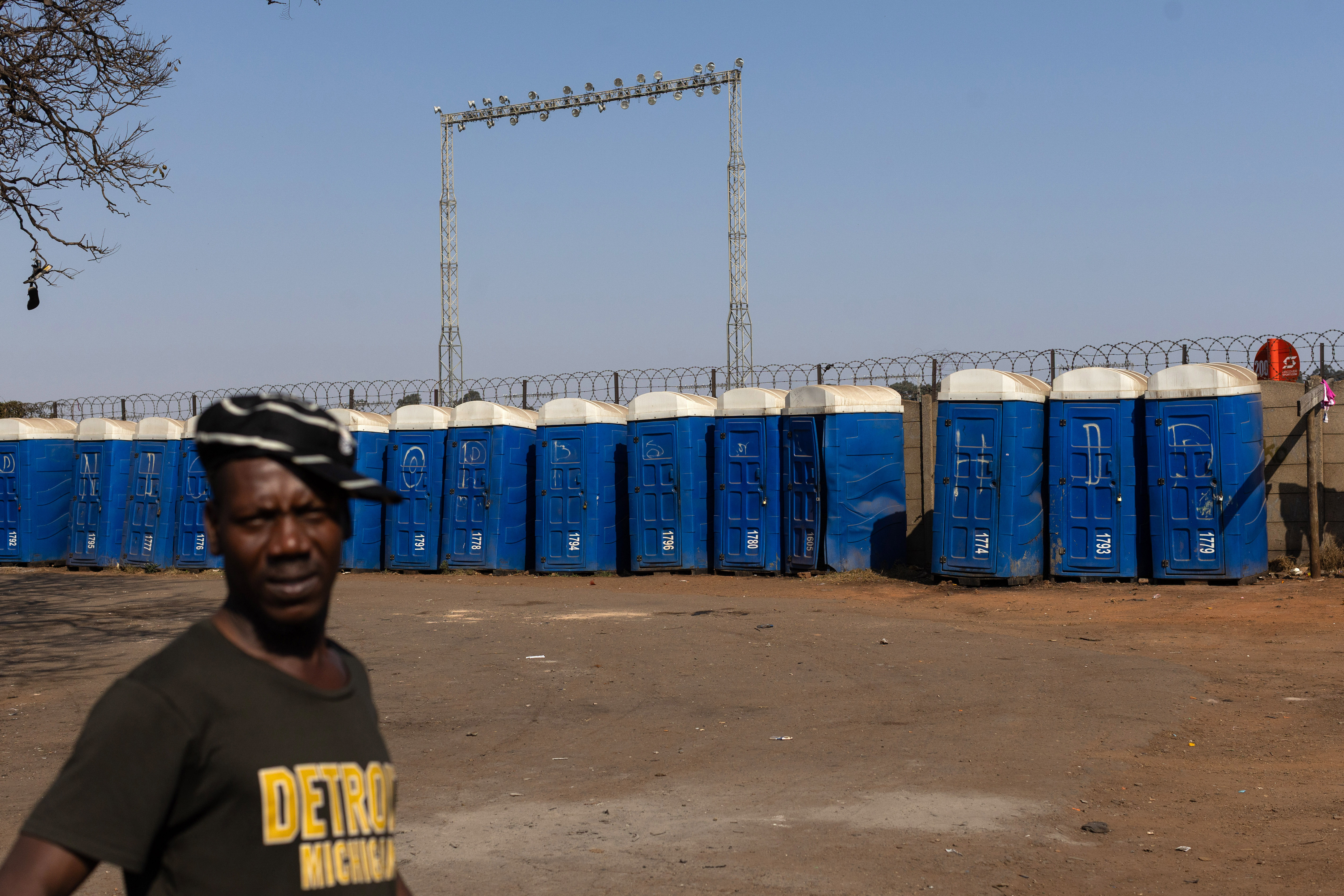
There is no running water or electricity at the Wembley Stadium temporary accommodation site.
“The issue is not simply around TEA,” said Wits University senior anthropology lecturer Matthew Wilhelm-Solomon. “The issue is that at its root, there is just a lack of affordable accommodation for low-income inner-city residents, and you’ll never resolve that issue just through TEA.”
He said temporary emergency accommodation should be more than just a way to keep people off the streets.
“Basic standards of living in dignity should be a characteristic of TEA,” he said. “A TEA should be a home of sorts … So certainly, issues of dignity and privacy should apply.”
This story is produced by Our City News, a non-profit newsroom serving the people of Johannesburg
