23 March 2026
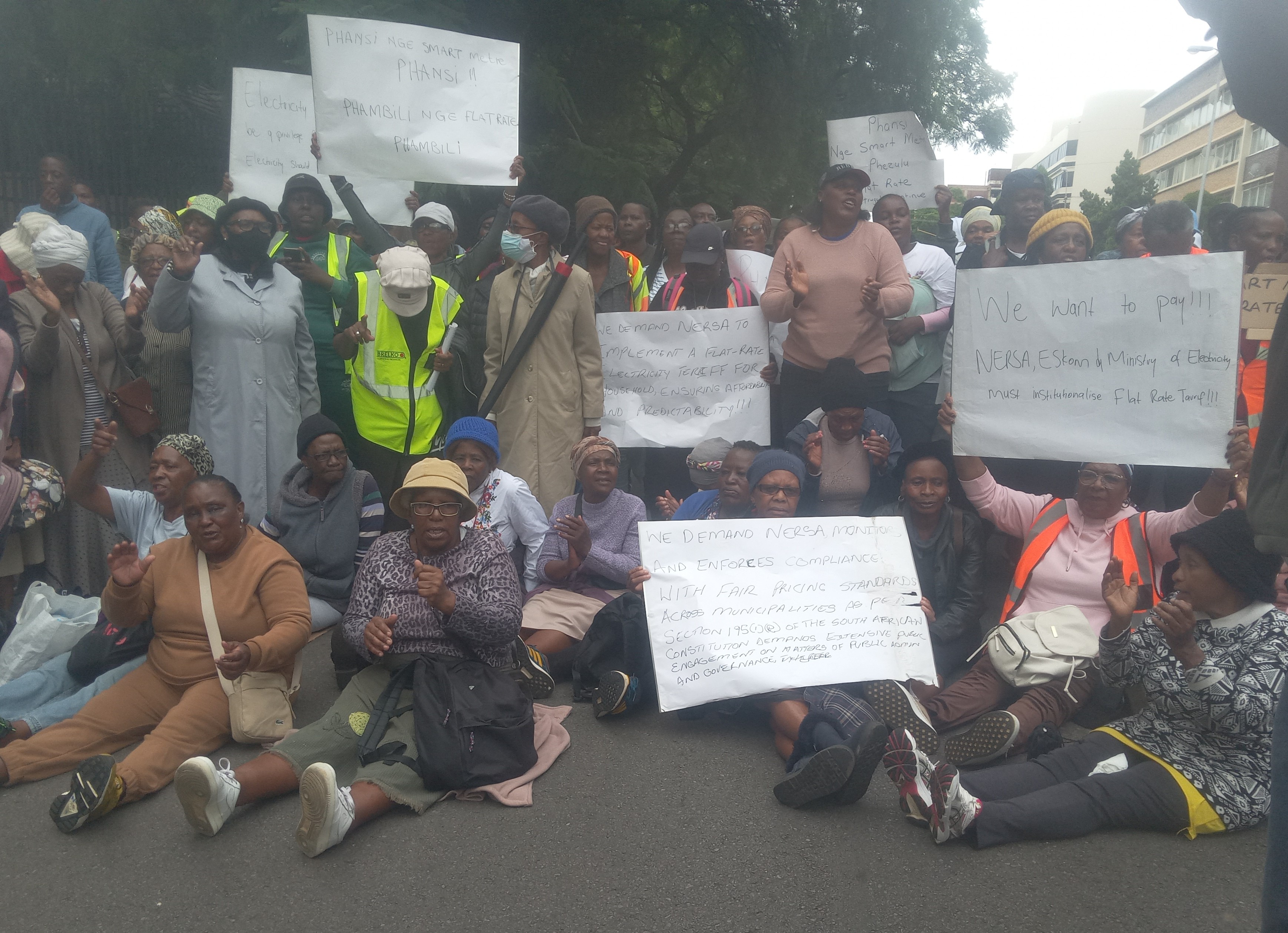
Mostly elderly residents from Soweto travelled to Pretoria on Monday to protest outside the office of the National Energy Regulator of South Africa. Photo: Warren Mabona
Hundreds of Soweto residents protested in the rain outside the offices of the National Energy Regulator of South Africa (NERSA) in Pretoria on Monday, demanding a flat rate electricity tariff of R350 for poor and working-class households. They said they cannot afford the current tariffs.
Protesters were led by members of the Diepkloof Workers, Elders and Youth Council. They want public hearings to be held in affected communities before a new tariff is charged.
Among their demands is for NERSA to instruct Eskom to suspend the installation of smart prepaid meters. Community leader Thabo Ngayo told protesters that Eskom started replacing the old electricity meters early last month. He said the power utility had started the project without consulting the community.
“If these meters are not suspended, there will be a lot of anarchy in Soweto. People are very angry,” warned Ngayo.
Ngayo said residents had marched to Eskom’s Soweto offices and handed over a memorandum on 13 March, but officials told them to approach NERSA.
Pensioner Ramolefe Mokwena told GroundUp that he spends R1,200 of his R2,300 a month on electricity every month. “My two children are at university, and I can’t buy enough food for them. It is painful to be unable to buy food for your children.”
“I’m begging you to feel sorry for us,” Motshidisi Maputle, 72, told the NERSA official who came out to accept the memorandum of demands. “I am very sick and weak. I need affordable electricity.”
Tshepiso Wesson said she is unemployed and survives on the R370 social relief of distress grant. “I cannot afford electricity on these new meters,” she said.
The protesters gave NERSA seven working days to respond. The memorandum was accepted by NERSA’s head of communications, Charles Hlebela, who promised to respond.
