9 February 2026
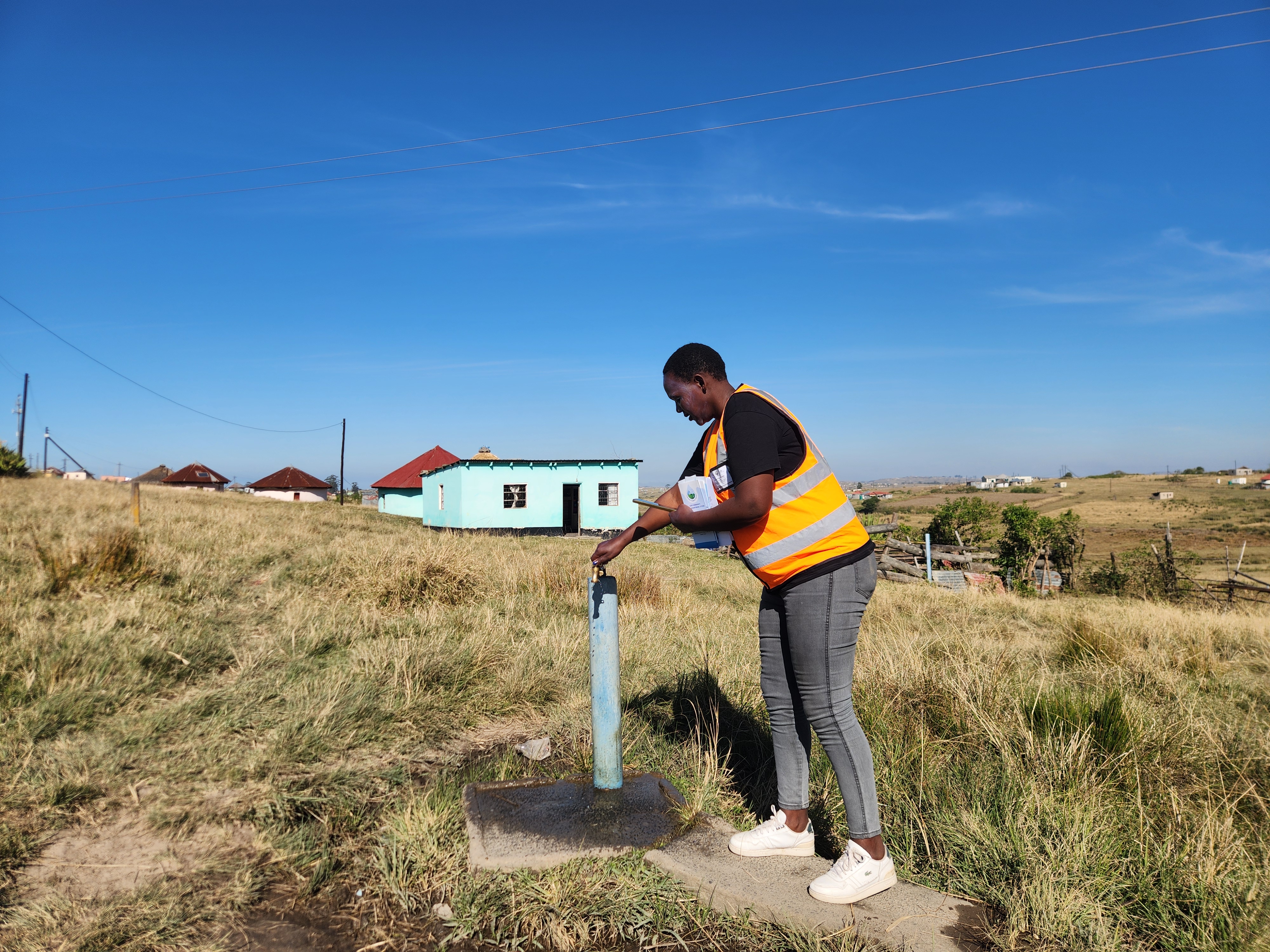
A Water Ambassador in the Amanzi Kumntu Wonke project, checking the taps for running water. Photo: Zoë Postman
For Nothembile Vayo, a 57-year-old woman from Tshezi Village in the former Transkei, the consequences of municipal dysfunction are deeply felt.
“I struggled to walk after my stroke, and the tap near my house never had water,” says Vayo. “I had to walk down to the river just to collect water.”
In rural communities across South Africa, local government failing to provide services is not an abstract governance problem: it affects dignity, health, and quality of life. Yet rural municipalities, where institutional failures compound historical neglect and deepen poverty and inequality, are underfunded.
Part of the root cause can be traced back to policies like the 1998 White Paper on Local Government that imagined municipalities would generate sufficient revenue to fund the bulk of their expenditure through property rates, sale of electricity, sale of water, refuse removal, and sewerage and sanitation.
In practice, this assumption has not held, particularly in rural municipalities, with thin revenue bases, that serve vast, poor communities with sparse infrastructure and degraded roads. The current municipal funding model fails to account for this reality, setting rural municipalities up for failure.
Addressing local government dysfunction and its impact on rural citizens requires a major rethink of how local government operates in rural South Africa.
This includes developing a funding model that accounts for historical injustice, particularly in former homeland areas.
Municipal administrations also need to be professionalised and insulated from political interference. And community participation needs to be stronger and more meaningful.
In the deep rural Eastern Cape, communities have partnered with the Amathole District Municipality to monitor water access. This partnership, called Amanzi Kumntu Wonke (AKW), has led to tangible improvements in water service provision for thousands of rural residents.
The Amathole District Municipality has received adverse audit opinions for the last five years and was put under financial administration by 2021 after declaring itself bankrupt.
This was not a municipality that could simply be sued into service delivery.
Instead, community members, traditional leaders, engineers, and activists spent time understanding the problem that led to this systemic failure, listening carefully to residents’ experiences of water provision.
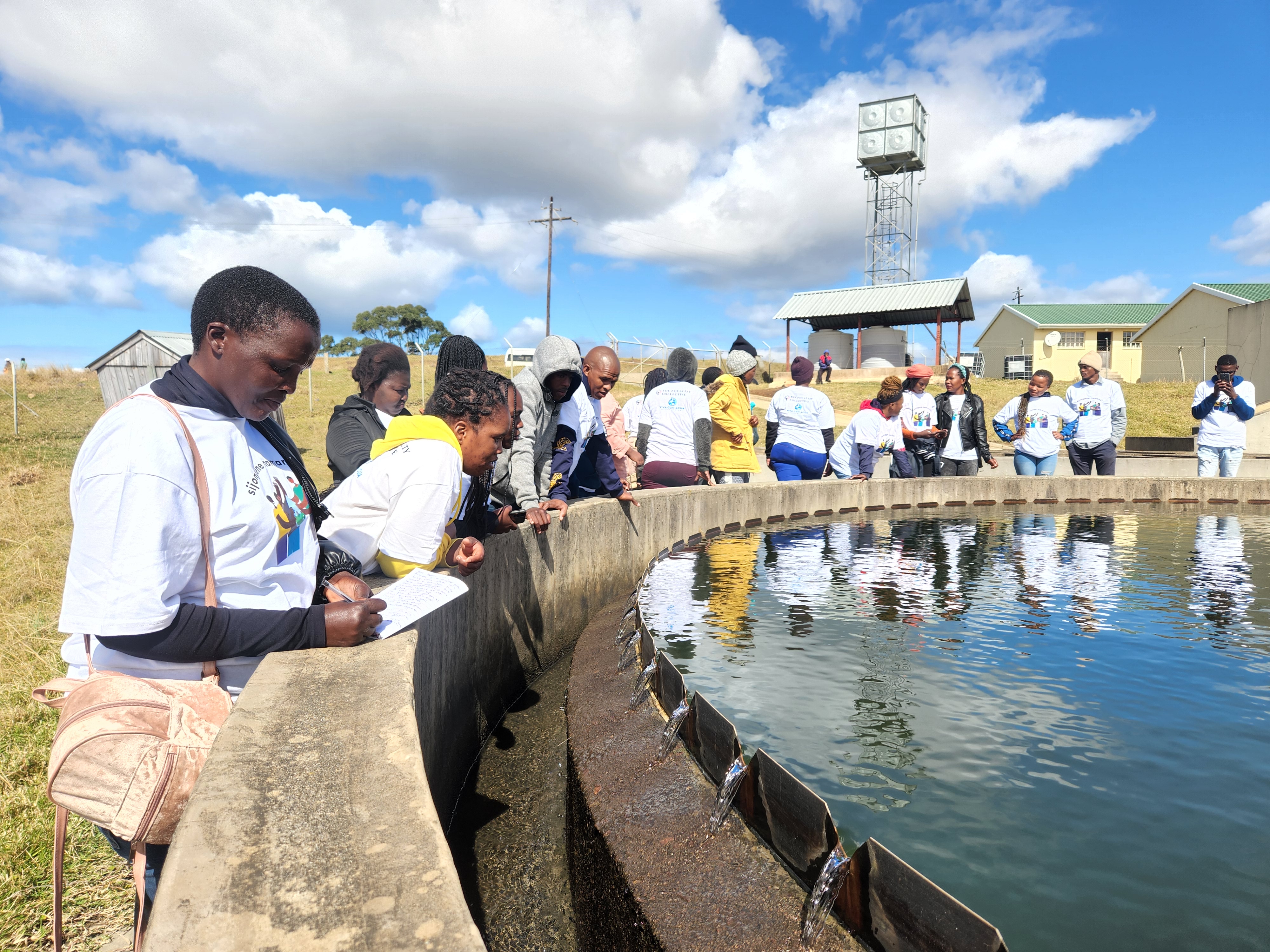
Amanzi Kumntu Wonke ambassadors inspect a reservoir.
We conducted a door-to-door survey of approximately 300 residents serviced by the local Mncwasa Water Scheme in 2021, which revealed the scale of the problem. On the day of the survey, 55% of respondents reported having no water, while 82% said water was not available every day. Of those who said water was not available every day, 41% said they had not had water since the previous year.
Through direct engagement with the municipality, it became clear that they lacked the capacity to properly monitor and maintain the scheme, and that the infrastructure itself required significant refurbishment.
This was the genesis of AKW: a community water monitoring system relying on 32 volunteers, known as Water Ambassadors, across 40 villages, who monitor the scheme daily.
Since 2022, Water Ambassadors have reported daily to the Equality Collective, a local non-profit activist organisation, on whether water is flowing into reservoirs, and whether taps and break pressure tanks are broken or leaking.
These water reports are shared with the Amathole municipality, which has found the data useful for identifying problems and responding quicker, as well as with community members via WhatsApp groups and the local community radio.
The water reports reduced deniability, enabled solving problems jointly, and shifted relationships between communities and the municipality from cycles of blame to practices of cooperation.
The Equality Collective also supported the municipality in securing close to R30-million in Water Services Infrastructure Grant funding from the National Treasury over three years, a crucial intervention in addressing chronic underfunding for maintenance and repairs.
In August 2022, when water monitoring began, only 41% of reservoirs had water on a given day. By mid-2024, that figure had risen to 70%. By January 2025, water reliability reached 91%.
AKW shows that even in contexts of deep municipal dysfunction, sustained improvement is possible.
The result has been an active, informed citizenry holding the local government to account, alongside steady improvements in water service provision by the municipality.
Notwithstanding the municipality’s ongoing functional challenges, municipal officials are engaging with the community-generated data, responding to identified failures, and remain committed to improving water access.
Crucially, community monitoring only led to real change once it was paired with resources — funding, technical capacity, and political support — so that problems could be fixed, not merely documented.
Working constructively with a financially distressed municipality has required us to apply pressure through media advocacy and public mobilisation, while maintaining a spirit of collaboration.
Rural communities need not be passive victims of municipal dysfunction. When given access to information, technical support, and platforms to engage the state, they are capable of co-governing essential services and holding local governments to account in meaningful, sustained ways.
Vayo has felt the impact of this improvement firsthand. “Since the tap by my house started having water more often, I no longer struggle as much. I can just go to the tap, without straining my body, and collect the water I need to wash my clothes, drink, garden, and cook,” she says.
Zoë Postman is the Head of Communications for Social Change at the Equality Collective–a community-embedded rural justice organisation in the former Transkei. AKW receives funding from the European Union. Opinions expressed are not necessarily the views of the European Union.
Views are not necessarily shared by GroundUp.