27 May 2026
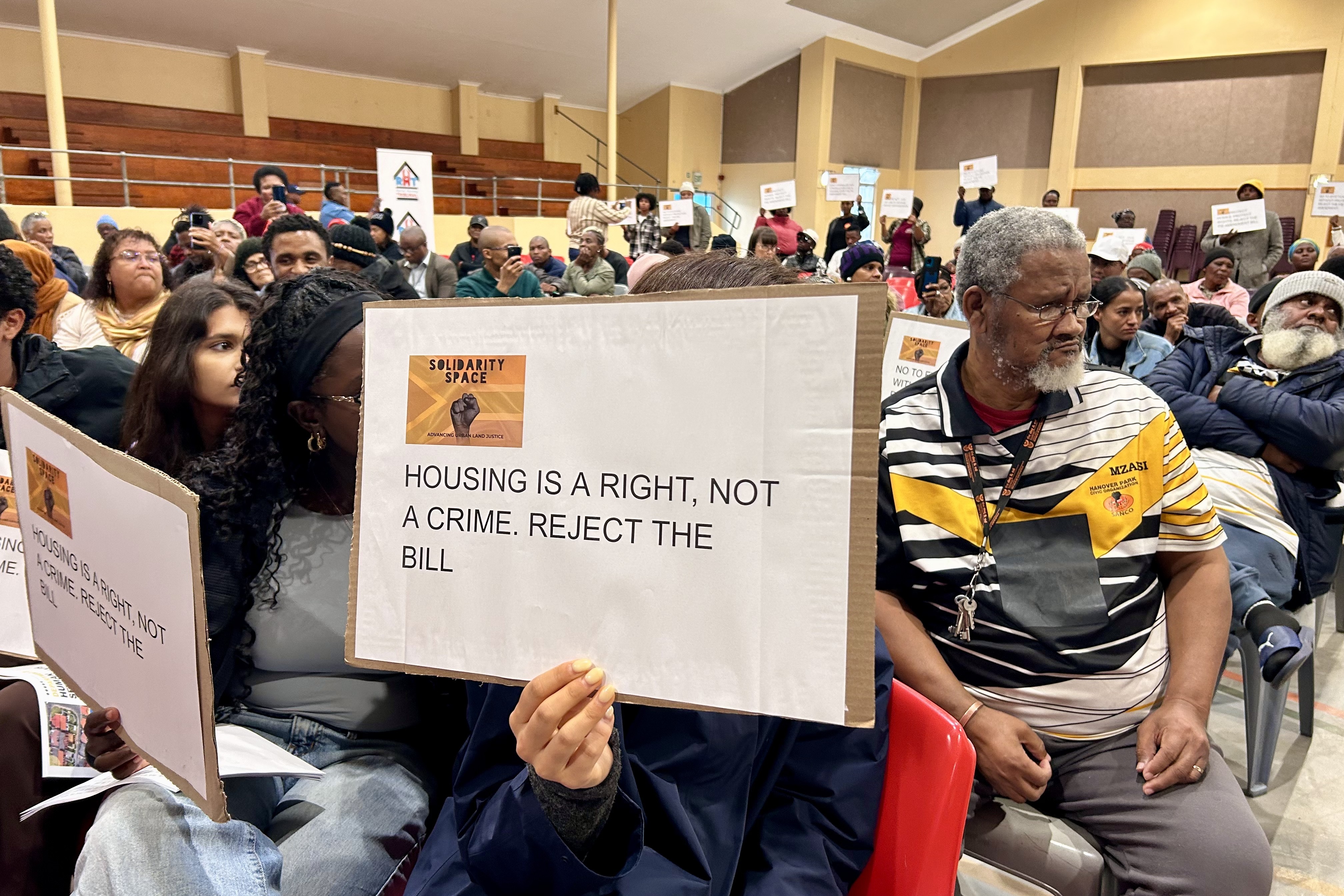
Housing activists from across Cape Town voiced their opposition to the proposed PIE Amendment Bill in Langa on Tuesday where the Department of Human Settlements hosted a public participation session. Photo: Matthew Hirsch
The Bill, now out for public comment, follows its approval by Cabinet in April.
A petition calling for the amendments to be rejected has so far received over 3,000 signatures.
The Bill will empower courts to include in their eviction orders the period for which alternative accommodation or land would need to be provided for an unlawful occupier by a municipality, organ of state or another sphere of government.
People have until 16 June to submit their comments.
Residents and housing activists from across Cape Town voiced their opposition to the proposed PIE Amendment Bill in Langa on Tuesday, criticising some of the changes for being “anti-poor”.
A petition calling for the amendments to be rejected has so far received over 3,000 signatures.
“South Africa is confronted with deepening inequality, systemic mass unemployment and acute shortage of affordable housing, and the continued reality of landlessness rooted in historical and ongoing dispossession and impoverishment,” says a statement by civil society organisations. “For millions of people, occupation is not a choice, but a necessity born of exclusion from land and housing markets that remain structurally inaccessible to the poor and working-class.”
The Bill, published in the Government Gazette for public comment, follows its approval by Cabinet in April. It seeks to amend the Prevention of Illegal Eviction from and Unlawful Occupation of Land Act of 1998.
During the public participation session hosted by the government on Tuesday, activists present were particularly concerned with the provisions relating to alternative accommodation.
The Bill will empower courts to make an order related to alternative accommodation and require the courts to include in their eviction orders the period for which alternative accommodation or land would need to be provided for an unlawful occupier by a municipality, organ of state or another sphere of government.
Activists believe this may limit the time in which the government has to assist occupiers with housing, and in certain circumstances could “grant eviction without requiring that such accommodation is made available at all”.
They have also raised concerns about the threat of jail time and fines of up to R2-million for people found to have incited land occupations. “In a society where millions occupy land out of necessity, such criminalisation is both unjust and impractical,” the organisations say.
According to the Department of Human Settlements, the proposed amendment to the Act aims to mitigate unlawful occupation of land.
“The problem creates a huge financial and planning burden on municipalities and landowners to provide alternative accommodation to people facing imminent eviction,” read the government’s presentation.
“The bill seeks to bring balance between the rights of unlawful occupiers, landowners and municipalities,” read the presentation. The department is also looking to introduce a mediatory process in cases where a municipality is the landowner.
After the presentation, many people in the meeting raised their hands to speak. Some also held up placards that read, “Housing is a human right, not a crime” and “No to evictions without protection”.
Wendy Pekeur, from Ubuntu Rural Women and Youth Movement, said that there were more than 3-million people in the country on the housing waiting list. “We need proper housing, so the political parties must take this message back. We want to see them work for the people. We don’t want this bill because it’s going to create chaos,” she said.
Indira Mtandeki, who lives in the Covid 19 informal settlement in Driftsands, also rejected the bill, saying, “This is going to increase the vulnerability of informal settlement residents facing homelessness. It will expand the powers of eviction without sufficient safeguards for the affected communities.”
“It will criminalise poverty and the landless instead of addressing the root causes.”
Housing activist Kenneth Matlawe stressed that alternative accommodation offered to families must meet the standards of dignity and address the issue of spatial injustice.
Local ward councillor Lwazi Phakade (ANC) criticised the officials for failing to inform him of the presentation timeously so he could invite affected residents in his ward. “Many people have been deprived of this information-sharing session and public participation process. On behalf of the people of Langa that are here and not here, we reject this,” he said.
Officials from the department noted the residents’ concerns at the end of the meeting and urged them to make formal submission by 16 June to [email protected].
The department intends to return to the Cabinet with the revised Bill by July 2026. “This will pave the way for the Bill to be tabled before Parliament by late July or early August,” said Minister Thembi Simelane in a media statement last month.
