20 July 2026
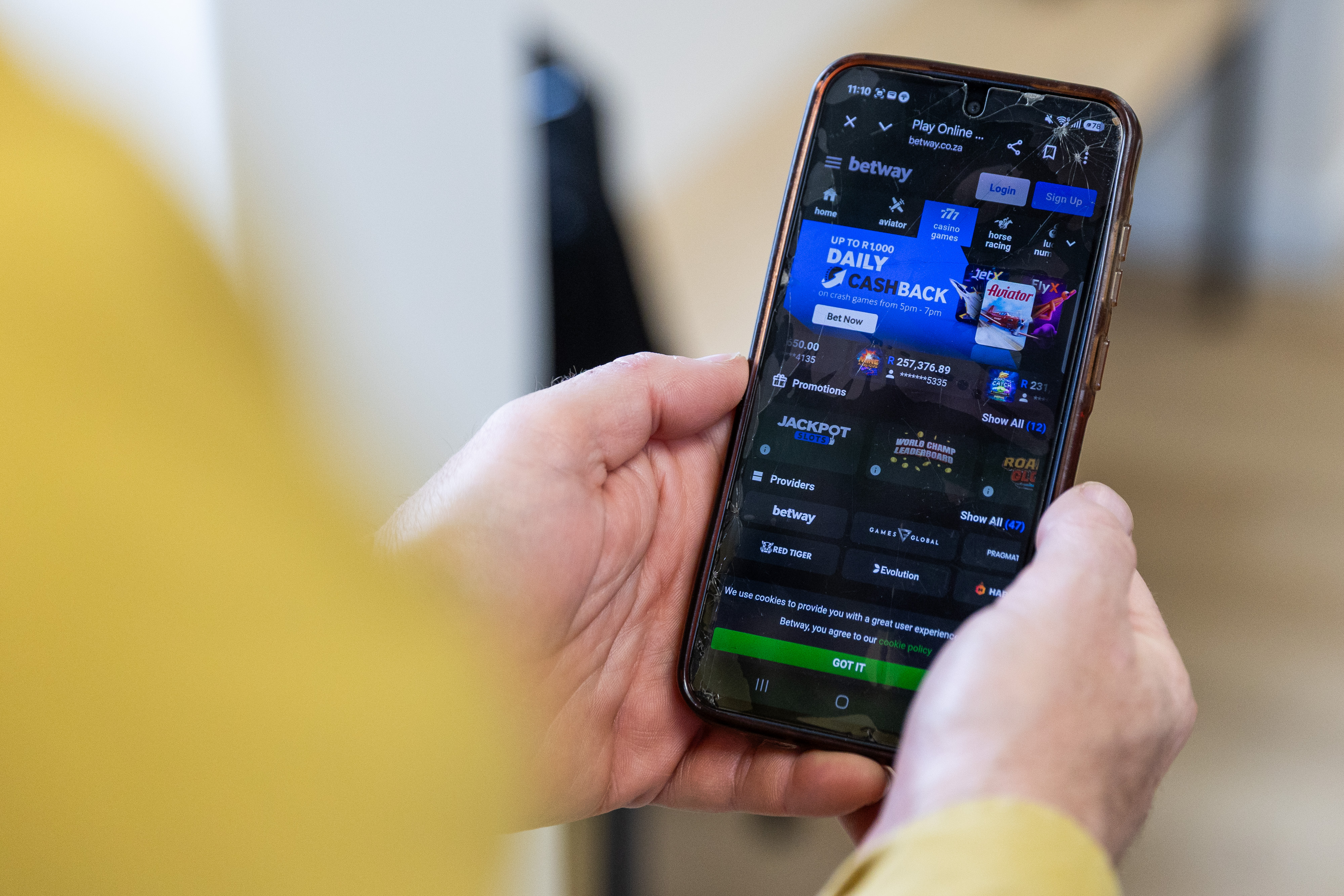
Young South Africans are betting on sites like Betway more and more. But over the long run, the only gambling winners are the companies themselves. Photo: Ashraf Hendricks
We are two final-year computer science students, and we have noticed just how bad the gambling crisis has become, especially on campus. Students are gambling their bursary or NSFAS funds away, and have to borrow money to avoid going hungry.
In this article, we want to debunk common gambling misconceptions found on social media and help make sense of how these systems actually work and why gambling is such a problem in South Africa.
According to Google Trends, four of the top ten search terms in South Africa are related to gambling. Betway sits at number two and Hollywoodbets at number three, just behind the weather. Gambling platforms are being searched more than SASSA — the agency that pays out child support grants and old-age pensions.
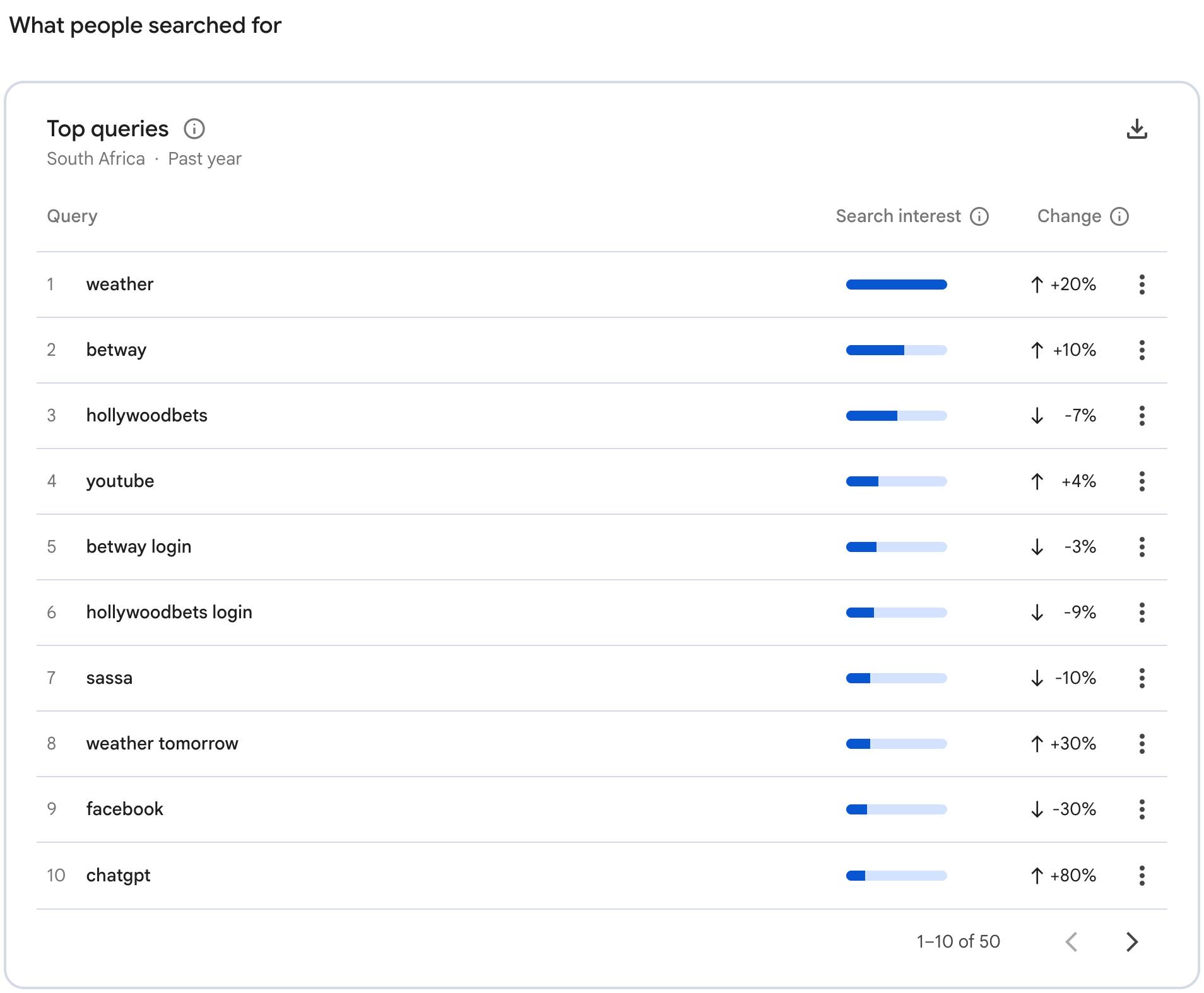
Screenshot from Google Trends, retrieved July 2026.
South Africans wagered R1.5-trillion on gambling in the 2024/25 financial year - about 20% of our GDP and equal to almost half of what the government spends every year. Most of this takes place online; casinos are only responsible for 20% of gambling.
The industry’s revenue grew by over 25% in the financial year, significantly outpacing our economy’s annual growth.
A problem gambler is someone who continues to gamble despite the negative consequences for their life. Problem gambling has jumped from just 6% of gamblers in 2017 to over 31% today.
Over a million calls were made to the National Responsible Gambling Programme helpline in 2024/25. Among people our age, 18 to 35, treatment referrals more than doubled.
We see it on campus too. Someone’s phone is open on Betway during a lecture. Someone says they’re “just checking the score”, but they are actually checking whether their bet was a success.
There is a whole industry of Telegram channels and WhatsApp groups selling “signals” or “prediction apps” that tell you when and on what to place a bet.
But no one can predict the future. Popular online casino games, such as Aviator, use provably fair random number systems (see a technical explanation at the bottom of this article).
There is no known way to predict what the numbers these apps generate will be, not even for the people who make the apps. Anyone who claims to know the outcome of bets on the Aviator game in advance is lying.
There is no pattern. The odds of any number, or series of numbers, occurring at any time of any day are the same.
Many people think that if they’ve had a run of losses, a win is more likely next time. This is known as the gambler’s fallacy. But if a fair coin lands heads ten times in a row, the eleventh flip is still just as likely to be heads as tails. The coin does not remember, and neither does a slot machine, and neither does Aviator.
Gambling platforms abuse this by showing you a history of past results, which gives your brain a pattern to match against. But the pattern is meaningless.
Some people double their bet after every loss. This is known as the Martingale system. Eventually, a win recovers everything plus some extra. It has been around since the 18th century, and has been bankrupting people for just as long.
The maths: You start at R10. You lose ten times in a row and double your bet each time. Your eleventh bet, therefore, needs to be R10,240 just to get back to even. And even if you won that 11th bet, you’d make a mere R20, having risked over R20,000 along the way.
Also, most SA gambling platforms will cap your maximum bet, specifically so that this strategy cannot run forever. It never beats the house edge.
A post on social media punted “Project 19 Million” as a way for people to build money up for December. The idea is that you start with R100, bet at 1.5 odds, and then re-gamble all the winnings the next day. By day 30, you bet R12,783,352 for a chance of winning R19,175,028.
One big problem: the math is against it. 1.5 odds implies a 67% chance of winning any single bet (this is excluding the bookmaker’s margins). There is a 1 in 192,000 chance of winning 30 days in a row. The influencer who posted the schedule has not made it past day 3 and regularly restarts it.
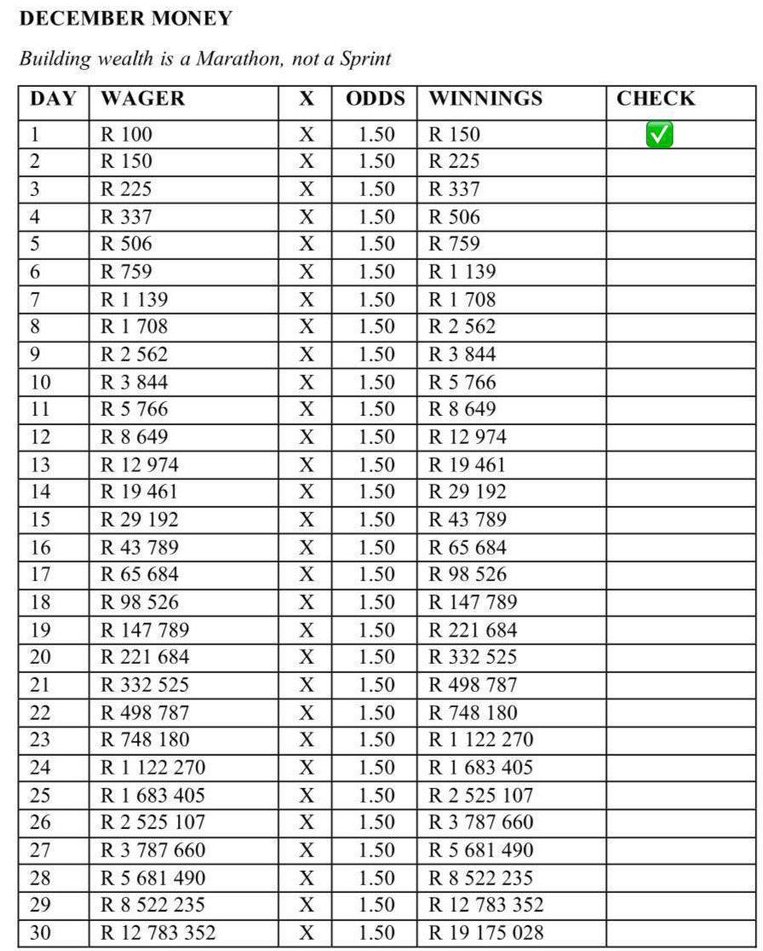
Plans like Project 19 Million do not work. 30 consecutive wins is not a good strategy to have.
People propose there are better times to gamble: Friday nights, just after midnight, maybe when the app is “less busy”. It is all false.
Licensed platforms use certified random number generators that are independent of time, what you are wearing, or how many people are online. Nobody at Hollywoodbets is sitting there making it easier for you to win at 11pm.
In fact, Sunbet, a popular online gambling platform, has stated that these are myths and that “no time of day, week, or month has any effect on your chances of winning”.
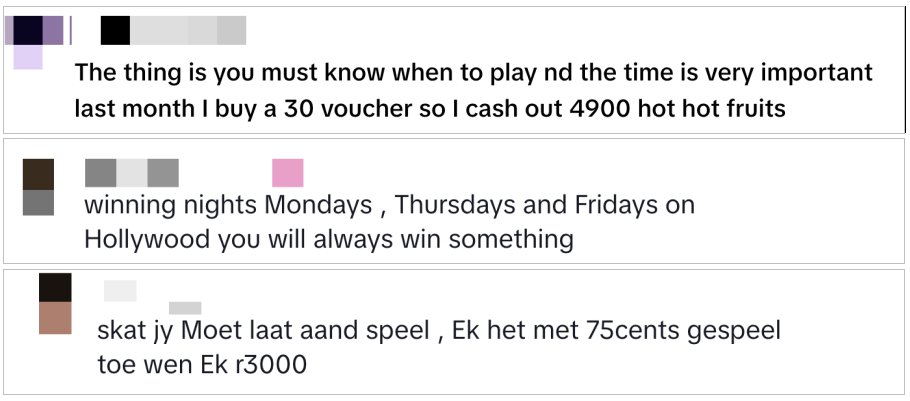
On social media, people claim to know when the best time is to gamble. This is nonsense. The odds of winning don’t change based on the time you play.
Meet Brenda Bradely, an influencer with rituals for everything, from making someone love you again to becoming pregnant and attracting large amounts of money. They all seem to involve one or more of the following: cinnamon, brown sugar, water, Vaseline, cloves, and urine.

Brenda regularly posts what appear to be messages from people saying her rituals were successful.
None of the gambling rituals works. The games are controlled by mathematics and random number generators. Washing yourself with urine will not change the outcome. We contacted Brenda using a number found on TikTok and asked for a gambling ritual. We were assured that we could become billionaires, for the low, low cost of R4,500.
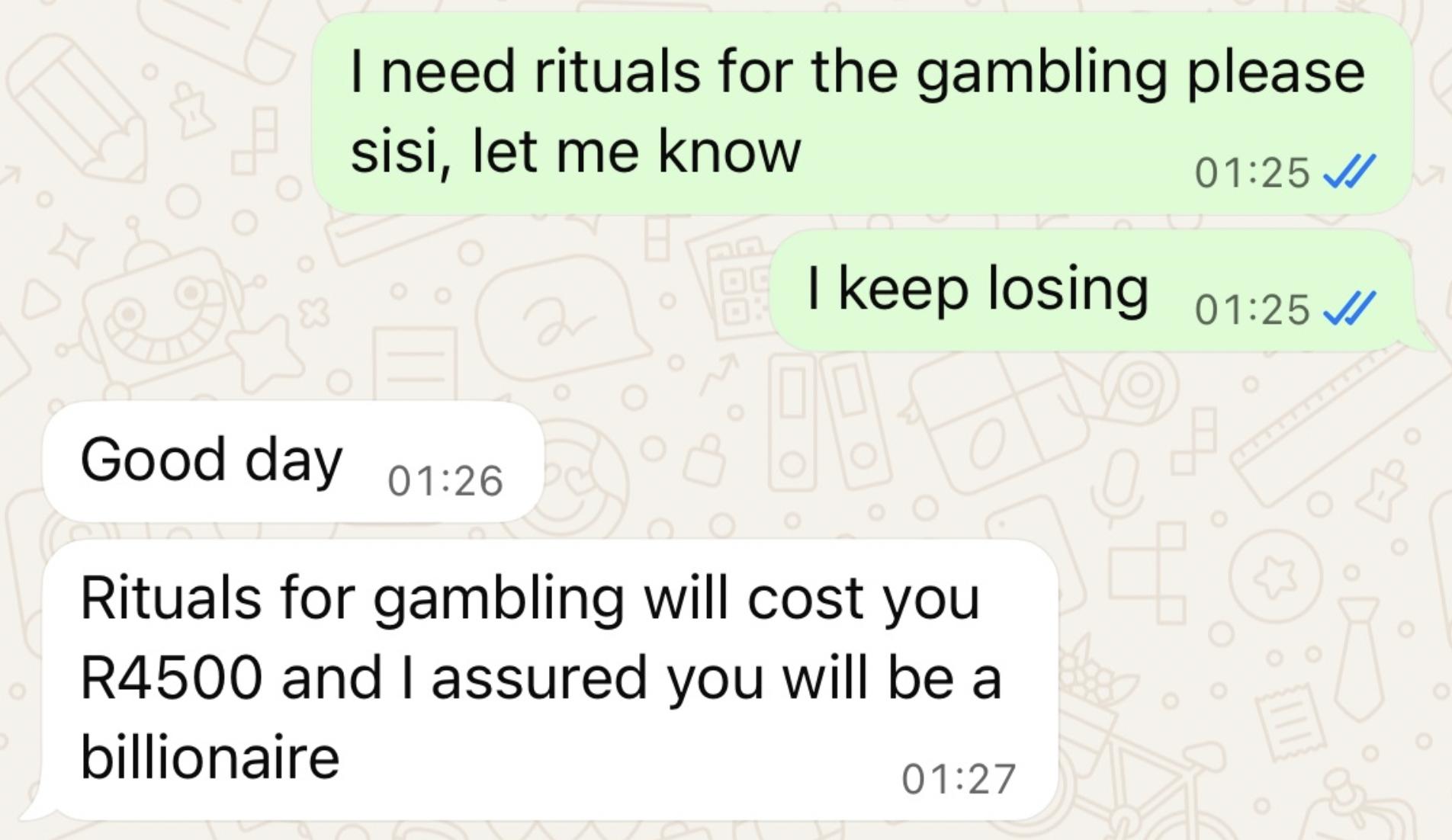
An exchange over WhatsApp between one of the authors and Brenda.
At this point, we were quite eager to make payment. Name one student who wouldn’t want to become a billionaire! So we asked Brenda how we could pay.
Immediately, she (or whoever they actually are) responded, saying we can use eWallet - a legitimate payment method, but commonly used by scammers alongside a falsely registered SIM card. We pushed for banking details instead so that we could make an EFT. The banking details did not belong to someone called Brenda with the surname Bradely.
Disappointed, we quickly realised that we would not become instant billionaires, and that this was all just a scam, just like the rituals posted on Facebook.
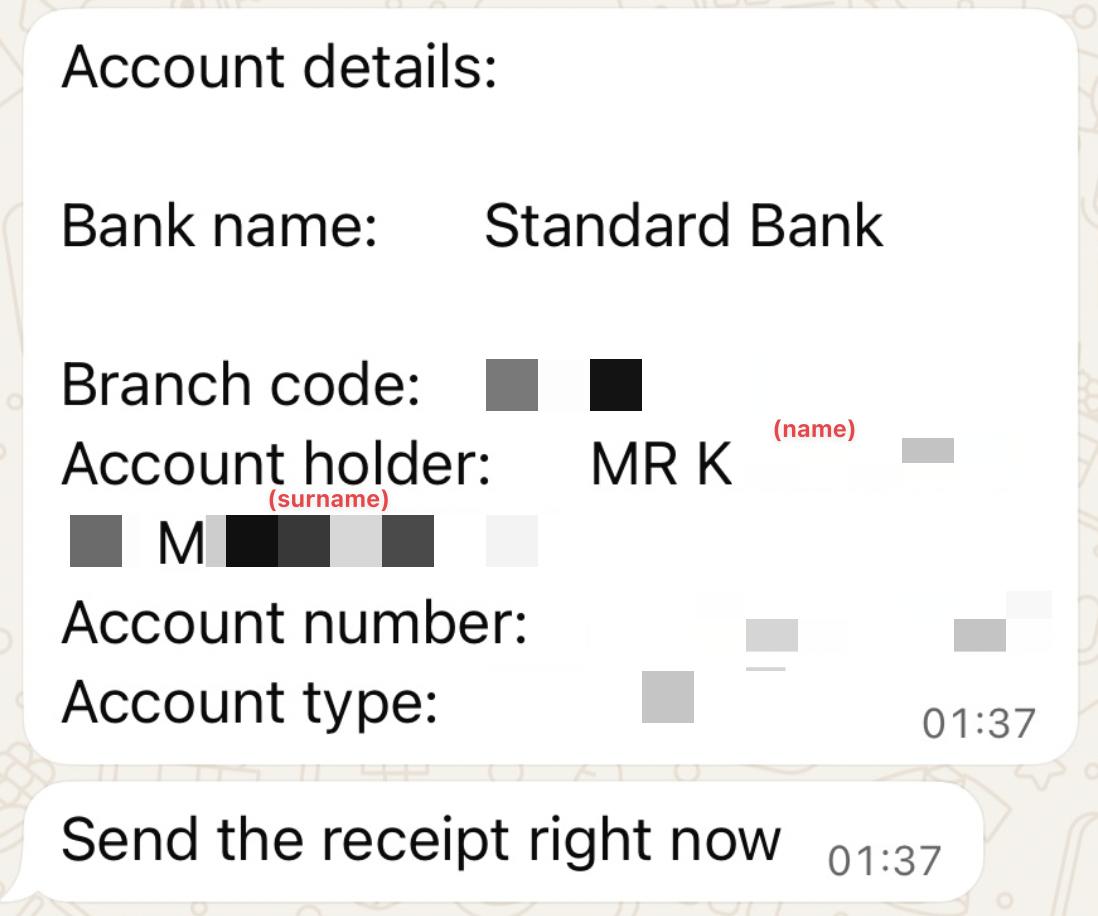
The banking details shared by Brenda, that do not belong to “Brenda Bradely”.
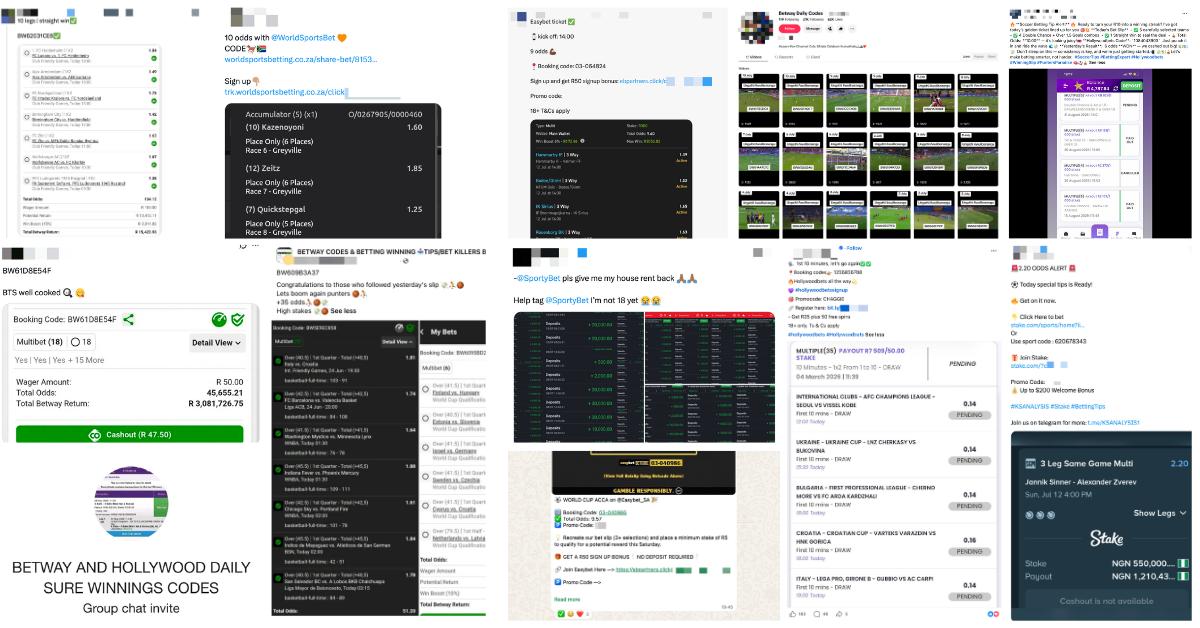
They are all over social media. Bet “codes” being shared, combining multiple wagers into a single bet. These are called parlays, combo bets, or multibets.
Combining bets like this makes the odds really high, which makes the return look great. However, the risk is also significantly higher, and you are much less likely to win. Even combining “safe” bets at around 1.5 to 2.0 odds each will already drop your win probability below 25% after only three are combined.
The image below shows social media posts where bet influencers (as they are called by Betway’s referral program) share their various parlay codes so that others can recreate the bets on their accounts.
Most of the parlays will end up losing. But the person who shared the code will usually earn a commission, regardless of whether or not the slip wins. They are always the real winner, and this is worth remembering the next time you use a bet code from someone with 40,000 followers claiming their bet is a guaranteed “boom”.
Use this to see how the odds on a parlay change as more bets are combined.
South Africa has a massive gambling problem. Gambling revenue (turnover less payouts) is over 1% of GDP and has skyrocketed in recent years. It could be because we are one of the most unequal countries in the world, and we have an extremely high unemployment rate, especially among our youth. That would also explain why so many bookmakers are opening up gambling platforms in South Africa month after month.
Youth, in particular, are struggling badly with gambling. Youth referrals to the National Responsible Gambling Programme’s rehabilitation and counselling programs are rising rapidly. Young people become exposed early to gambling - either via their parents, via social media, via advertisements, via their favourite artists, via sponsors at their school, or via simply living in South Africa for at least a minute, where gambling platforms run rampant with minimal regulation.
It feels as if gambling is all around us, in so many forms. We see it at the airports, we see it driving around in bright purple cars, we see it on TV, and we see our friends gambling during class. One of the most popular ways in South Africa to watch the World Cup is to subscribe to SportyTV on YouTube for a mere R15. But the channel is saturated with adverts for SportyBet. The gambling platforms are targeting South Africa (see Super Group’s revenue in South Africa from Betway), but they know that young adults are their most lucrative customers.
We built a quick quiz to help you test your understanding of some of the myths. Most people whom we tested it out on got at least two wrong, so good luck!
If you read this article and recognised some of your own habits, you are not alone. The apps are built by teams of people whose job is specifically to get you to keep playing longer.
Use the survey below to assess whether you or a friend has a problem.
The South African Responsible Gambling Foundation runs a free, confidential helpline, seven days a week: 080 000 6008. You can also WhatsApp them at 076 675 0710 for help.
Aviator and other gambling games use audited random number generators. For Aviator, even before a round starts, the server generates a “seed”, hashes (protects) it with a cryptographic function (together with your client seed), and then publishes the hash. Only after the game are you able to see the server seed, allowing you to check if the result was correct - this is the fair part. No one can predict the hash, and no one can crack it. It is mathematically close to being impossible.
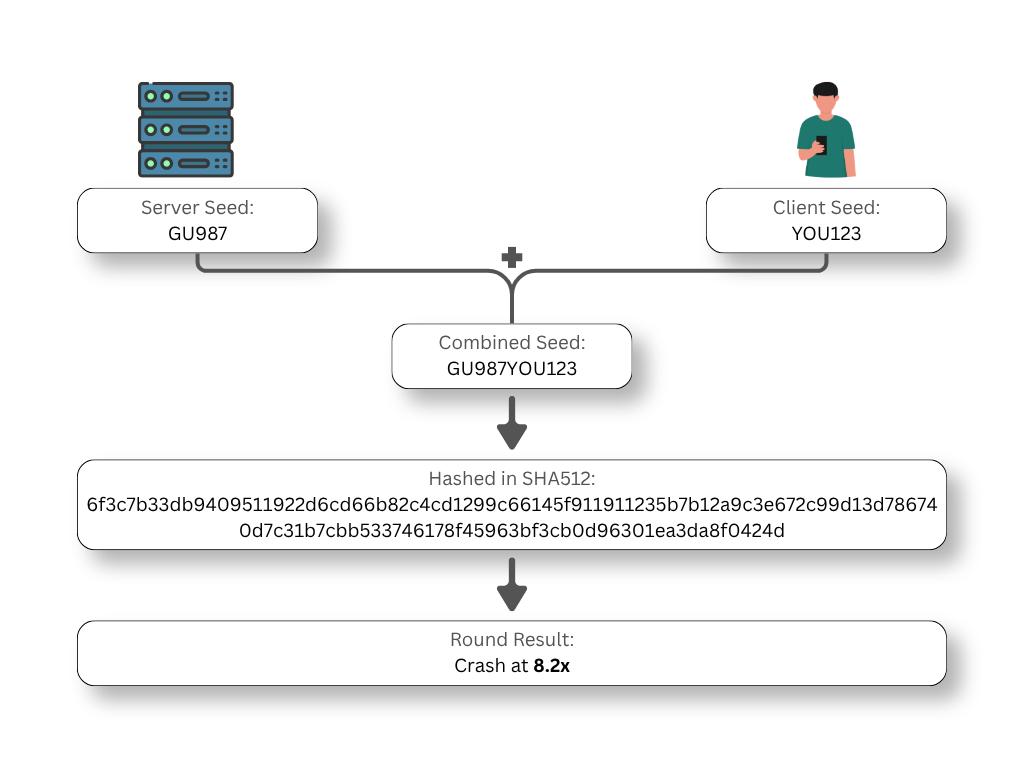
A simplification of the provably fair system used by Spribe’s Aviator and similar games.
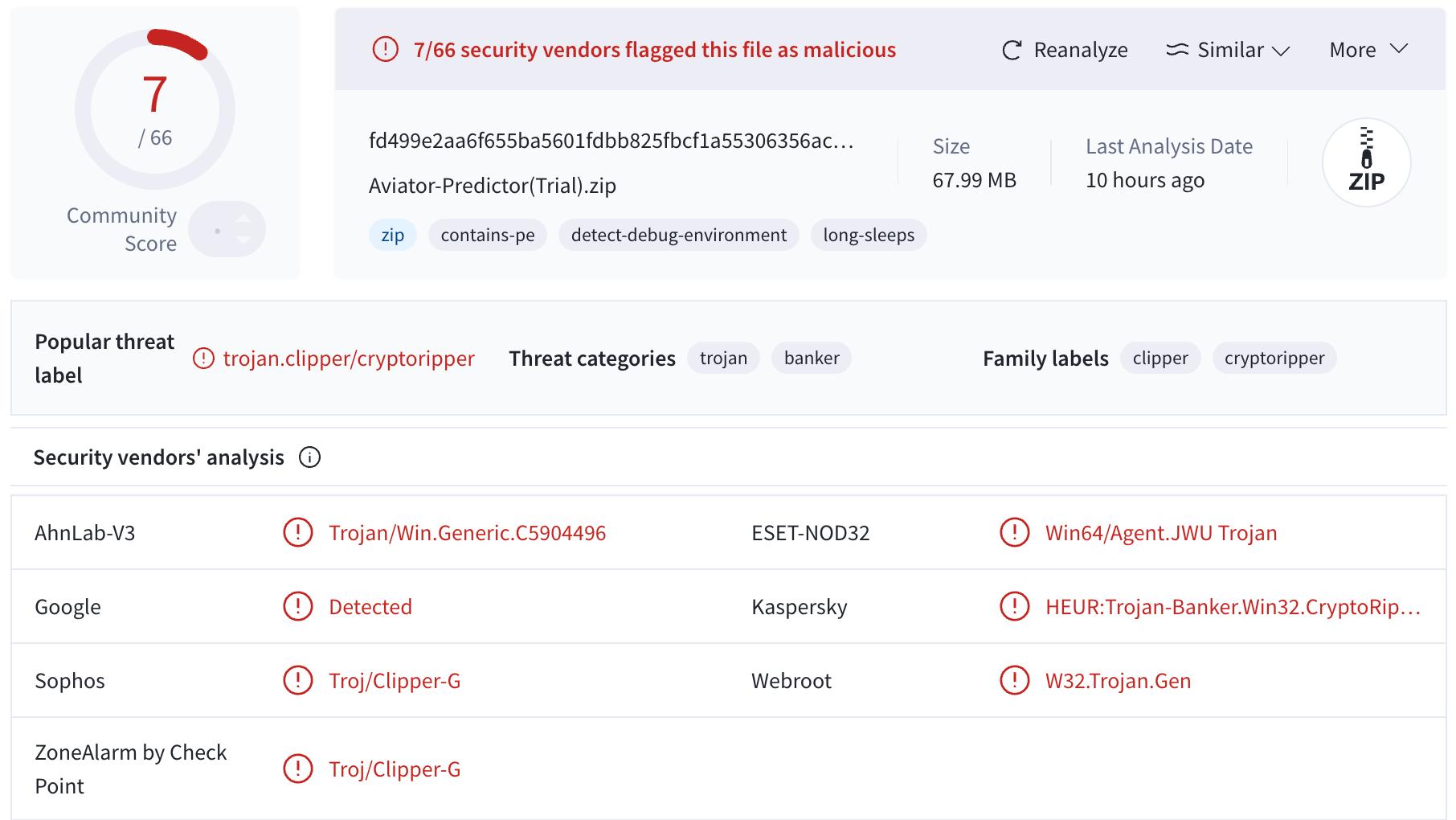
Apps that claim to predict games like Aviator are often malware. In this case, the app was designed to replace a user’s cryptocurrency address with that of the malware creator’s.
