21 August 2026
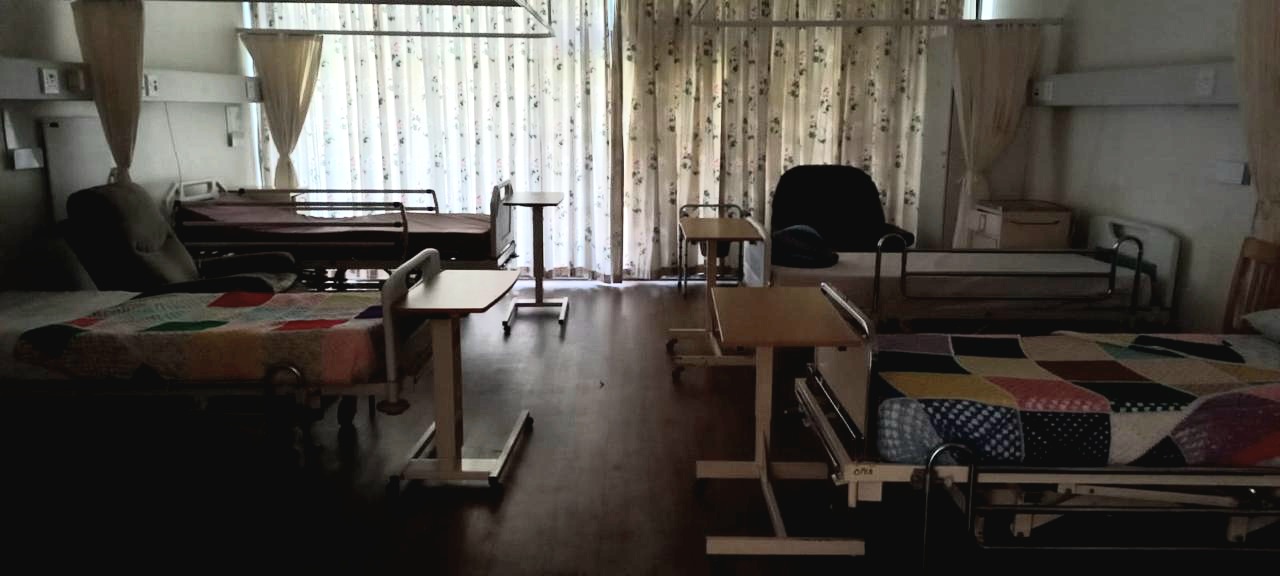
The inpatient unit at St Luke’s Combined Hospices in Kenilworth closed nearly two years ago. The organisation concluded it was unsustainable. But former staff and volunteers argue it needs to be reopened. Photos supplied
St Luke’s is a much respected institution that has been looking after people with life-threatening illnesses in Cape Town since 1980. But there’s a debate over how best to provide its services.
The disagreement is about the closing of the organisation’s inpatient unit in December 2024. St Luke’s, with a budget of about R25-million a year, mostly from donations, has shifted towards community and home-based palliative care instead.
Long-serving volunteers and former staff of St Luke’s want the inpatient unit to reopen. They argue that the closure has left many terminally ill patients and their families without a safe place to go when they can no longer be cared for at home. But the management of St Luke’s believe their current approach allows the institution to reach more people.
St Luke’s Combined Hospices, based in Kenilworth, provides palliative and hospice services to more than 600 people daily across the city, free of charge. Besides volunteers, it employs nurses, doctors, social workers and counsellors.
Palliative care aims to improve the quality of life of people with life-threatening illnesses, while hospice care usually begins when people are dying and is often provided by community-based organisations.
The inpatient unit cared for people who could not be looked after at home. It is this component that former staff and volunteers say is now missing.
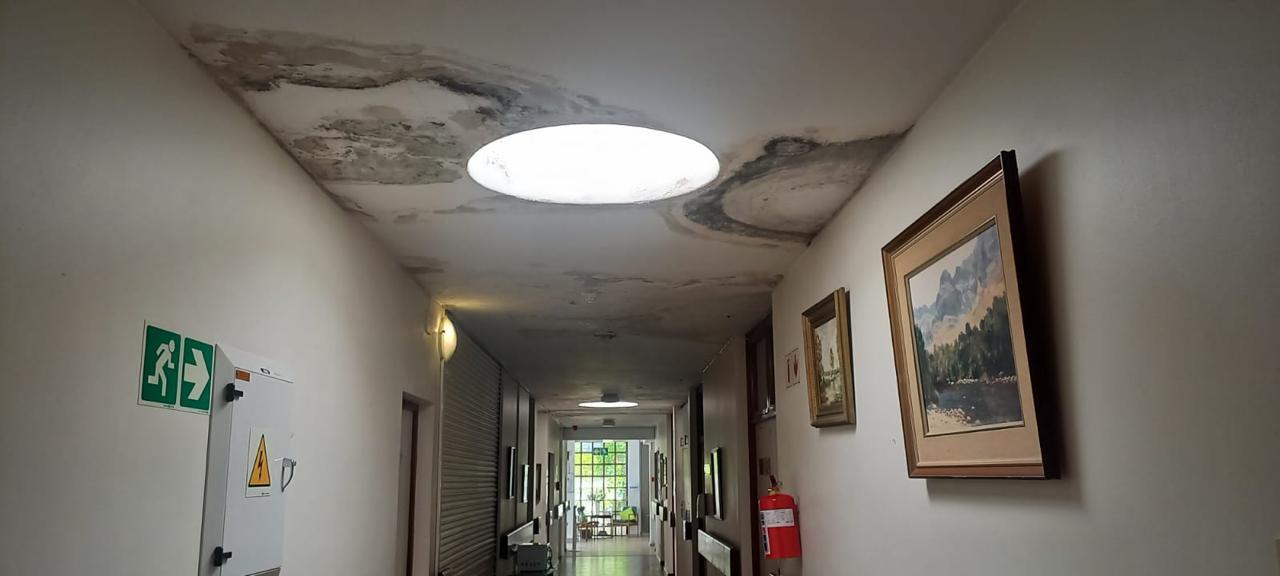
A weathered passage at the hospice in Kenilworth.
A former nurse at St Luke’s, who asked to remain anonymous, explained to GroundUp that one of the reasons for a bed in the inpatient unit was to relieve pain and bring symptoms under control. Patients would be admitted and often return home after five to seven days.
Another reason was to relieve families struggling to care for a terminally ill relative. “Families are struggling. They are not nurses and they aren’t trained. So they don’t know if they’re doing things right or not, or what to do. And they can get burnt out,” she said.
She said the closure meant that community nurses no longer had the option to refer patients to the inpatient unit when a patient’s needs became too difficult to manage at home.
A former St Luke’s doctor, who worked at the hospice for four years, confirmed that it isn’t always possible to comfortably care for every patient at home.
He said while research has found that most people prefer to die at home, that could not simply be applied to all people living in poor conditions.
“If you’re a patient lying on a mattress in a shack in Crossroads and now have a river running through your home, that’s not an environment that anyone with a terminal illness should be dying in,” he said.
“We’ve lost that secure place with trained staff who were able to guide the family and patient, and take them through the dying process. That’s gone,” he said.
Volunteers, who spoke to GroundUp on condition of anonymity, said they were particularly concerned for patients who could not afford private care facilities and whose home circumstances are extremely difficult.
One volunteer, who had worked in the inpatient unit for seven years, said, “Sometimes people weren’t at the end of life but came in for respite. They would say ‘please don’t discharge me’. Patients would tell us, ‘I’ve never had my feet rubbed, I’ve never had someone listen to me’ … And they didn’t pay. That’s the important thing.”
“Patients don’t have access to this anymore,” the volunteer said.
Motlalentoa Motsoane is the CEO of the Association of Palliative Care Centres. He said more than 90% of care provided by their members happens at patients’ homes, and many centres provide home and community-based care without operating their own inpatient units.
But, he said, inpatient services still play an important role. “Inpatient units can provide important short-term support for patients whose symptoms cannot adequately be managed at home, respite for families and caregivers, and, in some cases, terminal care requiring palliative nursing support,” said Motsoane.
Motsoane referred to South Africa’s National Policy Framework and Strategy on Palliative Care, which covered 2017 to 2022. It explicitly identifies the need for inpatient care facilities.
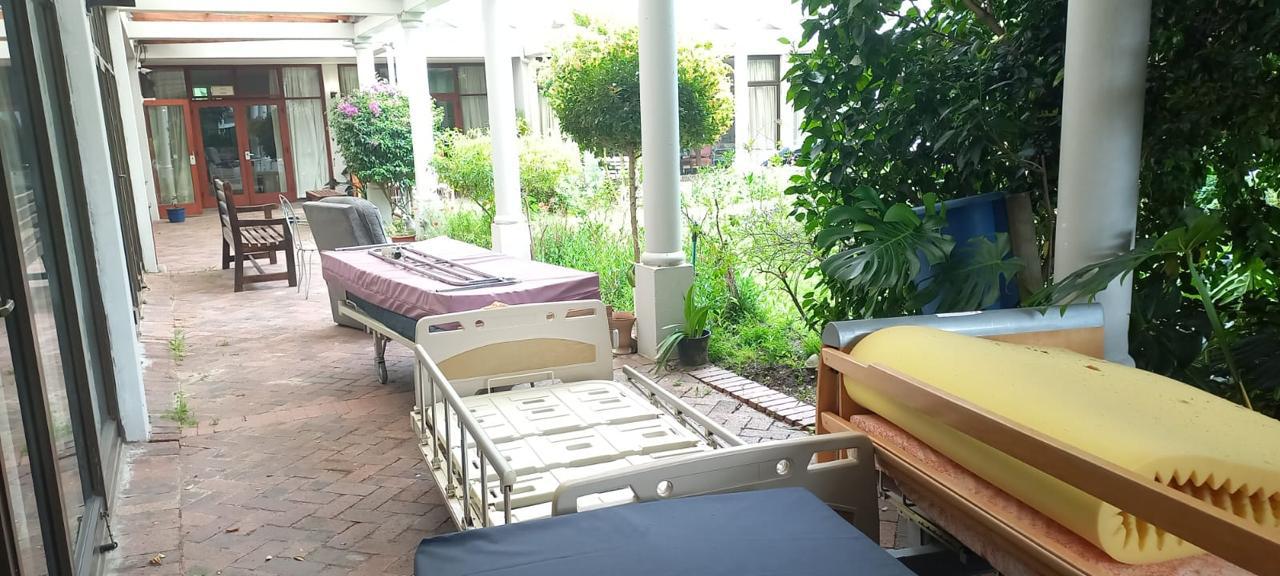
Beds from the now closed inpatient unit stand in the courtyard at St Luke’s.
Responding to our questions, the St Luke’s board said it closed the inpatient unit after analysing how much it was used. It looked at international and local palliative-care research and the sustainability of its model.
The board said the inpatient unit had been registered for 20 beds but was operating as a ten-bed facility because it received no government funding. In the three years before its closure, the unit had an average of three to five patients, the board said.
St Luke’s said it had spent years exploring alternatives to closing the unit, including seeking government funding. It also sought philanthropic support for the unit but it was unable to secure enough long-term funding.
The board said it implemented “phasing out” measures to keep the unit viable for as long as possible. But with insufficient funding, it decided that keeping it open “was no longer feasible”.
St Luke’s has instead put its resources into community-based care which benefits a larger number of patients. St Luke’s said it was able to redeploy staff to its community and home programmes, allowing teams to conduct more frequent visits, identify patients at risk earlier and manage complex symptoms in patients’ homes.
For the “minority of patients” requiring inpatient care, St Luke’s said it works with other providers, including Living Hope. Patients in need of hospital-level care are referred to public health facilities such as Groote Schuur Hospital.
The board said there are no plans to reopen the unit, but would reconsider this if there was “clear, sustained evidence of clinical need that cannot be effectively managed through home-based care or existing partner healthcare facilities”, together with a long-term funding commitment to cover the cost of 24-hour staffing.
St Luke’s is a non-profit organisation trying to fill a gap in health-care that should be provided by the state. We asked the Western Cape health department what it’s doing to fill the need for inpatient hospice care.
Spokesperson Dwayne Evans acknowledged that inpatient care remains “an important component of a comprehensive palliative care system”.
Asked whether there were plans to expand inpatient palliative care capacity elsewhere, he said the department could not confirm any specific plans.
Asked what was being done to fill the gap left by the closure of St Luke’s inpatient unit, he said patients needing palliative care could access public hospital-based, community and home-based services, as well as caregiver support, psychosocial services, social work and referrals to hospices and other palliative-care providers “where available”.
The department said it had been strengthening its palliative care offerings since 2017 and continues to provide services through “a range of health services and partnerships across the province”.
But many poor people, suffering with pain and reaching the end of their lives, are not getting the care they need.
