23 January 2026
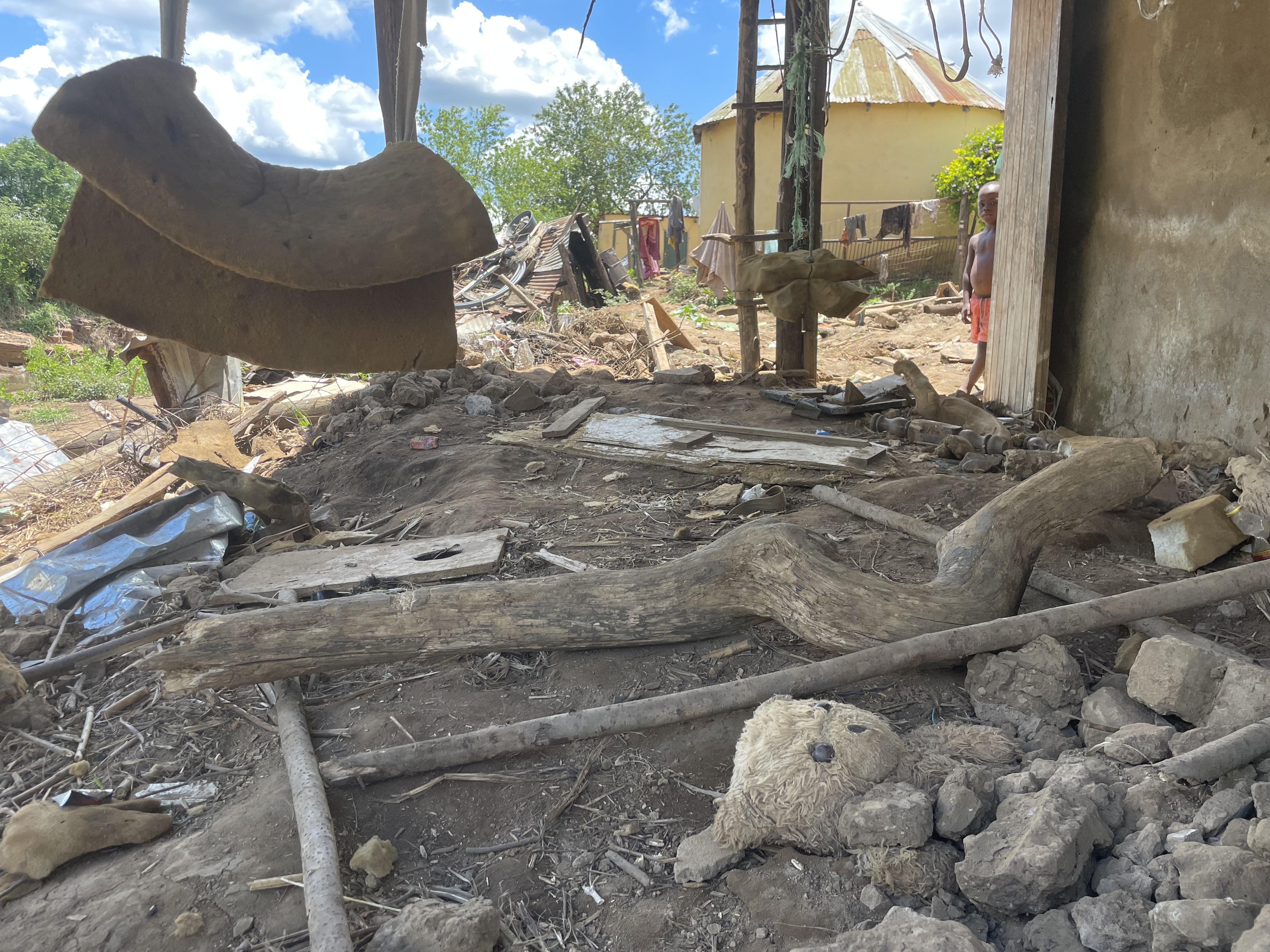
Floods in November destroyed hundreds of houses in uMshwati. Photos: Joseph Bracken
Families left homeless by floods in uMshwati on 23 November are waiting to be given temporary houses.
When heavy rains swept through uMshwati, KwaZulu-Natal, on 23 November, water levels rose rapidly. Families rushed to evacuate their homes and move to higher ground. Three people died.
More than 700 houses were damaged across the municipality, according to uMshwati Municipality spokesperson Sibusiso Mkhithi. 18 households have been allocated temporary housing, Mkhithi told GroundUp last week.
But two months after the flood, it is unclear how many of these temporary housing units — which are usually prefabricated buildings or modified shipping containers — have actually been built.
“I don’t have a safe place to rebuild by the river,” says Tandani Dlolo from Shiyabazali, a badly affected village next to the Injusuthu river. The village is in Ward 2, where 170 houses were damaged.
Dlolo wants to be given a temporary house. He says his and other victims’ details were taken down by municipal officials last week, but they have not been told if or when they will receive temporary housing.
Nompumelelo Ngubane, who also lost her home in Shiyabazali, is renting a place for R1,500 a month in uMshwati Heights while she waits for the government to provide a temporary housing unit. GroundUp has confirmed that she is on the list of 18 households that have been allocated houses. Her details were taken by municipal officials on Monday, but officials didn’t say when her house would be built.
Questions about when the allocated TRUs would be finished were sent to Mkhithi, but no response was received by the time of publication.
The KwaZulu-Natal Department of Human Settlements did not respond to questions despite several follow-up attempts made to spokesperson Ndabezinhle Sibiya.
Storms and floods have battered the province in recent years, and the provincial government is battling to keep up with the housing demand. Extreme weather is expected to become more frequent in the region as a result of climate change.
Bongiwe Ratebe, who also lived in Shiyabazali with her five children, was on the housing waiting list before the floods and had been allocated a RDP/BNG house. After the floods destroyed her home, an RDP/BNG house was hastily finished by the provincial human settlements department. But it still does not have electricity, so Ratebe and her children are still staying with a family member.
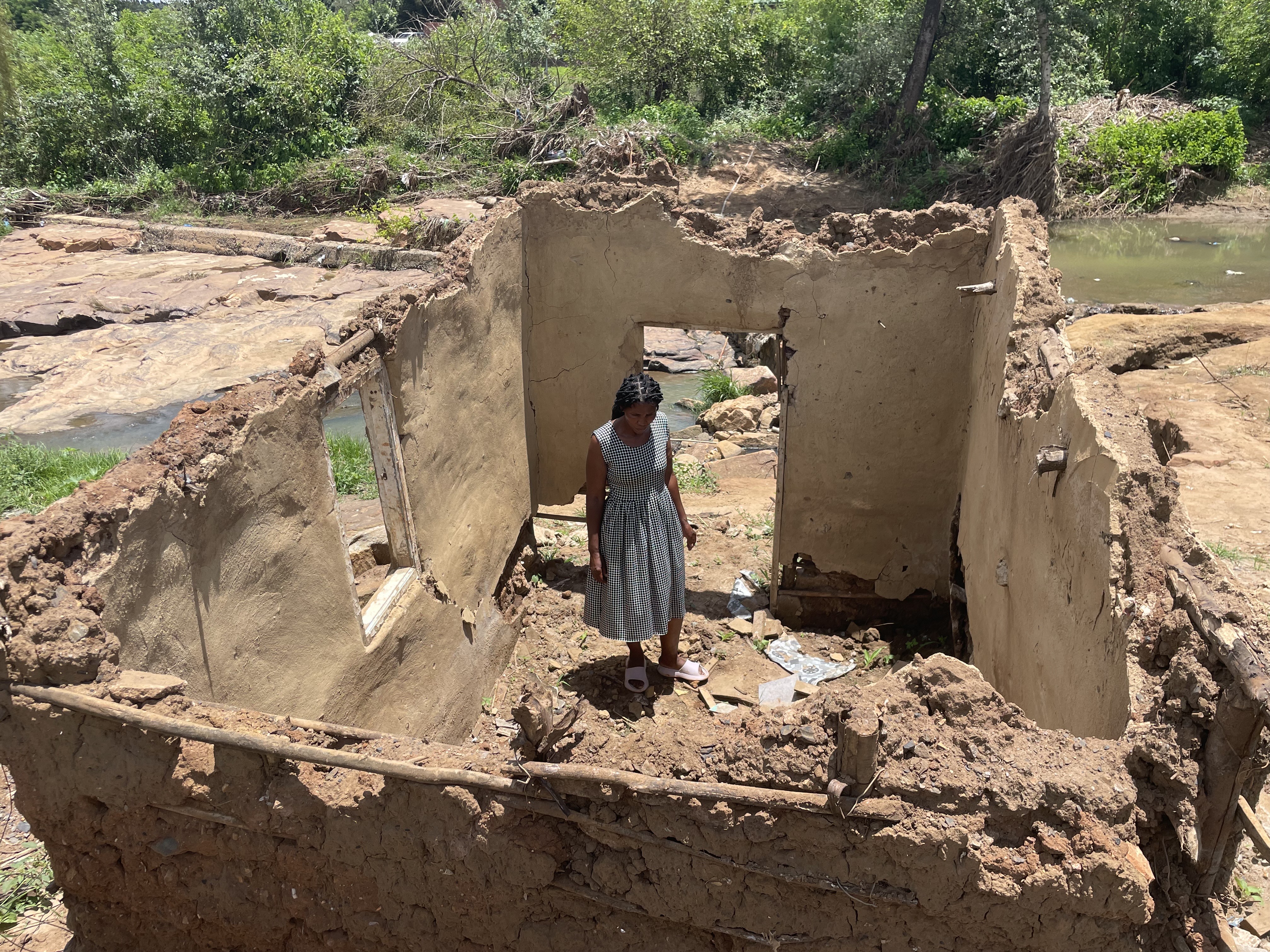
Bongiwe Ratebe stands inside one of the flood-damaged mud houses in Shiyabazali next to the Injusuthu river. Many houses were completely destroyed.
Kapsile Zondi’s house in Shiyabazali was damaged, but she is still able to live in it. She had a separate building with three rooms, which she rented out. All three of her tenants drowned in the flood, and the building was destroyed.
One of the tenants was inside her room when the flood began. “She cried. The only thing I remember, even now, is her cries calling for help. No one could assist her because of the water levels. All of a sudden, we heard nothing. It went quiet,” said Zondi.
“It’s still a painful thing to talk about,” said Zondi.
Councillor Sikhumbuzo Nxumalo told GroundUp that after the flood, a community hall and school were made available for people who needed emergency accommodation. All the flood victims were eventually accommodated by relatives, friends, or neighbours who were not affected, he said.
Nxumalo says residents are being advised not to build homes on floodplains. The municipality has also issued formal warning letters to those living in at-risk areas that they will be relocated, he says.
Homes in Ward 7 were also damaged. Lungi Malaqa, who lives in Cool Air, has had to rebuild her home. After the flood, municipal officials offered food parcels and blankets to the residents, but they have not returned since, said Malaqa.
Malaqa believes that the flood was made worse by the pipes under the road being clogged. “The pipes are still clogged, and no one from the government is doing anything about it,” she said.
Mkhithi did not respond to questions about the pipes.
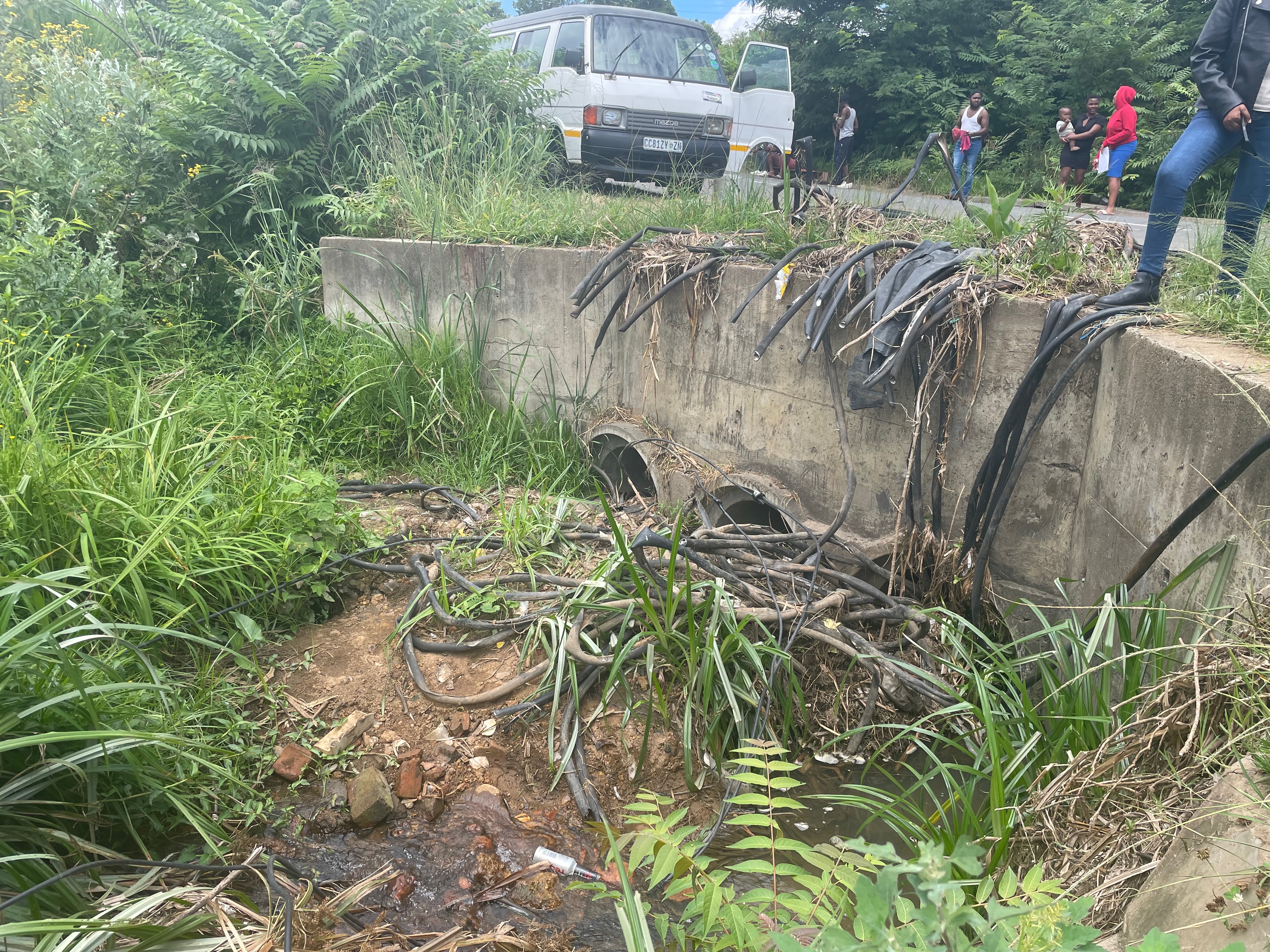
Residents believe the impact of the floods was more severe because these pipes have been clogged for years.