24 September 2026
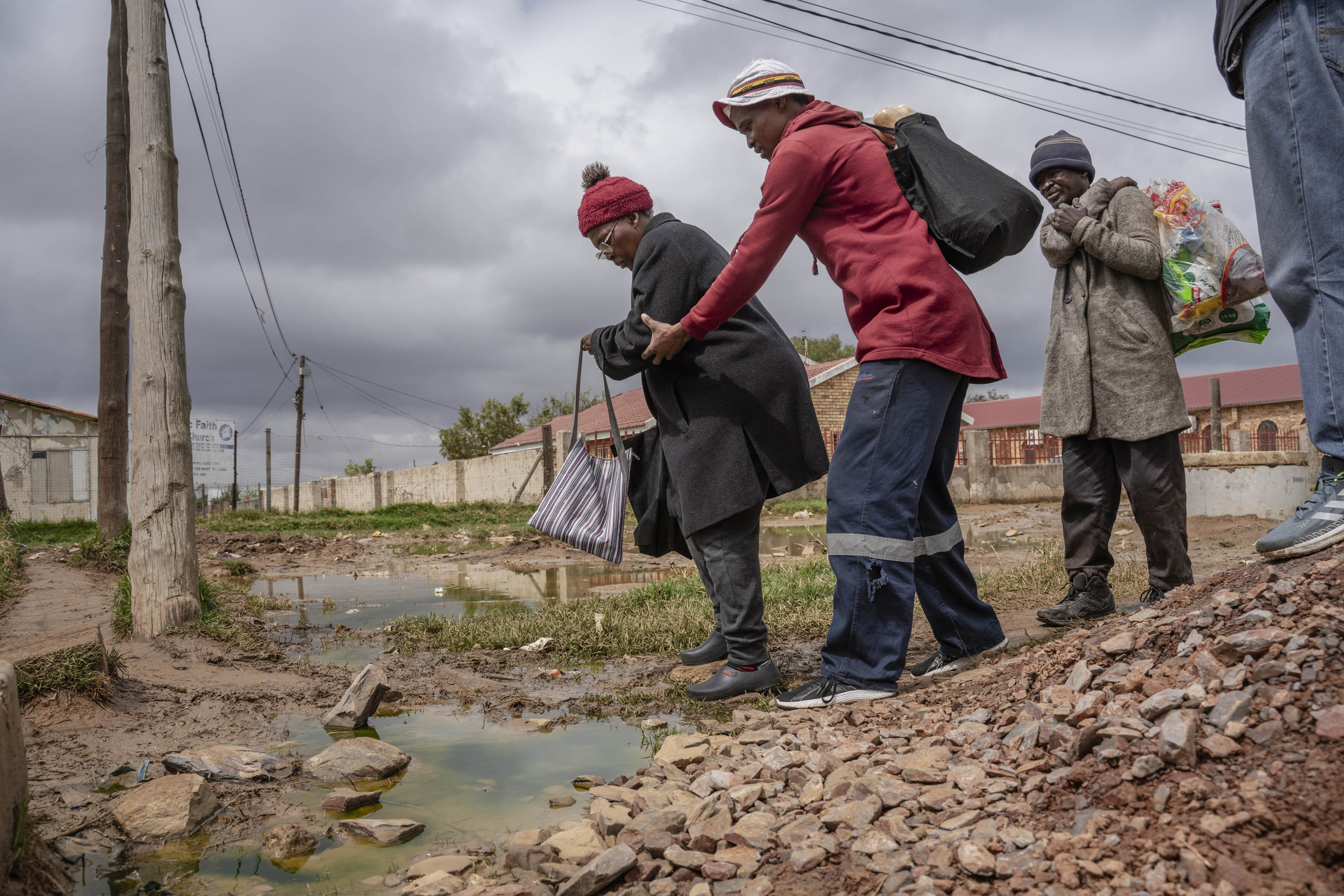
An elderly woman is helped across a stream of sewage in Letsopa near Ottosdal in the North West province. Photos: Ihsaan Haffejee
Abraham Moreo lives on a street flooded with raw sewage. The leak has been going on for so long in Letsopa in Ottosdal in the North West, that the sewage has carved out a riverbed. Now the provincial government is taking steps against the failing Tswaing Local Municipality, which has consistently failed to obey instructions.
Moreo has lived in the township for 30 years. He believes his family, and many of the roughly 130,000 residents of Tswaing are bearing the brunt of an “uncaring government”.
At night, “we can’t sleep because the smell is too much,” said Moreo. “It is also really bad for our health.”
When GroundUp visited earlier this month we saw dozens of residents, from toddlers to the very old, attempting to wade through shin-deep sewage covering yards, roads and pavements.
There is no drinking water in Moreo’s section, so daily life involves walking to distant sections of Letsopa with 5 litre buckets “looking for water”.
With an inconsistent power supply, dilapidated public facilities and roads, and irregular rubbish collection, Moreo believes that the municipality “is doing nothing, absolutely nothing” to improve the lives of his community.
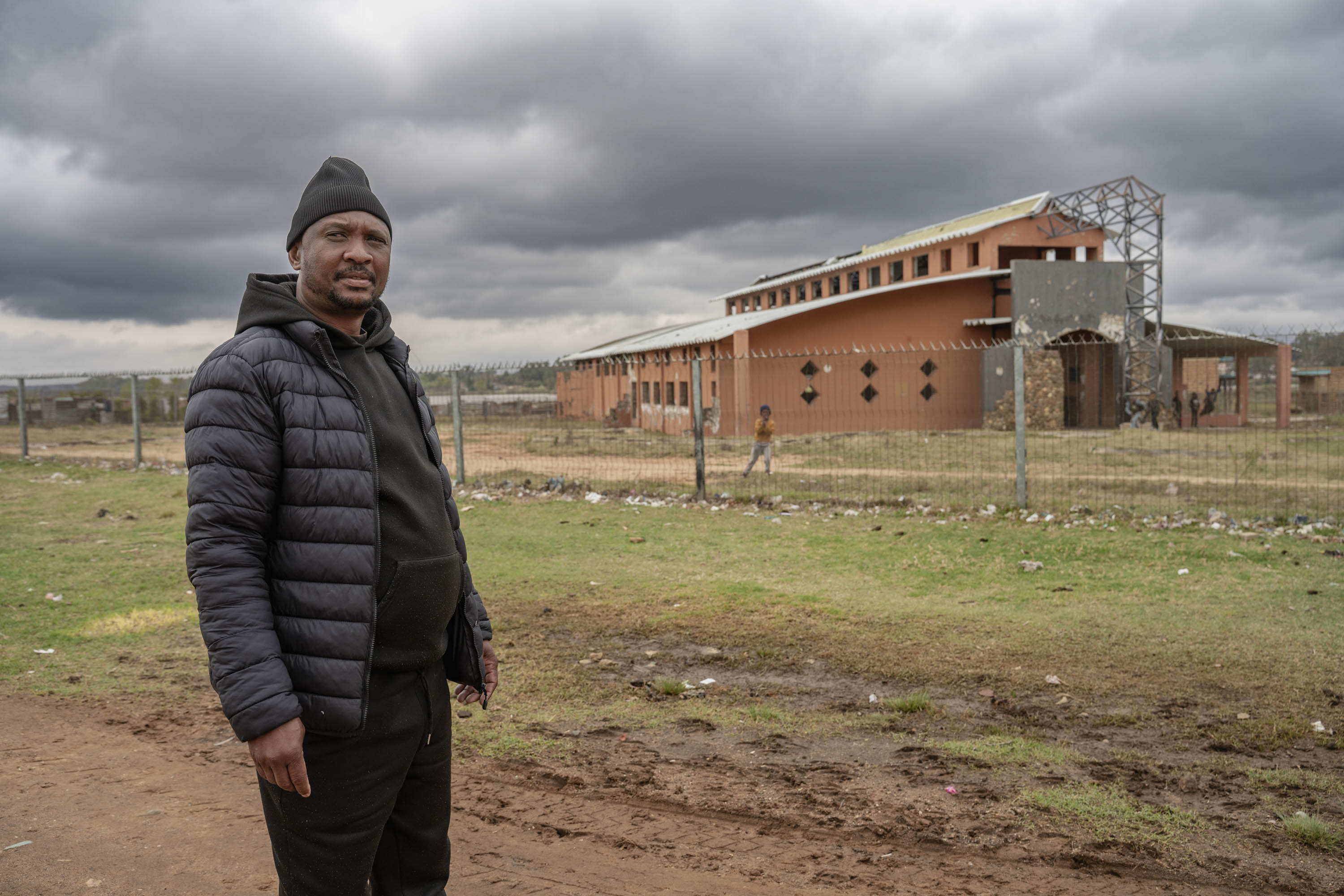
The municipality has failed to provide basic services, says Abraham Moreo.
In 2023, a South African Human Rights Commission (SAHRC) investigation found that the constitutional rights of Tswaing residents were being violated by water and sanitation failures.
Now the provincial government is taking steps against the municipality which has failed to implement its directives, said North West MEC for Cooperative Governance, Human Settlements and Traditional Affairs Gaoage Molapisi. The province has been intervening in the municipality since 2022.
Speaking to the media on 23 September, Molapisi said the provincial government referred several findings of maladministration to law enforcement authorities.
A provincial representative in the municipality, Moatlhodi Mosala, would now “assume the responsibility of the council” and accounting officer, said Molapisi. Mosala had been instructed to intensify focus on implementing directives issued to the municipality after a scathing report ordered by the MEC.
The report flagged alleged irregular payments and appointments, disputed council resolutions, concerns over approximately R47.7-million in legal costs, procurement irregularities and an attempted transaction involving municipal land.
SAHRC North West manager Shirley Mlombo told GroundUp the municipality had not complied with its directives either and the commission was considering litigation.
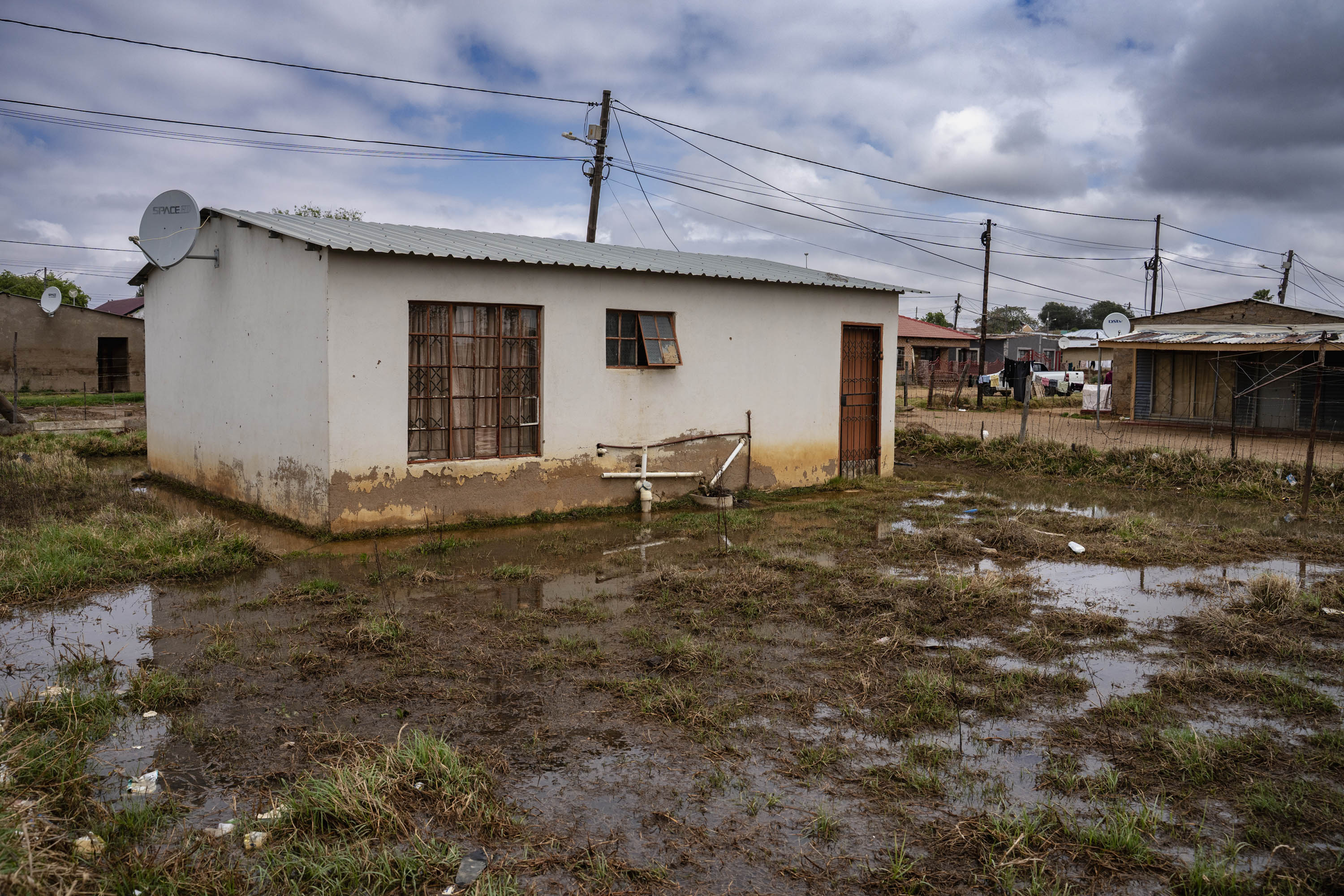
A home flooded with sewage in Letsopa.
About 30 minutes north-west of Ottosdal, GroundUp met pensioner Dora Seleke. She and 17 others in her family share one shack in Agisanang near Sannieshof. Despite repeated promises of formalisation “when it is elections,” Seleke is yet to see any change.
According to data from the municipality in its draft 2024/25 annual report which is not yet online, her family is one of about 4,000 households that are further than 200 metres from a water supply point.
Using her pension, she pays people around R30 a day to carry six 5-litre bottles of water to her home. When she can’t afford this, she has to carry the water herself, making several trips a day.
Her stand has no toilets, and Seleke has to walk far to surrounding areas to ask if she could use someone else’s toilet.
“We shouldn’t be treated like this,” said the great-grandmother.
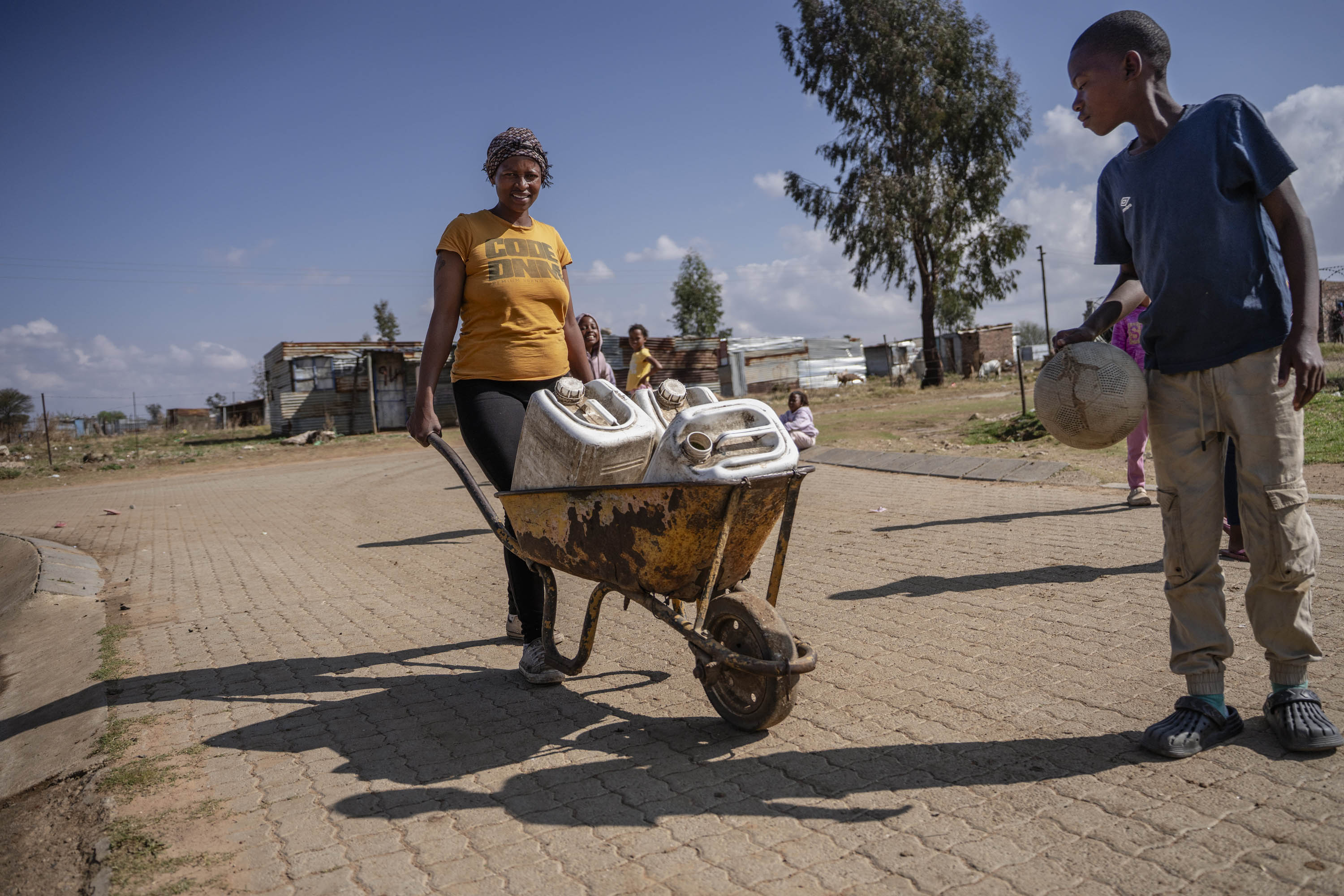
A resident of the informal settlement of Skielik on the outskirts of Delareyville fetches water with a wheelbarrow.
More than 7,000 households lack basic sanitation, a failure for which the SAHRC blamed both the municipality and the Ngaka Modiri Molema District Municipality, which is responsible for bulk water supply, as well as the wastewater treatment plants and sewage pump stations servicing Ottosdal, Sannieshof, Delareyville, and Atamelang.
According to 2022 StatsSA census data, just over 62% of households across the municipality had piped water on site, 31% received weekly refuse removal, 50% had flush toilets connected to sewerage, and 92% had electricity access, compared with national averages of 82%, 67%, 71%, and 95% respectively.
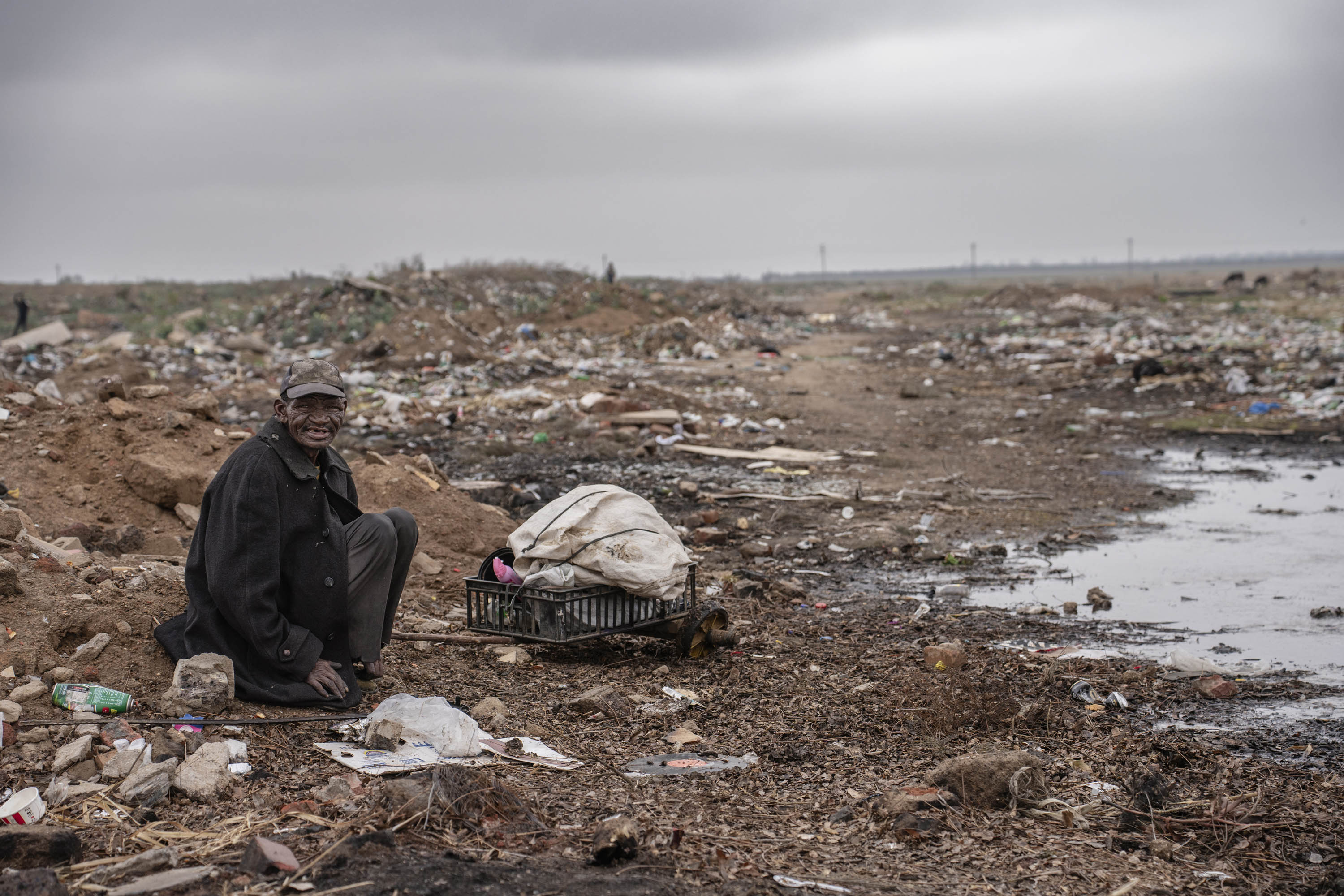
A resident of Agisanang collects recyclable materials from a dump site near Sannieshof.
The Auditor-General’s (AG) 2024/25 audit expressed “doubt” that the municipality will be able to continue operating.
For the infrastructure it has, just over R3.7-million was said to have been spent on repairs and maintenance in 2024/25, equivalent to just 0.5% of the value of its infrastructure (the National Treasury norm is at least 8%). Meanwhile, the AG noted that the municipality had spent R18.7-million on consultants for financial reporting.
In the following year, the budget for repairs and maintenance was cut by a further R500,000 to R3.2-million. This has been revised to R13.7-million for 2026/27 (only 2.3%).
Every resident we spoke to complained of the water supply.
All usable water in Tswaing comes from underground boreholes. The municipality has said that supply is often interrupted because of poor borehole maintenance and Eskom power disconnections over unpaid municipal accounts (R218-million was owed as of 7 August 2026).
Tswaing’s annual report noted that it currently relied heavily on water tankers to provide emergency supply, but it did not disclose the amount.
These persistent water shortages cause waterborne sewer networks to collapse, resulting in blockages and raw sewage overflowing into communities, which GroundUp saw in every area we visited.
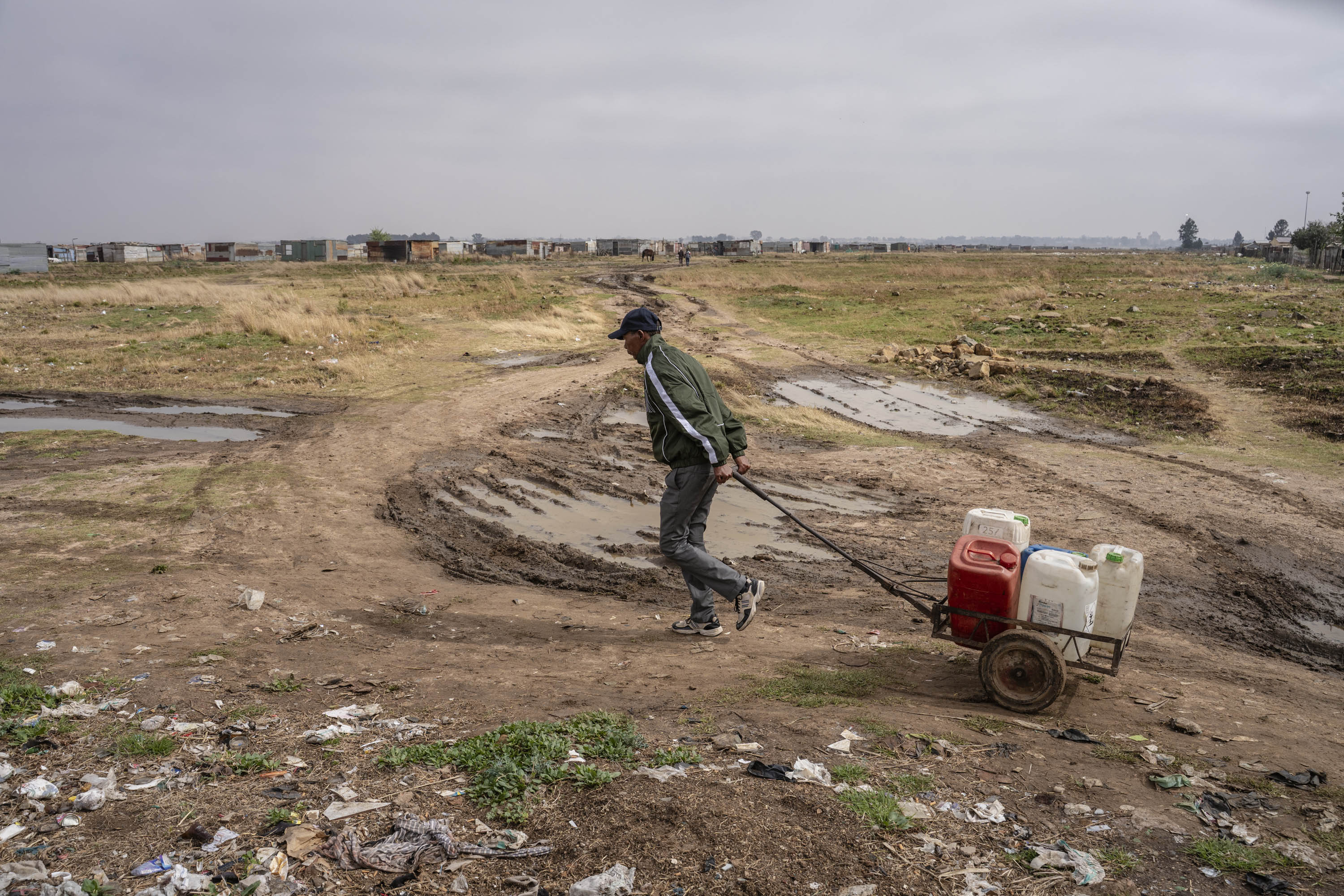
Johannes Montsho, 66, pulls a trolley filled with water buckets to his home in Agisanang.
The sewerage system relies on tanks, which need to be periodically emptied and maintained. For this purpose, Sannieshof and its surrounds rely on two “honeysucker” tankers, shared with Ottosdal, over half an hour away. We watched the honeysuckers siphoning dirty water into a dysfunctional treatment plant which overflowed into the Harts River.
According to the Department of Water and Sanitation’s 2025 Green Drop Report, which assesses wastewater services, the Sannieshof treatment plant (operated by the district municipality) received a score of 33%.
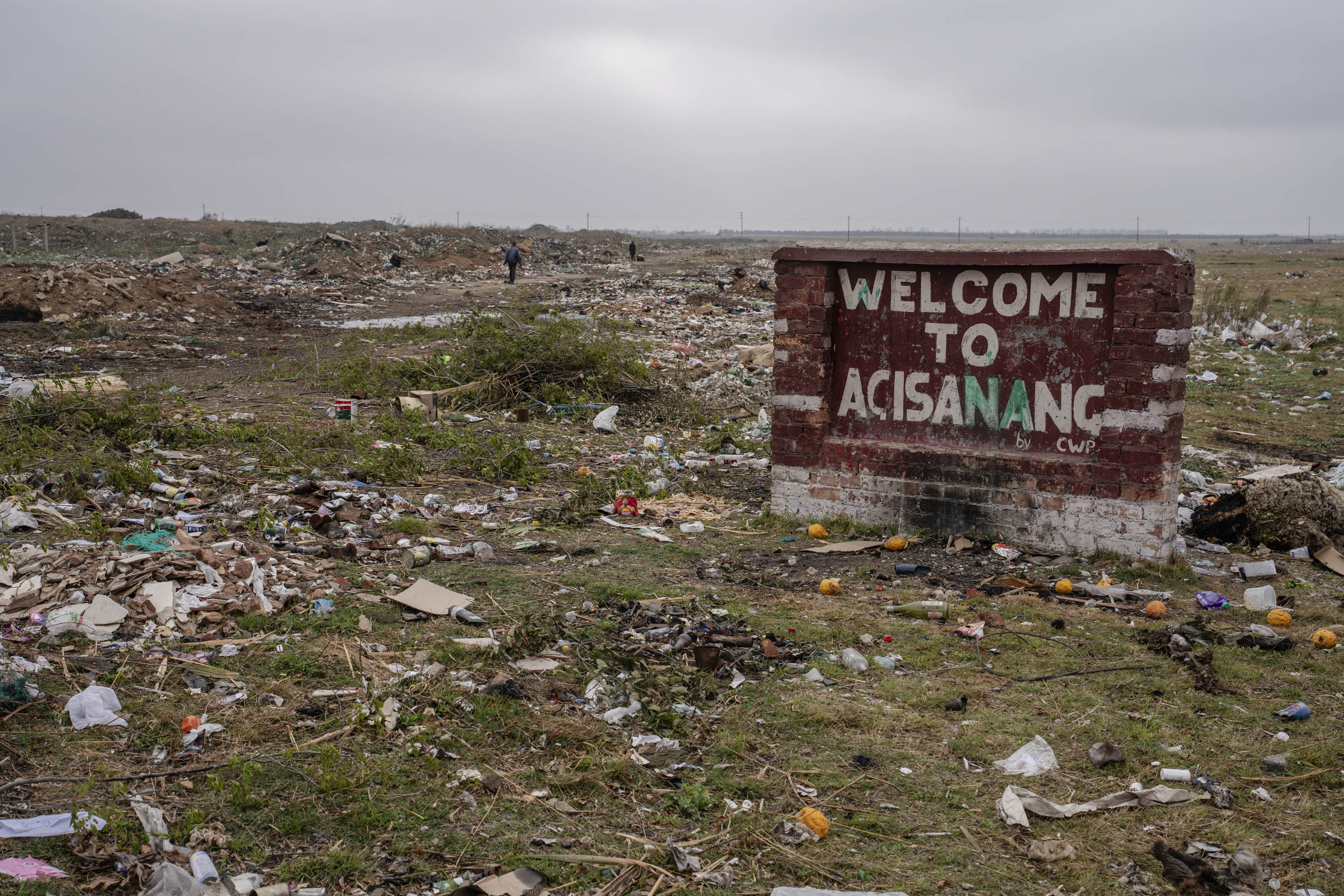
All four local landfill sites remain unlicensed, including one created at the entrance of Agisanang near the Harts River, on a road used largely by farmers.
The electricity network is also deteriorating, with prolonged outages said to be frequent. The municipality said some areas use more electricity than supply can handle, with its ageing electricity infrastructure, including outdated switchgear and wooden poles, meaning faults can knock out multiple circuits.
Refuse removal is inconsistent. There are only two operational trucks across Ottosdal and Sannieshof. All four local landfill sites remain unlicensed, including one created at the entrance of Agisanang near the Harts River, on a road used largely by farmers.
Community parks are poorly maintained, and sports fields, stadiums, swimming pools and tennis courts are either incomplete or dilapidated.
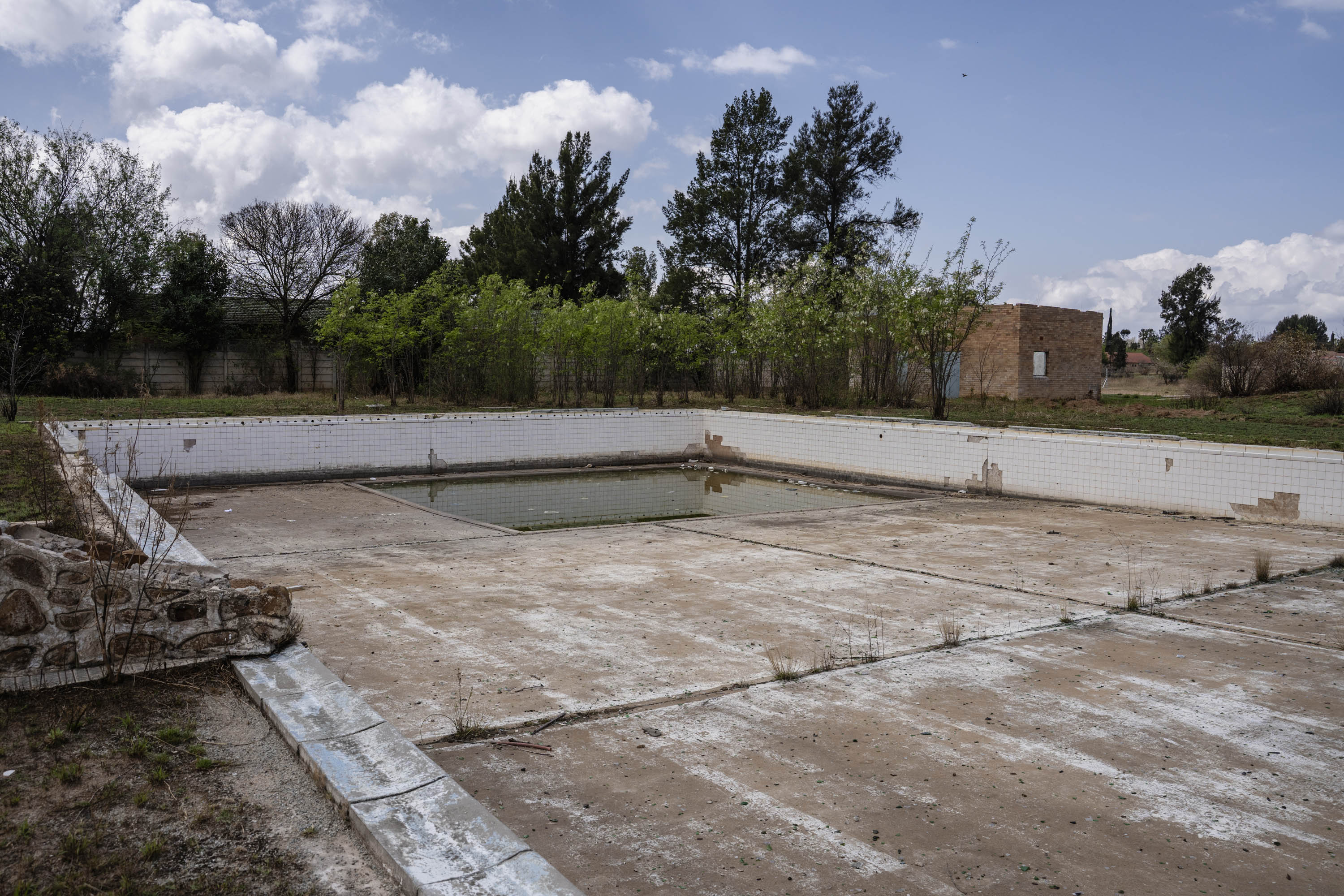
The remains of a swimming pool in Delareyville.
According to the draft annual report, it takes the municipality about 750 days (more than two years) to settle its debts, far longer than the legally required 30 days and up from 402 days audited in 2024/25.
This means suppliers can go for years without being paid. This makes it harder for the municipality to secure goods and services needed to maintain infrastructure, deliver basic services, and finish infrastructure projects, like the now half-built sports grounds in Delareyville.
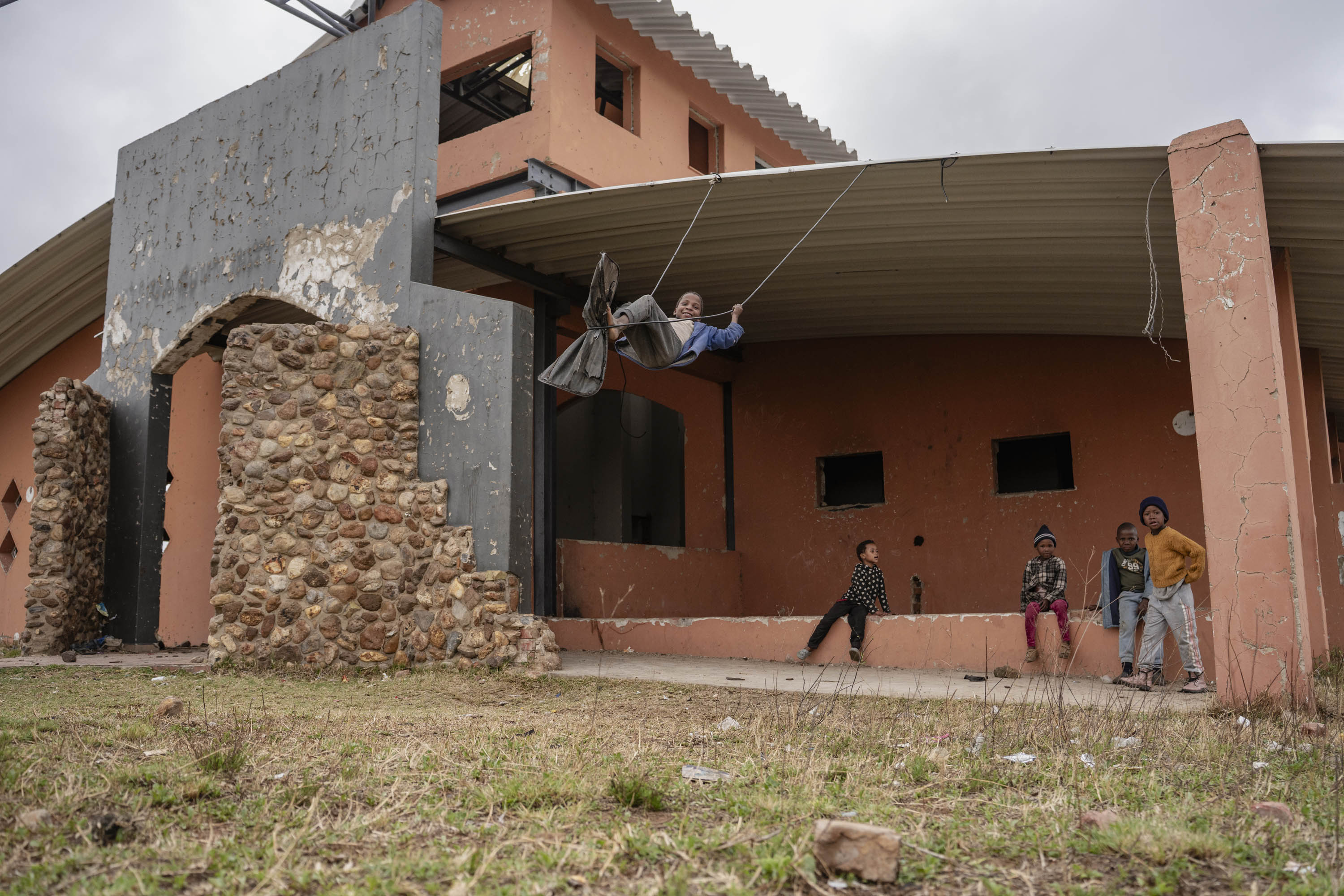
Children play on a makeshift swing in the remains of a library in Letsopa, damaged during protests against the Tswaing Local Municipality in 2019.
The municipality is heavily dependent on government grants. In the 2024/25 financial year, R208-million (54%) of its R384.4-million revenue came from grants and equitable share allocations.
The reliance on grants hit a crisis point when the National Treasury temporarily withheld a portion of its July funding over persistent financial mismanagement.
As a result, Tswaing, which spent 62% of its revenue on salaries according to its draft annual report, could not pay employees for months.
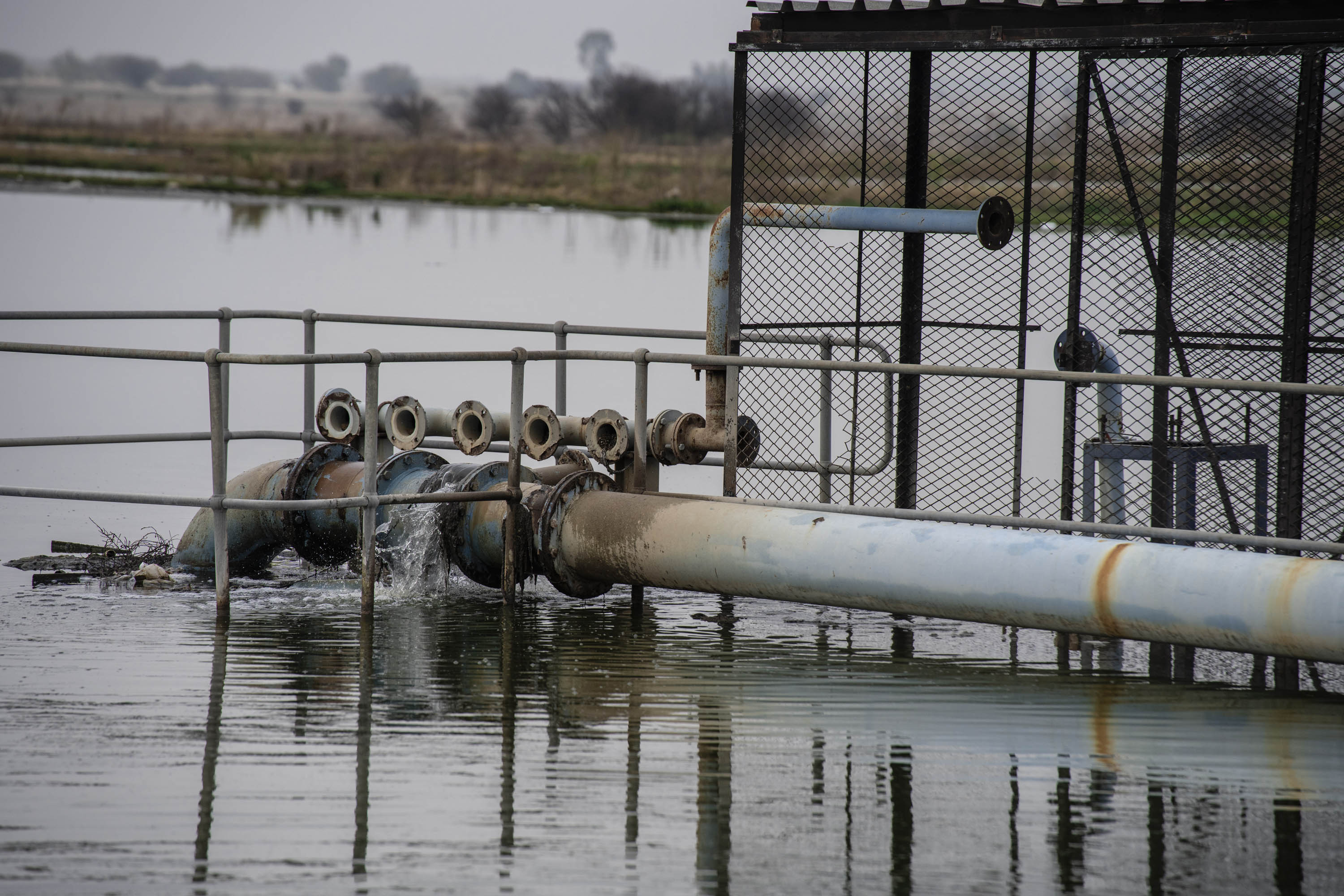
The dysfunctional Sannieshof wastewater treatment plant discharges sewage directly into the Harts River (below).
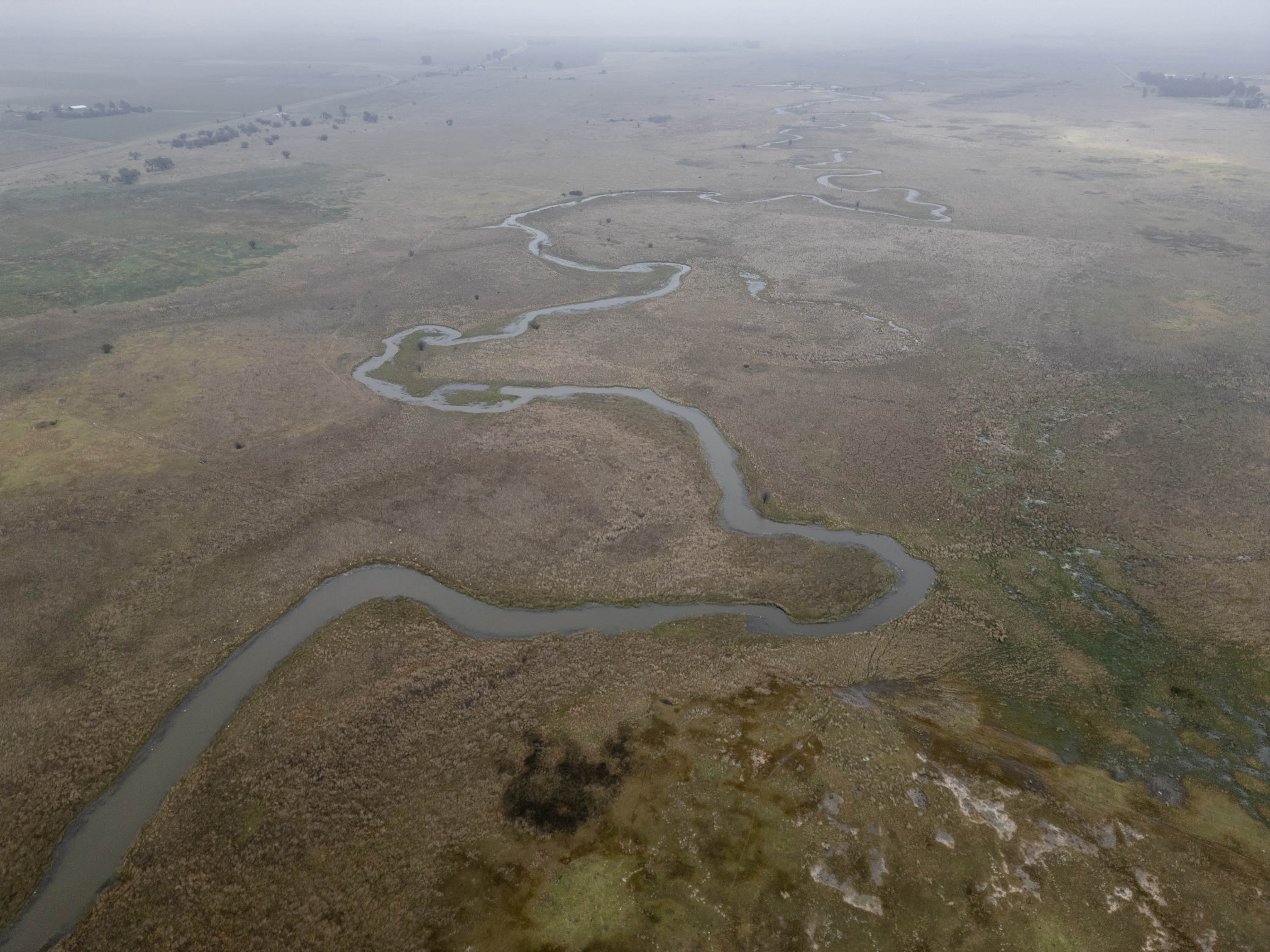
Grey sewage filled water flows down the Harts River after being contaminated by raw sewage from the dysfunctional Sannieshof wastewater treatment plant in the North West town of Sannieshof which falls under the administration of the Tswaing Local Municipality.
In a 14 September parliamentary reply, cooperative governance Minister Velenkosini Hlabisa said Tswaing municipality was characterised by “persistent maladministration and political instability, administrative paralysis, financial mismanagement, and non-compliance with court orders”.
After the 2025 investigation ordered by Molapisi, he instructed Council to revoke the appointments of three implicated senior officials. But Council rejected the findings and took the provincial government to court to interdict the directives. The high court dismissed its urgent application in May.
Directorate for Priority Crime Investigation (Hawks) Lieutenant Colonel Tinyiko Mathebula told GroundUp that one of the officials, former acting municipal manager and chief legal officer Lesang Cyril Lobakeng, appeared in the Delareyville Magistrates’ Court on 4 September. Lobakeng is charged with contravention of the Municipal Finance Management Act.
Lobakeng made a brief court appearance and was released. The matter was postponed to 12 October 2026 at the Specialised Commercial Crime Court sitting in Vryburg.
GroundUp sent detailed questions to the municipality on 11 September. We did not get a response.
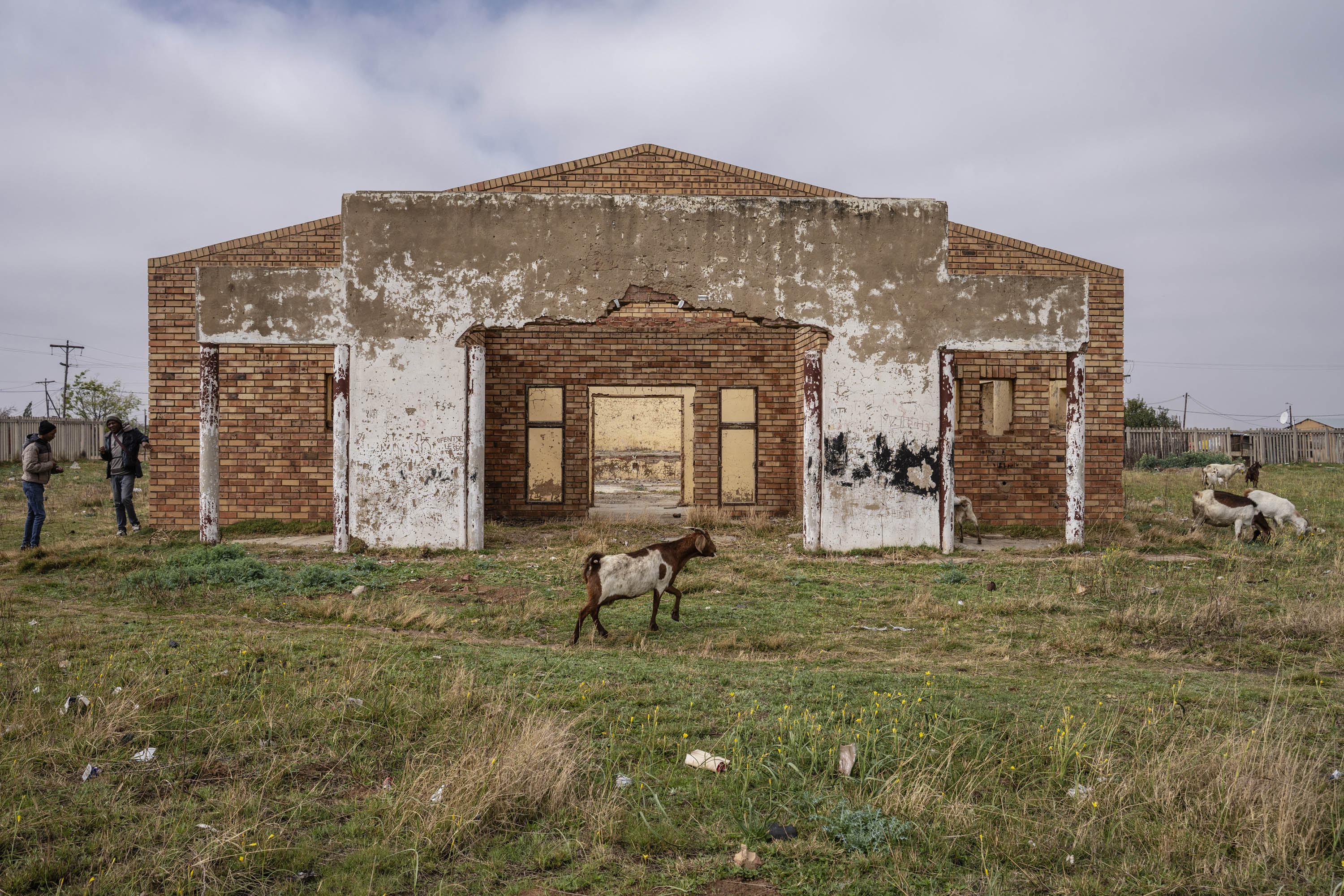
The local community hall sits in ruins and is occupied by a herd of grazing goats in the township of Agisanang near the North West town of Sannieshof which falls under the administration of the Tswaing Local Municipality.
