6 May 2026
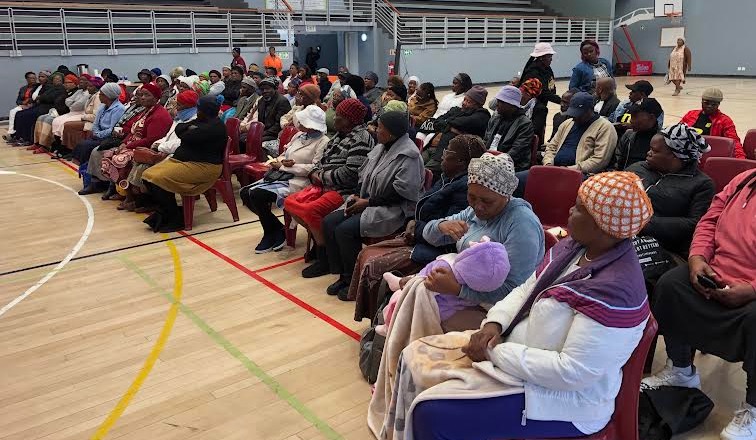
Elderly people from Khayelitsha described their experiences of abuse at a meeting hosted by Ilitha Labantu. Photo: Mary-Anne Gontsana
“He would beat me and steal from me. He was a very problematic child.” A grandmother from Khayelitsha described years of abuse by her grandson at a meeting hosted by Ilitha Labantu in Khayelitsha, Cape Town.
“It was only him and I living together. Some of the neighbours and residents knew about the abuse. I admit I did not go to the police. I endured this abuse until one day I decided that it was enough, and I found the courage to kick him out.”
She said months went by without her grandson coming back. One day he appeared. He had been beaten by community members who had accused him of stealing. “He begged me to help him. I told him I had washed my hands of him. That was the first time that I ever received an apology from him. I let him come back, and after that day, he never abused or disrespected me again,” she said.
The meeting, held at the Thusong Community Hall in Khayelitsha, was attended by over 60 elderly men and women who shared their experiences of abuse and the issues with reporting it to police.
Ilitha Labantu’s senior legal advisor, Simnikiwe Maboe, said they dealt with many cases of elder abuse, and in most cases, the abuse was by grandchildren and not the spouse.
Maboe said in some cases old people were stripped of their SASSA grants by family members.
“We need our elders to do more to protect themselves. Seek help. Talk to someone you trust, go to organisations like Ilitha Labantu. Another thing that we advocate for is the importance of joining social clubs. Many of these clubs exist in our communities,” said Maboe.
“Older people are not familiar with how the law works and that is a huge problem,” Sergeant Xoliswa Nyalambisa from the Lingelethu West police station in Khayelitsha, told the meeting.
Nyalambisa said, “The elderly are not active enough when it comes to the law. You all know that you have rights, but the question is, do you know what those rights are?”
Nyalambisa said often when a protection order was served on an abuser, the complainant would change their mind. “The very same gogo or mkhulu who applied for the order, will intervene and tell the officer it is fine, they apologised so the order is not needed anymore.”
Greenpoint resident Madlamini Sgwili said she was losing confidence in the police. She said since 2022 she had been harassed by a man in her street. She reported him on four occasions at the Site B police station. When she went to report him again last year, she was told that the other cases she had opened against him “did not appear on their system. No one could answer how or why”.
Other participants also cited issues of investigating officers not communicating or following up on cases.
Lindelwa Ngxaka from Kuyasa said reporting abuse was difficult because people are afraid. “The same police that you report a crime to, are the same ones who will let people know who made the report.”
Maboe encouraged the elders to speak out about abuse. “Reporting and speaking out is not always easy, but you need to remember that abuse against older persons is both a violation of rights and a crime.”
She also encouraged elders who were not comfortable speaking at the dialogue to contact the Ilitha Labantu social worker at the event.
