28 June 2026
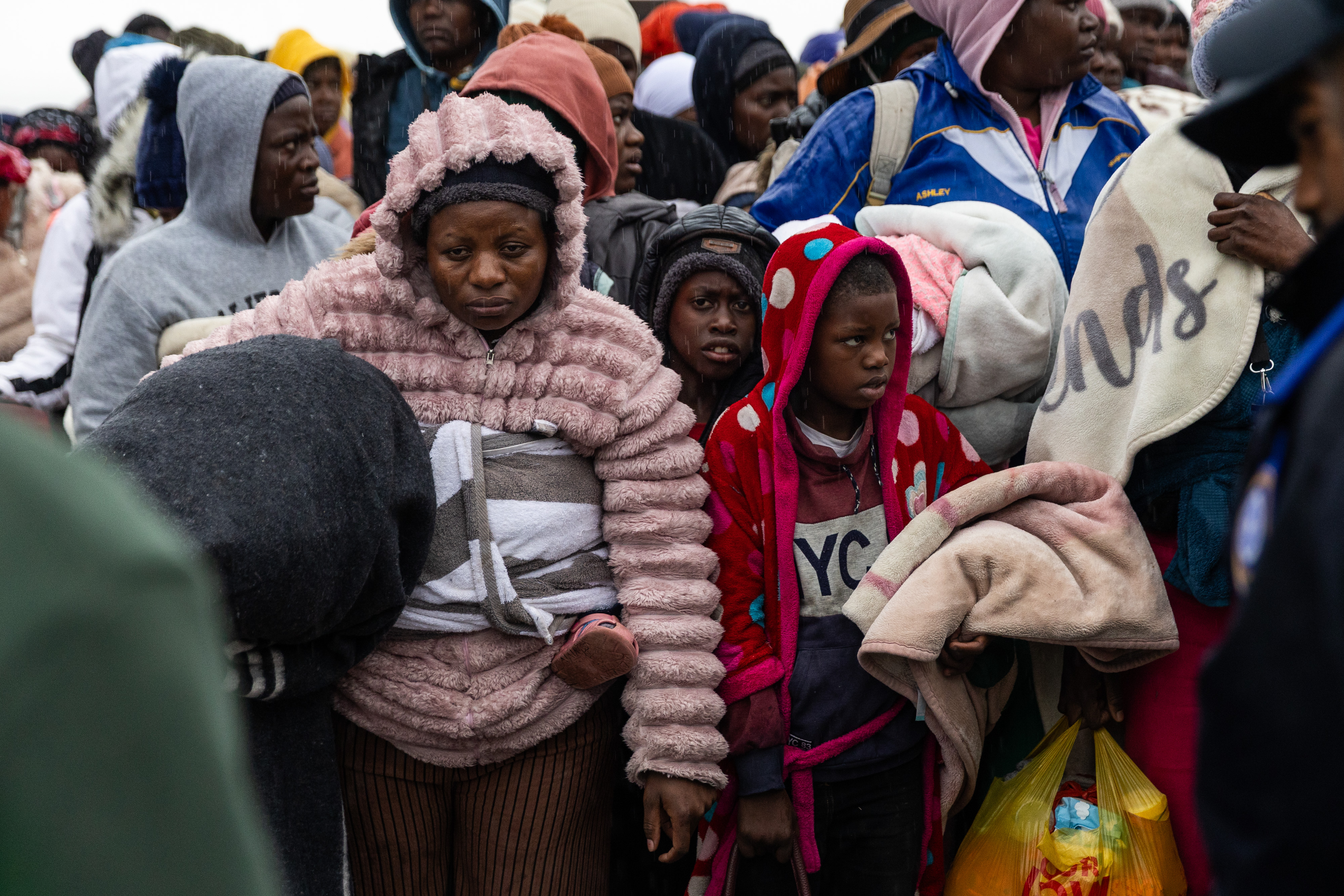
Mothers and children line up to be transported to Epping, Cape Town. Photos: Ashraf Hendricks
After spending the night sleeping rough in the rain, hundreds of immigrants gathered outside the Zimbabwean Consulate were relocated to an official repatriation site on Sunday morning.
Marquee tents had been erected by volunteers on Saturday night, but they were not big enough to provide shelter for everyone. Women and children were prioritised. Others sheltered under plastic tarps.
Some of the people had been sleeping outside the consulate for five nights.
It rained heavily on Sunday morning as the City of Cape Town, the Department of Home Affairs and the Zimbabwean Consulate began relocating people to the Home Affairs refugee centre in Epping.
Babies, wrapped in blankets, were crying as people lined up to board vehicles.
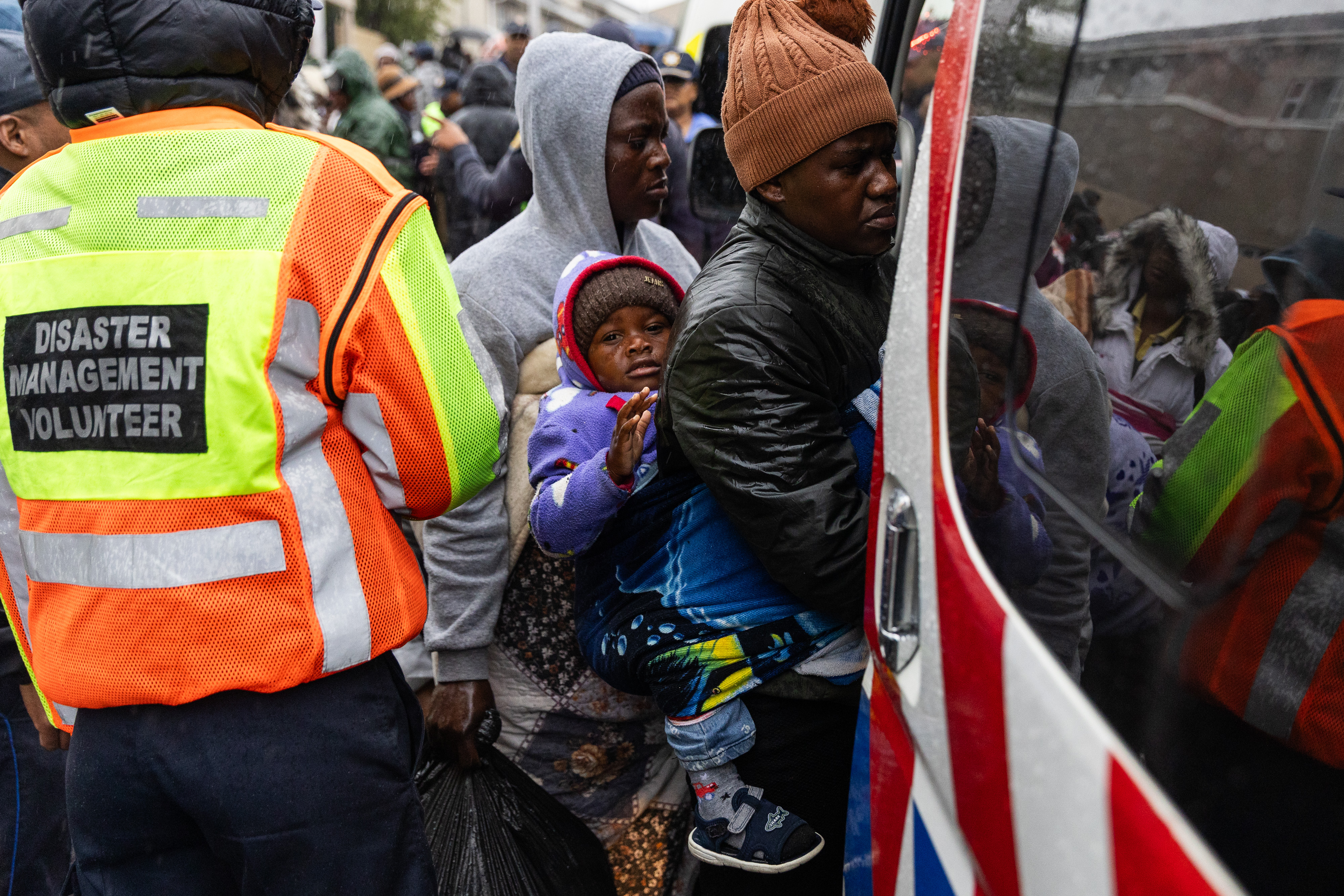
Children were crying in the wet and cold weather on Sunday.
Weston Willie, a leader of the Zimbabwean community, said he stayed up through the night to make sure that everyone was safe. He thanked the City and Home Affairs, and the humanitarian organisations that assisted with food and shelter.
Porridge had been served for breakfast before the relocation.
Willie said political parties have been stoking the anti-immigrant sentiment. “We are just being used as pawns in the game of chess. This thing is politically motivated. It’s not like the South African locals are xenophobic. It’s politicians who are trying to settle a score,” he told GroundUp.
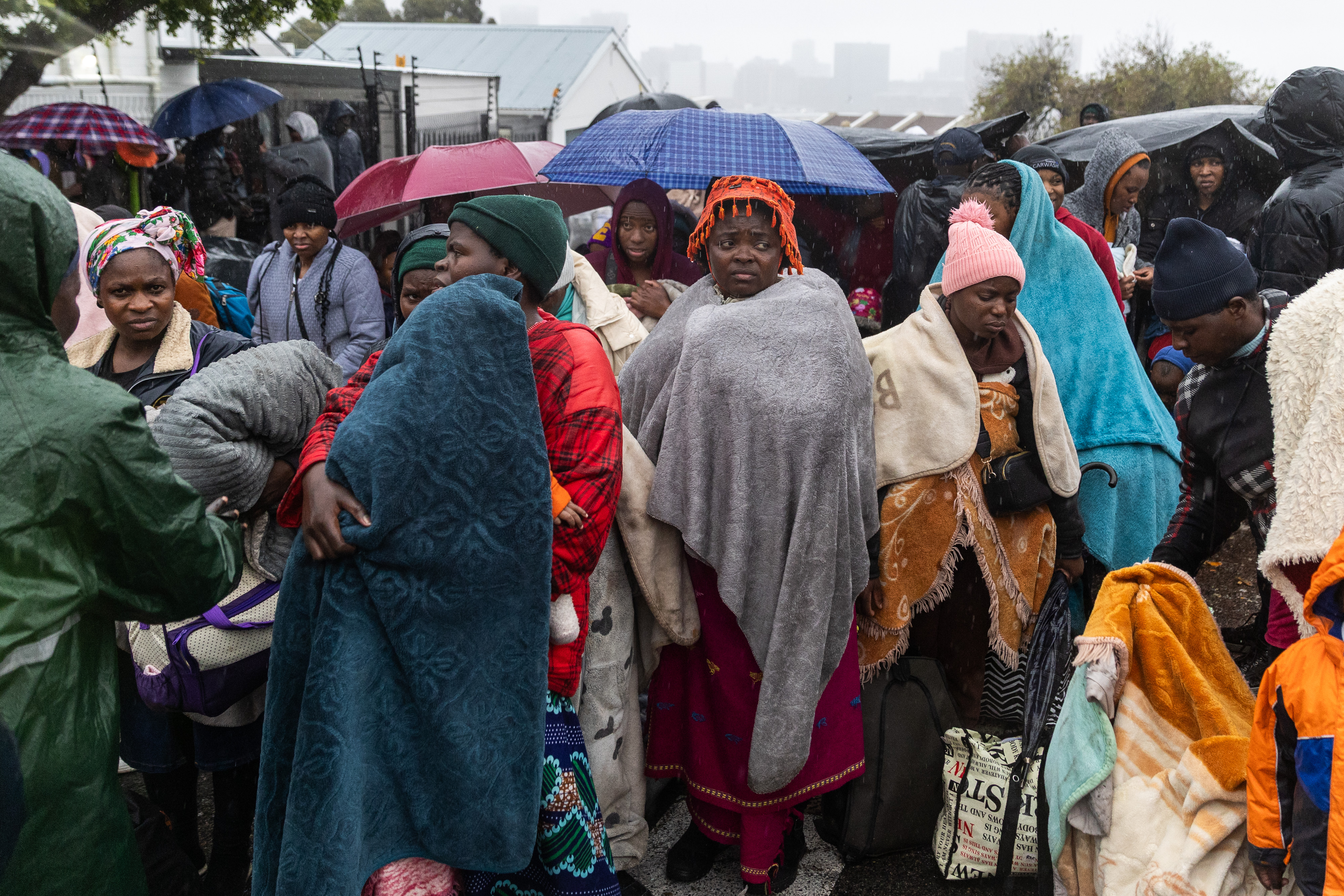
Women try to keep warm in the rain as they line up to board vehicles to Epping.
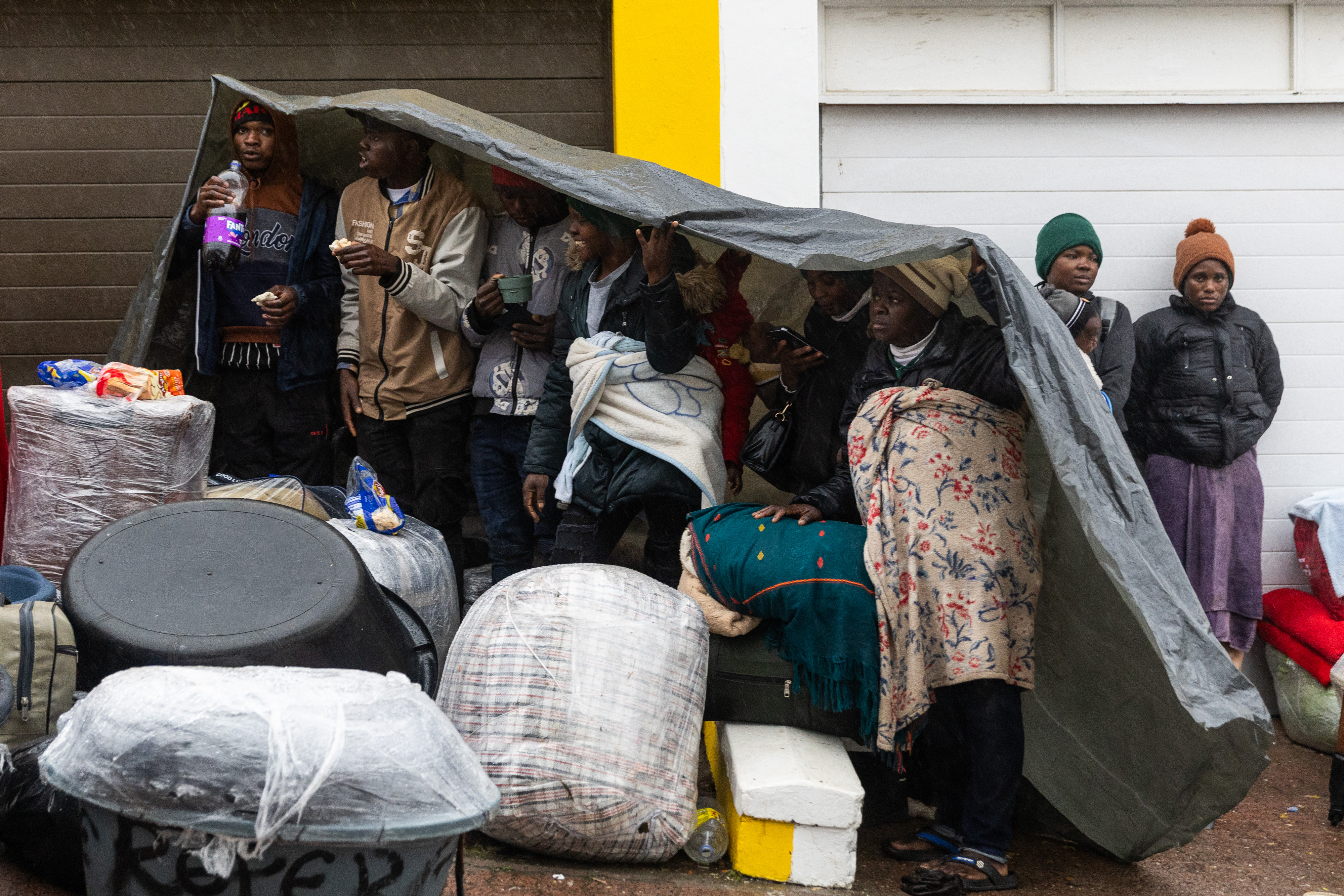
Many spent the night under makeshift shelters in the rain.
Joseph Mushonga was waiting in line for a bus. He said he was one of dozens of people who had come from Robertson. He said fears of protests on 30 June, led by the anti-immigrant group March and March, were why a lot of people had fled their homes.
“We have seen a situation where a lot of people are living in fear. We can see that after the 30th, it could be even worse … Even when you walk down the street, you can see the eyes of the neighbours. It’s no longer safe and conducive for us to continue working,” he said.
He thanked the humanitarian organisations. “Even if we are going home, we feel that we have been loved, we have been taken care of,” he said.
At the Home Affairs centre in Epping, women with children were disembarking from the vehicles, carrying heavy suitcases. Some were huddled near the entrance, trying to keep out of the rain.
The Department of Home Affairs did not respond to a request for comment on how long the repatriation process is expected to take.
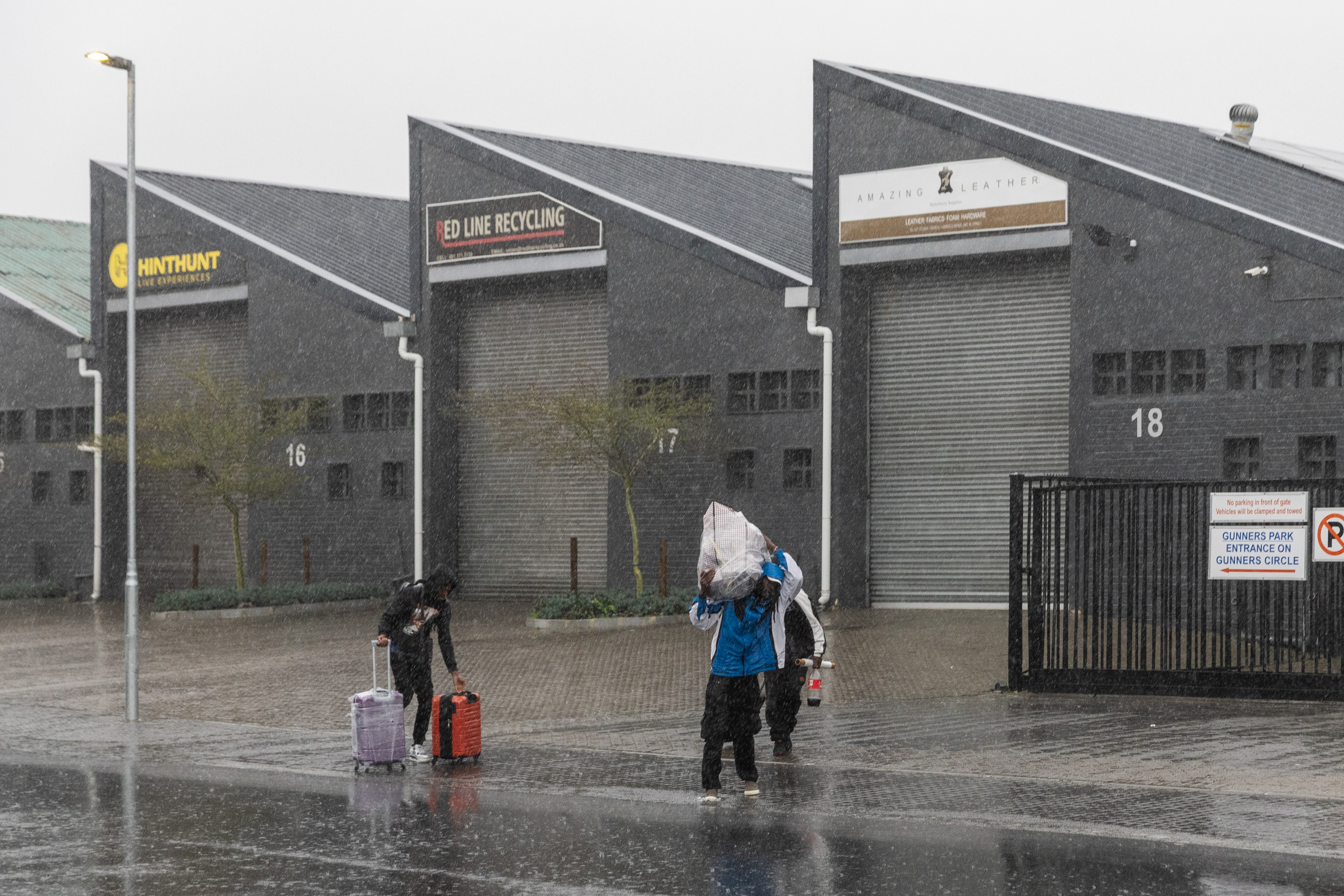
People carry their luggage to the Home Affairs centre in Epping.
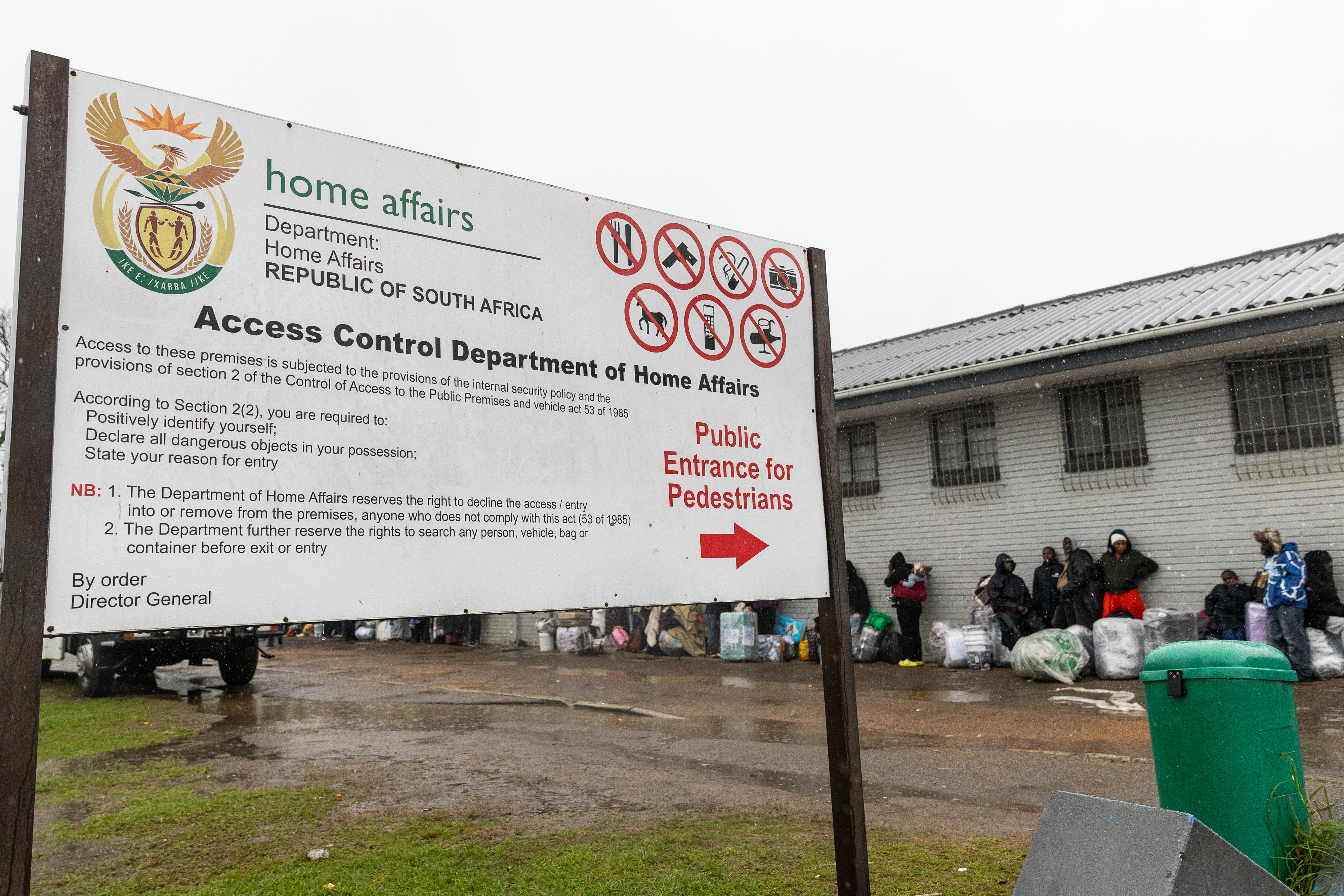
People shelter from the rain at the Home Affairs centre in Epping.
