8 July 2026
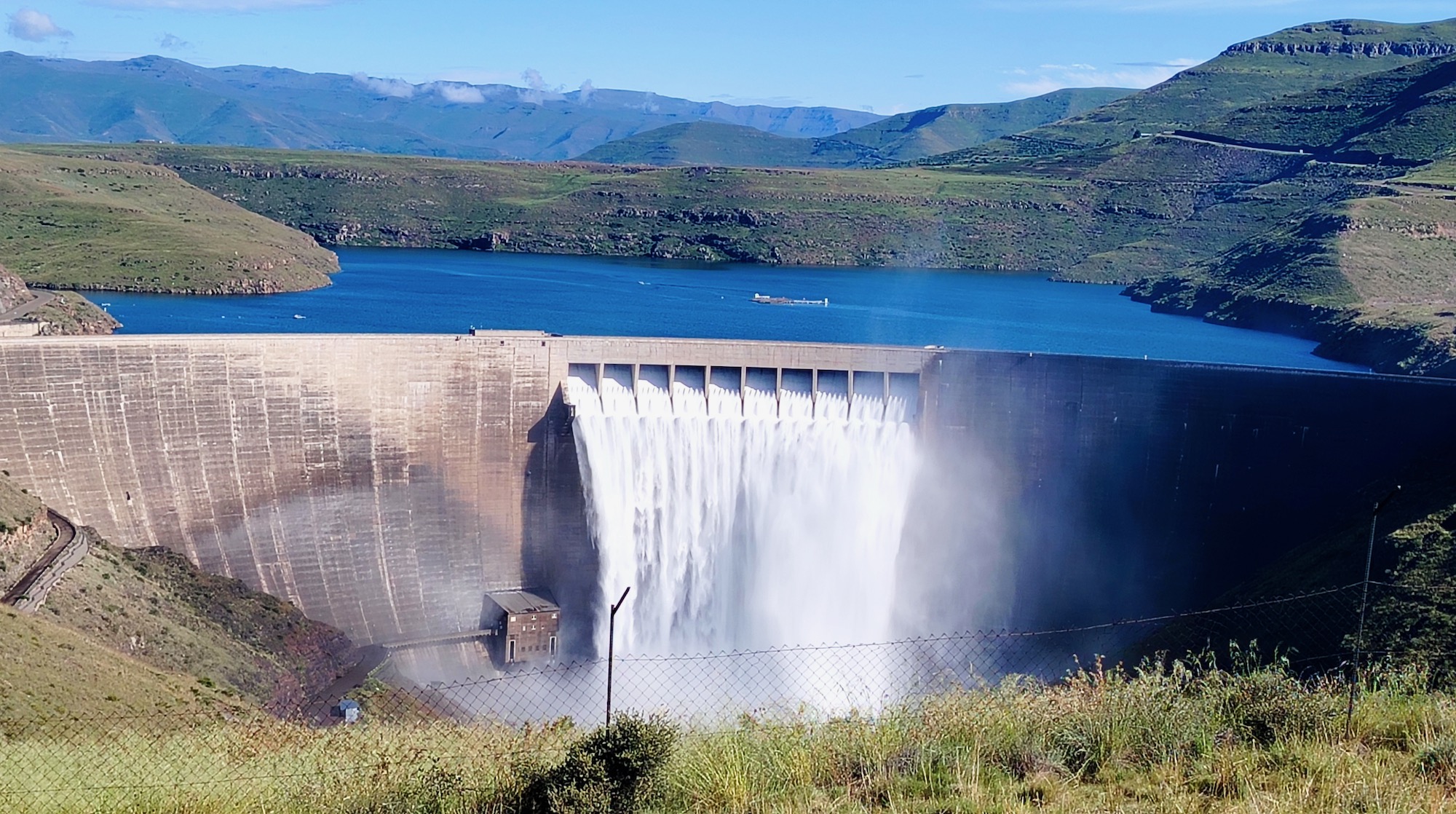
The Katse Dam in Lesotho. Photo: Sechaba Mokhethi
Thousands of villagers and businesses seeking compensation over the Lesotho Highlands Water Project have suffered a setback after the High Court of Lesotho, sitting as the Constitutional Court, ruled that the dispute should be pursued through the High Court.
In a judgment delivered in May and released in writing last week, a full bench of the court declined to exercise its constitutional jurisdiction. The apex court held that although the applicants say they were denied prompt and full compensation for land and livelihoods lost during the construction of the Katse, Mohale and Polihali dams, they have recourse to adequate legal remedies under existing legislation.
The case was brought by more than 3,000 individuals and 889 businesses registered under Mokhotlong Business Forum Development Trust, Community Resources Development Trust, and eight community members against the Lesotho Highlands Development Authority (LHDA) and its 66 other respondents, including its contractors.
In their application, communities displaced by various phases of the water project say they were not compensated or were underpaid for decades. They claimed that businesses were excluded from compensation and that the promised community development funds had not materialised.
They asked the court to declare that construction of the dams violated constitutional protections for property and livelihoods because the LHDA had failed to pay prompt and full compensation, together with interest.
They also sought orders compelling the authority to pay outstanding compensation, community development funds, and contract-related benefits.
They also want the arrests and prosecution of some community members declared unconstitutional.
The LHDA has maintained throughout that the applicants have pursued the wrong legal route. In an answering affidavit filed last year, LHDA chief executive officer Tente Tente described the application as an “irregular constitutional petition” and argued that existing laws and compensation policies already provide mechanisms for affected communities to pursue claims.
The Constitutional Court has now agreed with the LHDA’s position, without deciding whether the underlying compensation claims themselves have merit.
Writing for the full bench, Justice Polo Banyane said the dispute centred on whether the LHDA had complied with statutory obligations governing compensation rather than on the interpretation or enforcement of constitutional rights.
The judges held that Lesotho’s Constitution allows the court to decline constitutional litigation where adequate alternative remedies already exist. In this case, they found that the LHDA Act, the Land Act and the Lesotho Highlands Water Project compensation regulations already provide mechanisms through which affected people can seek compensation.
“Since their complaint is solely about non-payment, delayed payment, and underpayment of compensation, the question is whether the dispute can be resolved and determined on non-constitutional grounds,” the judgment noted. The judges concluded that it could.
The ruling did not determine whether the LHDA owes compensation to the applicants or whether communities were unlawfully underpaid.
Regarding criminal charges brought against some community members following protests linked to the water project, the court ruled that those complaints should be addressed by the magistrates’ courts where the criminal cases are pending.
“The applicants, therefore, have adequate means of redress in the High Court and the Magistrates’ Court for the alleged violation of their human rights.”
The judgment effectively means that while the constitutional application has failed, the applicants remain free to pursue their compensation claims through ordinary civil litigation.
