16 July 2026
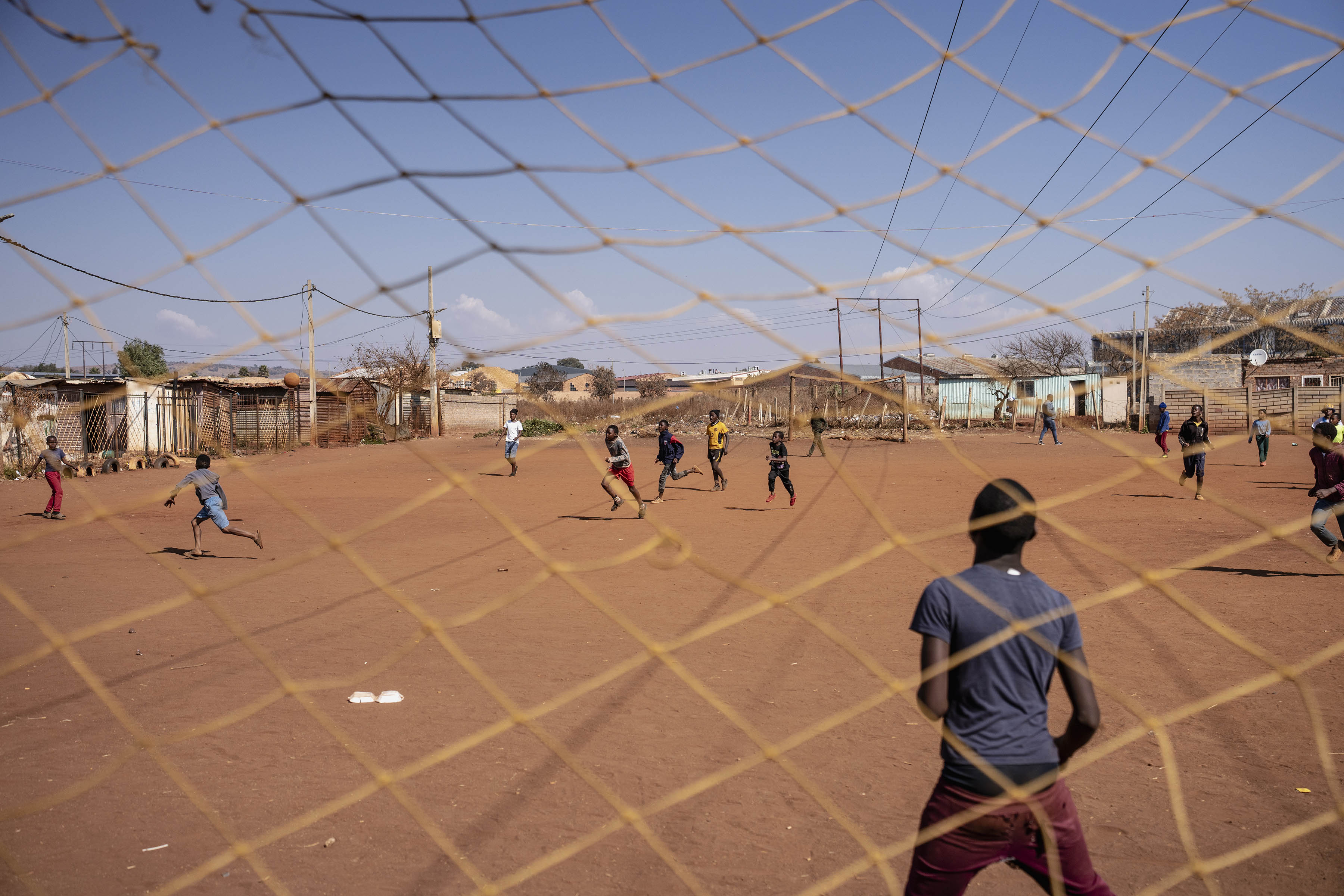
A group of youngsters play a game of football on a dusty field in the informal settlement of Thembelihle, south of Johannesburg. Photos: Ihsaan Haffejee
After anti-immigration violence swept South Africa two decades ago, Thembelihle informal settlement in Johannesburg won an award in 2008 for living in harmony with immigrants and standing up against xenophobia.
But on the night of 30 June 2026 – the “deadline” set by anti-immigration organisations for all undocumented immigrants to leave South Africa – Thembelihle informal settlement resident, Alexandra Mohale heard his Basotho neighbour screaming. Vigilante groups had broken into her shack and stolen cellphones, cash, her stove, TV and other valuables.
The vigilantes warned all immigrants to leave the settlement.
Mohale, originally from Mozambique, says he was heartbroken to see his neighbour a few days later pack her bags and say goodbye. She returned to Lesotho.
Other immigrants from Mozambique, Zimbabwe, Lesotho and Malawi, who were also attacked, have left Thembelihle.
Last Saturday, 11 July, there were more attacks and a woman was reportedly raped.
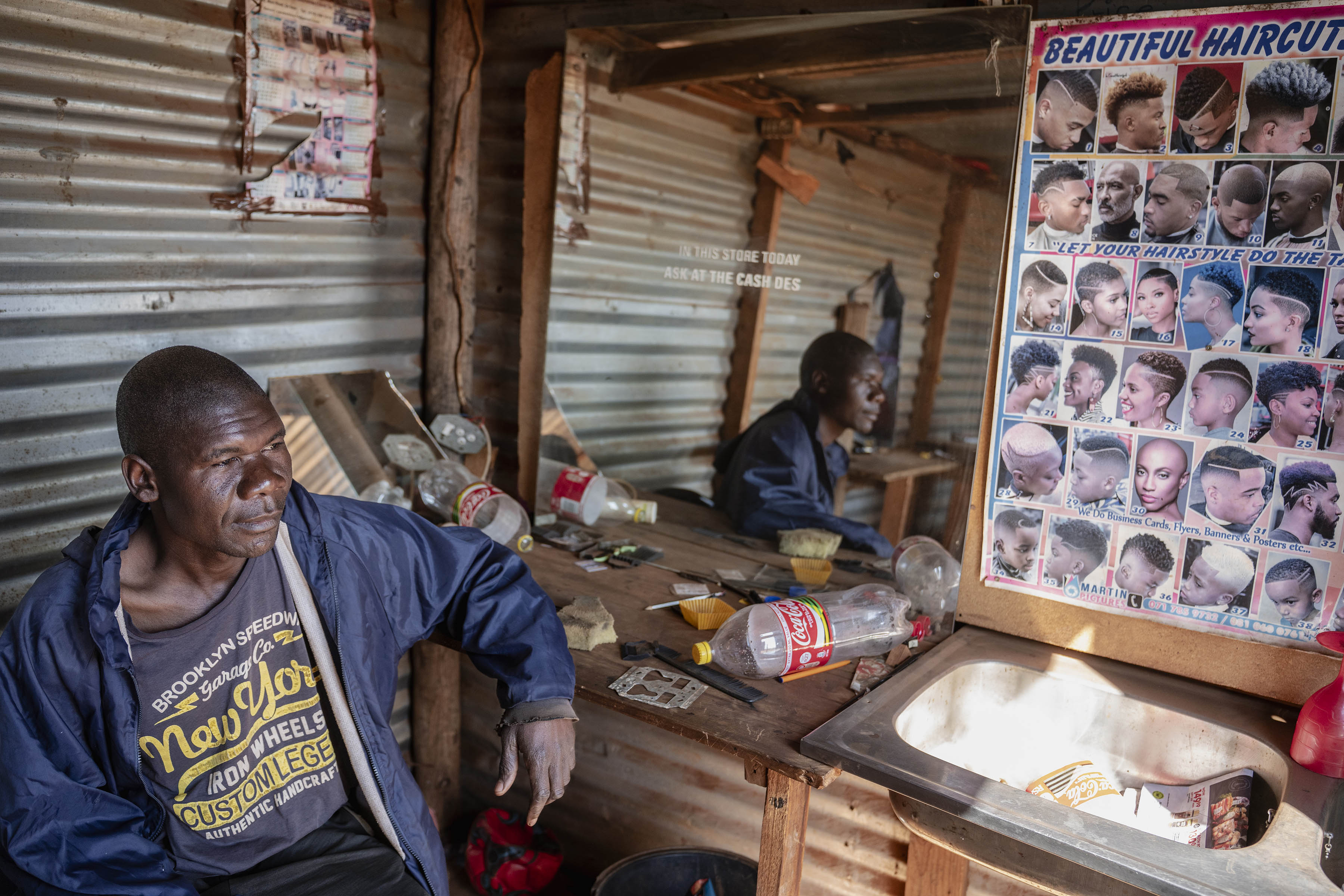
Alexandra Mohale, a migrant from Mozambique inside his barbershop in the informal settlement of Thembelihle, south of Johannesburg.
Until recently, Thembelihle had about 4,000 stands with up to eight families on each. About 45% of households were immigrants, according to community leaders. Most of the immigrants in the settlement are from Malawi.
Simphiwe Zwane, of the Thembelihle Crisis Committee, which won the 2008 award for creating a welcoming environment for immigrants and for its efforts in fight xenophobia, said the community is now divided.
Zwane said while most residents want immigrants to stay, political parties and the Abahambe movement have called for their removal.
According to Zwane, the community refused to allow political parties to carry out door-to-door verification, looking for immigrant households.
The community refused to partake in any of the protests organised by March and March.
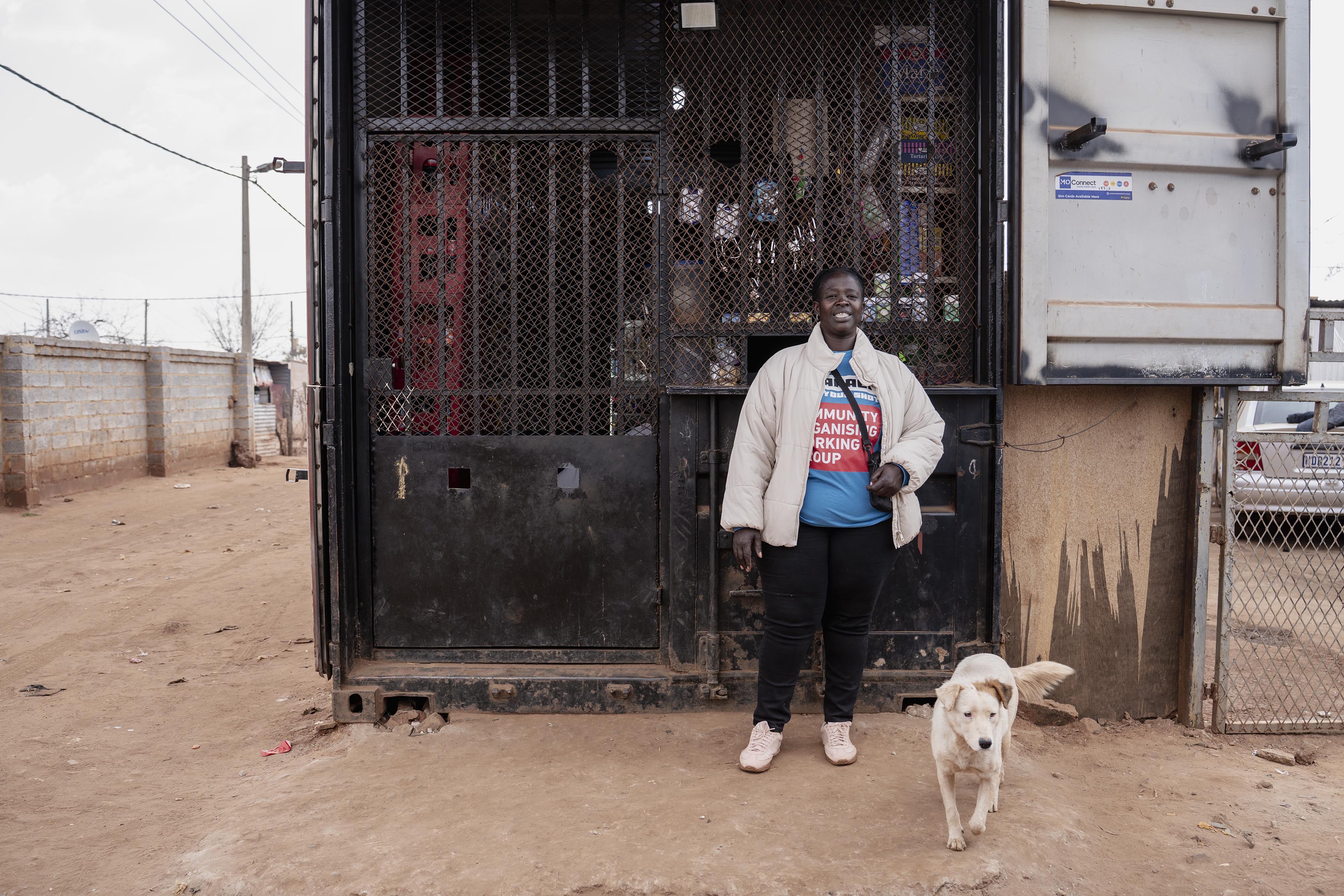
Community activist Simphiwe Zwane works with the Thembelihle Crisis Committee to help combat xenophobia in the informal settlement of Thembelihle.
“As a community we are putting our heads together to find ways of making sure that we remain united against fighting our fellow African brothers and sisters,” she said.
Meetings were held to discuss issues faced by immigrants and to unite the community.
Zwane said some residents in Thembelihle lost much-needed rental income as immigrants fled.
“As the Thembelihle Crisis Committee, we will stop at nothing to protect immigrants because they contribute to the economy and we like living with them,” said Zwane.
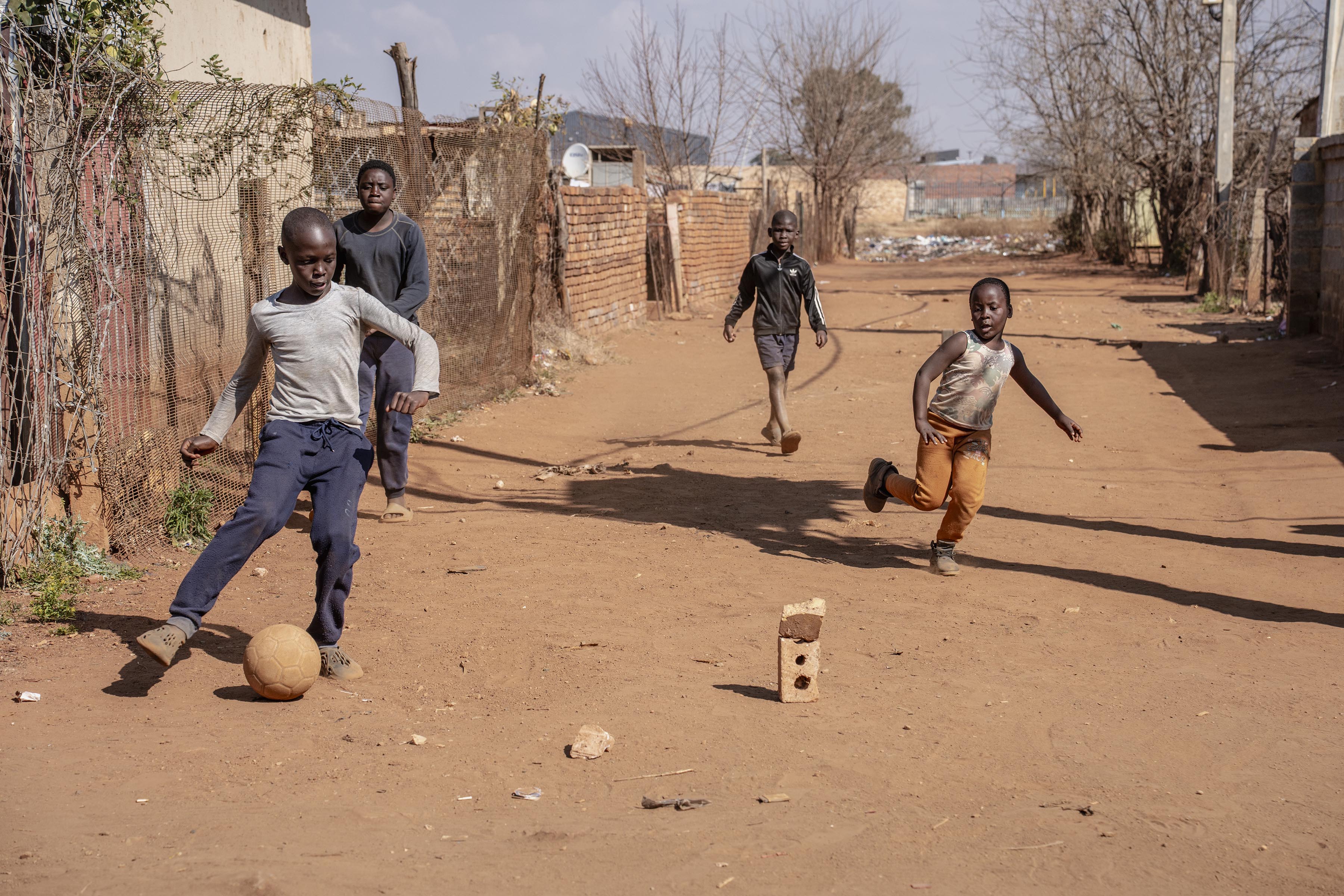
A group of youngsters play football on the dusty streets of Thembelihle.
Siphiwe Mbatha, from the Siyafana Sonke Campaign, said Malawians have been targeted and robbed on their way to and from work. Some have also received deadlines from their landlords to leave.
Mbatha said the crisis committee has teamed up with a group of Mozambicans to patrol the area, especially at night, challenging vigilante groups who are harassing immigrants.
“Fortunately we managed to catch two of six guys who broke into a shack of one of the migrants,” said Mbatha. “But when we opened a case of robbery and theft against these criminals, police had since refused to open cases because victims are migrants who don’t have valid papers.”
When GroundUp visited the settlement on Tuesday, South African and immigrant children were playing soccer together on the football field.
SAPS Brigadier Brenda Muridili said, “The allegations that any person was refused access to services rendered by the Police in Lenasia are viewed in a serious light. The public is requested to report any police officer who refuses to register a case for them to the station commander at that police station or to register a formal complaint against that police officer to the Inspectorate Component.”
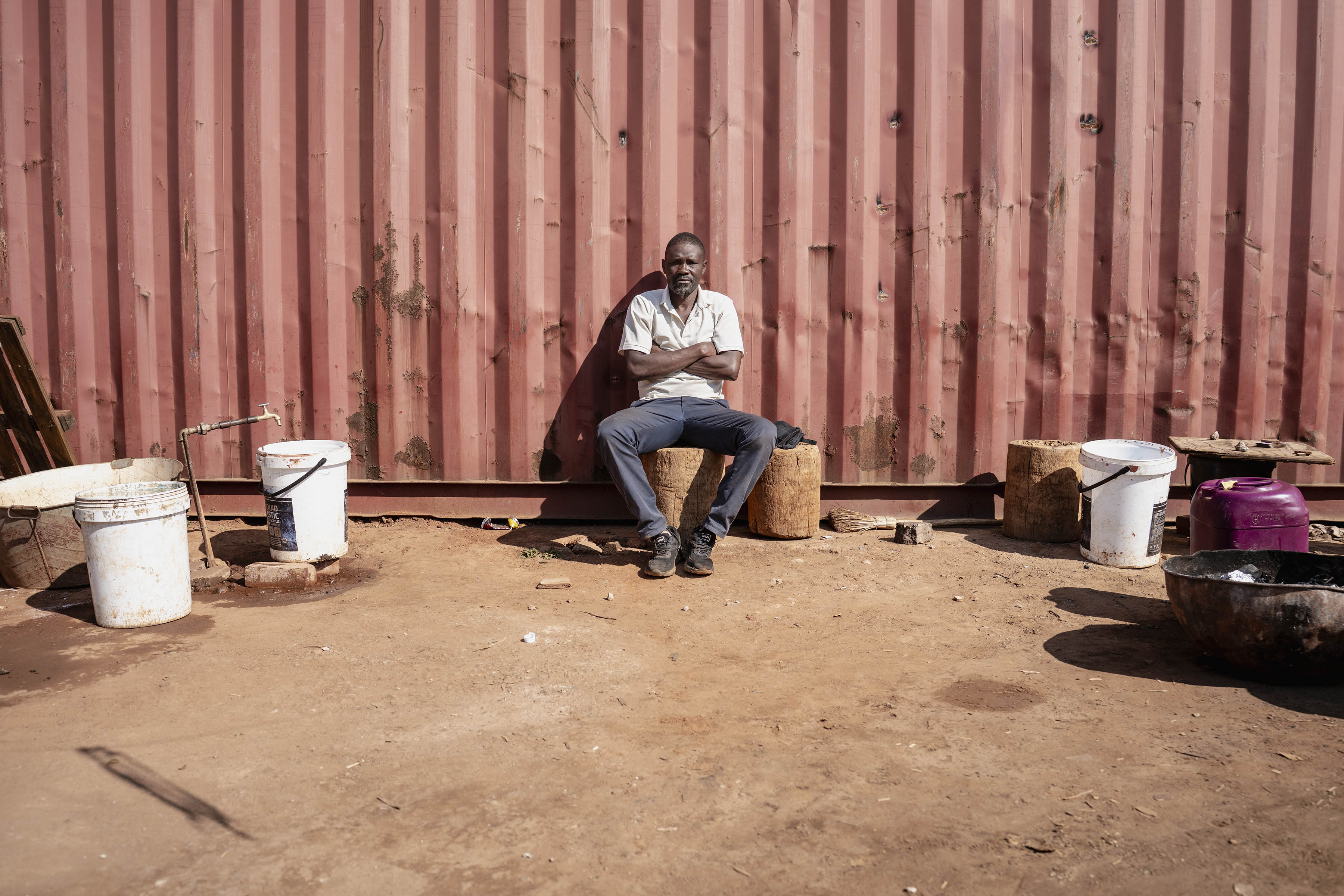
Santos Sithole, who had a South African father and Mozambican mother, is struggling to get his South African ID. The migrants renting rooms in his yard have fled due to the anti-immigrant violence.
Santos Sithole, from Mozambique, has lived in Thembelihle with his South African partner since 2006. He inherited his father’s home in the settlement in 2019. His family members have South African IDs, but Sithole came to the country later. He has struggled to get a spousal visa.
On 30 June, his home was targeted. Four Malawian tenants renting shacks in his yard were attacked by a mob and robbed that night. They have returned to Malawi.
“I cannot give up on my home. My father left the property to me, but I am being targeted because I still use a Mozambican passport,” said Sithole.
He is left with one Ethiopian tenant, Laqa Wodimo, who has run a shop in his yard for three years. On the night of 30 June, a mob tried but failed to break into the shop. Since then, he has been asked to pay a monthly protection fee of R500.
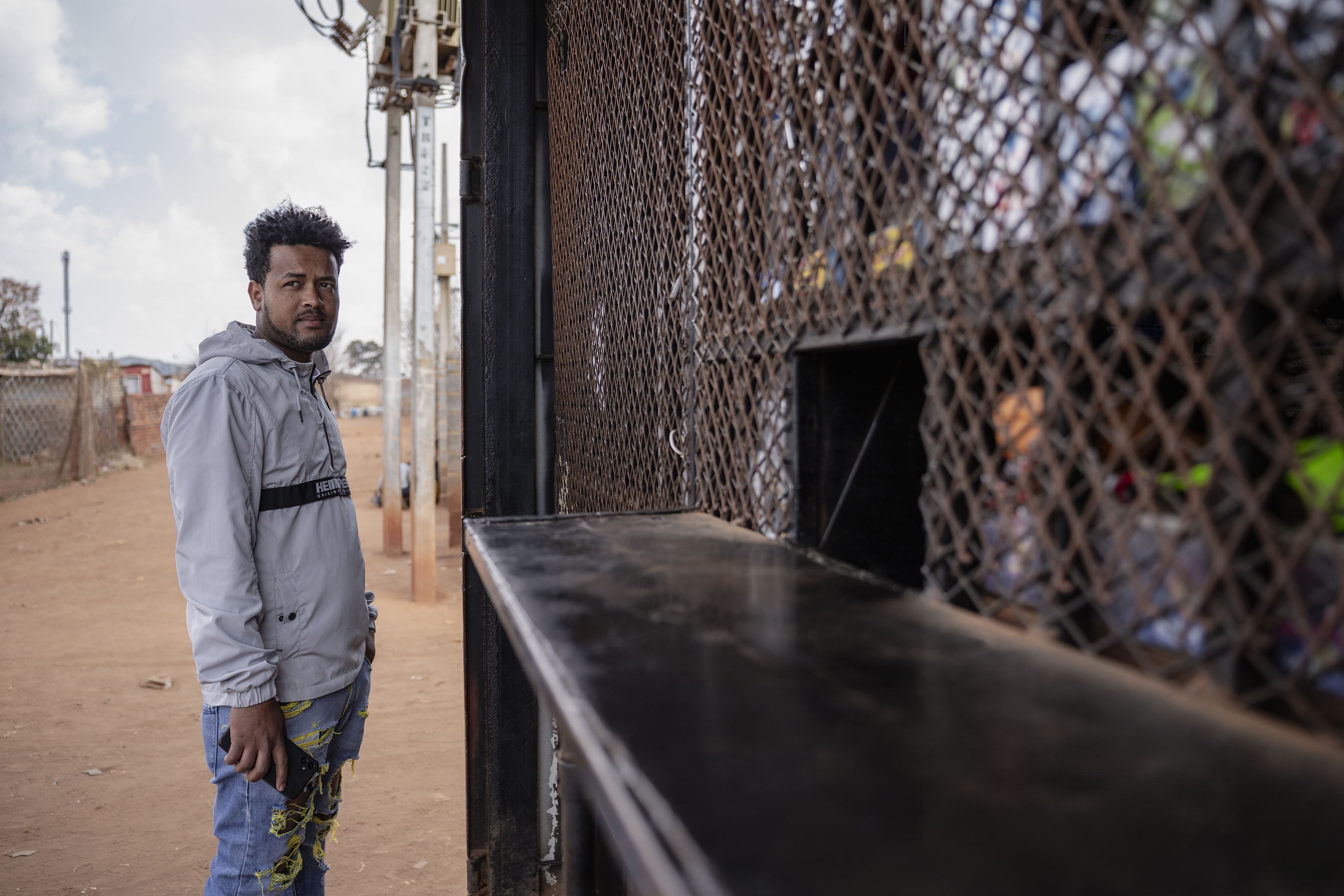
Ethiopian immigrant Laqa Wodimo, outside the container spaza shop which he runs in Thembelihle.
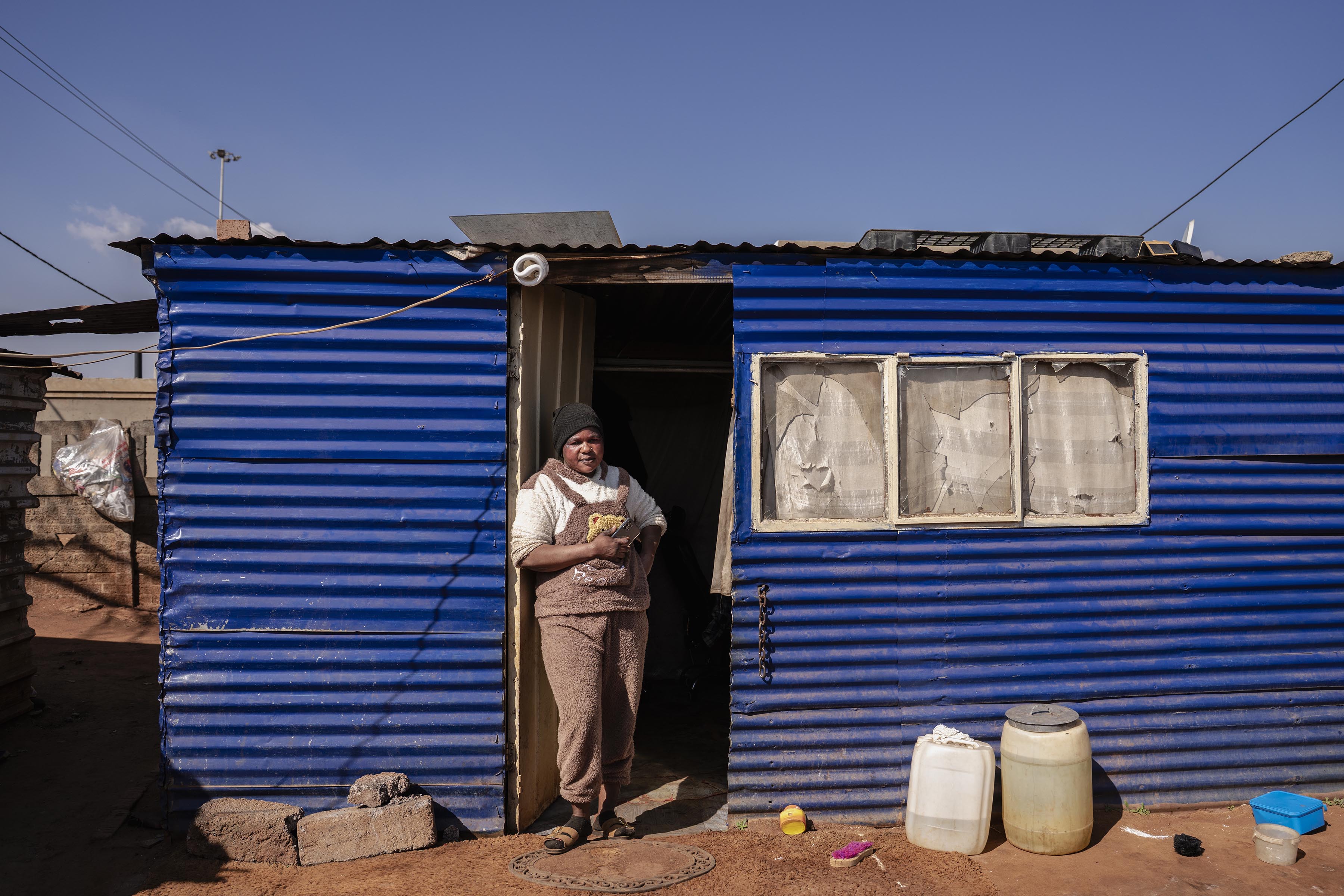
Catherine Mwanyado, from Malawi, has lived with her husband in the settlement since 2013. At first she worked as a domestic worker until her husband was able to secure a work permit and a job at a nearby firm. They have not been attacked, but she feels unsafe after her neighbours were attacked. “I love staying in Thembelihle, but things are not the same because many people have left,” said Mwanyado.
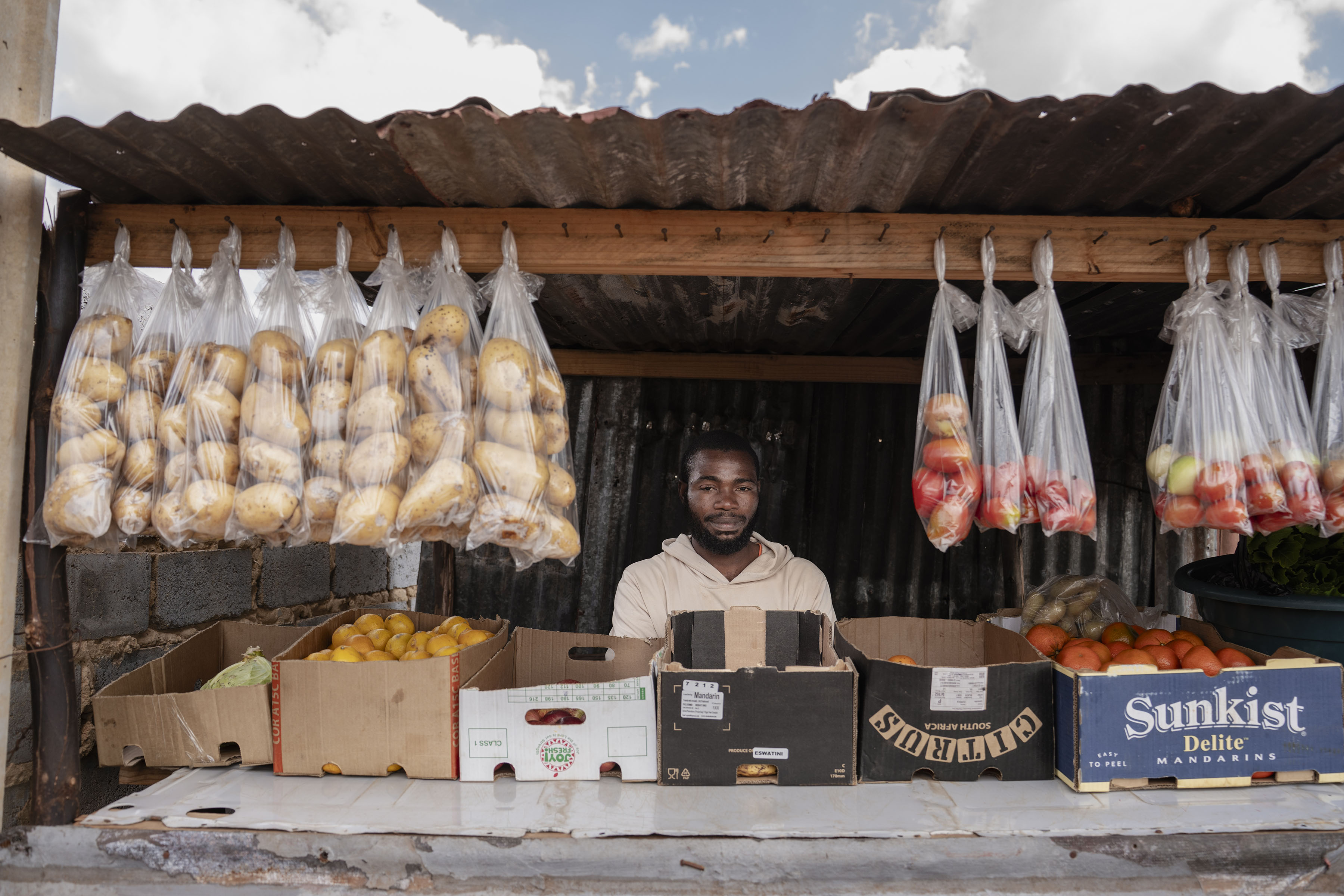
Abdul Azaki, from Malawi, has been living in the settlement since 2014 and sells fruit and vegetables from a stall in his yard. He has not been attacked but threats are circulating.
