5 February 2026
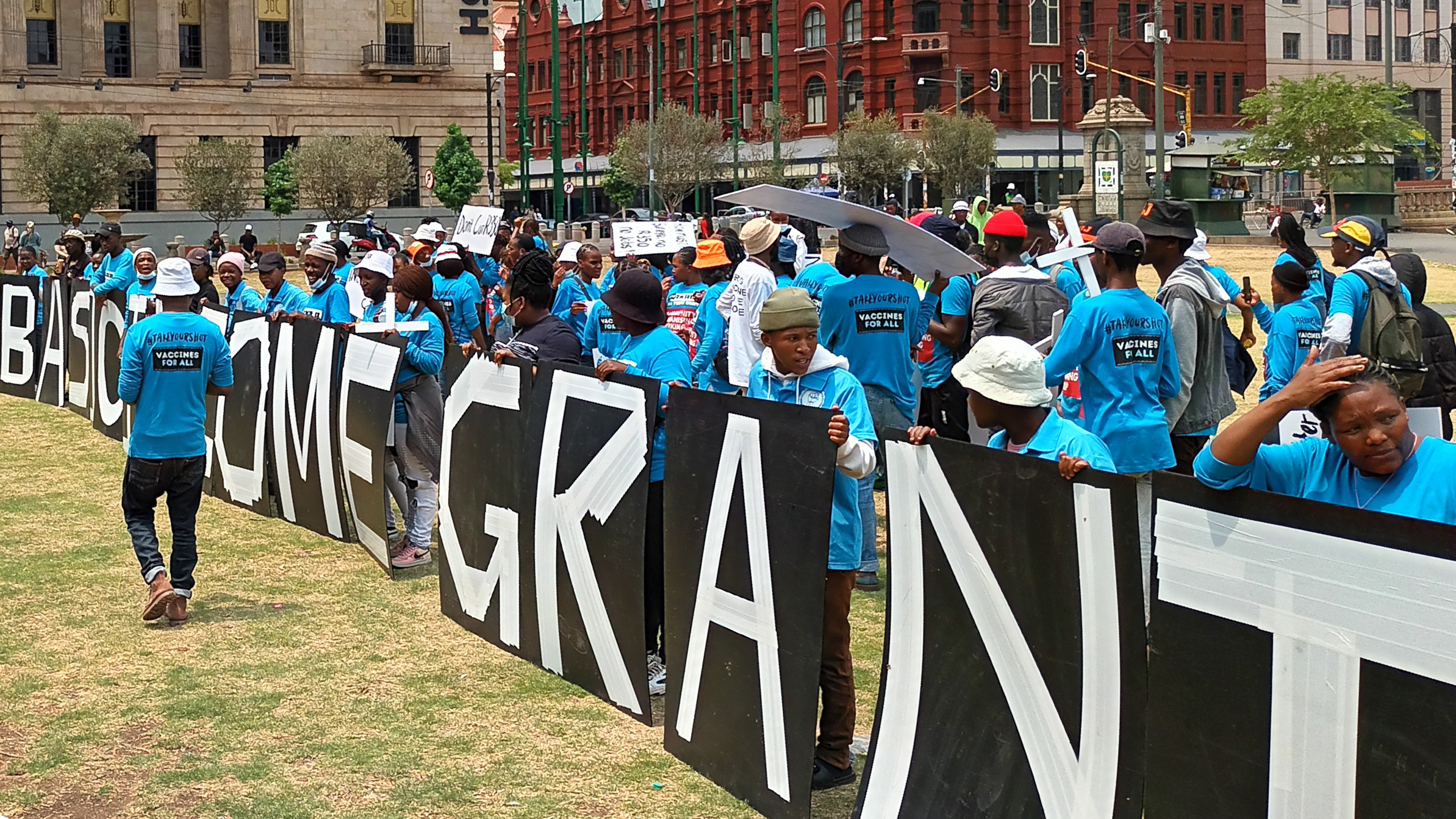
The Department of Social Development (DSD) is aiming to submit its revised policy on basic income support (BIS) to Cabinet by March 2027. Archive photo: Chris Gilili
The Department of Social Development (DSD) is aiming to submit its revised policy for basic income support (BIS) to Cabinet by March 2027.
The department briefed Parliament’s portfolio committee for social development on Wednesday on its second-quarter performance for the 2025/26 financial year, and gave an update on progress made in developing a universal basic income support (BIS) policy.
The DSD first tabled a draft BIS policy before Cabinet in November 2024, but Cabinet sent it back for further work.
Chief director for social assistance Maureen Mogotsi told MPs that Cabinet had specifically instructed the department to strengthen the policy’s links to economic inclusion measures for Social Relief of Distress (SRD) grant beneficiaries.
She said further consultations were held with the departments of employment and labour, public works and small business development, “culminating in a June 2025 consultation report whose findings were incorporated into a revised BIS policy”.
That revised policy was shared with National Treasury and the Presidency.
“One of the key instructions was to engage National Treasury on the sustainability of the BIS,” Mogotsi said.
In October 2025, the department convened a two-day policy colloquium, bringing together affected government departments, the National Treasury, the Presidency and local and international experts.
Mogotsi said the colloquium aimed to build the case for continued income support for working-age adults.
“The Presidency has provided essential support for the work and facilitated engagements with other government initiatives, such as the MyMzansi programme and other labour activation initiatives,” she said.
She said the discussions had shown that technology and better coordination between government departments are needed to make BIS workable.
This led to including MyMzansi – “a new unified, digital government services platform that is currently in development”. It is intended as a single entry point for citizens to access social protection and other government services.
Following the colloquium, DSD held further engagements with the Presidency and National Treasury, which requested updated costings and clarity on the roles of different departments. Treasury said it could not support the policy until this was completed.
Mogotsi said the department was now revising the costing model. This will be done by February. It will then be added to the policy proposal and submitted to Treasury.
In the meantime, DSD has requested an extension of the Covid-19 SRD grant to prevent a break in income support while the BIS policy is finalised.
Mogotsi told MPs that regulations governing the SRD extension had been finalised, certified by the Presidency, and would be published for public comment within the next two weeks.
However, MPs expressed frustration at the slow pace of progress on BIS.
DA MP Nazley Khan Sharif said 2027 was “a long time away”, questioning how a policy could be submitted without costing and asking whether implementation would only occur after 2027.
MK Party MP Reverend Nhlanhla Bernard Gcwabaza said millions of people were going to bed hungry while the government deliberated. “The Department needs to ensure the policy moves back to Cabinet as quickly as possible for it to be approved and for people to start earning from it”, he said.
Mogotsi defended the timeline. She said the department initially approached Cabinet to request permission to publish the policy for public comment, after which, several procedural steps were required, including “consolidating public input, obtaining regulatory impact certification and consulting Treasury”.
“That process takes longer because it goes through various phases of approval,” she said.
DSD minister Nokuzola Tolashe addressed the department’s qualified audit for 2024/25. She said it was linked to grant payments that did not meet accounting standards. This was due to weaknesses in SASSA’s systems, including the failure to properly identify ineligible beneficiaries and insufficient records to support some payments.
DSD director general Peter Fhumulani Netshipale gave further details, saying the qualification related to duplicate payments, beneficiaries without valid ID documents, payments made to people outside South Africa, and payments made to beneficiaries after death.
He said the department and SASSA felt that the auditor-general had been “a bit harsh”, arguing that progress had been made, including the rollout of biometric systems and improvements to beneficiary databases.
Tolashe said the department has developed an audit action plan identifying root causes, corrective controls, and steps to address the findings.