24 March 2026
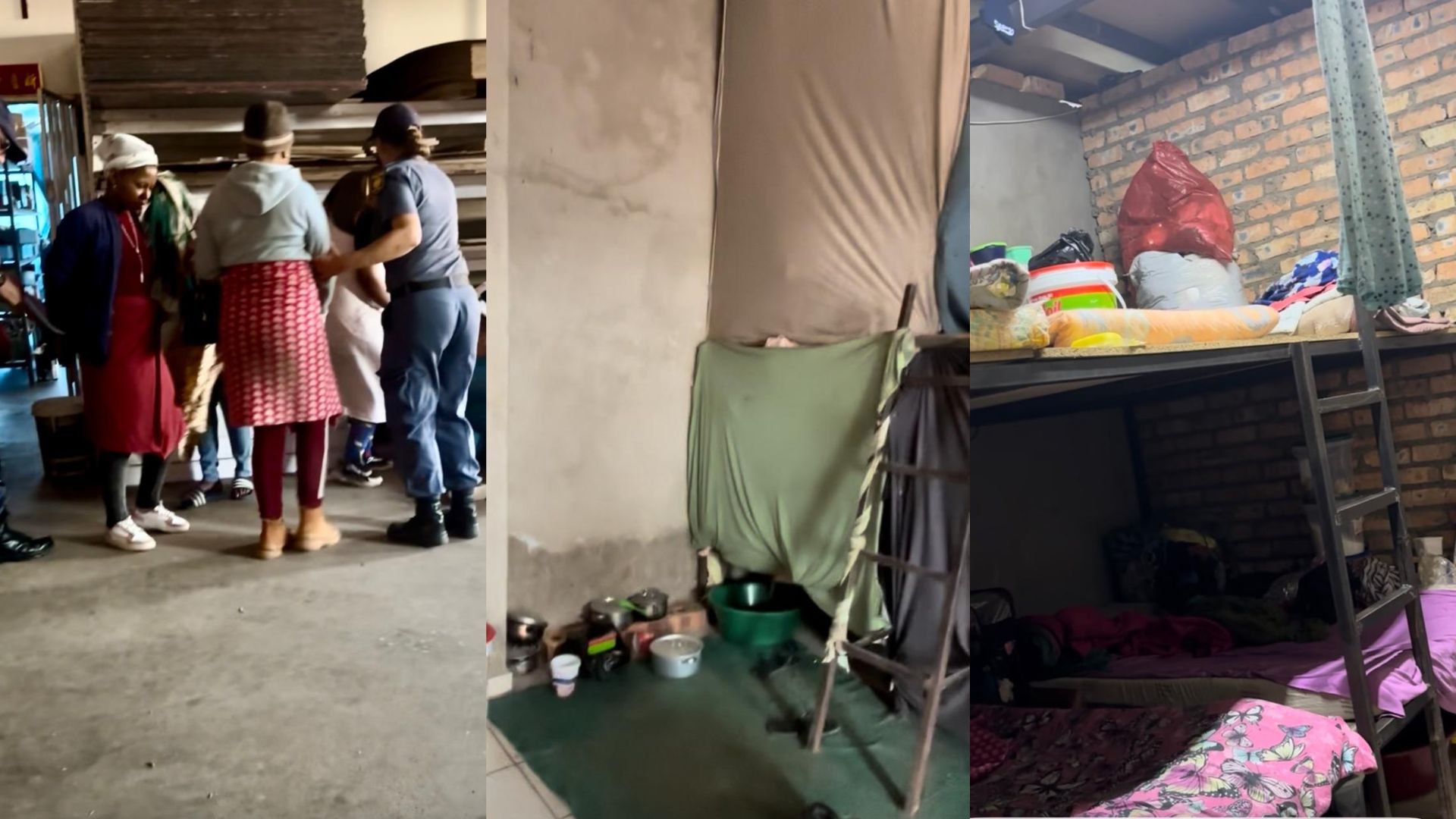
A photo taken by inspectors from the National Bargaining Council for the Clothing Manufacturing Industry at a sweatshop in KwaZulu-Natal. Photo supplied.
The National Bargaining Council for the Clothing Manufacturing Industry says Drake Clothing has failed to put up any “believable defence” against allegations that it relies on “sham” co-operatives to manufacture clothing for some of South Africa’s biggest retailers.
The council is seeking to liquidate the Pinetown-based design house, claiming it outsources production to unregistered “sweatshops” that do not comply with labour laws, pay below industry-standard wages, force workers to toil for long hours and, in some instances, force workers to live in appalling conditions within or next to the factories.
Drake is opposing the application, arguing that it is based on unsubstantiated, highly defamatory allegations, unfounded speculation and inadmissible hearsay evidence.
It denies contracting with most of the “co-ops” cited by the council. It says boxes with its labels found by council inspectors at some premises were just being reused.
Drake has said that all its subcontractors had to sign annual declarations confirming they are compliant and had to be audited.
But in a final affidavit filed in the Pietermaritzburg High Court, the council’s KwaZulu-Natal general secretary Chantal Naidoo said Roger Drake’s opposing affidavit is “replete with bare denials” in the face of “objective evidence such as photographs and corroborated under oath from a plurality of witnesses”.
Regarding the assertion that the only evidence of any relationship between Drake and some of the co-ops was photographs of labelled boxes, Naidoo said factory owners and managers had confirmed to council agents that they had a trading relationship with Drake.
She said the company was “crying foul” instead of using the opportunity to dispel “so-called untruths”.
She said Drake Clothing could easily demonstrate that it is not a participant in the pervasive exploitation of workers by simply disclosing the complaint manufacturers with whom it contracts. She said the company had acknowledged only a small number of manufacturers, which included Jin Peng and KJN, both of which are noncompliant, she said.
She said that when confronted with clear evidence of ongoing noncompliance by both Jin Peng and KJN to register workers with the council, to pay minimum wages, and to comply with compliance orders, Drake “neither expresses surprise nor dismay”.
She said Drake’s claim that, insofar as it is aware, its subcontractors did not trade with sham co-operatives was “wilful ignorance”.
She said the fact that Drake claimed it had contracts with manufacturers, which required that they comply with labour legislation and submit to compliance audits, was indicative of its appreciation of the problem. But, at the same time, it claimed it could not be responsible for their labour law compliance.
In spite of being requested, under the rules of court, to provide documentation of such contracts and audits, Drake had refused to do so and had only provided its contract with JinPeng.
Naidoo said, “The design houses do not simply provide design services to the retailers. The retailers place orders for the actual supply of manufactured products with the design houses. The manufacturing component is essential to Drake’s business model, which has, as one of its objectives, the reduction of costs and the elimination of employment issues.
“It is not the council’s case that the non-compliance of the manufacturers and their association with Drake clothing is mere coincidence; its case is that Drake has adopted as its business model the employment of non-compliant manufacturers in order to benefit from their non-compliance.
“And it is this business model that provides a lifeline to the noncompliant manufacturers to continue to operate as they do,” said Naidoo.
The application has been set down for April.
