7 October 2026
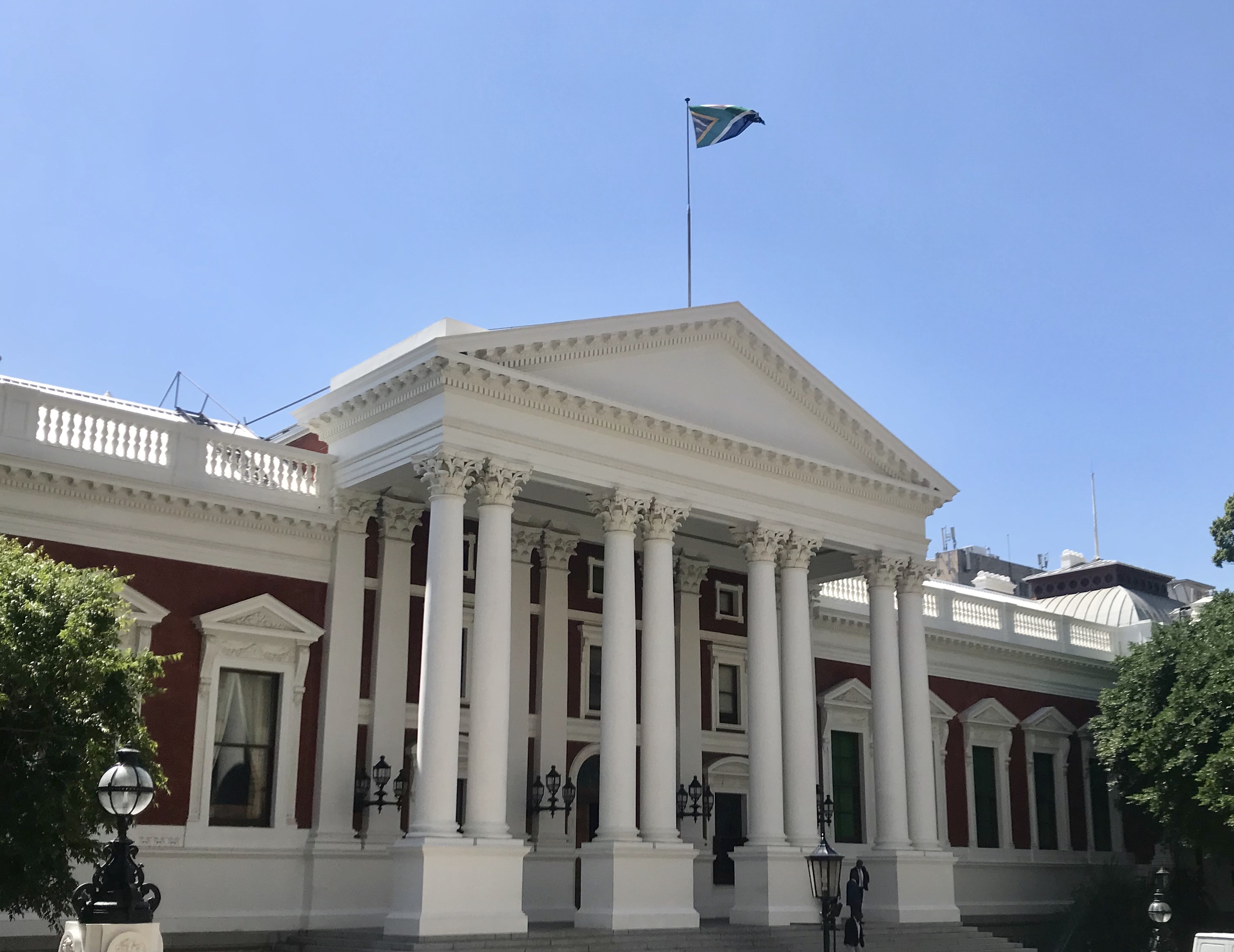
The General Laws (Anti-Money Laundering and Combating Terrorism Financing) Amendment Bill currently before Parliament is intended to keep South Africa off the grey list of the Financial Action Task Force, but it risks making life unnecessarily difficult for non-profit organisations. Archive photo: Brent Meersman
In our scramble to meet international requirements preventing financing of terrorism, South Africa risks making life unnecessarily difficult for non-profit organisations (NPOs).
The General Laws (Anti-Money Laundering and Combating Terrorism Financing) Amendment Bill currently before Parliament is intended to keep South Africa off the grey list of the Financial Action Task Force (FATF), when the next assessment is due in 2027.
FATF is an intergovernmental body that sets the international standards for combating money laundering, terrorist financing and the financing of weapons of mass destruction. Its original job was money laundering. It took on terrorist financing after the 11 September 2001 attacks. The grey list identifies countries with strategic deficiencies in their anti-money laundering, terrorist financing, and proliferation financing controls. They are then subject to increased scrutiny and higher cost for transactions.
FATF sees NPOs as a possible channel for terrorist money. Charities raise money from the public, they are trusted, they often work in conflict areas, and they move funds across borders with less scrutiny than banks or companies face. In some cases, charities have been set up as fronts or had their funds diverted to armed groups.
FATF used to treat the whole sector as suspect but revised its standards in 2016 and again in November 2023, after its own review found that legitimate NPOs had lost funding and been denied banking services. Countries must now identify which NPOs are actually at risk and apply measures to them that are “focused, proportionate and risk-based” without unduly disrupting or discouraging legitimate work.
The Department of Social Development (DSD) says that the purpose of the current NPO amendments is to fix deficiencies under recommendation 8, the FATF standard on non-profit organisations, and to move South Africa from “partially compliant” towards “compliant”. That is a legitimate aim. Nobody in the sector wants to go back on the grey list. Charities and their beneficiaries feel it first when banks close accounts and donors pull back.
But assessors do not only check that a law exists. They check whether it targets the right organisations in the right way. A blunt law can fail that test as surely as a missing one.
The NPO Act already has two kinds of registered NPOs. Since 2022, organisations that donate or provide services across South Africa’s borders must register. Everyone else registers voluntarily: crèches, soup kitchens, sports clubs, church groups. They usually register because a funder or a government department will not deal with them without a registration number. Most organisations on the register are in this second group.
The draft Bill that Treasury published in January would have applied the new monitoring and enforcement powers to both groups. After submissions from the sector, the Bill tabled in Parliament in May corrected this. The new compliance notices and administrative sanctions apply only to organisations “required to register”. That was an early win.
The concern that remains is whether “required to register” is sufficiently connected to the risk-assessed subset of NPOs that recommendation 8 says should be supervised. A cross-border test is a proxy for risk, not a finding of it. South Africa has done the harder part: its 2024 NPO sector risk assessment identifies where the risk lies. But the Bill does not tie the registration duty, or the new enforcement powers, to that assessment. When assessors look for evidence that supervision follows risk, the law should show them the link.
The Bill also leaves the Act’s existing enforcement rule where it is. Under the Act, any registered organisation that gets a compliance notice has one month to comply, unless the director extends that period on good cause shown. If it does not comply in time, the director must cancel its registration.
For organisations required to register, the Bill adds that the directorate may impose administrative sanctions “as prescribed”. What the sanctions are, and when each applies, is left to regulations. Nothing in the Bill requires the director to hear an organisation before imposing one. The organisation can appeal only after the decision has been made, and there are separate appeal routes: one for refusals and sanctions, another for cancellations.
For a volunteer-run organisation whose treasurer also cooks the meals, one month is very little time; more so when organisations struggle to report problems on the directorate’s new online system. The DSD has told Parliament that the Act has no express exemption for portal failures. Losing registration is not a technicality: funding that depends on registration can stop.
Then there is the criminal penalty. The Bill sets one ceiling for offences under the Act: a fine of up to R1-million, five years in prison, or both. These offences are not confined to high-risk organisations. They include making a material false representation in a report to the director, which could catch any registered organisation, and the Act does not expressly require that it was done knowingly.
The Bill is being presented as part of South Africa’s response to Recommendation 8, so its enforcement scheme should demonstrably be proportionate and risk-based. A blanket maximum of this size is neither, and the threat of prison will make it harder to find volunteers willing to serve on boards.
The NPO Working Group, a coalition of organisations, has sent Treasury, the DSD and Parliament proposed wording. Its latest proposal concentrates on the offences and penalties. The registration offences would apply only where someone acted knowingly and with intent to deceive. There would be a separate offence for doing the same things in order to facilitate terrorist financing. Where a court can work out what was gained from an offence, the fine would be linked to that amount.
Courts would have to weigh the seriousness of the offence, the size and means of the organisation, and what the penalty would do to the people it serves. Office-bearers would be personally liable only if they took part in the offence and knowingly allowed it. The aim is that punishment falls on the wrongdoers and not on a charity’s beneficiaries. The coalition also wants the panel that hears appeals to include people with legal expertise and people who know the sector.
None of this is radical. Notice and a fair chance to be heard before a decision is made is already what the Promotion of Administrative Justice Act requires. None of it weakens oversight of the organisations that do carry risk. It makes that oversight credible, and credibility is what the assessors will test. A scheme that can deregister a crèche for a late form will be hard to defend as proportionate.
The Standing Committee on Finance still has to receive legal advice and adopt its report, so there is still time. Parliament should not pass an NPO law that it cannot defend to the FATF as risk-based. It would risk a poor rating in 2027 and potentially an early court challenge, and the organisations that do the country’s quiet work would carry the cost of both.
Views expressed are not necessarily those of GroundUp.