23 March 2026
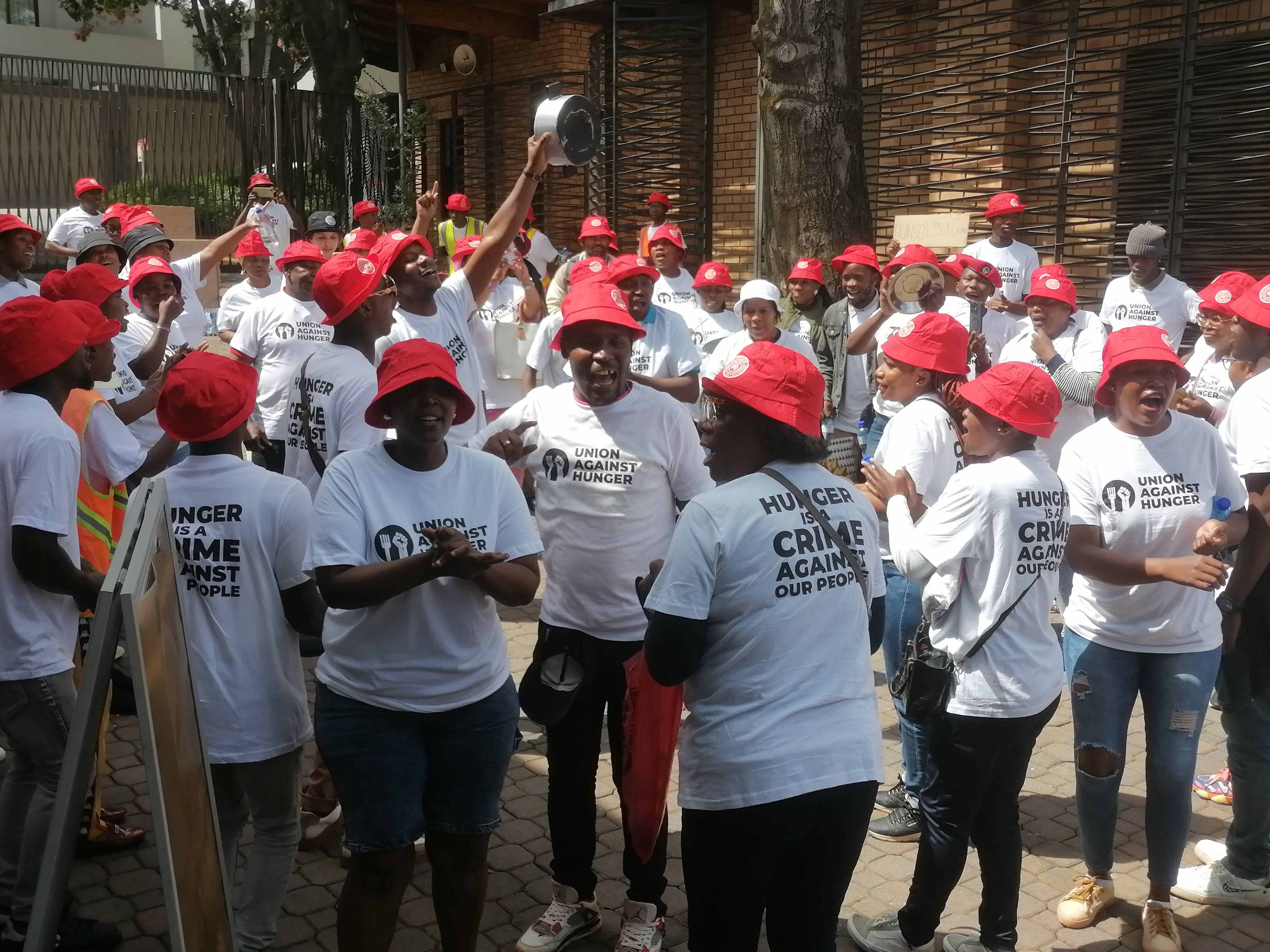
Members of the Union Against Hunger called for urgent action to end food insecurity. Photo: Bernard Chiguvare
More than 50 people demonstrated outside the Nelson Mandela Foundation Centre on Friday, where the South African Human Rights Commission was holding a hearing to investigate food systems.
The activists, under the banner of the Union Against Hunger, urged the government to take decisive action to end hunger in South Africa.
Several civil society organisations have presented evidence to the commission on the impact of food insecurity in South Africa.
Founding member of the Union Against Hunger, Mark Heywood, told GroundUp that in many communities, people do not have enough food and children are going hungry.
“It’s not because there is no food in shops or on farms, but because the system is unfair. Food is expensive, and many people cannot afford it,” he said.
According to StatsSA, almost one in five households (19.7%) experienced moderate food insecurity in 2023. Moderate food insecurity is the inability to eat regular, nutritious meals. Severe food insecurity was experienced by 8% of households, meaning they regularly run out of food and go for a day or more without eating.
Vusimuzi Mosoeu, a Soweto resident, told GroundUp that every day he encounters children begging for food.
Lebone Seleho, from Kensington, said there is high unemployment in her area, and residents have no space to grow their own food.
“When residents go hungry, they often turn to drugs or find other means of getting food,” she said.
Siyanda Baduza, from the Universal Basic Income Coalition, said the introduction of a universal grant would help households afford basic food.
Minister of Agriculture John Steenhuisen, presenting to the commission on Wednesday, said market forces, not the department, determined food prices.
South Africa produces a food surplus, but many households still go hungry due to unemployment and the inability to afford food, Steenhuisen said. Exporting food creates jobs, he said.
